
Mark J. Boda
Author of Dictionary of the Old Testament: Prophets (IVP Bible Dictionary)
About the Author
Mark J. Boda (PhD, University of Cambridge) is professor of Old Testament at McMaster Divinity College. He is the author or editor of more than twenty-five books, including the Dictionary of the Old Testament: Prophets (coedited with Gordon McConville) and commentaries on Haggai, Zechariah, 1-2 show more Chronicles, and Judges. show less
Series
Works by Mark J. Boda
Dictionary of the Old Testament: Prophets (IVP Bible Dictionary) (2012) — Editor — 462 copies, 1 review
After God's Own Heart: The Gospel According to David (The Gospel According to the Old Testament) (2007) 272 copies
'Return To Me': A Biblical Theology of Repentance (New Studies in Biblical Theology) (2015) 172 copies
The Book of Zechariah (New International Commentary on the Old Testament (NICOT)) (2016) 126 copies, 1 review
The Heartbeat of Old Testament Theology: Three Creedal Expressions (Acadia Studies in Bible and Theology) (2017) 78 copies
Judges: A Discourse Analysis of the Hebrew Bible (7) (Zondervan Exegetical Commentary on the Old Testament) (2022) 41 copies
Seeking the Favor of God, Vol. I: The Origins of Penitential Prayer in Second Temple Judaism (Early Judaism and Its Literature) (2006) 29 copies
Seeking the Favor of God, Volume 2: The Development of Penitential Prayer in Second Temple Judaism (Early Judaism and Its Literature) (2007) 27 copies
The Words of the Wise Are Like Goads: Engaging Qoheleth in the 21st Century (2013) — Editor; Contributor — 16 copies
Daughter Zion: Her Portrait, Her Response (Society of Biblical Literature. Ancient Israel and Its Liter) (2012) 15 copies
Seeking the Favor of God, Volume 3: The Impact of Penitential Prayer beyond Second Temple Judaism (Early Judaism and Its Literature) (2008) 14 copies
Tradition in transition Haggai and Zechariah 1-8 in the trajectory of Hebrew theology (2008) 8 copies
1 Chronicles & 2 Chronicles 8 copies
Unity and Disunity in Ezra-Nehemiah: Redaction, Rhetoric, and Reader (2008) — Editor; Contributor — 6 copies
Praying the Tradition: The Origin and the Use of Tradition in Nehemiah 9 (Beihefte Zur Zeitschrift Fur die Alttestamentliche Wissenschaft) (1999) 6 copies
Exploring Zechariah, Volume 2: The Development and Role of Biblical Traditions in Zechariah (Ancient Near East Monographs) (2017) 5 copies
Exploring Zechariah, Volume 1: The Development of Zechariah and Its Role within the Twelve (Ancient Near East Monographs) (2017) 5 copies
Riddles and Revelations: Explorations into the Relationship between Wisdom and Prophecy in the Hebrew Bible (2020) 3 copies
Inner Biblical Allusion Poetry Of Wisdom (The Library of Hebrew Bible/Old Testament Studies) (2020) 2 copies
Inner Biblical Allusion in the Poetry of Wisdom and Psalms (The Library of Hebrew Bible/Old Testament Studies, 659) (2018) 1 copy
Associated Works
Christian Mission: Old Testament Foundations and New Testament Developments (2010) — Contributor — 11 copies
Prayer and Poetry in the Dead Sea Scrolls and Related Literature: Essays in Honor of Eileen Schuller on the Occasion of Her 65th Birthday (Studies of the Texts of Thedesert of… (2011) — Contributor — 6 copies
Yahwism After the Exile: Perspectives on Israelite Religion in the Persian Era (Studies in Theology and Religion) (2003) — Contributor — 5 copies
Tagged
Common Knowledge
- Canonical name
- Boda, Mark J.
- Gender
- male
- Education
- Ambrose University College (BTh)
Westminster Seminary (MDiv)
University of Cambridge (PhD) - Occupations
- professor, pastor
- Organizations
- Christian and Missionary Alliance
- Nationality
- Canada
- Places of residence
- Hamilton, Ontario, Canada
- Associated Place (for map)
- Ontario, Canada
Members
Reviews
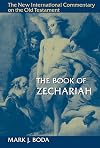
The Gospel of John records in 5:39 a saying by Jesus Christ: “… it is they (the Scriptures) that bear witness about me, …”. Would that saying sensitize thenceforth any would-be interpreters how they approach the Biblical texts?
If interpreters, while handling an OT text find it appropriate to engage with their fellow commentators, whether contemporary or ancient, how much more would it seem necessary for these same interpreters to also comment on those NT texts that make direct show more quotation or allusion to it?
The response to the above queries is at best ambivalent if one reads Mark J. Boda’s 2016 commentary on the book of Zechariah. Apart from a brief paragraph entitled “Zechariah For Today” (pg. 44), Boda largely eschews making any messianic references in his commentary proper. At various points, he expresses his apprehension of characterizing Zechariah’s vision reports as eschatological (pgs. 102, 211):
“ … there are reasons to see in Zechariah’s vision reports some of the ingredients that will be key components of the later apocalyptic form, it is not helpful to emphasize the connection, since the reading strategy associated with the later form cannot be imposed on the earlier form [vision reports that relate to recent events] without falling into anachronistic error”. (pg. 102, see also n.123)
Such warning is perspicacious and prudent, as Boda demonstrates trenchantly the historical groundings and relevance of the prophet’s message to its late sixth to the mid-5th century audience. Questions remain, however, whether interpreters of OT prophetic texts are inescapably caught between mutually exclusive quandaries of imminent visions and apocalypses. Given his rather restrictive definition of “eschatological” (pg. 211), it is apparent that Boda sees the answer in the affirmative.
Apart from the above, Boda’s commentary on the Book of Zechariah is another (after his 2004 NIVAC) important contribution to the study of this prophetic book. He offers often exhaustive references to words used in other parts of the OT. His expert translation, explication of textual relationships, cogent exegesis and fair interactions with recent commentators are invaluable resources.
One cannot help after reading this substantial commentary but feel thankful and musing at the same time. There is an urge to turn to those quotations in the NT and ask: “what about …?” Were these NT writers mistaken? For a commentary in a series that claims its affiliation, and by inference its readership, in “evangelicalism”, there is an interpretative void yet to be filled. show less
If interpreters, while handling an OT text find it appropriate to engage with their fellow commentators, whether contemporary or ancient, how much more would it seem necessary for these same interpreters to also comment on those NT texts that make direct show more quotation or allusion to it?
The response to the above queries is at best ambivalent if one reads Mark J. Boda’s 2016 commentary on the book of Zechariah. Apart from a brief paragraph entitled “Zechariah For Today” (pg. 44), Boda largely eschews making any messianic references in his commentary proper. At various points, he expresses his apprehension of characterizing Zechariah’s vision reports as eschatological (pgs. 102, 211):
“ … there are reasons to see in Zechariah’s vision reports some of the ingredients that will be key components of the later apocalyptic form, it is not helpful to emphasize the connection, since the reading strategy associated with the later form cannot be imposed on the earlier form [vision reports that relate to recent events] without falling into anachronistic error”. (pg. 102, see also n.123)
Such warning is perspicacious and prudent, as Boda demonstrates trenchantly the historical groundings and relevance of the prophet’s message to its late sixth to the mid-5th century audience. Questions remain, however, whether interpreters of OT prophetic texts are inescapably caught between mutually exclusive quandaries of imminent visions and apocalypses. Given his rather restrictive definition of “eschatological” (pg. 211), it is apparent that Boda sees the answer in the affirmative.
Apart from the above, Boda’s commentary on the Book of Zechariah is another (after his 2004 NIVAC) important contribution to the study of this prophetic book. He offers often exhaustive references to words used in other parts of the OT. His expert translation, explication of textual relationships, cogent exegesis and fair interactions with recent commentators are invaluable resources.
One cannot help after reading this substantial commentary but feel thankful and musing at the same time. There is an urge to turn to those quotations in the NT and ask: “what about …?” Were these NT writers mistaken? For a commentary in a series that claims its affiliation, and by inference its readership, in “evangelicalism”, there is an interpretative void yet to be filled. show less
Structure:
The "Cornerstone Biblical Commentary" brings together a wealth of scholarship in a clearly presented and highly accessible format. Each larger section of text gets its own introductory section. Then each textual unit, usually of a chapter or two in length, gets its own separate treatment. The full text from the New Living Translation opens the section, then footnotes to the text, and detailed notes follow. The commentary section is next and covers sources used by the Chronicler, show more the structure and content of the section - which is where the primary exegesis happens, and then a concluding section titled "significance" where the author brings home the main themes from the text.
Features:
A detailed introduction to the books of Chronicles opens the work, and enumerates the setting, author, date, and audience. The canonicity and textual history of Chronicles are detailed, and literary and theological concerns are addressed. Space is also devoted to the major themes of the books of Chronicles, of which the author finds covenant relationship, an emphasis on renewing the present through remembering the past, and the prophetic office as key. And while the Chronicler emphasizes Judah's history, he repeatedly refers to "all Israel," Boda sees in this a concern for the fulfillment of a truly united Israel "comprised of inhabitants from both north and south united around the Temple, King, and Jerusalem" (p. 18). And intriguingly, he argues that "The omission of the history of the northern kingdom throughout the account is not intended as a slight against these tribes, but rather is used to play down the schism and to include them in `all Israel'" (p. 18). The introduction also includes a detailed outline of the books of Chronicles.
Other features of the commentary include a proprietary numbering system from Tyndale for the Hebrew, Aramaic and Greek words - similar to Strong's numbers, but coded to other reference works from Tyndale. Some numbers are also provided that key to Zondervan resources as well. A detailed list is also provided of key textual witnesses to 1 and 2 Chronicles, and the Old and New Testaments as a whole. Also included is an extensive explanation of the transliteration and numbering system employed in the commentary. Throughout the volume, charts, maps, chiastic structures, and timelines are provided, but all in black and white. The commentary makes thorough use of end notes after every section and introduction, as well. This allows it to remain highly technical but also more accessible to the average reader.
Evaluation:
This commentary over and again proves faithful to a high view of Scripture. Yet it is also extremely helpful in sorting out the techincal details in the text and catching the underlying theological vision of the Chronicler. Some of my readers may not be aware of how very different the books of Chronicles are from the books of Kings, and this commentary helps underscore and interpret these differences as being loaded with theological import rather than evidence against the divine ispiration of both groups of books. The books of Chronicles are full of lists and genealogies, and the technical bent of this commentary proves helpful in catpuring what is being communicated theologically by the Chronicler. The material is presented in a clear way and remains accessible to a wide variety of readers. I recommend this book for anyone who desires to study the books of Chronicles. I'm confident that it will prove helpful and steer you right.
Disclaimer:
This book was provided by Tyndale House Publishers. I was under no obligation to offer a favorable review. show less
The "Cornerstone Biblical Commentary" brings together a wealth of scholarship in a clearly presented and highly accessible format. Each larger section of text gets its own introductory section. Then each textual unit, usually of a chapter or two in length, gets its own separate treatment. The full text from the New Living Translation opens the section, then footnotes to the text, and detailed notes follow. The commentary section is next and covers sources used by the Chronicler, show more the structure and content of the section - which is where the primary exegesis happens, and then a concluding section titled "significance" where the author brings home the main themes from the text.
Features:
A detailed introduction to the books of Chronicles opens the work, and enumerates the setting, author, date, and audience. The canonicity and textual history of Chronicles are detailed, and literary and theological concerns are addressed. Space is also devoted to the major themes of the books of Chronicles, of which the author finds covenant relationship, an emphasis on renewing the present through remembering the past, and the prophetic office as key. And while the Chronicler emphasizes Judah's history, he repeatedly refers to "all Israel," Boda sees in this a concern for the fulfillment of a truly united Israel "comprised of inhabitants from both north and south united around the Temple, King, and Jerusalem" (p. 18). And intriguingly, he argues that "The omission of the history of the northern kingdom throughout the account is not intended as a slight against these tribes, but rather is used to play down the schism and to include them in `all Israel'" (p. 18). The introduction also includes a detailed outline of the books of Chronicles.
Other features of the commentary include a proprietary numbering system from Tyndale for the Hebrew, Aramaic and Greek words - similar to Strong's numbers, but coded to other reference works from Tyndale. Some numbers are also provided that key to Zondervan resources as well. A detailed list is also provided of key textual witnesses to 1 and 2 Chronicles, and the Old and New Testaments as a whole. Also included is an extensive explanation of the transliteration and numbering system employed in the commentary. Throughout the volume, charts, maps, chiastic structures, and timelines are provided, but all in black and white. The commentary makes thorough use of end notes after every section and introduction, as well. This allows it to remain highly technical but also more accessible to the average reader.
Evaluation:
This commentary over and again proves faithful to a high view of Scripture. Yet it is also extremely helpful in sorting out the techincal details in the text and catching the underlying theological vision of the Chronicler. Some of my readers may not be aware of how very different the books of Chronicles are from the books of Kings, and this commentary helps underscore and interpret these differences as being loaded with theological import rather than evidence against the divine ispiration of both groups of books. The books of Chronicles are full of lists and genealogies, and the technical bent of this commentary proves helpful in catpuring what is being communicated theologically by the Chronicler. The material is presented in a clear way and remains accessible to a wide variety of readers. I recommend this book for anyone who desires to study the books of Chronicles. I'm confident that it will prove helpful and steer you right.
Disclaimer:
This book was provided by Tyndale House Publishers. I was under no obligation to offer a favorable review. show less
The distinguished InterVarsity staff purport to portray a "broad picture of contemporary scholarship on the Prophets" without trying to resolve contentious issues. The project is joined by scholars from all points on the spectrum. While including Jewish scholarship, they select the "Christian Old Testament", including the reception history of book of Daniel as one of the four "major prophetic books", and the Book of the Twelve. Changes in the parameters of reference work from just decades show more previously are also reflected. The contributors of the articles express the joy and diversity coming to the fore in this fresh and moving field of interpretation. The work is informed by the most recent archeological discoveries -- including Qumran, Mishnah, and pseudepigrapha. Appropriate cross-referencing is provided, along with detailed Subject and Scripture Indices. show less
You May Also Like


Associated Authors
Statistics
- Works
- 37
- Also by
- 6
- Members
- 1,797
- Popularity
- #14,314
- Rating
- 3.8
- Reviews
- 4
- ISBNs
- 70
- Languages
- 1
- Favorited
- 1