
Michel Jean (1) (1960–)
Author of Kukum
For other authors named Michel Jean, see the disambiguation page.
About the Author
Image credit: Michel Jean
Works by Michel Jean
Tagged
Common Knowledge
Members
Reviews
Kukum by Michel Jean
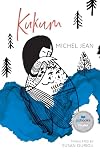
Over a year ago, one of the people who posts in the Canadian Literature group, recommended this book. It took me a while to read it but I am so glad I did.
The author is writing about his great-grandmother but this is fiction, not a biography, as he had to piece together her life based on some recollections she shared and extrapolate from them. His great-grandmother, Almanda, was white but spent all of her adult life with the Innu of northern Quebec. Her husband, Thomas, was an Innu trapper show more and hunter. They met when he canoed past her aunt and uncle's farm. He told her about his family's traditional land north of Lake Pekuakami (called by a French missionary as Lac St-Jean) where they spent the winters living in tents. Almanda was fascinated by his description and said she wanted to go there. It was agreed that Joseph and Almanda would marry before the family migrated to the north. In September, they got into a canoe and travelled up Riviere Peribonka to Lac Peribonka. Wikipedia tells me that is a distance of 140 km. Joseph taught Almanda to shoot and others in the family showed her how to set traps and snares, skin animals, prepare furs and many other skills needed to live on the land. They followed this lifestyle for many years, returning each summer to sell their furs and congregate with other Innu. Almanda gave birth to 9 children, one of whom died in infancy, mostly while living in the winter territory. As a literate person, Almanda decided that her children had to be taught to read, write and do arithmetic. She arranged to have a house built near Pekuakami where one daughter and her sister-in-law could live for the winter. All too soon, however, that house became their permanent home. Loggers had come to the area and were sending logs down the Peribonka which meant the family could not canoe up to their territory. Then, the Canadian government decided that native children had to be sent to residential schools and the children lost their language as well as knowledge of traditional ways. Almanda deplored the loss of their way of life and the changes that had come to the Innu people. She lived to the age of ninety-seven having experienced a complete shift in how Indigenous peoples lived. show less
The author is writing about his great-grandmother but this is fiction, not a biography, as he had to piece together her life based on some recollections she shared and extrapolate from them. His great-grandmother, Almanda, was white but spent all of her adult life with the Innu of northern Quebec. Her husband, Thomas, was an Innu trapper show more and hunter. They met when he canoed past her aunt and uncle's farm. He told her about his family's traditional land north of Lake Pekuakami (called by a French missionary as Lac St-Jean) where they spent the winters living in tents. Almanda was fascinated by his description and said she wanted to go there. It was agreed that Joseph and Almanda would marry before the family migrated to the north. In September, they got into a canoe and travelled up Riviere Peribonka to Lac Peribonka. Wikipedia tells me that is a distance of 140 km. Joseph taught Almanda to shoot and others in the family showed her how to set traps and snares, skin animals, prepare furs and many other skills needed to live on the land. They followed this lifestyle for many years, returning each summer to sell their furs and congregate with other Innu. Almanda gave birth to 9 children, one of whom died in infancy, mostly while living in the winter territory. As a literate person, Almanda decided that her children had to be taught to read, write and do arithmetic. She arranged to have a house built near Pekuakami where one daughter and her sister-in-law could live for the winter. All too soon, however, that house became their permanent home. Loggers had come to the area and were sending logs down the Peribonka which meant the family could not canoe up to their territory. Then, the Canadian government decided that native children had to be sent to residential schools and the children lost their language as well as knowledge of traditional ways. Almanda deplored the loss of their way of life and the changes that had come to the Innu people. She lived to the age of ninety-seven having experienced a complete shift in how Indigenous peoples lived. show less
Kukum by Michel Jean
Rating: 3.5* of five
The Publisher Says: Finalist, Governor General's Literary Award in the Translation Category
Longlist, 2025 Dublin Literary Award
A Quebec bestseller based on the life of Michel Jean’s great-grandmother that delivers an empathetic portrait of drastic change in an Innu community.
Kukum recounts the story of Almanda Siméon, an orphan raised by her aunt and uncle, who falls in love with a young Innu man despite their cultural differences and goes on to share her life with the show more Pekuakami Innu community. They accept her as one of their own: Almanda learns their language, how to live a nomadic existence, and begins to break down the barriers imposed on Indigenous women. Unfolding over the course of a century, the novel details the end of traditional ways of life for the Innu, as Almanda and her family face the loss of their land and confinement to reserves, and the enduring violence of residential schools.
Kukum intimately expresses the importance of Innu ancestral values and the need for freedom nomadic peoples feel to this day.
I RECEIVED A DRC FROM THE PUBLISHER VIA EDELWEISS+. THANK YOU.
My Review: Heartfelt love stokes equally deep incandescent outrage. "My children were born in the woods. My grandchildren grew up on a reserve. The former were educated on the land, the latter in a residential school. When they returned, they spoke French. The white priests forbade them from speaking Innu-aimun and even punished those who did. Another tie had been severed between the generations. They thought that by robbing our children of their language they would make them white. But an Innu who speaks French is still Innu. With yet another wound."
I'd rate it more highly had it not felt...novelistic...and that is not its stated brief. The author's written eight or more novels so I suppose the cadence of fiction is natural to him now.
Arachnide Editions asks a reasonable $17.99 for a trade paper edition. show less
The Publisher Says: Finalist, Governor General's Literary Award in the Translation Category
Longlist, 2025 Dublin Literary Award
A Quebec bestseller based on the life of Michel Jean’s great-grandmother that delivers an empathetic portrait of drastic change in an Innu community.
Kukum recounts the story of Almanda Siméon, an orphan raised by her aunt and uncle, who falls in love with a young Innu man despite their cultural differences and goes on to share her life with the show more Pekuakami Innu community. They accept her as one of their own: Almanda learns their language, how to live a nomadic existence, and begins to break down the barriers imposed on Indigenous women. Unfolding over the course of a century, the novel details the end of traditional ways of life for the Innu, as Almanda and her family face the loss of their land and confinement to reserves, and the enduring violence of residential schools.
Kukum intimately expresses the importance of Innu ancestral values and the need for freedom nomadic peoples feel to this day.
I RECEIVED A DRC FROM THE PUBLISHER VIA EDELWEISS+. THANK YOU.
My Review: Heartfelt love stokes equally deep incandescent outrage. "My children were born in the woods. My grandchildren grew up on a reserve. The former were educated on the land, the latter in a residential school. When they returned, they spoke French. The white priests forbade them from speaking Innu-aimun and even punished those who did. Another tie had been severed between the generations. They thought that by robbing our children of their language they would make them white. But an Innu who speaks French is still Innu. With yet another wound."
I'd rate it more highly had it not felt...novelistic...and that is not its stated brief. The author's written eight or more novels so I suppose the cadence of fiction is natural to him now.
Arachnide Editions asks a reasonable $17.99 for a trade paper edition. show less
Kukum by Michel Jean
Michel Jean wrote Kukum about his great-grandmother, Almanda Siméon, a white girl in Quebec who completely assimilated into the Innu culture and way of life. Almanda was an Irish orphan raised by her aunt and uncle on a small farm in Quebec. When she was fifteen, Almanda began talking to a young Innu man who passed by the pasture where she cared for the farm's cows. After a short time, she fell in love, introduced Thomas to her aunt and uncle, married him, and went to live with his show more Pekuakami Innu family. The book is stunningly descriptive, and the reader can visualize the beautiful yet perilous wilderness where the Innu lived, fished, trapped, and hunted. Almanda adapted rapidly to nomadic life. She learned to hunt and trap and to tan hides with her sisters-in-law. As she learned the language, she gathered much wisdom from her husband's father. Later, she advocated for the Innu people as white settlers and commerce usurped the Innu's lands and way of life.
The book covers nearly a century and details the significant changes, then end, to the traditional way of life for the Innu. It is heartbreaking to read of Almanda and her family watching as their forests are chopped down, the Innu are confined to reserves, and their children are taken away to residential schools. How dispiriting it must have been for these nomadic people who loved and had a spiritual connection to their wilderness to have land and the ability to roam forcibly wrested from their lives! This is the plight of many native people as society progresses.
Michel Jean has not only documented the life of his great-grandmother and the offenses against her Innu people, but he has also written a book of astonishing beauty and impactful emotion. Everyone should read this story.
Thank you to NetGalley and Arachnide Editions for the ARC of this extraordinary book. show less
The book covers nearly a century and details the significant changes, then end, to the traditional way of life for the Innu. It is heartbreaking to read of Almanda and her family watching as their forests are chopped down, the Innu are confined to reserves, and their children are taken away to residential schools. How dispiriting it must have been for these nomadic people who loved and had a spiritual connection to their wilderness to have land and the ability to roam forcibly wrested from their lives! This is the plight of many native people as society progresses.
Michel Jean has not only documented the life of his great-grandmother and the offenses against her Innu people, but he has also written a book of astonishing beauty and impactful emotion. Everyone should read this story.
Thank you to NetGalley and Arachnide Editions for the ARC of this extraordinary book. show less
Kukum by Michel Jean
This is a quiet book. Michel Jean tells his grandmother's story simply, with more description of her way of life with the Innu than development of his characters. The writing is deceptively simple because it packs a punch as the reader comes to see the devastating affects of colonization on the Innu way of life. An important book for those who seek to understand the roots of some of the issues we continue to struggle with today.
The last chapter is the grandmother's (Almanda) origin story. It show more was, in some ways, my favourite part of the book as it gave a deeper insight into her perceptions. show less
The last chapter is the grandmother's (Almanda) origin story. It show more was, in some ways, my favourite part of the book as it gave a deeper insight into her perceptions. show less
Lists
Awards


You May Also Like
Associated Authors
Statistics
- Works
- 12
- Members
- 332
- Popularity
- #71,552
- Rating
- 4.2
- Reviews
- 19
- ISBNs
- 49
- Languages
- 5