
Terry Williams (2)
Author of Crackhouse: Notes from the End of the Line
For other authors named Terry Williams, see the disambiguation page.
Terry Williams (2) has been aliased into Terry M. Williams.
Works by Terry Williams
Works have been aliased into Terry M. Williams.
Teenage Suicide Notes: An Ethnography of Self-Harm (The Cosmopolitan Life) (2017) 17 copies, 3 reviews
Tagged
Common Knowledge
There is no Common Knowledge data for this author yet. You can help.
Members
Reviews
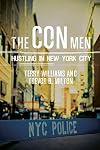
I’m not sure I can review this dispassionately. It’s about the con artists of New York City. It explores the machinations of Canal Street, the whispering Senegalese street hawkers, the bootleg DVD sellers and the scammers who can make marks hand over their wallets. It has given me a completely different appreciation of them all, and I don’t know if non New Yorkers will have the same reaction. It gives context and perspective to the characters and lives of those who take advantage of show more the naïve and susceptible. And that includes the supposedly sharp-minded, who think they are better than the con artists. Greed is a weakness the con artists love to take advantage of.
It is not an exposé. There are no chases, courtroom dramas or murders. It is not dramatic. It is rather, an ethnography, in which two academics attempt to be the fly on the wall, in plain sight. They record everything: what the subjects are wearing, their moods and demeanors, how they got there that day, the décor of the room and the area. They take detailed notes, and voice recordings when they can get away with it. They seek permission to be there, to take their notes and to publish their results. It’s a great way to document a society, but it makes for elongated stories that don’t necessarily have a conclusion or a point.
From Times Square scammers to the “Venus Fly Traps” of Canal Street, three card monte hustlers to cocaine dealers, it’s all gathered and presented without (much) judgment. The police get their own chapter, as they con businesses large and small into a little protection money, often in kind, or a fat job to retire to. The NYPD is notorious for selling contraband evidence to criminals, fixing tickets, and claiming bogus disabilities. The final chapter is Wall Street, where the numbers are much bigger, but it all boils down to the same thing. Lobby the government to win its trust and get laws in their favor, milk and bilk the customer (often that same government), and live the Gordon Gekko life, always on the prowl for the next mark. From the street hustler to the Ponzi schemer, it’s all just about the money. Only the scale is different.
The irony is “You wouldn’t want to live in a world where you couldn’t be conned”. It would mean nobody ever trusted anybody, including all business transactions and government agencies. Nothing would work. Conning is a part of our sociology, our psychology and our structure. It will always be with us.
David Wineberg show less
It is not an exposé. There are no chases, courtroom dramas or murders. It is not dramatic. It is rather, an ethnography, in which two academics attempt to be the fly on the wall, in plain sight. They record everything: what the subjects are wearing, their moods and demeanors, how they got there that day, the décor of the room and the area. They take detailed notes, and voice recordings when they can get away with it. They seek permission to be there, to take their notes and to publish their results. It’s a great way to document a society, but it makes for elongated stories that don’t necessarily have a conclusion or a point.
From Times Square scammers to the “Venus Fly Traps” of Canal Street, three card monte hustlers to cocaine dealers, it’s all gathered and presented without (much) judgment. The police get their own chapter, as they con businesses large and small into a little protection money, often in kind, or a fat job to retire to. The NYPD is notorious for selling contraband evidence to criminals, fixing tickets, and claiming bogus disabilities. The final chapter is Wall Street, where the numbers are much bigger, but it all boils down to the same thing. Lobby the government to win its trust and get laws in their favor, milk and bilk the customer (often that same government), and live the Gordon Gekko life, always on the prowl for the next mark. From the street hustler to the Ponzi schemer, it’s all just about the money. Only the scale is different.
The irony is “You wouldn’t want to live in a world where you couldn’t be conned”. It would mean nobody ever trusted anybody, including all business transactions and government agencies. Nothing would work. Conning is a part of our sociology, our psychology and our structure. It will always be with us.
David Wineberg show less
I received this book from NetGalley in return for a fair review. That being said, I could not finish the book. I tried, repeatedly. I picked it up half a dozen times, only to read a bit, shake my head in disbelief, and toss it aside again.
Reportedly to be about the art of the con, as practiced by NYC hustlers, I found it to be a rather disjointed, hard to follow story. The author does discuss many of the con games being practiced in NYC (dice, fake merchandise, the "Nigerian Prince" scam, show more etc). And how con men identify their victims, where they practice their "art", and how they interact with each other. That was informative, if not earthshaking.
The problem was the great stock the author placed in his main subject, Alibi Jones. Jones is a low level street hustler, who manages to enthrall the author with all manner of slick stories. Poor Alibi, turned down for a Federal job because of his criminal record. Now he must make society pay for their wrong. Poor Alibi, cannot get an honest job, because he has warrants out for his arrest, and cannot risk applying or the police might find him. (Newsflash, Alibi, stand up like a man, pay your debt to society and start over at the back of the line like everyone else does!)
The author even finds himself making excuses for dear Alibi. "He is not the kind of man who hated others or carried out acts of violence (at least not physical violence). This is true of most con artists I knew. None was inclined to violence, and I tend to believe Alibi is typical in this regard." Give me a break! He has the nerve to say this when just a few pages before, he tells about Alibi's rules for pimping. NO, running prostitutes is not violence committed on women! Stealing from other people is not a form of violence! (Goodness, this guy really got sucked in deep!)
Honestly, the author reminds me of the archetypical spoiled rich girl who throws her lot in with the boy "from the wrong side of the tracks", either because she a) finds it exciting, b) wants to shock people, or c) thinks she can "save" him. The author takes Jone's stories at face value, often admitting that he sometimes does not understand what Jone's is saying in his stream of consciousness ramblings (but hey, it fills the pages of a book so, I'll let him talk).
Perhaps the biggest con of all was performed by Jone's onto the author. In exchange for spinning some yarns, Jone's got his ego stroked, and received validation from the author on how clever he was. After almost thirty years spent working in corrections, I've ran into thousands of Alibi Jones. Given half a chance, they would all tell you what masterful criminals they were, and how it wasn't their fault, society did them wrong. Given an opportunity, they love to talk. The problem was that most of it was BS. The author needed to develop his own BS filter, then maybe the book would have been better.
I really cannot recommend this book. show less
Reportedly to be about the art of the con, as practiced by NYC hustlers, I found it to be a rather disjointed, hard to follow story. The author does discuss many of the con games being practiced in NYC (dice, fake merchandise, the "Nigerian Prince" scam, show more etc). And how con men identify their victims, where they practice their "art", and how they interact with each other. That was informative, if not earthshaking.
The problem was the great stock the author placed in his main subject, Alibi Jones. Jones is a low level street hustler, who manages to enthrall the author with all manner of slick stories. Poor Alibi, turned down for a Federal job because of his criminal record. Now he must make society pay for their wrong. Poor Alibi, cannot get an honest job, because he has warrants out for his arrest, and cannot risk applying or the police might find him. (Newsflash, Alibi, stand up like a man, pay your debt to society and start over at the back of the line like everyone else does!)
The author even finds himself making excuses for dear Alibi. "He is not the kind of man who hated others or carried out acts of violence (at least not physical violence). This is true of most con artists I knew. None was inclined to violence, and I tend to believe Alibi is typical in this regard." Give me a break! He has the nerve to say this when just a few pages before, he tells about Alibi's rules for pimping. NO, running prostitutes is not violence committed on women! Stealing from other people is not a form of violence! (Goodness, this guy really got sucked in deep!)
Honestly, the author reminds me of the archetypical spoiled rich girl who throws her lot in with the boy "from the wrong side of the tracks", either because she a) finds it exciting, b) wants to shock people, or c) thinks she can "save" him. The author takes Jone's stories at face value, often admitting that he sometimes does not understand what Jone's is saying in his stream of consciousness ramblings (but hey, it fills the pages of a book so, I'll let him talk).
Perhaps the biggest con of all was performed by Jone's onto the author. In exchange for spinning some yarns, Jone's got his ego stroked, and received validation from the author on how clever he was. After almost thirty years spent working in corrections, I've ran into thousands of Alibi Jones. Given half a chance, they would all tell you what masterful criminals they were, and how it wasn't their fault, society did them wrong. Given an opportunity, they love to talk. The problem was that most of it was BS. The author needed to develop his own BS filter, then maybe the book would have been better.
I really cannot recommend this book. show less
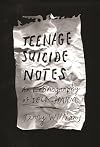
In Teenage Suicide Notes Williams elucidates a subject many prefer to ignore, to pretend it doesn't exist. But exist it does, and it's growing worse. And what is that subject?
Teenage suicide.
Williams makes an ethnographic study of several teens in New York who either committed suicide, or went through parasuicide rituals. Many of these teens were thankfully either able to work through the underlying issues or were well on the way to doing so. Two weren't so blessed. For them, the only way show more out was that final step. This book contains only a handful of cases, yet it encompasses the truth of a wide swath of our communities.
This ethnographic study put paid to the notion that a two-parent household was ideal. Even two-parent homes can be full of dysfunction, with faulty beliefs and behaviours passing from generation to generation, at least until someone along the line becomes self-aware enough to break the cycle. The biggest issue was these kids being the odd one out in the family, and trying to conform to expectations. Like a square peg trying to fit in a round hole.
This book really struck a chord with me. I was the 'black sheep’ of my family, so different from everyone else. I had suicidal thoughts as a young adult and teen. I didn't fit in at school either, being an extreme introvert. I was more at home in books than with people.
I wrote about suicide, like the kids within these pages, but never made a serious attempt. I'm forever grateful to my paternal grandmother, who always accepted me as is, even when my faith diverted from my family's. I became deeply spiritual, and philosophical, a far cry from the majority of my family. They still cannot understand me, but we’ve come to accord, and my relationships are much improved.
I still have unhealthy inculcated beliefs, those multi-generational influences passed down from parent to child. This has left me with a deep distrust of males, among other things. I've spent decades working through these limiting beliefs. Perspective changes everything.
I find it fascinating, the notion of suicide and suicide attempts as a rite of passage in America, in a culture that has no formal rites of passage. Williams notes that teens today seem to be finding their way back to the rites of passage to adulthood practised by older societies, where said rites involved undergoing risks in order to become adults. What our ancestors did in a controlled, purposeful way, with the support of the adult community, today's teens are doing themselves, albeit uncontrolled and unsupported. Perhaps society as a whole needs to heed the wisdom of our ancestors.
This is a book I would recommend everyone read. This is such an important topic, and one many avoid.
***Many thanks to Netgalley and Columbia University Press for providing an egalley in exchange for a fair and honest review. show less
Teenage suicide.
Williams makes an ethnographic study of several teens in New York who either committed suicide, or went through parasuicide rituals. Many of these teens were thankfully either able to work through the underlying issues or were well on the way to doing so. Two weren't so blessed. For them, the only way show more out was that final step. This book contains only a handful of cases, yet it encompasses the truth of a wide swath of our communities.
This ethnographic study put paid to the notion that a two-parent household was ideal. Even two-parent homes can be full of dysfunction, with faulty beliefs and behaviours passing from generation to generation, at least until someone along the line becomes self-aware enough to break the cycle. The biggest issue was these kids being the odd one out in the family, and trying to conform to expectations. Like a square peg trying to fit in a round hole.
This book really struck a chord with me. I was the 'black sheep’ of my family, so different from everyone else. I had suicidal thoughts as a young adult and teen. I didn't fit in at school either, being an extreme introvert. I was more at home in books than with people.
I wrote about suicide, like the kids within these pages, but never made a serious attempt. I'm forever grateful to my paternal grandmother, who always accepted me as is, even when my faith diverted from my family's. I became deeply spiritual, and philosophical, a far cry from the majority of my family. They still cannot understand me, but we’ve come to accord, and my relationships are much improved.
I still have unhealthy inculcated beliefs, those multi-generational influences passed down from parent to child. This has left me with a deep distrust of males, among other things. I've spent decades working through these limiting beliefs. Perspective changes everything.
I find it fascinating, the notion of suicide and suicide attempts as a rite of passage in America, in a culture that has no formal rites of passage. Williams notes that teens today seem to be finding their way back to the rites of passage to adulthood practised by older societies, where said rites involved undergoing risks in order to become adults. What our ancestors did in a controlled, purposeful way, with the support of the adult community, today's teens are doing themselves, albeit uncontrolled and unsupported. Perhaps society as a whole needs to heed the wisdom of our ancestors.
This is a book I would recommend everyone read. This is such an important topic, and one many avoid.
***Many thanks to Netgalley and Columbia University Press for providing an egalley in exchange for a fair and honest review. show less
Free review copy. Reading a work of sociology like this one makes very clear why Alice Goffman and Sudhir Venkatesh were able to find wider platforms for their own work on deviance (despite ethical disputes about their research). The best work in this area draws broader lessons from individual experiences and puts them in an intelligible framework. This book tries, but doesn’t integrate its theory well with its anecdotes, and largely lets its interviewees ramble on in a way that show more illuminates how hard it was to get coherent stories from them but doesn’t tell much else. Being criminalized for being black is, understandably, a big part of the subjects’ self-narrative; if you can be arrested for being black, they reason, why not be a criminal? And once they’re convinced felons, that has so many knock on effects on employment and ability to rent that they’re stuck. “So what am I supposed to do, starve? No, I ain’t gonna starve. I’m gonna make me some money the best way I know how.” The authors acknowledge that the female members of the group they hung out with were never comfortable with them and never opened up: the authors “came to the conclusion that their dislike had something to do with privacy” even though their “intentions were honorable and [] none of them had anything to be concerned about. But the issue of privacy bothered me at the time.” This distance made it a little hard for me to accept, as they reported, that one man they talked to only ever beat one woman, who asked him to do so.
The narrative is otherwise consistent with what I’ve read about cons before—con men believe that you can only con people who are willing to take advantage of other people; con men see most people in power as successful grifters. However, the authors cautioned about that disrespect for con victims: “many victims go along with the con not only because of larceny but because they are overwhelmed, confused, and/or may be afraid of what happens if they do not comply with the con.” Petty crime like selling counterfeits or peddling without a license helps smooth city life by making products easily and cheaply available; if the laws were all enforced to the hilt, almost all of them would be eliminated. Because hustlers like the people who sell water on hot days at intersections aren’t working legally, they can only enforce control over their spaces through the willingness to become violent, and no formal property rights are possible. The authors express some sympathy for young people who jump from job to job, formal and informal: these are people who’ve been “left to invent miraculously their own careers.” In a world where college dropouts make multimillion-dollar apps and rappers control fashion lines, they suggest, many young people just expect success to happen to them. What is their alternative, in a society that responded to youth unemployment not with jobs but by criminalizing poor youth of color?
Probably the most interesting chapter was about a woman who helped run an illegal lottery. I was sympathetic to the idea that the state’s lottery monopoly was no better; people could feel like they were winning, even small amounts, in the illegal lottery. (The design of the bets reminded me of Natasha Dow Schüll’s Addiction by Design, about machine gambling in Las Vegas: lots of ways to win small amounts, with complicated structures, that lure people to keep betting with small rewards hiding large overall losses.) There was also a chapter about a renter who was a landlord’s nightmare, hustling by paying only a month’s rent and then living rent-free for years as she worked the system to prevent eviction, cleverly playing off different regulators and rules against each other. Finally, the authors conclude by suggesting that the police and Wall Street firms are cons of their own, but they lack much access to the details of those. Tidbits: most cigarettes consumed in New York have been smuggled in from other states; also, a sense of place—“terroir”—is important in running cons, so that the criminals can make every incident seem unplanned but also get out quickly if necessary. show less
The narrative is otherwise consistent with what I’ve read about cons before—con men believe that you can only con people who are willing to take advantage of other people; con men see most people in power as successful grifters. However, the authors cautioned about that disrespect for con victims: “many victims go along with the con not only because of larceny but because they are overwhelmed, confused, and/or may be afraid of what happens if they do not comply with the con.” Petty crime like selling counterfeits or peddling without a license helps smooth city life by making products easily and cheaply available; if the laws were all enforced to the hilt, almost all of them would be eliminated. Because hustlers like the people who sell water on hot days at intersections aren’t working legally, they can only enforce control over their spaces through the willingness to become violent, and no formal property rights are possible. The authors express some sympathy for young people who jump from job to job, formal and informal: these are people who’ve been “left to invent miraculously their own careers.” In a world where college dropouts make multimillion-dollar apps and rappers control fashion lines, they suggest, many young people just expect success to happen to them. What is their alternative, in a society that responded to youth unemployment not with jobs but by criminalizing poor youth of color?
Probably the most interesting chapter was about a woman who helped run an illegal lottery. I was sympathetic to the idea that the state’s lottery monopoly was no better; people could feel like they were winning, even small amounts, in the illegal lottery. (The design of the bets reminded me of Natasha Dow Schüll’s Addiction by Design, about machine gambling in Las Vegas: lots of ways to win small amounts, with complicated structures, that lure people to keep betting with small rewards hiding large overall losses.) There was also a chapter about a renter who was a landlord’s nightmare, hustling by paying only a month’s rent and then living rent-free for years as she worked the system to prevent eviction, cleverly playing off different regulators and rules against each other. Finally, the authors conclude by suggesting that the police and Wall Street firms are cons of their own, but they lack much access to the details of those. Tidbits: most cigarettes consumed in New York have been smuggled in from other states; also, a sense of place—“terroir”—is important in running cons, so that the criminals can make every incident seem unplanned but also get out quickly if necessary. show less
Statistics
- Works
- 5
- Members
- 90
- Popularity
- #205,794
- Rating
- 3.4
- Reviews
- 10
- ISBNs
- 44