
Tiera Fletcher
Author of Wonder Women of Science: How 12 Geniuses Are Rocking Science, Technology, and the World
Works by Tiera Fletcher
Wonder Women of Science: How 12 Geniuses Are Rocking Science, Technology, and the World (2021) 52 copies, 19 reviews
Tagged
Common Knowledge
There is no Common Knowledge data for this author yet. You can help.
Members
Reviews
Wonder Women of Science: How 12 Geniuses Are Rocking Science, Technology, and the World by Tiera Fletcher
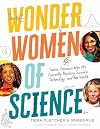
WONDER WOMEN OF SCIENCE by Tiera Fletcher and Ginger Rue presents an inspiring set of profiles of twelve women working in STEM (Science, Technology, Engineering, and Mathematics) fields. The profiles are diverse, encompassing women from different backgrounds and of different ages; the written presentations are supported by Sally Wern Comport’s appealing illustrations, and the pages are bright and comfortably readable. It’s a tight, well-paced package intended for readers age nine to show more twelve.
Representing fields from video game design to oncofertility (a new medical discipline), the Wonder Women share details about their childhoods, educations, career paths, and accomplishments. It’s a fabulous celebration of individual ability and the power of research, collaboration, and the scientific method. The profiles also contain reflections on what the Wonder Women would tell their younger selves and their advice for today’s girls looking to work in STEM fields. Every profile is supported by a brief fact-filled sidebar — such as an introduction to tapirs, an explanation of why astronauts need space suits, and an overview of how the human immune system works — meant to pique the reader’s curiosity. These sidebars are very effective! The back matter also directs readers who want to pursue these fields to quick actions they can take to apply and extend their STEM-based interests.
What I loved about this book is its no-nonsense approach. It acknowledges stereotypes about girls and science and then encourages readers to think beyond the stereotypes. All the profiles underscore that there is no single right way to be a smart girl, to be girl who loves STEM fields, or even to get into STEM work. At several points STEM is expanded to STEAM or STEAMD (adding Arts and Design), demonstrating the importance of the humanities and applied arts to a field that is too often characterized as cold, mechanical, impersonal — and dominantly male.
WONDER WOMEN OF SCIENCE is a great example of science communication for preteen audiences. The writing voice is upbeat and playful without overdoing current slang, so the book will stay fresh for several years. The featured women provide a cross-cultural range of visibility that should allow more girls to see their own potential in these women’s achievements — and open the door for readers to discover even more women in similar roles. This book is a “must” purchase for any library or classroom that aims to help girls — especially girls from historically under-represented backgrounds — get excited about STEM. show less
Representing fields from video game design to oncofertility (a new medical discipline), the Wonder Women share details about their childhoods, educations, career paths, and accomplishments. It’s a fabulous celebration of individual ability and the power of research, collaboration, and the scientific method. The profiles also contain reflections on what the Wonder Women would tell their younger selves and their advice for today’s girls looking to work in STEM fields. Every profile is supported by a brief fact-filled sidebar — such as an introduction to tapirs, an explanation of why astronauts need space suits, and an overview of how the human immune system works — meant to pique the reader’s curiosity. These sidebars are very effective! The back matter also directs readers who want to pursue these fields to quick actions they can take to apply and extend their STEM-based interests.
What I loved about this book is its no-nonsense approach. It acknowledges stereotypes about girls and science and then encourages readers to think beyond the stereotypes. All the profiles underscore that there is no single right way to be a smart girl, to be girl who loves STEM fields, or even to get into STEM work. At several points STEM is expanded to STEAM or STEAMD (adding Arts and Design), demonstrating the importance of the humanities and applied arts to a field that is too often characterized as cold, mechanical, impersonal — and dominantly male.
WONDER WOMEN OF SCIENCE is a great example of science communication for preteen audiences. The writing voice is upbeat and playful without overdoing current slang, so the book will stay fresh for several years. The featured women provide a cross-cultural range of visibility that should allow more girls to see their own potential in these women’s achievements — and open the door for readers to discover even more women in similar roles. This book is a “must” purchase for any library or classroom that aims to help girls — especially girls from historically under-represented backgrounds — get excited about STEM. show less
 This review was written for LibraryThing Early Reviewers.
Wonder Women of Science: How 12 Geniuses Are Rocking Science, Technology, and the World by Tiera Fletcher
One current issue in education is on the need to get girls interested in science, technology, engineering, and math (STEM). Unfortunately, numerous challenges abound, including archaic and incorrect views regarding women’s abilities to be successful in STEM. These views have been exacerbated by the fact that women are historically underrepresented in STEM fields. For instance, in 2019, women made up 27% of STEM workers in the United States even though they make up nearly half of the US show more workforce (https://www.census.gov/library/stories/2021/01/women-making-gains-in-stem-occupations-but-still-underrepresented.html). Given this gap, books like "Wonder Women of Science: How 12 Geniuses Are Rocking Science, Technology, and the World" by Tiera Fletcher and Ginger Rue with illustrations by Sally Wern Comport are much needed.
As the title suggests, the book profiles women who are involved in STEM. Each profile follows a similar format, with introductory information regarding the person’s field of study and contributions, a summary of their childhood and educational experiences, a “Eureka Moment,” a note to themselves, and a note to the reader. Throughout the profile are pictures that make the individual seem more real and approachable to the reader. Interspersed throughout the book are sections explaining a scientific concept, like qualitative and quantitative data, that are related to the scientists’ fields of study. The book also contains resources such as a glossary, questions, and suggested additional reading.
This book provides an informative and approachable look at women who are involved in the STEM fields, thus showing young readers and adults that women not only belong in STEM but are also making significant contributions to the field. As an MIT graduate and an aerospace engineer working with NASA, co-author Tiera Fletcher is especially well-suited to this topic, since she knows the challenges of working in STEM and being a woman in a male-dominated field and also recognizes the importance of championing the work done by women in science. I particularly appreciated how the focus is on female scientists who are currently active, since other books about women in science/STEM often tend to focus on women in history. Furthermore, the book showcases scientists with different interests and of different backgrounds. All in all, this book would be a fantastic supplement to use in STEM class or to have in a school or classroom library. show less
As the title suggests, the book profiles women who are involved in STEM. Each profile follows a similar format, with introductory information regarding the person’s field of study and contributions, a summary of their childhood and educational experiences, a “Eureka Moment,” a note to themselves, and a note to the reader. Throughout the profile are pictures that make the individual seem more real and approachable to the reader. Interspersed throughout the book are sections explaining a scientific concept, like qualitative and quantitative data, that are related to the scientists’ fields of study. The book also contains resources such as a glossary, questions, and suggested additional reading.
This book provides an informative and approachable look at women who are involved in the STEM fields, thus showing young readers and adults that women not only belong in STEM but are also making significant contributions to the field. As an MIT graduate and an aerospace engineer working with NASA, co-author Tiera Fletcher is especially well-suited to this topic, since she knows the challenges of working in STEM and being a woman in a male-dominated field and also recognizes the importance of championing the work done by women in science. I particularly appreciated how the focus is on female scientists who are currently active, since other books about women in science/STEM often tend to focus on women in history. Furthermore, the book showcases scientists with different interests and of different backgrounds. All in all, this book would be a fantastic supplement to use in STEM class or to have in a school or classroom library. show less
This review was written for LibraryThing Early Reviewers.Wonder Women of Science: How 12 Geniuses Are Rocking Science, Technology, and the World by Tiera Fletcher
It's always good to expand your knowledge of women in science beyond Marie Curie. Even other biographies I've read tend to focus on historical women in science but this book is thoroughly modern. Twelve women from various specialties are highlighted. Each gets a little background on how they ended up in their STEM field, and a description of their contribution and their often unique field. Each also offers some advice and describes their motto in life. While mostly US-centric, there are show more women from some other countries profiled.
Studying the layers of dirt in the Earth to make predictions for future climate based on past, designing new space suits, studying tapirs and their role in ecosystems, keeping water clean in the ISS - each new topic and field of study was more interesting than the last. There is some information on the topic presented for each biography and could be a starting point for some young person to start investigating.
All of this is written for a late elementary/junior high school aged reader. So while I liked the information, the writing was definitely not for adults. Which is fine - I am not the target audience, and I will be pleased to add this book to my classroom library. show less
Studying the layers of dirt in the Earth to make predictions for future climate based on past, designing new space suits, studying tapirs and their role in ecosystems, keeping water clean in the ISS - each new topic and field of study was more interesting than the last. There is some information on the topic presented for each biography and could be a starting point for some young person to start investigating.
All of this is written for a late elementary/junior high school aged reader. So while I liked the information, the writing was definitely not for adults. Which is fine - I am not the target audience, and I will be pleased to add this book to my classroom library. show less
This review was written for LibraryThing Early Reviewers.Wonder Women of Science: How 12 Geniuses Are Rocking Science, Technology, and the World by Tiera Fletcher
I enjoyed reading this collection of twelve mini-biographies of female scientists currently working in a wide range of fields. Several were particularly memorable. The veterinary neurosurgeon who had time to earn a Masters degree while repeatedly applying to veterinary school -- and upon graduation, failed her boards twice because she aced the essay questions but couldn't handle the multiple choice section (probably a sign of outside-the-box creativity or knowing too much about exceptional show more situations) -- was an object lesson in perseverance. The wildlife researcher who studies tapirs was fascinating because... tapirs. The NASA microbiologist had a lot to teach us about microfilms (so that's why the tubes in the whirlpool tub are gross) and space physiology (the mechanism for bone loss astronauts experience in zero gravity is increased calcium in the urine, which really messes up the plumbing)! The spacesuit designer was just very, very cool.
The author could have been included in the book on her own merits, but chose to put her first-person biography in the introduction. The fact that it was the preface was easy to miss, since the format was exactly like every other biography in the book, and the first couple of pages left me wondering why is this first person, this is weird. Then I reread the first page carefully and above the "FACT FILE" that starts each biography, above the name, at the top of the page in small print, "preface". I think if you want to write a preface, perhaps straight-out introducing some of what the book will contain, rather than trying to incorporate it in an autobiography, would be less confusing.
The book contains a glossary, an excellent index, and a list of books for further reading. What my ARC (Advance Reading Copy) does not contain is a definition of the acronym STEM, which it constantly uses (almost 20 references in the index; no entry in the glossary). The first time of use is page 5 in that autobiographical preface. It should have been defined at that point. I thought, maybe every preteen girl in 2021 knows this, so I asked my 11 year old granddaughter. "I've heard the term, Mrs Blair told us about it, but I forgot. Something about science?" Not bad, but they really needed to define it. I think she'll enjoy reading this book, but before giving it to her I wrote on the title page:
STEM
Science
Technology
Engineering
Mathematics
I better have got that right. If not, they really needed to put it in the glossary! With any luck, the editors will pick up the omission in time to fix it in the first edition. show less
The author could have been included in the book on her own merits, but chose to put her first-person biography in the introduction. The fact that it was the preface was easy to miss, since the format was exactly like every other biography in the book, and the first couple of pages left me wondering why is this first person, this is weird. Then I reread the first page carefully and above the "FACT FILE" that starts each biography, above the name, at the top of the page in small print, "preface". I think if you want to write a preface, perhaps straight-out introducing some of what the book will contain, rather than trying to incorporate it in an autobiography, would be less confusing.
The book contains a glossary, an excellent index, and a list of books for further reading. What my ARC (Advance Reading Copy) does not contain is a definition of the acronym STEM, which it constantly uses (almost 20 references in the index; no entry in the glossary). The first time of use is page 5 in that autobiographical preface. It should have been defined at that point. I thought, maybe every preteen girl in 2021 knows this, so I asked my 11 year old granddaughter. "I've heard the term, Mrs Blair told us about it, but I forgot. Something about science?" Not bad, but they really needed to define it. I think she'll enjoy reading this book, but before giving it to her I wrote on the title page:
STEM
Science
Technology
Engineering
Mathematics
I better have got that right. If not, they really needed to put it in the glossary! With any luck, the editors will pick up the omission in time to fix it in the first edition. show less
This review was written for LibraryThing Early Reviewers.Awards


Statistics
- Works
- 1
- Members
- 52
- Popularity
- #307,429
- Rating
- 3.9
- Reviews
- 19
- ISBNs
- 3
