
Marko Hautala
Author of The Black Tongue
About the Author
Image credit: © Veikko Somerpuro
Works by Marko Hautala
Tilauspukki 2 copies
Pale Toes (short story) 1 copy
Associated Works
It Came From the North: An Anthology of Finnish Speculative Fiction (2013) — Contributor — 80 copies, 3 reviews
Tagged
Common Knowledge
- Canonical name
- Hautala, Marko
- Birthdate
- 1973-06-05
- Gender
- male
- Education
- University of Vaasa (MA|English)
- Nationality
- Finland
- Birthplace
- Kauhava, Finland
- Places of residence
- Vaasa, Finland
- Map Location
- Finland
Members
Reviews
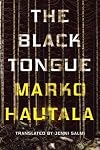
Somewhere between horror, folk lore and social commentary, set deep in the quiet back waters of northern Finland, THE BLACK TONGUE is a book that will stay with you for a lot of reasons.
Not being much of a fan of horror stories, it's hard to explain why this book appealed in the first place. Perhaps it is that concept of Scandinavian folk lore, to this reader's mind a kind of ramped up Grimms' Fairy Tales. Perhaps it was simply the idea that there is always an unexplained lurking evil - the show more boogie man or the bunyip - that's designed to keep kids in line and give them a bit of a good old fashioned scare into the bargain. So who or what was the legend of Granny Hatchet all about was extremely intriguing.
As Maisa Riipinen and Samuel Autio return to the place of their childhood, their shared pasts are revealed. Coming from the same place - both these adults have a different background - Samuel is the child of one of the refugee families who moved into the area, Maisa is from more local stock. When they were children together, the legend of Granny Hatchet was well known, delivered as a part of a ritual gathering, frightening yet creating a childish bond. Until one young girl leaves the secret circle and Samuel and Maisa are left with their own secret kept until now. Will their coming together again in the place of their childhood mean that the secret is finally revealed?
The narrative timeline of THE BLACK TONGUE switches between the childhood period - and the disappearance of the young girl - and the current day. Switching backwards and forwards abruptly at times there's a sense of unease and constant disruption as a result. That is echoed somehow in the reasons for these two returning after all these years. Maisa for the purposes of research has a clarity about her that matches the childhood observations. Samuel is back to arrange his father's funeral and his sad and reflective rummage around in his past and present seems to match the current day experience much better. It's always clear that there has been a secret past, but how that will be revealed - or if it will be - and what an increasing number of disconnected characters will have to do with it all, becomes complicated and oddly chaotic.
What THE BLACK TONGUE does deliver in spades is a wonderfully atmospheric sense of place and time. Dark, dank and moody, the setting for this story comes across as absolutely perfect horror territory. When staying with the main themes there's an overwhelming feeling of knowing the two main characters, of understanding their struggles and their imperfections, despite the fact that the legend of Granny Hatchet does seem to disappear from view surprisingly quickly. Where it seems to fall down, is when it wanders off into disconnected, almost surreal territory for no apparent reason.
Which could be the part that stays with you (personally I'm still mildly baffled by proceedings on a small island nobody is supposed to visit) or it could be the age-old problem of kids struggling to make sense of odd things that happen to them, or the life-long affect of guilt. Regardless of what it is that stays with you, nobody could ever accuse THE BLACK TONGUE of being expected reading.
https://www.austcrimefiction.org/review/review-black-tongue-marko-hautala show less
Not being much of a fan of horror stories, it's hard to explain why this book appealed in the first place. Perhaps it is that concept of Scandinavian folk lore, to this reader's mind a kind of ramped up Grimms' Fairy Tales. Perhaps it was simply the idea that there is always an unexplained lurking evil - the show more boogie man or the bunyip - that's designed to keep kids in line and give them a bit of a good old fashioned scare into the bargain. So who or what was the legend of Granny Hatchet all about was extremely intriguing.
As Maisa Riipinen and Samuel Autio return to the place of their childhood, their shared pasts are revealed. Coming from the same place - both these adults have a different background - Samuel is the child of one of the refugee families who moved into the area, Maisa is from more local stock. When they were children together, the legend of Granny Hatchet was well known, delivered as a part of a ritual gathering, frightening yet creating a childish bond. Until one young girl leaves the secret circle and Samuel and Maisa are left with their own secret kept until now. Will their coming together again in the place of their childhood mean that the secret is finally revealed?
The narrative timeline of THE BLACK TONGUE switches between the childhood period - and the disappearance of the young girl - and the current day. Switching backwards and forwards abruptly at times there's a sense of unease and constant disruption as a result. That is echoed somehow in the reasons for these two returning after all these years. Maisa for the purposes of research has a clarity about her that matches the childhood observations. Samuel is back to arrange his father's funeral and his sad and reflective rummage around in his past and present seems to match the current day experience much better. It's always clear that there has been a secret past, but how that will be revealed - or if it will be - and what an increasing number of disconnected characters will have to do with it all, becomes complicated and oddly chaotic.
What THE BLACK TONGUE does deliver in spades is a wonderfully atmospheric sense of place and time. Dark, dank and moody, the setting for this story comes across as absolutely perfect horror territory. When staying with the main themes there's an overwhelming feeling of knowing the two main characters, of understanding their struggles and their imperfections, despite the fact that the legend of Granny Hatchet does seem to disappear from view surprisingly quickly. Where it seems to fall down, is when it wanders off into disconnected, almost surreal territory for no apparent reason.
Which could be the part that stays with you (personally I'm still mildly baffled by proceedings on a small island nobody is supposed to visit) or it could be the age-old problem of kids struggling to make sense of odd things that happen to them, or the life-long affect of guilt. Regardless of what it is that stays with you, nobody could ever accuse THE BLACK TONGUE of being expected reading.
https://www.austcrimefiction.org/review/review-black-tongue-marko-hautala show less
Hautala has written some fantastically creepy scenes here, along with some tantalizing connections, terrifying atmosphere, and tremendously horrific images that themselves deserve notice.
And yet...I'm honestly not sure how I feel about it. There's no doubt that the beginning and ending were stronger and carried more inertia than the middle of the book. And while I can also see while he chose to structure it as he did, and pull things together as he did, I can't help feeling that the larger show more impression, while creepy, is also full of chaos. And I'm not sure how much of that chaos is productive vs. accidental.
I'd probably have to read the book again to get a real feel for how well I feel it's been put together, and how much of that chaos serves a purpose, but the truth is that none of the characters are sympathetic enough to come close to demanding the book be offered the time for that second read. And when I add in the fact that so much of the on-the-page sex and violence felt as if it was delivered with an eye toward shock value vs. expanding on the story...well, I'm not even sure I really want to explore more of Hautala's work.
Perhaps I'll have clearer feelings on the book later and be able to revisit this review. Until then, I'm left thinking there's a lot to admire here, but so much chaos that the book is an experience just so much as a narrative which will have any lasting impact for me, or bring me back to the author for more. show less
And yet...I'm honestly not sure how I feel about it. There's no doubt that the beginning and ending were stronger and carried more inertia than the middle of the book. And while I can also see while he chose to structure it as he did, and pull things together as he did, I can't help feeling that the larger show more impression, while creepy, is also full of chaos. And I'm not sure how much of that chaos is productive vs. accidental.
I'd probably have to read the book again to get a real feel for how well I feel it's been put together, and how much of that chaos serves a purpose, but the truth is that none of the characters are sympathetic enough to come close to demanding the book be offered the time for that second read. And when I add in the fact that so much of the on-the-page sex and violence felt as if it was delivered with an eye toward shock value vs. expanding on the story...well, I'm not even sure I really want to explore more of Hautala's work.
Perhaps I'll have clearer feelings on the book later and be able to revisit this review. Until then, I'm left thinking there's a lot to admire here, but so much chaos that the book is an experience just so much as a narrative which will have any lasting impact for me, or bring me back to the author for more. show less
I'm not quite sure how to characterize Marko Hautala's The Black Tongue because I'm still not sure exactly what happened to Samuel, Julia, Maisa, and Sagal, each of whom had disturbing encounters with the residents of the mysterious Bondorff Island. The narrative was at times hard to follow because Hautala moves without warning among three different time periods: (1) 2014, when the adult Maisa is recording the Finnish folktale of Granny Hatchet with the help of immigrant teenager Sagal; (2) show more 2012, when the adult Samuel disappears after returning to his hometown after his father's death; and (3) 1987, when the teenaged Samuel, Julia, and Maisa were neighbors before Maisa moved and Julia vanished. Once I figured out the timeline, however, I was "hooked" on the legend of Granny Hatchet and its real-life underpinnings. (Those who read The Black Tongue will get, and probably groan over, the pun.)
Recommended for fans of blended supernatural/crime fiction with elements of Lovecraft and Fringe.
I received a free copy of The Black Tongue through NetGalley in exchange for an honest review. show less
Recommended for fans of blended supernatural/crime fiction with elements of Lovecraft and Fringe.
I received a free copy of The Black Tongue through NetGalley in exchange for an honest review. show less
Received via NetGalley and AmazonCrossing in exchange for an completely unbiased review.
Also posted on Silk & Serif
The Black Tongue is a beautifully written novel translated to English and originally written Swedish. The novel, keeping with the Swedish writing tradition, is a detailed and original piece with a similar narration style as Steig Larsson who wrote The Girl With The Dragon Tattoo.
A chilling psychological horror with plenty of darkness and disturbing situations.
A killer lives show more among the residents of Suvikylä in northern Finland. She kills with a hatchet, buries their hearts in a potato field and eats them after they’ve rotted black. After generations of tales and missing children Maisa Riipinen has returned home to study Granny Hatchet for her dissertation on urban folklore that causes her to fall down a well of darkness and memories. Samuel Autio has also returned home to arrange his father's funeral while uncovering strange and horrific memories of his childhood. Two lives, one story, one legend so ancient and terrifying it could destroy them both.
Initially I rated this novel two stars, but once I had time to reflect I decided it was worth three stars. The Black Tongue is one of those novels that sticks with you and requires a bit of after thought to be properly appreciated. I didn't understand the ending until I really thought over what had actually transpired and followed the clues Hautala carefully laid out. Hautala is clearly a master of creating a tale with plenty of nuance to develop a mysterious psychological horror novel. I didn't quite understand what happened with Maisa and Sagal.
The various narratives of the characters seemed completely unrelated and random until the very end which made for an initially slow read. Once you learned enough about each character and how their stories interlinked it became easy to become immersed in the tale.
The Black Tongue was much darker than I expected, traveling down paths that I hadn't anticipated.
This novel will appeal to readers who enjoy horror novels, psychological thrillers, dark urban legends and Swedish literature. show less
Also posted on Silk & Serif
The Black Tongue is a beautifully written novel translated to English and originally written Swedish. The novel, keeping with the Swedish writing tradition, is a detailed and original piece with a similar narration style as Steig Larsson who wrote The Girl With The Dragon Tattoo.
A chilling psychological horror with plenty of darkness and disturbing situations.
A killer lives show more among the residents of Suvikylä in northern Finland. She kills with a hatchet, buries their hearts in a potato field and eats them after they’ve rotted black. After generations of tales and missing children Maisa Riipinen has returned home to study Granny Hatchet for her dissertation on urban folklore that causes her to fall down a well of darkness and memories. Samuel Autio has also returned home to arrange his father's funeral while uncovering strange and horrific memories of his childhood. Two lives, one story, one legend so ancient and terrifying it could destroy them both.
Initially I rated this novel two stars, but once I had time to reflect I decided it was worth three stars. The Black Tongue is one of those novels that sticks with you and requires a bit of after thought to be properly appreciated. I didn't understand the ending until I really thought over what had actually transpired and followed the clues Hautala carefully laid out. Hautala is clearly a master of creating a tale with plenty of nuance to develop a mysterious psychological horror novel. I didn't quite understand what happened with Maisa and Sagal.
“Otherwise she’ll appear one day when you’re least expecting her,” he continued. “And she’ll wait for you to turn your back on her. Then she’ll whack you with her hatchet between your shoulder blades so hard that the air is knocked out of your lungs and your legs go numb. And she’ll roll you over. She’ll stick her black tongue out at you . . .”
The various narratives of the characters seemed completely unrelated and random until the very end which made for an initially slow read. Once you learned enough about each character and how their stories interlinked it became easy to become immersed in the tale.
The Black Tongue was much darker than I expected, traveling down paths that I hadn't anticipated.
This novel will appeal to readers who enjoy horror novels, psychological thrillers, dark urban legends and Swedish literature. show less
Lists
Awards


You May Also Like


Associated Authors
Statistics
- Works
- 19
- Also by
- 3
- Members
- 290
- Popularity
- #80,655
- Rating
- 3.4
- Reviews
- 7
- ISBNs
- 43
- Languages
- 5