
Jack Mitchell (8)
Author of Wisconsin on the Air: 100 Years of Public Broadcasting in the State That Invented It
For other authors named Jack Mitchell, see the disambiguation page.
Works by Jack Mitchell
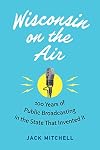
Wisconsin on the Air: 100 Years of Public Broadcasting in the State That Invented It (2016) 26 copies, 11 reviews
Tagged
Common Knowledge
There is no Common Knowledge data for this author yet. You can help.
Members
Reviews
Wisconsin on the Air: 100 Years of Public Broadcasting in the State That Invented It by Jack Mitchell
Wisconsin justly prides itself on being an incubator that has spawned several progressive institutions of the Twentieth Century. “Wisconsin on the Air” is the story of Wisconsin’s pioneering role in Public Broadcasting.
I will tell you first what I like best about this work. I have had the “Wisconsin Idea” explained to me in theory as that the limits of the University of Wisconsin reach to the boundaries of the state. Nowhere have I seen this illustrated in action as well as in this show more tome.
Public Broadcasting originated in the physics department of the University of Wisconsin in early 1917 with 9XM, later WHA, “the oldest station in the nation.” Over the decades programing has modified as service to the people of Wisconsin has required. At times that has meant transmission of UW classes over the radio waves and classes suited for grade and high schools that supplemented the local instruction. Trade classes, music, science, UW sports and entertainment have all had their turns on the dial. Like other public networks Wisconsin’s have wrestled with the conflicting missions of providing what people want to hear and what they should hear. Initiatives to add stations so as to extend coverage and struggles for with private stations for frequencies spurred and inhibited growth of Wisconsin Public Radio. Coverage of news events and public affairs sparked controversies with political figures. Many of its ideas would inspire other state networks and NPR, including long running “All Things Considered”. As technology advanced Wisconsin Public Radio was joined by Wisconsin Public Television. As funding evolved from the Ford Foundation to Corporation for Public Broadcasting interaction between Wisconsin Radio and NPR and national public television would guide the development of each.
Author Jack Mitchell has extensively researched the history of an organization he obviously loves. The narrative switches from third to first person in Chapter 8 when the author became manager of WHA. Mitchell does an excellent job of blending details into a flow that refreshes the interest of a wide scope of readers.
So what readers would enjoy “Wisconsin on the Air”? Certainly someone who grew up with Wisconsin Public Broadcasting will appreciate the backstage insights. Those of us who watched local public television outside of Wisconsin will recognize enough to tickle our memory cells. If you are a fan of NPR pick it up to learn where it all began. Then there are those history fans who want to delve behind the “newsmakers” to the people, the organizations and media that mold the culture. If you find yourself in any of those categories get comfortable and tune into “Wisconsin on the Air.”
I did receive a free copy of this book without an obligation to post a review. show less
I will tell you first what I like best about this work. I have had the “Wisconsin Idea” explained to me in theory as that the limits of the University of Wisconsin reach to the boundaries of the state. Nowhere have I seen this illustrated in action as well as in this show more tome.
Public Broadcasting originated in the physics department of the University of Wisconsin in early 1917 with 9XM, later WHA, “the oldest station in the nation.” Over the decades programing has modified as service to the people of Wisconsin has required. At times that has meant transmission of UW classes over the radio waves and classes suited for grade and high schools that supplemented the local instruction. Trade classes, music, science, UW sports and entertainment have all had their turns on the dial. Like other public networks Wisconsin’s have wrestled with the conflicting missions of providing what people want to hear and what they should hear. Initiatives to add stations so as to extend coverage and struggles for with private stations for frequencies spurred and inhibited growth of Wisconsin Public Radio. Coverage of news events and public affairs sparked controversies with political figures. Many of its ideas would inspire other state networks and NPR, including long running “All Things Considered”. As technology advanced Wisconsin Public Radio was joined by Wisconsin Public Television. As funding evolved from the Ford Foundation to Corporation for Public Broadcasting interaction between Wisconsin Radio and NPR and national public television would guide the development of each.
Author Jack Mitchell has extensively researched the history of an organization he obviously loves. The narrative switches from third to first person in Chapter 8 when the author became manager of WHA. Mitchell does an excellent job of blending details into a flow that refreshes the interest of a wide scope of readers.
So what readers would enjoy “Wisconsin on the Air”? Certainly someone who grew up with Wisconsin Public Broadcasting will appreciate the backstage insights. Those of us who watched local public television outside of Wisconsin will recognize enough to tickle our memory cells. If you are a fan of NPR pick it up to learn where it all began. Then there are those history fans who want to delve behind the “newsmakers” to the people, the organizations and media that mold the culture. If you find yourself in any of those categories get comfortable and tune into “Wisconsin on the Air.”
I did receive a free copy of this book without an obligation to post a review. show less
Wisconsin on the Air: 100 Years of Public Broadcasting in the State That Invented It by Jack Mitchell
This history of Wisconsin Public Radio was well written and well researched. Synthesizing 100 years into one readable book couldn't have been easy, but Jack Mitchell does a great job of it. Reading about the Wisconsin Idea and the fight to use public radio to empower the masses made me think about how taken for granted the Internet is today. I agree with a previous reviewer that I would have enjoyed more detail into some of the specific programs - the Homemakers' Program especially. I'm a show more very visual learner, so I also would have appreciated a timeline just to keep the dates, names, and acronyms straight, but this was really an excellent history. show less
 This review was written for LibraryThing Early Reviewers.
Wisconsin on the Air: 100 Years of Public Broadcasting in the State That Invented It by Jack Mitchell
REVIEW: WISCONSIN ON THE AIR
100 Years of Public Broadcasting in the State That Invented It
By Jack Mitchell
The subtitle of this well-researched book truly says it all. Accomplished writer and broadcaster Jack Mitchell has written a sober and detailed history of Wisconsin Public Radio set against the backdrop of the social and political history of the state, from LaFollette’s Progressives through WWII, McCarthyism, the turbulence of the 1960’s, to today’s fast-paced world.
The Wisconsin show more Idea – the well-meaning, goodhearted movement to spread education and enlightenment to all, especially farmers, through the University of Wisconsin – was and is the driver of the whole public radio and television development, according to Mitchell. The professors at the university wanted to keep the “elites” from creating a society that they and they alone could benefit from. A slight touch of irony in this is that the earliest promulgator of this idea was Professor McCarthy, who graduated Brown University, thus an Ivy Leaguer himself, despite his Irish immigrant roots. That aside, the fascinating behind-the-scenes peek at the growth of what we all now take for granted will keep readers very interested who enjoy social and political history along with a dash of technological innovation.
The main conflict between “enlightenment” and “entertainment” in the history of public radio was clearly detailed, and it was enjoyable to read about the tug of war between those who wanted the early broadcasts to be mainly sports coverage from the university and those who wanted sober educational discussions and classical music. Educational broadcasting and public broadcasting were two different, competing models, and the intrigue and political give-and-take of the events shaping the growth of public radio and television all over the US, beginning with Wisconsin, is given full treatment.
Mitchell writes clearly and in a very organized, chronological fashion, which, given the depth of the research, was a challenge. One wishes that a bit more humor would have popped out every now and then, because there were many instances where one could see the potential, such as when the new broadcasters emerged sweatily from the makeshift broadcast tent in the early days, vowing they’d never do it again, but Mitchell’s calm, dispassionate style was well-suited to the subject of political conflict involving the growth of public broadcasting. The good people of Wisconsin and the university worked together to bring the Wisconsin Idea to life: “To interpret the true spirit, the life, and the workings of the university, as well as to instruct, stimulate, and enrich the lives of listeners.” We would all wish for this to be true of all our public broadcasting. show less
100 Years of Public Broadcasting in the State That Invented It
By Jack Mitchell
The subtitle of this well-researched book truly says it all. Accomplished writer and broadcaster Jack Mitchell has written a sober and detailed history of Wisconsin Public Radio set against the backdrop of the social and political history of the state, from LaFollette’s Progressives through WWII, McCarthyism, the turbulence of the 1960’s, to today’s fast-paced world.
The Wisconsin show more Idea – the well-meaning, goodhearted movement to spread education and enlightenment to all, especially farmers, through the University of Wisconsin – was and is the driver of the whole public radio and television development, according to Mitchell. The professors at the university wanted to keep the “elites” from creating a society that they and they alone could benefit from. A slight touch of irony in this is that the earliest promulgator of this idea was Professor McCarthy, who graduated Brown University, thus an Ivy Leaguer himself, despite his Irish immigrant roots. That aside, the fascinating behind-the-scenes peek at the growth of what we all now take for granted will keep readers very interested who enjoy social and political history along with a dash of technological innovation.
The main conflict between “enlightenment” and “entertainment” in the history of public radio was clearly detailed, and it was enjoyable to read about the tug of war between those who wanted the early broadcasts to be mainly sports coverage from the university and those who wanted sober educational discussions and classical music. Educational broadcasting and public broadcasting were two different, competing models, and the intrigue and political give-and-take of the events shaping the growth of public radio and television all over the US, beginning with Wisconsin, is given full treatment.
Mitchell writes clearly and in a very organized, chronological fashion, which, given the depth of the research, was a challenge. One wishes that a bit more humor would have popped out every now and then, because there were many instances where one could see the potential, such as when the new broadcasters emerged sweatily from the makeshift broadcast tent in the early days, vowing they’d never do it again, but Mitchell’s calm, dispassionate style was well-suited to the subject of political conflict involving the growth of public broadcasting. The good people of Wisconsin and the university worked together to bring the Wisconsin Idea to life: “To interpret the true spirit, the life, and the workings of the university, as well as to instruct, stimulate, and enrich the lives of listeners.” We would all wish for this to be true of all our public broadcasting. show less
This review was written for LibraryThing Early Reviewers.Wisconsin on the Air: 100 Years of Public Broadcasting in the State That Invented It by Jack Mitchell
Author Jack Mitchell, a distinguished figure in public radio, has, in a linear and well-written manner, earnestly detailed the history of Wisconsin public broadcasting from its earliest conception (carrying out the “Wisconsin Idea” that the University of Wisconsin’s knowledge and resources be made accessible to everyone in the state) through its development and maturation in both the radio and television formats.
The book focuses primarily on the administrative, logistical, funding and show more legislative aspects of public broadcasting, which of course comprises the backbone of its history; however, these aspects can be somewhat dry for the general audience of readers.
In my view, the book’s finest moments are the occasional discussions of certain radio and TV series that were presented via Wisconsin public broadcasting through the years. For example, the book notes that in the 1930s there was a radio program "Let's Draw" which taught visual arts without visuals, by tapping into students' imaginations, such as capturing "feelings" in pictures - the feelings of coldness, love, gayety, night, darkness, etc. The discussion of the children’s TV series “The Friendly Giant” was another highlight of the book. I think greater emphasis on the programs and programming decisions (which series worked, which didn’t, the growth and development of more imaginative ideas, how new technologies shaped the program offerings, anecdotes and personal recollections of the performers, on-air personalities, and listeners/viewers, etc.) would have made for a more engaging read. As such, a book devoted exclusively to Wisconsin public broadcasting programming would be a natural and welcomed follow-up volume. show less
The book focuses primarily on the administrative, logistical, funding and show more legislative aspects of public broadcasting, which of course comprises the backbone of its history; however, these aspects can be somewhat dry for the general audience of readers.
In my view, the book’s finest moments are the occasional discussions of certain radio and TV series that were presented via Wisconsin public broadcasting through the years. For example, the book notes that in the 1930s there was a radio program "Let's Draw" which taught visual arts without visuals, by tapping into students' imaginations, such as capturing "feelings" in pictures - the feelings of coldness, love, gayety, night, darkness, etc. The discussion of the children’s TV series “The Friendly Giant” was another highlight of the book. I think greater emphasis on the programs and programming decisions (which series worked, which didn’t, the growth and development of more imaginative ideas, how new technologies shaped the program offerings, anecdotes and personal recollections of the performers, on-air personalities, and listeners/viewers, etc.) would have made for a more engaging read. As such, a book devoted exclusively to Wisconsin public broadcasting programming would be a natural and welcomed follow-up volume. show less
This review was written for LibraryThing Early Reviewers.Statistics
- Works
- 1
- Members
- 26
- Popularity
- #495,360
- Rating
- 4.0
- Reviews
- 11
- ISBNs
- 58
- Languages
- 3
