

David Fisher (24)
Author of John Adams Under Fire: The Founding Father's Fight for Justice in the Boston Massacre Murder Trial
For other authors named David Fisher, see the disambiguation page.
Works by David Fisher
John Adams Under Fire: The Founding Father's Fight for Justice in the Boston Massacre Murder Trial (2020) — Author — 196 copies, 9 reviews
Kennedy's Avenger: Assassination, Conspiracy, and the Forgotten Trial of Jack Ruby (2021) 125 copies, 2 reviews
Associated Works
Lincoln's Last Trial: The Murder Case That Propelled Him to the Presidency (2018) — Author — 423 copies, 9 reviews
Tagged
Common Knowledge
- Gender
- male
Members
Reviews
John Adams Under Fire: The Founding Father's Fight for Justice in the Boston Massacre Murder Trial by David Fisher
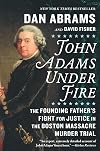
Just finished: John Adams Under Fire: The Founding Father's Fight for Justice in the Boston Massacre Murder Trial by Dan Abrams and David Fisher. Here’s a synopsis
In 1770, tensions over British taxes and troops boiled over in Boston. On March 5, eight soldiers commanded by Captain Preston fired their guns on the mob, killing five and wounding six.
Self-defense or murder? Did Preston order the soldiers to shoot or did they act spontaneously?
Preston was tried first; then the soldiers. John show more Adams defended the soldiers in court, ensuring a fair trial despite patriot outrage. “Always an honest man, often a great man but sometimes absolutely mad.” Ben Franklin describing Adams
Adams championed an independent, impartial legal system to protect against tyranny. The law must serve justice, with counsel as a last resort for the accused, to protect liberty and oppose oppressive governance like absolute monarchy.
For the trials, Adams cited Blackstone's newly published self-defense principle, allowing individuals to repel force with force when they or their kin are attacked, with legal blame on the aggressor.
The American legal system evolved from British roots, but it diverged by adopting the presumption of innocence, established in colonial Massachusetts, ensuring that a defendant is considered innocent until proven guilty by sufficient evidence before a jury.
Adams championed an impartial legal system and trial by jury, ensuring justice is administered fairly based on truth, not political motives, despite pressures from revolutionary patriots led by Samuel Adams and the Sons of Liberty.
Adams wrote: “Representative government and trial by jury are the heart and lungs of liberty. Without them we have no other fortification against being ridden like horses, fleeced like sheep, worked like cattle, and fed and clothed like swine and hounds.”
In the defense, Adams referred to John Locke: Every person has a natural right to defend their life, liberty, or property; if attacked with unlawful force, they enter a state of war with the aggressor, justifying lethal self-defense if necessary.
“I am for the prisoners at the bar and shall apologize for it only in the words of the Marquis Beccaria, ‘If I can but be the instrument of preserving one life, his blessing and tears of transport, shall be a sufficient consolation to me, for the contempt of all mankind.’”
What were the outcomes of the trials? I recommend reading this well-researched book to find out. The lessons on the foundations of American law are worth reviewing in these turbulent times.
BTW: As the second U.S. President and leader of the Federalists, John Adams signed the Alien Enemies Act into law in 1798, one of the Alien and Sedition Acts passed by a Federalist-controlled Congress during the Quasi-War with France. show less
In 1770, tensions over British taxes and troops boiled over in Boston. On March 5, eight soldiers commanded by Captain Preston fired their guns on the mob, killing five and wounding six.
Self-defense or murder? Did Preston order the soldiers to shoot or did they act spontaneously?
Preston was tried first; then the soldiers. John show more Adams defended the soldiers in court, ensuring a fair trial despite patriot outrage. “Always an honest man, often a great man but sometimes absolutely mad.” Ben Franklin describing Adams
Adams championed an independent, impartial legal system to protect against tyranny. The law must serve justice, with counsel as a last resort for the accused, to protect liberty and oppose oppressive governance like absolute monarchy.
For the trials, Adams cited Blackstone's newly published self-defense principle, allowing individuals to repel force with force when they or their kin are attacked, with legal blame on the aggressor.
The American legal system evolved from British roots, but it diverged by adopting the presumption of innocence, established in colonial Massachusetts, ensuring that a defendant is considered innocent until proven guilty by sufficient evidence before a jury.
Adams championed an impartial legal system and trial by jury, ensuring justice is administered fairly based on truth, not political motives, despite pressures from revolutionary patriots led by Samuel Adams and the Sons of Liberty.
Adams wrote: “Representative government and trial by jury are the heart and lungs of liberty. Without them we have no other fortification against being ridden like horses, fleeced like sheep, worked like cattle, and fed and clothed like swine and hounds.”
In the defense, Adams referred to John Locke: Every person has a natural right to defend their life, liberty, or property; if attacked with unlawful force, they enter a state of war with the aggressor, justifying lethal self-defense if necessary.
“I am for the prisoners at the bar and shall apologize for it only in the words of the Marquis Beccaria, ‘If I can but be the instrument of preserving one life, his blessing and tears of transport, shall be a sufficient consolation to me, for the contempt of all mankind.’”
What were the outcomes of the trials? I recommend reading this well-researched book to find out. The lessons on the foundations of American law are worth reviewing in these turbulent times.
BTW: As the second U.S. President and leader of the Federalists, John Adams signed the Alien Enemies Act into law in 1798, one of the Alien and Sedition Acts passed by a Federalist-controlled Congress during the Quasi-War with France. show less
John Adams Under Fire: The Founding Father's Fight for Justice in the Boston Massacre Murder Trial by David Fisher
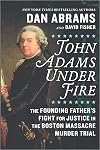
250 years ago the Boston Massacre marked the beginning of the American Revolution. The mythos handed down tells how British Redcoats fired into a crowd of Americans, resulting in the death of freeman Crispus Attucks and other men.
The soldiers and their superior were put on trial separately. Samuel Adams wanted to capitalize on the incident to inflame anti-British sentiment and support the Sons of Liberty.
John Adams was part of the team to defend the Redcoats. He wanted to keep politics out show more of it and to prove the fairness and impartiality of American justice.
I knew it was a pivotal trial in American judicial history and I thought it would be interesting to learn more.
Dan Abrams' book John Adams Under Fire follows the incident and the testimonies at the trials in meticulous detail. The trials set new precedents in the length of the trials, extending over days, and the judge's warning of 'reasonable' doubt' tending toward a verdict of not guilty.
I have to admit that with pages and pages of testimony reproduced in the book I scanned over many pages without a through reading. It was...frankly, boring...
But I am not a scholar or a lawyer.
I appreciated many aspects of the book including a deeper understanding of the roots of the riot.
British soldiers stationed were in Boston, one lobsterback to every three citizens. Bostonians resented their presence and their conduct toward. Some soldier took jobs to supplement their meager income, and some courted young women, but they also pushed their weight around and raped young women.
Young Bostonian men decided to give the sentries a hard time, taunting them to lash back by firing their guns. The youth threw ice balls and carried clubs and struck the guns. They knew the soldiers could not fire in anger.
Until they did.
Since Americans did in the end sent the Brits back across the pond, our history is biased. Paul Revere's picture of soldiers firing and citizens dying shows Americans as victims. Crispus has become a hero, even if he was likely one of the men out to stir up trouble in the first place.
A book not for the reader who prefers narrative nonfiction that reads like a novel, I am still pleased to have increases my understanding of this pivotal moment in America history.
I was given access to a free ebook by the publisher through NetGalley in exchange for a fair and unbiased review. show less
The soldiers and their superior were put on trial separately. Samuel Adams wanted to capitalize on the incident to inflame anti-British sentiment and support the Sons of Liberty.
John Adams was part of the team to defend the Redcoats. He wanted to keep politics out show more of it and to prove the fairness and impartiality of American justice.
I knew it was a pivotal trial in American judicial history and I thought it would be interesting to learn more.
Dan Abrams' book John Adams Under Fire follows the incident and the testimonies at the trials in meticulous detail. The trials set new precedents in the length of the trials, extending over days, and the judge's warning of 'reasonable' doubt' tending toward a verdict of not guilty.
I have to admit that with pages and pages of testimony reproduced in the book I scanned over many pages without a through reading. It was...frankly, boring...
But I am not a scholar or a lawyer.
I appreciated many aspects of the book including a deeper understanding of the roots of the riot.
British soldiers stationed were in Boston, one lobsterback to every three citizens. Bostonians resented their presence and their conduct toward. Some soldier took jobs to supplement their meager income, and some courted young women, but they also pushed their weight around and raped young women.
Young Bostonian men decided to give the sentries a hard time, taunting them to lash back by firing their guns. The youth threw ice balls and carried clubs and struck the guns. They knew the soldiers could not fire in anger.
Until they did.
Since Americans did in the end sent the Brits back across the pond, our history is biased. Paul Revere's picture of soldiers firing and citizens dying shows Americans as victims. Crispus has become a hero, even if he was likely one of the men out to stir up trouble in the first place.
A book not for the reader who prefers narrative nonfiction that reads like a novel, I am still pleased to have increases my understanding of this pivotal moment in America history.
I was given access to a free ebook by the publisher through NetGalley in exchange for a fair and unbiased review. show less
John Adams Under Fire: The Founding Father's Fight for Justice in the Boston Massacre Murder Trial by David Fisher

4/5
Dan Abrams & David Fisher do a great job in showing that no matter the political climate. Truth and the law should matter. When we deviate and pick and chose what laws are worth imposing our institutions crumble. Sadly we don’t have leaders like John Adams anymore who could stand up to a mob even when he agrees with them politically. He could and would do the right thing no matter the polling.
Best quote:
“If the legal system could be bent to achieve a desired political outcome any show more liberty that came of it would be worthless.”
Dan Abrams & David Fisher show less
Dan Abrams & David Fisher do a great job in showing that no matter the political climate. Truth and the law should matter. When we deviate and pick and chose what laws are worth imposing our institutions crumble. Sadly we don’t have leaders like John Adams anymore who could stand up to a mob even when he agrees with them politically. He could and would do the right thing no matter the polling.
Best quote:
“If the legal system could be bent to achieve a desired political outcome any show more liberty that came of it would be worthless.”
Dan Abrams & David Fisher show less
John Adams Under Fire: The Founding Father's Fight for Justice in the Boston Massacre Murder Trial by David Fisher
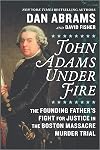
A mob, inflamed by England’s stranglehold of Boston in 1770, attacks English soldiers who fire their guns & kill five. Did they commit murder or was it self-defense? John Adams-a true patriot-surprisingly defends the soldiers. There are important firsts for America & much on the foundation of legal principles. Unfortunately most of the book is straight from the trial transcript, which was detailed, monotonous, & repetitive. Interesting but dry.
Lists
Awards


You May Also Like
Associated Authors
Statistics
- Works
- 6
- Also by
- 2
- Members
- 326
- Popularity
- #72,686
- Rating
- 3.6
- Reviews
- 11
- ISBNs
- 308
- Languages
- 11
- Favorited
- 1