
Robert Bray
Author of Reading With Lincoln
About the Author
Robert Bray is R. Forrest Colwell Professor of American Literature in the English department at Illinois Wesleyan University
Works by Robert Bray
The Glass Menagerie 1 copy
Associated Works
Tagged
Common Knowledge
- Gender
- male
- Nationality
- Estados Unidos
- Birthplace
- Pittsburg, Kansas, USA
- Associated Place (for map)
- Kansas, USA
Members
Reviews
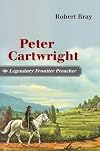
In the post-nuclear apocalypse, assuming I survive the fallout and the starving years and the plague times and the cannibal clans, my plan is to find a working motorcycle, secure a dependable source of fuel, and become a latter-day circuit riding preacher.
Okay, it’s not so much a plan as an exercise in imagining what might come next. But I have a pattern in the circuit riders of American Methodism, riding horseback through the wilderness and bringing the Word to scattered settlements to show more gather lost souls into the method of John Wesley.
The most famous of these was Peter Cartwright of Kentucky and Illinois. Ordained by Francis Asbury, Cartwright represented the heroic generation of Methodist evangelists pushing into the hard-bitten American frontier, a perfect field of souls for a man self-described as “sanctified in spots.”
Cartwright competed for those souls with hard-drinking Baptists, erudite Presbyterians, visionary Shakers, and kingdom-building Mormons. On the side, he advocated for Methodist education, built a political machine, served in the Illinois legislature, and skirmished repeatedly with “infidel” Abraham Lincoln, ultimately losing to Honest Abe in the 1846 race for Congress.
What made Cartwright a legend in his own time, though, was his book “The Backwoods Preacher: Being the Autobiography of Peter Cartwright, an American Methodist Travelling Preacher.” Published in 1856, this collection of anecdotes from Cartwright’s long ministry sets the historian a hard job.
Cartwright was a mountain of a man with an ego to match, not unlike a modern televangelist (though he was far more concerned with holiness and far less concerned with money, dying in 1872 with almost nothing). Added to his larger-than-life and domineering personality was a reading public hungry for exaggeration, japes, and ironic twists in its western lore. Sorting fact from tall tale is a tall task.
Robert Bray’s biography of Cartwright is an exemplary exercise in historiography as he works both from the “Autobiography” and from a potpourri of contemporary publications, public records, private letters, and Methodist conference journals to bring the real Peter Cartwright into sharper focus.
This in effect is the second of a two-part biography, the first being Cartwright’s own book. Bray shares few of the preacher’s anecdotes of frontier living, except when they illustrate an historiographical point; for example, how exactly the fight with a scoffing ferryman went down, or how Charles Dickens put a sexualized spin on Cartwright’s conversion of the wife and daughters of an outraged husband and father.
For the whole picture, then, you’ll want to read both the “Autobiography” and Bray’s conversation with it. What you’ll find in Bray is careful historiography, a pleasing narrative of Cartwright’s life, and a whole lot of Methodist conferences. These last can get tiresome, but they provide valuable insights into the rhythms, personal frictions, and hot-button topics in early American Methodism.
The hottest of hot buttons was, of course, slavery. Methodism formally opposed it, but in practice found carveout after carveout for Southerners. The button was finally pressed hard at the General Conference of 1844 when the church found itself faced for the first time with a slave-owning bishop.
Unable to wink at such high-level abuse of church discipline, the conference split into Northern and Southern churches, with the North (including Cartwright) claiming that the South had never left because it had no right to leave unilaterally, and the South claiming that it had left and that all church property in the South belonged to it. All of this was, of course, an eerie foreshadowing of what would come in 1860.
Bray’s biography is well-researched, careful, and insightful in its parsing both of Cartwright and of the tensions in antebellum America. The book would have benefited from one more editorial pass: I tripped over more typos than I’m accustomed to find in a professional publication. That quibble aside, those interested in the history of Christianity in America will find much to appreciate. show less
Okay, it’s not so much a plan as an exercise in imagining what might come next. But I have a pattern in the circuit riders of American Methodism, riding horseback through the wilderness and bringing the Word to scattered settlements to show more gather lost souls into the method of John Wesley.
The most famous of these was Peter Cartwright of Kentucky and Illinois. Ordained by Francis Asbury, Cartwright represented the heroic generation of Methodist evangelists pushing into the hard-bitten American frontier, a perfect field of souls for a man self-described as “sanctified in spots.”
Cartwright competed for those souls with hard-drinking Baptists, erudite Presbyterians, visionary Shakers, and kingdom-building Mormons. On the side, he advocated for Methodist education, built a political machine, served in the Illinois legislature, and skirmished repeatedly with “infidel” Abraham Lincoln, ultimately losing to Honest Abe in the 1846 race for Congress.
What made Cartwright a legend in his own time, though, was his book “The Backwoods Preacher: Being the Autobiography of Peter Cartwright, an American Methodist Travelling Preacher.” Published in 1856, this collection of anecdotes from Cartwright’s long ministry sets the historian a hard job.
Cartwright was a mountain of a man with an ego to match, not unlike a modern televangelist (though he was far more concerned with holiness and far less concerned with money, dying in 1872 with almost nothing). Added to his larger-than-life and domineering personality was a reading public hungry for exaggeration, japes, and ironic twists in its western lore. Sorting fact from tall tale is a tall task.
Robert Bray’s biography of Cartwright is an exemplary exercise in historiography as he works both from the “Autobiography” and from a potpourri of contemporary publications, public records, private letters, and Methodist conference journals to bring the real Peter Cartwright into sharper focus.
This in effect is the second of a two-part biography, the first being Cartwright’s own book. Bray shares few of the preacher’s anecdotes of frontier living, except when they illustrate an historiographical point; for example, how exactly the fight with a scoffing ferryman went down, or how Charles Dickens put a sexualized spin on Cartwright’s conversion of the wife and daughters of an outraged husband and father.
For the whole picture, then, you’ll want to read both the “Autobiography” and Bray’s conversation with it. What you’ll find in Bray is careful historiography, a pleasing narrative of Cartwright’s life, and a whole lot of Methodist conferences. These last can get tiresome, but they provide valuable insights into the rhythms, personal frictions, and hot-button topics in early American Methodism.
The hottest of hot buttons was, of course, slavery. Methodism formally opposed it, but in practice found carveout after carveout for Southerners. The button was finally pressed hard at the General Conference of 1844 when the church found itself faced for the first time with a slave-owning bishop.
Unable to wink at such high-level abuse of church discipline, the conference split into Northern and Southern churches, with the North (including Cartwright) claiming that the South had never left because it had no right to leave unilaterally, and the South claiming that it had left and that all church property in the South belonged to it. All of this was, of course, an eerie foreshadowing of what would come in 1860.
Bray’s biography is well-researched, careful, and insightful in its parsing both of Cartwright and of the tensions in antebellum America. The book would have benefited from one more editorial pass: I tripped over more typos than I’m accustomed to find in a professional publication. That quibble aside, those interested in the history of Christianity in America will find much to appreciate. show less
Interesting biography. Most readers would probably prefer a little less detail, especially concerning inter-Methodist squabbles, but this was a large part of who Peter Carwright was.
If you enjoy Western history combined with Methodist history this biography will appeal to you.
If you enjoy Western history combined with Methodist history this biography will appeal to you.
Awards

You May Also Like
Associated Authors
Statistics
- Works
- 13
- Also by
- 5
- Members
- 91
- Popularity
- #204,135
- Rating
- 3.7
- Reviews
- 2
- ISBNs
- 22