
Ed Warner (2)
Author of Running with Rhinos: Stories from a Radical Conservationist
For other authors named Ed Warner, see the disambiguation page.
Works by Ed Warner
Tagged
Common Knowledge
- Gender
- male
- Education
- Colorado State University (BS)
University of California, Los Angeles (MS)
Colorado State University (PhD, honorary) - Occupations
- geologist
conservationist
philanthropist - Organizations
- Sand County Foundation
Denver Museum of Nature and Science
Bird Conservancy of the Rockies
Geological Society of America Foundation
American Geological Institute Foundation
Members
Reviews
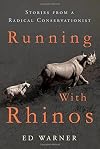
Ed Warner is geologist who made his fortune in the oil industry and now spends time working for wildlife conservation in Africa. (He is aware that this particular combination of life paths tends to raise a few eyebrows, but does not believe the two things are actually contradictory.)
In this book, he talks about his various trips to Zimbabwe and Namibia to work on projects aimed at protecting wild rhinos. He's got some interesting stories about working with the animals in the field, and show more includes some good descriptions of the places he's visited, which he presents with a real enthusiasm for the wildlife and the knowledgeable eye of a geologist.
But... Well, you can tell the guy's not a professional writer. He seems like someone who'd it'd be interesting to shoot the breeze with around a dinner table, especially if you happen to know any of the people he's talking about, but that doesn't necessarily translate into writing a book. So significant portions of this feel rather too much like rambling, disjointed anecdotes, some of which basically boil down to "Let me tell you about this funny thing my buddy said!" and were probably a lot more funny if you were there. (Also, I would probably not take any medical advice from this guy. Just sayin'.) show less
In this book, he talks about his various trips to Zimbabwe and Namibia to work on projects aimed at protecting wild rhinos. He's got some interesting stories about working with the animals in the field, and show more includes some good descriptions of the places he's visited, which he presents with a real enthusiasm for the wildlife and the knowledgeable eye of a geologist.
But... Well, you can tell the guy's not a professional writer. He seems like someone who'd it'd be interesting to shoot the breeze with around a dinner table, especially if you happen to know any of the people he's talking about, but that doesn't necessarily translate into writing a book. So significant portions of this feel rather too much like rambling, disjointed anecdotes, some of which basically boil down to "Let me tell you about this funny thing my buddy said!" and were probably a lot more funny if you were there. (Also, I would probably not take any medical advice from this guy. Just sayin'.) show less
 This review was written for LibraryThing Early Reviewers.
When I requested this book through the Early Reviewers program I imagined I would be reading stories about rhinos: rescues, births, and poachers. When I started reading, I learned right away that the most important rule of rhino tracking is that you must always have a tree nearby. Oh boy. Foreshadowing! Instead, the stories were written by someone working behind the scenes. Although Mr. Warner's role in Sand County Foundation was equally important as that of a vet tech, it just wasn't as show more interesting. He goes to fundraisers and orders supplies. One of the stories was about how he accidentally overpaid $8 at the grocery store. A more appropriate title would be, "Running through Customs."
I bet the author is a good campfire story teller. I really wanted to like this book just based on the fact that the black rhino rescue in Zimbabwe is named after Aldo Leopold's land ethic. I just don't feel confident recommending this book to people based on the cover and title, and the lack of scrambling-for-a-nearby-tree moments. show less
I bet the author is a good campfire story teller. I really wanted to like this book just based on the fact that the black rhino rescue in Zimbabwe is named after Aldo Leopold's land ethic. I just don't feel confident recommending this book to people based on the cover and title, and the lack of scrambling-for-a-nearby-tree moments. show less
This review was written for LibraryThing Early Reviewers.The subtitle to Ed Warner's book is Stories from a Radical Conservationist. This really needs further elaboration because it identifies the keys to Warner's memoir. The term "radical conservation" is inspired by a Colorado State University professor, Dr. Rick Knight, who proposes that environmentalism should work from the "radical center" - a public-private community-based natural resource management collaboration based on Aldo Leopold's "Land Ethic". Leopold is one of the foremost show more conservationists of the twentieth century, author of the classic A Sand County Almanac (Oxford University Press, 1949), in which his land ethic is elucidated. Leopold says, "All ethics so far evolved rest upon a single premise: that the individual is a member of a community of interdependent parts. His instincts prompt him to compete for his place in that community, but his ethics prompt him also to co-operate (perhaps in order that there may be a place to compete for.) The land ethic simply enlarges the boundaries of the community to include soils, waters, plants, and animals, or collectively: the land. ... In short, a land ethic changes the role of Homo Sapiens from conqueror of the land-community to plain member and citizen of it. It implies respect for his fellow-members, and also respect for the community as such." (A Sand County Almanac, pp. 203-204)
The World Wildlife Fund is working to install that ethic in Africa through its Southern African Regional Programme Office's work with communities and landowners. Part of that endeavor is its Rhino Conservancy Project. Warner had tracked a rhino while on a vacation safari in Zimbabwe and was hooked by the thrill of the dangerous undertaking, so he used the power of his wealth to finagle his way onto the project via engagement with the Sand County Foundation, a conservation group dedicated to promoting Leopold's philosophy through projects in the United States and Africa. As an eventual director of the foundation, Warner worked in Zimbabwe, Zambia, Tanzania, Namibia and Mozambique before his focus on the rhino ops in Zimbabwe. His stories derive from his rhino ops experiences.
Unfortunately, discussion in the stories of the efficacy of establishing a "Land Ethic" in Africa is given short shrift in favor of describing the thrills of dealing with rhinos on a face-to-face basis, as it were. An occasional complaint is made about the "gangster government" in Zimbabwe, but the focus shifts to stories detailing the implementation of a wildlife conservation effort - the physical acts of the scouting and tracking of rhinos, darting them with powerful drugs, identifying, tagging and then running from the animals, not with them when they awaken from their drugged state. Interspersed throughout every chapter are technical descriptions of the geology and some of the forestry of the areas conserved (Warner was a geologist before he retired and became a conservationist.) These details are interesting and occasionally exciting. Unfortunately, however, a good portion of each story's content is composed of complaints about the difficulties Warner encounters at the airport, on the planes or helicopters, at the customs stations, exchange rates, camping in the bush, etc. These problems, familiar to any seasoned traveler, particularly to third world countries, and boring to read about in bulk, over and over, are spiced up, supposedly, by details of the nightly drinking by the staff , happily funded by Warner, the ogling of female staff members by all the males, Warner included, and tales of Warner's macho behavior (trying to curry admiration from a group of rhino scouts by grabbing and brandishing a live python, indeed!)
Warner fancies himself a storyteller and I imagine that he is a good oral storyteller. He has a flair for the dramatic and sometimes teases a bit of suspense. I think his stories, carefully selected for appropriate context and sparsely presented in conversation with a few like-minded men, would be a hit. However, when presented as written text, one story after another, repeatedly describing almost the same events and behaviors, the memoir loses its punch.
I received a free copy of this book from the publisher in exchange for an honest review. show less
The World Wildlife Fund is working to install that ethic in Africa through its Southern African Regional Programme Office's work with communities and landowners. Part of that endeavor is its Rhino Conservancy Project. Warner had tracked a rhino while on a vacation safari in Zimbabwe and was hooked by the thrill of the dangerous undertaking, so he used the power of his wealth to finagle his way onto the project via engagement with the Sand County Foundation, a conservation group dedicated to promoting Leopold's philosophy through projects in the United States and Africa. As an eventual director of the foundation, Warner worked in Zimbabwe, Zambia, Tanzania, Namibia and Mozambique before his focus on the rhino ops in Zimbabwe. His stories derive from his rhino ops experiences.
Unfortunately, discussion in the stories of the efficacy of establishing a "Land Ethic" in Africa is given short shrift in favor of describing the thrills of dealing with rhinos on a face-to-face basis, as it were. An occasional complaint is made about the "gangster government" in Zimbabwe, but the focus shifts to stories detailing the implementation of a wildlife conservation effort - the physical acts of the scouting and tracking of rhinos, darting them with powerful drugs, identifying, tagging and then running from the animals, not with them when they awaken from their drugged state. Interspersed throughout every chapter are technical descriptions of the geology and some of the forestry of the areas conserved (Warner was a geologist before he retired and became a conservationist.) These details are interesting and occasionally exciting. Unfortunately, however, a good portion of each story's content is composed of complaints about the difficulties Warner encounters at the airport, on the planes or helicopters, at the customs stations, exchange rates, camping in the bush, etc. These problems, familiar to any seasoned traveler, particularly to third world countries, and boring to read about in bulk, over and over, are spiced up, supposedly, by details of the nightly drinking by the staff , happily funded by Warner, the ogling of female staff members by all the males, Warner included, and tales of Warner's macho behavior (trying to curry admiration from a group of rhino scouts by grabbing and brandishing a live python, indeed!)
Warner fancies himself a storyteller and I imagine that he is a good oral storyteller. He has a flair for the dramatic and sometimes teases a bit of suspense. I think his stories, carefully selected for appropriate context and sparsely presented in conversation with a few like-minded men, would be a hit. However, when presented as written text, one story after another, repeatedly describing almost the same events and behaviors, the memoir loses its punch.
I received a free copy of this book from the publisher in exchange for an honest review. show less
This review was written for LibraryThing Early Reviewers.With this book, I actually had an eye-opening picture of Africa presented to me by "Ed," as he likes to be called. I really know next to nothing about that entire continent and to have him present the black rhino against a backdrop of political and economic conditions was fascinating. I'm not sure who else could provide this amount of overall information in such an entertaining way--he has the money, the time, the education and the incredible interest in what is happening and he gets show more throughly into it all both physically and financially. Although I had trouble following the different groups of people competing with each other, you are definitely aware of the gruesomeness of the poachers. Ed leads you through it all with his own willingness to do and try everything along with his special and sometimes unsuccessful humor. He knows and appreciates the efforts of a tremendous number of people and they in turn, work with him. show less
This review was written for LibraryThing Early Reviewers.Statistics
- Works
- 1
- Members
- 29
- Popularity
- #460,289
- Rating
- 2.8
- Reviews
- 10
- ISBNs
- 5
- Languages
- 1

