
Andrew Westoll
Author of The Chimps of Fauna Sanctuary: A True Story of Resilience and Recovery
About the Author
Andrew Westoll is an award-winning narrative journalist and the author of The Riverbones, a travel memoir set in the jungles of Suriname, where he once lived as a monkey researcher. He fives in Toronto.
Works by Andrew Westoll
Associated Works
Tagged
Common Knowledge
- Gender
- male
- Education
- University of British Columbia (MFA|Creative Writing)
- Occupations
- primatologist
assistant professor (University of Toronto Scarborough) - Nationality
- Canada
- Associated Place (for map)
- Canada
Members
Reviews
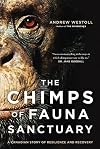
I have been wanting to read this book since it was published in 2011. It won the Charles Taylor Prize for Literary Non-fiction in 2012 and then in 2017 it appeared on the CBC list of 100 True Stories that Make You Proud to be Canadian. But it was the choice to put it on the Canada Reads 2019 longlist that finally made me get it from the library. As I write this there is still a few more days before the Canada Reads shortlist is announced but I do really hope this book will be chosen. After show more all, the theme this year is "One Book to Move You" and I think it certainly fulfils that.
Andrew Westoll went to live at Fauna Sanctuary on the south shore of Quebec in the summer of 2010. He had trained as a biologist and had worked with capuchin monkeys in the Amazon rainforest but then he turned to writing. He wanted to document the work that Gloria Grow and her staff were doing with chimpanzees that were finally in retirement after a lifetime as bio-medical research subjects. Fauna Sanctuary is on a rural property and houses, in addition to the chimpanzees, horses, cows, a donkey, dogs, birds and others. When Westoll went to volunteer and write there were thirteen chimpanzees in residence. Most had come from a medical facility in New York state but a few were retired zoo animals. The procedures the chimps had undergone included surgeries, infections with viruses such as hepatitis and HIV, biopsies, and vaccine production. All of the chimps were traumatized by the procedures, some worse than others. The wonder is that they survived to retire to Fauna Sanctuary. And an even greater surprise is how these animals grew to trust and love the humans there. Westoll was profoundly impacted by his experiences; it shines through his writing. This book is a moving argument against using great apes in research. In the years since the book was written the US has decided to retire almost all of the great apes used in labs there. This may not be due to a change of heart about testing on them; rather the cost of housing and feeding and caring for the great apes is expensive and it may be just too expensive. Great apes also may not be a good research subject. Despite their similarity to humans they are different enough that most viruses do not proliferate in them and therefore testing vaccines is useless. Westoll refers to a 2007 paper by Andrew Knight that examined experiments on chimpanzees over 10 years. Knight concluded that "No chimpanzee study made an essential contribution, or, in most cases, a significant contribution of any kind."
When I was taught literature in school I was told that one of the major themes was man's inhumanity to man. I think there should be an addition to that; it should be man's inhumanity to man or beast. show less
Andrew Westoll went to live at Fauna Sanctuary on the south shore of Quebec in the summer of 2010. He had trained as a biologist and had worked with capuchin monkeys in the Amazon rainforest but then he turned to writing. He wanted to document the work that Gloria Grow and her staff were doing with chimpanzees that were finally in retirement after a lifetime as bio-medical research subjects. Fauna Sanctuary is on a rural property and houses, in addition to the chimpanzees, horses, cows, a donkey, dogs, birds and others. When Westoll went to volunteer and write there were thirteen chimpanzees in residence. Most had come from a medical facility in New York state but a few were retired zoo animals. The procedures the chimps had undergone included surgeries, infections with viruses such as hepatitis and HIV, biopsies, and vaccine production. All of the chimps were traumatized by the procedures, some worse than others. The wonder is that they survived to retire to Fauna Sanctuary. And an even greater surprise is how these animals grew to trust and love the humans there. Westoll was profoundly impacted by his experiences; it shines through his writing. This book is a moving argument against using great apes in research. In the years since the book was written the US has decided to retire almost all of the great apes used in labs there. This may not be due to a change of heart about testing on them; rather the cost of housing and feeding and caring for the great apes is expensive and it may be just too expensive. Great apes also may not be a good research subject. Despite their similarity to humans they are different enough that most viruses do not proliferate in them and therefore testing vaccines is useless. Westoll refers to a 2007 paper by Andrew Knight that examined experiments on chimpanzees over 10 years. Knight concluded that "No chimpanzee study made an essential contribution, or, in most cases, a significant contribution of any kind."
When I was taught literature in school I was told that one of the major themes was man's inhumanity to man. I think there should be an addition to that; it should be man's inhumanity to man or beast. show less
This book is difficult to describe. On the one hand, it is historic and delves into the politics and ecological problems in clear prose, but on the other hand, the author seems to show himself as self-satisfying, drunken though compassionate, irresponsible in his personal relationship, and not the type of person who would be writing this book. I found it difficult to reconcile the two.
Andrew had been to Suriname before, as part of a team of researchers working in the Central Suriname Nature show more Reserve studying monkeys. He left Suriname after a few months to return to
Canada, but Suriname never left him. Several years later, he abruptly leaves once again, this time leaving a fiancé behind, and heads off on his obsessive need to return to Suriname. With no real goal in mind except to explore the heart of the country, he immerses himself completely. When he hears of the extremely rare and most protected tiny blue frog, okopipi. This one tiny shining frog becomes even more of an obsession and he will not leave Suriname before he finds it. His stay in Suriname extends far beyond his original timeset. This sets the background of the story.
Suriname as described is most certainly an Eden, but as with all versions of Eden, there are snakes. Snakes in human form, political form, internal warring, deception, conglomerates who poison the ground and the water, and also poisonous snakes, in fact some of the most poisonous in the world exist in this country.
One of the largest man-made lakes in the world buried the jungle canopy and misplaced 43 Maroon villages, scores of dead bodies of villagers, animals, and the once buried. As the waters rose, a group of SPCA volunteers under Operation Gwamba made the largest animal rescue in history by rescuing with little more than “normally used to capture raccoons in the subburban alleyways of Boston.” Young (23 yr old) Walsh and his team “saved 2,104 three-toed sloths, 1,051 nine-banded armadillos, 479 red howler monkeys, 161 pygmy anteaters, 36 tapirs and 3 jaguars, just to name some of the larger animals.” This was done over a period of 18 months. It is hard to imagine wrestling frantic deer, boars, giant armadillos into dugouts! The rescue itself took a terrible toll on the workers with everything from infected bites to dengue fever. The grim reminder of the drowned jungle are the tops of the trees, the canopy, now dead and standing like ghostly sentinels all through the lake.
Suriname is dying. There is barely a spot in the jungle or plain or lake that is not full of poison; workers do not have any protection against the poison they work with, their drinking water is poisoned, everything they do poisons them more, from the clothing they wear and wash in the poisoned water, to the food they cook, being washed and stewed in poisoned water. Shamans have cures for a lot, but they must remain hidden and their secrets which could save many in the world will die with them. Children are often born deformed or blind, and there seems no end to what is happening. There appears to be no answers. The young people of the “cities” drink their type of beer, dance to reggae, and seem to have forgotten what oral history they may have heard. I can understand the author’s feelings and would not be surprised to find he returns to Suriname once again. Over all an excellent book, but with so much history I would rather not have him dwell so much on being hungover when has initiated trips into the wilds. I found that a bit of an annoying aside. It made me feel as though he was afraid of being thought a hero. His interaction with the Surinamese is remarkable otherwise. Difficult to put down, I would prefer to give it 4 1/2 stars for the sheer amount of legend, myth, history, zoology, botany, and political information researched and well-told. show less
Andrew had been to Suriname before, as part of a team of researchers working in the Central Suriname Nature show more Reserve studying monkeys. He left Suriname after a few months to return to
Canada, but Suriname never left him. Several years later, he abruptly leaves once again, this time leaving a fiancé behind, and heads off on his obsessive need to return to Suriname. With no real goal in mind except to explore the heart of the country, he immerses himself completely. When he hears of the extremely rare and most protected tiny blue frog, okopipi. This one tiny shining frog becomes even more of an obsession and he will not leave Suriname before he finds it. His stay in Suriname extends far beyond his original timeset. This sets the background of the story.
Suriname as described is most certainly an Eden, but as with all versions of Eden, there are snakes. Snakes in human form, political form, internal warring, deception, conglomerates who poison the ground and the water, and also poisonous snakes, in fact some of the most poisonous in the world exist in this country.
One of the largest man-made lakes in the world buried the jungle canopy and misplaced 43 Maroon villages, scores of dead bodies of villagers, animals, and the once buried. As the waters rose, a group of SPCA volunteers under Operation Gwamba made the largest animal rescue in history by rescuing with little more than “normally used to capture raccoons in the subburban alleyways of Boston.” Young (23 yr old) Walsh and his team “saved 2,104 three-toed sloths, 1,051 nine-banded armadillos, 479 red howler monkeys, 161 pygmy anteaters, 36 tapirs and 3 jaguars, just to name some of the larger animals.” This was done over a period of 18 months. It is hard to imagine wrestling frantic deer, boars, giant armadillos into dugouts! The rescue itself took a terrible toll on the workers with everything from infected bites to dengue fever. The grim reminder of the drowned jungle are the tops of the trees, the canopy, now dead and standing like ghostly sentinels all through the lake.
Suriname is dying. There is barely a spot in the jungle or plain or lake that is not full of poison; workers do not have any protection against the poison they work with, their drinking water is poisoned, everything they do poisons them more, from the clothing they wear and wash in the poisoned water, to the food they cook, being washed and stewed in poisoned water. Shamans have cures for a lot, but they must remain hidden and their secrets which could save many in the world will die with them. Children are often born deformed or blind, and there seems no end to what is happening. There appears to be no answers. The young people of the “cities” drink their type of beer, dance to reggae, and seem to have forgotten what oral history they may have heard. I can understand the author’s feelings and would not be surprised to find he returns to Suriname once again. Over all an excellent book, but with so much history I would rather not have him dwell so much on being hungover when has initiated trips into the wilds. I found that a bit of an annoying aside. It made me feel as though he was afraid of being thought a hero. His interaction with the Surinamese is remarkable otherwise. Difficult to put down, I would prefer to give it 4 1/2 stars for the sheer amount of legend, myth, history, zoology, botany, and political information researched and well-told. show less
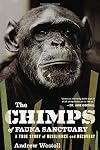
In Fauna Sanctuary Gloria Grow rescues animals. There are dogs, horses, swans, a donkey, and of course the chimpanzees. Most were retired from research facilities where they were the subjects of medical research into Hepatitis, HIV, and the like. There are a few who were circus chimps. Some of them started life as pets, cute little chimps to dress up and play with, until they grew too big and strong and dangerous. Anyone who heard of Travis and his attack on Charla Nash knows that a chimp is show more not to be taken lightly. And yet people continue to try and keep them as domestic pets.
In this book Westoll spent a year working in the Fauna Sanctuary. He gets to know not only the people who work there but also the chimpanzees themselves, and their horrific lives spent as test subjects, being knocked out, biopsied, infected, and isolated.
chimps of fauna sanctuary
This is a heart-breaking story. Made all the worse because it is true.
The chimps Andrew meets, from bully boy Yoko to peace-maker Jethro to Rachel with her love for human clothes, all have huge issues and problems. They have been so mistreated that many can never fully recover. All Gloria can offer them is the chance for some respite and the hope that they can find some peace. But they are so damaged, physically and phychologically, that they are almost beyond hope.
Westoll paints a very readable tale of a year in the life of these chimps and people. He also fills us in on the backstories of the chimps, what they were through in their years as research animals. Being torn away from their mothers when only a few days old, and, in many cases isolated for years. He tells us of the research that proves that chimps and other primates need love and contact in their formative years, just as any human child does. How it is becoming more and more accepted that they can suffer from PTSD, just as people do, and yet that they are so dissimilar from us in other ways. All that HIV research they endured did nothing to help people, chimpanzee’s never develop AIDS, the disease affects them in a totally different manner. Likewise the Hepatitis research can be done now with artificially grown human tissue, much more beneficial than testing treatments on a chimp.
And even if it was of some benefit Westoll argues that it is ethically and morally wrong to use chimps in such a way. He compares it to the medical research performed on African-American men who were not given treatment for their syphillus in prison in the past. We wouldn’t do that now, someday will people look back with the same horror as what we are doing to chimpanzees today?
The United States is the only country in the world that still experiments on primates. And much of Gloria Grow’s work is involved in lobbying for legislation to protect the chimps. If you would like to donate to her, or other chimp sanctuaries you can find details here: http://www.faunafoundation.org/
I found this a fascinating book, hard to read in places, and maybe a little biased, but I think we can excuse Westoll that, he did live in the sanctuary for a year, and to be honest, I think I’d be on the chimps side too. show less
In this book Westoll spent a year working in the Fauna Sanctuary. He gets to know not only the people who work there but also the chimpanzees themselves, and their horrific lives spent as test subjects, being knocked out, biopsied, infected, and isolated.
chimps of fauna sanctuary
This is a heart-breaking story. Made all the worse because it is true.
The chimps Andrew meets, from bully boy Yoko to peace-maker Jethro to Rachel with her love for human clothes, all have huge issues and problems. They have been so mistreated that many can never fully recover. All Gloria can offer them is the chance for some respite and the hope that they can find some peace. But they are so damaged, physically and phychologically, that they are almost beyond hope.
Westoll paints a very readable tale of a year in the life of these chimps and people. He also fills us in on the backstories of the chimps, what they were through in their years as research animals. Being torn away from their mothers when only a few days old, and, in many cases isolated for years. He tells us of the research that proves that chimps and other primates need love and contact in their formative years, just as any human child does. How it is becoming more and more accepted that they can suffer from PTSD, just as people do, and yet that they are so dissimilar from us in other ways. All that HIV research they endured did nothing to help people, chimpanzee’s never develop AIDS, the disease affects them in a totally different manner. Likewise the Hepatitis research can be done now with artificially grown human tissue, much more beneficial than testing treatments on a chimp.
And even if it was of some benefit Westoll argues that it is ethically and morally wrong to use chimps in such a way. He compares it to the medical research performed on African-American men who were not given treatment for their syphillus in prison in the past. We wouldn’t do that now, someday will people look back with the same horror as what we are doing to chimpanzees today?
The United States is the only country in the world that still experiments on primates. And much of Gloria Grow’s work is involved in lobbying for legislation to protect the chimps. If you would like to donate to her, or other chimp sanctuaries you can find details here: http://www.faunafoundation.org/
I found this a fascinating book, hard to read in places, and maybe a little biased, but I think we can excuse Westoll that, he did live in the sanctuary for a year, and to be honest, I think I’d be on the chimps side too. show less
Actually a 4.5 Star read!
This book is hard to review because it is a necessary story, a hard story and a story that shows how ruddy right shitty human beings can be; the hard part comes from not wanting to be a hard-ass on author Westoll for some less than stellar passages and other cliché moments of self-inspection. Please know that Westoll is a journalist and was, briefly, a primatologist - living for one year in Suriname to study. He comes from a research, scientific and fact background. show more He seems like a kind and lovely man. His writing style is fluid, compelling and sometimes, even, poetic. My wish, though, is that Westoll had not added his journey into the equation, weaving his personal searching (if that's the right word??) during his time at the sanctuary (where he resided in research of this book). The chimps of Fauna Sanctuary have stories, biographies of horrible affronts to their physical and emotional lives. Coupled with the story of Gloria Grow, Fauna's founder, there is certainly more than enough to provide a tale that can stand alone. Seriously.
So yeah, I feel like a crappy human being for trifling over this stuff but I think it is worth noting the things that didn't work for me. And really, it is still a 4.5 Star book, so it didn't rankle my cankles enough to chafe.
Read this book! DO IT! show less
This book is hard to review because it is a necessary story, a hard story and a story that shows how ruddy right shitty human beings can be; the hard part comes from not wanting to be a hard-ass on author Westoll for some less than stellar passages and other cliché moments of self-inspection. Please know that Westoll is a journalist and was, briefly, a primatologist - living for one year in Suriname to study. He comes from a research, scientific and fact background. show more He seems like a kind and lovely man. His writing style is fluid, compelling and sometimes, even, poetic. My wish, though, is that Westoll had not added his journey into the equation, weaving his personal searching (if that's the right word??) during his time at the sanctuary (where he resided in research of this book). The chimps of Fauna Sanctuary have stories, biographies of horrible affronts to their physical and emotional lives. Coupled with the story of Gloria Grow, Fauna's founder, there is certainly more than enough to provide a tale that can stand alone. Seriously.
So yeah, I feel like a crappy human being for trifling over this stuff but I think it is worth noting the things that didn't work for me. And really, it is still a 4.5 Star book, so it didn't rankle my cankles enough to chafe.
Read this book! DO IT! show less
Lists
Awards


You May Also Like
Associated Authors
Statistics
- Works
- 4
- Also by
- 3
- Members
- 157
- Popularity
- #133,742
- Rating
- 4.3
- Reviews
- 10
- ISBNs
- 17
- Languages
- 1