
Zoë Playdon
Author of The Hidden Case of Ewan Forbes: And the Unwritten History of the Trans Experience
About the Author
Works by Zoë Playdon
The Hidden Case of Ewan Forbes: And the Unwritten History of the Trans Experience (2021) 85 copies, 4 reviews
Associated Works
Tagged
Common Knowledge
- Canonical name
- Playdon, Zoë
- Other names
- Playdon, Zoë-Jane
- Birthdate
- 20th century
- Gender
- female
- Occupations
- academic
professor - Organizations
- Warwick University
GLAAD - Agent
- United Agents
- Nationality
- UK
- Associated Place (for map)
- UK
Members
Reviews

This is a fascinating and timely book. The major section tells the life story of Ewan Forbes, born Elizabeth, into an aristocratic Scottish family in 1912. Despite being registered at birth as female, Ewan grew as a boy, supported by his mother, only donning girl's clothes for formal occasions. His mother had him educated at home and took him to the continent in the 1920s where it is speculated that he received medical treatment to transition as well as furthering his education. He went on show more to study medicine in Aberdeen and became a much respected rural doctor and elder of the Presbyterian Kirk (if that doesn't say he was accepted I don't know what would!). In 1952 he successfully requested his birth certificate be changed from female to male (a relatively simple process at the time!) and married. Unfortunately, in 1965, his elder brother died without male heirs, and as one of the family titles was only to be inherited by males, this threw Ewan into an impossible situation when a cousin claimed the title on the grounds that Ewan was not a man. If Ewan capitulated his marriage would've been declared invalid and he and his wife would've faced prosecution for perjury (lying on their marriage documents). Though he won the subsequent court case it was a traumatic process personally and had potential ramifications for the inheritance of the British throne (leading to the suppression of the case) and devastating consequences for trans rights in the UK. Playdon (Emeritus Professor of Medical Humanities at the University of London, a Visiting Professor at the University of Cumbria, and an Honorary Research Fellow at Birkbeck College) concludes the book with a summing up of the legal situation for trans people in the UK and, consequently, in the English speaking world. There is a certain irony in examining in detail the life of someone who appeared to just want to live their life in peace and privacy, however that, I feel is the point. Trans (and other) people should be able to live their lives as they want (as long as they don't harm others), and it seems bizarre that such a massive fuss should be made in legal and medical circles over something that is essentially a private medical issue and nobody else's business. Highly recommended and an engrossing read. show less
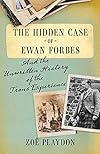
At a time when trans people across the U.S. are being vilified, legislated against, and assaulted The Hidden Case of Ewan Forbes offers a message simultaneously hopeful and frustrating. The case show us what may be possible for trans people--what was possible for one trans person--but also demonstrated the ways that victories can be buried.
The first two-thirds of the book relates the story of Ewan Forbes, technically born female, but clearly male in identity from the start. Forbes was lucky show more in being a member of the nobility. He was able to have his birth certificate amended to list him as male. The thinking at that time included the ideas that
• hermaphrodites (not that Forbes was necessarily one) might not reveal their true gender until they reached a certain age
and
• exceptional women might evolve "upward" to maleness.
Gender changes weren't common, but they were possible. In fact, Forbes pursued amending his birth certificate because he wanted to marry. When Ewan's older brother died childless, the family baronetcy seemed likely to be passed on to Forbes, until a distant cousin appeared, claiming Forbes was not male and, therefore, could not inherit the title. After a draw-out, humiliating, and perhaps manipulated private court proceding, Forbes was declared heir.
The problem was—if someone listed as female at birth, who then was amended to male, could inherit as a man, the entire structure of primogeniture would be on shaky grounds. As would the monarchy itself. So, in 1968 Forbes won his case, but the British government did all it could to suppress that ruling so it couldn't be used as precedent in future cases.
The last third of the book surveys that way trans-related law evolved after Forbes Forbes' victory and its concealment. Increasingly, trans identity was viewed as a psychiatric disorder, rather than a revelation that appeared slowly as an individual aged. We're living in a time of anti-trans hatred now, and reading about the evolution of legal and medical views of trans folk is infuriating and heart-breaking. The Forbes case should have made cases like his rather normal, but the need to protect patriarchal institutions and growing public animus made that impossible.
The book is a must-read for anyone interested in queer history or in the history of Britain in the 20th Century. I received a free electronic review copy from the publisher via NetGalley; the opinions are my own. show less
The first two-thirds of the book relates the story of Ewan Forbes, technically born female, but clearly male in identity from the start. Forbes was lucky show more in being a member of the nobility. He was able to have his birth certificate amended to list him as male. The thinking at that time included the ideas that
• hermaphrodites (not that Forbes was necessarily one) might not reveal their true gender until they reached a certain age
and
• exceptional women might evolve "upward" to maleness.
Gender changes weren't common, but they were possible. In fact, Forbes pursued amending his birth certificate because he wanted to marry. When Ewan's older brother died childless, the family baronetcy seemed likely to be passed on to Forbes, until a distant cousin appeared, claiming Forbes was not male and, therefore, could not inherit the title. After a draw-out, humiliating, and perhaps manipulated private court proceding, Forbes was declared heir.
The problem was—if someone listed as female at birth, who then was amended to male, could inherit as a man, the entire structure of primogeniture would be on shaky grounds. As would the monarchy itself. So, in 1968 Forbes won his case, but the British government did all it could to suppress that ruling so it couldn't be used as precedent in future cases.
The last third of the book surveys that way trans-related law evolved after Forbes Forbes' victory and its concealment. Increasingly, trans identity was viewed as a psychiatric disorder, rather than a revelation that appeared slowly as an individual aged. We're living in a time of anti-trans hatred now, and reading about the evolution of legal and medical views of trans folk is infuriating and heart-breaking. The Forbes case should have made cases like his rather normal, but the need to protect patriarchal institutions and growing public animus made that impossible.
The book is a must-read for anyone interested in queer history or in the history of Britain in the 20th Century. I received a free electronic review copy from the publisher via NetGalley; the opinions are my own. show less
FASCINATING. I shouldn't have left the review so long, because some of the particulars have faded, but I do remember being very struck by the way trans men were considered common and NBD/kind of ignored, because patriarchy and *of course* women would want to be men, but when white trans women who were making use of medical advances became hypervisible (hit the papers), cis people lost their shit and transphobia against both was suddenly much worse.
That the author ends the book advocating for show more gender-neutral primogeniture was not on my bingo card, though. I didn't know that QEII implemented a monarchy-specific one, so that was interesting. show less
That the author ends the book advocating for show more gender-neutral primogeniture was not on my bingo card, though. I didn't know that QEII implemented a monarchy-specific one, so that was interesting. show less
Ewan Forbes was born in 1912 to a wealthy family. Assigned female at birth, his true identity was clear even in childhood, and his mother quietly took him on a European "tour" that included treatment with an early form of synthetic testosterone. Ewan was generally accepted by society in the small town he worked in as a doctor, eventually changing the sex on his birth certificate and getting married. But when his older brother dies unexpectedly, Ewan was forced to defend his male status in show more court. For years, all of the information on Ewan's groundbreaking case was sealed from the public. This book's sometimes dense descriptions of events and legalese does not necessarily make for light reading, but Ewan and how quickly the world changed for trans people makes this book fascinating. show less
Lists
Awards


You May Also Like
Associated Authors
Statistics
- Works
- 1
- Also by
- 2
- Members
- 85
- Popularity
- #214,930
- Rating
- 3.6
- Reviews
- 4
- ISBNs
- 13