
Bruna Dantas Lobato
Author of Blue Light Hours
About the Author
Image credit: Author’s website
Works by Bruna Dantas Lobato
Associated Works
So what if I'm a puta : diaries of transness, sex work, desire (2016) — Translator, some editions — 28 copies, 3 reviews
Tagged
Common Knowledge
- Birthdate
- 1991
- Gender
- female
- Education
- Bennington College (BA|Literature)
New York University (MFA|Creative Writing - Fiction)
University of Iowa (MFA|Literary Translation) - Nationality
- Brazil
- Birthplace
- Natal, Rio Grande do Norte, Brazil
- Places of residence
- Iowa, USA
- Map Location
- Brazil
Members
Reviews
Rating: 4* of five
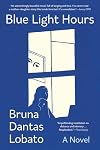
The Publisher Says: of a young Brazilian woman’s first year in America, a continent away from her lonely mother, and the relationship they build over Skype calls across borders
In a small dorm room at a liberal arts college in Vermont, a young woman settles into the warm blue light of her desk lamp before calling the mother she left behind in northeastern Brazil. Four thousand miles apart and bound by the angular confines of a Skype window, they ask each other a simple show more question: what’s the news?
Offscreen, little about their lives seems newsworthy. The daughter writes her papers in the library at midnight, eats in the dining hall with the other international students, and raises her hand in class to speak in a language the mother cannot understand. The mother meanwhile preoccupies herself with natural disasters, her increasingly poor health, and the heartbreaking possibility that her daughter might not return to the apartment where they have always lived together. Yet in the blue glow of their computers, the two women develop new rituals of intimacy and caretaking, from drinking whiskey together in the middle of the night to keeping watch as one slides into sleep. As the warm colors of New England autumn fade into an endless winter snow, each realizes that the promise of spring might mean difficult endings rather than hopeful beginnings.
Expanded from a story originally published in The New Yorker, and in elegant prose that recalls the work of Sigrid Nunez, Katie Kitamura, and Rachel Khong, Bruna Dantas Lobato paints a powerful portrait of a mother and a daughter coming of age together and apart and explores the profound sacrifices and freedoms that come with leaving a home to make a new one somewhere else.
I RECEIVED A DRC FROM THE PUBLISHER VIA NETGALLEY. THANK YOU.
My Review: A tight, compact barely-more-than-novella based on the author's fiction debut story. She's translated work from Brazilian that I've loved (The Words That Remain) and liked a lot (Moldy Strawberries), so I was primed for a good experience. I got that indeed.
Loneliness and that indescribable parent-feeling compounded of intense longing for the child you've had every day of their life as your primary focus mixed with huge dollops of pride in their accomplishment that's led them away from you, and the freezing fear of what you know can and will happen to hurt them where you just can't be. And, of course, resentment that this stellar being needs to be so far away to feel grown up. I was pleased that the author's stand-in was so dutiful and so genuinely, if sometimes impatiently, loving toward her mother in their long-distance relationship.
If you have, or were, a child, it's going to speak to you. It's told mostly from the author-placeholder's PoV, but we do hear directly from her mother at the end. It will sound, and feel, familiar to older folks. It will offer some insights to younger ones. It will do all this without leaving you feeling Taught. I am morally certain Author Lobato has been in this exact skin, it fits the reader so well.
Why I recommend it to you now is the fall has fallen, there's chill in our Northern Hemisphere air, trees are coloring up, and that's the time for a hot steaming mug for sipping and a long sleeve for sniffling into. You'll do a lot of both of 'em.
I'd offer a fifth star had the ending not felt like it was given a mildly short shrift. It's not bad, it's organic to the story, it's just not quite enough for a full, complete experience of her mother's part of their life.
A first novel made from Life, and grown from a short story could not hope for a better apotheosis. This will not, I hope, be the last work of her own long fiction Author Lobato publishes. Those will feel even more accomplished. show less
The Publisher Says: of a young Brazilian woman’s first year in America, a continent away from her lonely mother, and the relationship they build over Skype calls across borders
In a small dorm room at a liberal arts college in Vermont, a young woman settles into the warm blue light of her desk lamp before calling the mother she left behind in northeastern Brazil. Four thousand miles apart and bound by the angular confines of a Skype window, they ask each other a simple show more question: what’s the news?
Offscreen, little about their lives seems newsworthy. The daughter writes her papers in the library at midnight, eats in the dining hall with the other international students, and raises her hand in class to speak in a language the mother cannot understand. The mother meanwhile preoccupies herself with natural disasters, her increasingly poor health, and the heartbreaking possibility that her daughter might not return to the apartment where they have always lived together. Yet in the blue glow of their computers, the two women develop new rituals of intimacy and caretaking, from drinking whiskey together in the middle of the night to keeping watch as one slides into sleep. As the warm colors of New England autumn fade into an endless winter snow, each realizes that the promise of spring might mean difficult endings rather than hopeful beginnings.
Expanded from a story originally published in The New Yorker, and in elegant prose that recalls the work of Sigrid Nunez, Katie Kitamura, and Rachel Khong, Bruna Dantas Lobato paints a powerful portrait of a mother and a daughter coming of age together and apart and explores the profound sacrifices and freedoms that come with leaving a home to make a new one somewhere else.
I RECEIVED A DRC FROM THE PUBLISHER VIA NETGALLEY. THANK YOU.
My Review: A tight, compact barely-more-than-novella based on the author's fiction debut story. She's translated work from Brazilian that I've loved (The Words That Remain) and liked a lot (Moldy Strawberries), so I was primed for a good experience. I got that indeed.
Loneliness and that indescribable parent-feeling compounded of intense longing for the child you've had every day of their life as your primary focus mixed with huge dollops of pride in their accomplishment that's led them away from you, and the freezing fear of what you know can and will happen to hurt them where you just can't be. And, of course, resentment that this stellar being needs to be so far away to feel grown up. I was pleased that the author's stand-in was so dutiful and so genuinely, if sometimes impatiently, loving toward her mother in their long-distance relationship.
If you have, or were, a child, it's going to speak to you. It's told mostly from the author-placeholder's PoV, but we do hear directly from her mother at the end. It will sound, and feel, familiar to older folks. It will offer some insights to younger ones. It will do all this without leaving you feeling Taught. I am morally certain Author Lobato has been in this exact skin, it fits the reader so well.
Why I recommend it to you now is the fall has fallen, there's chill in our Northern Hemisphere air, trees are coloring up, and that's the time for a hot steaming mug for sipping and a long sleeve for sniffling into. You'll do a lot of both of 'em.
I'd offer a fifth star had the ending not felt like it was given a mildly short shrift. It's not bad, it's organic to the story, it's just not quite enough for a full, complete experience of her mother's part of their life.
A first novel made from Life, and grown from a short story could not hope for a better apotheosis. This will not, I hope, be the last work of her own long fiction Author Lobato publishes. Those will feel even more accomplished. show less
This is a quiet novel about the bond between mother and daughter.
An unnamed young woman is attending a liberal arts college in Vermont as an international student. Her mother remains in northeastern Brazil. In the blue light of their computers, the two communicate, and as absence disrupts their usual routines, they develop new rituals to maintain their bond.
The book examines the immigrant experience. The young woman has to adjust to a new country with a different climate, culture and show more language. As one would expect, she makes friends mostly with other international students who can understand her feelings of not fitting in and her homesickness and loneliness. Because she is a scholarship student, she doesn’t have the money other students have to return home for periodic visits.
But the book’s focus is on the complexities of the mother-daughter relationship as it inevitably changes because of the distance that separates them and because the daughter’s experiences are so alien to the mother. The daughter, though she often feels isolated and adrift, is grateful for the opportunities she has and wants independence, but at the same time as she enjoys her life, she loves her mother and feels guilty about leaving her alone. The mother’s health issues add to the daughter’s concerns. The mother realizes she has more freedom and fewer responsibilities but loves and misses her daughter very much. She wants her daughter to have opportunities, “to have the ocean,” but has to come to terms with changes in her daughter, including hearing her speak a language she herself doesn’t understand. Both want to maintain a connection while having to find new identities and purposes and learn “how to live alone, and to keep going.”
Three-quarters of the book is from the daughter’s perspective in first person. This section covers her first year in the U.S. Then there’s a shift to the mother’s perspective but her section is in the third person. Though very short, the mother’s chapter covers years. The final chapter entitled “Reunion” takes place five years after the daughter’s leaving for her education. I found the large time jumps to be awkward, and the switch to third person has a distancing effect.
Actually, there’s a feeling of detachment throughout. The style contributes to this because it feels detached and emotionless. There were many times when I wanted more feeling. The plot is also minimalist so parts felt incomplete; not much happens. For instance, the daughter’s life is described vaguely; it’s an impressionistic approach. I understand that the author wanted to focus on theme, but I would have appreciated more depth.
This is not a book for readers wanting lots of action since it describes only the mundane daily activities of the young woman and her mother. I sometimes found the book repetitive and its slow pace frustrating. However, it will appeal to readers interested in a realistic portrayal of a mother and daughter relationship as the two learn to let go and move forward while still maintaining a close bond.
Note: I received an eARC from the publisher via NetGalley.
Please check out my reader's blog (https://schatjesshelves.blogspot.com/) or my substack (https://doreenyakabuski.substack.com/) for over 1,100 of my book reviews. show less
An unnamed young woman is attending a liberal arts college in Vermont as an international student. Her mother remains in northeastern Brazil. In the blue light of their computers, the two communicate, and as absence disrupts their usual routines, they develop new rituals to maintain their bond.
The book examines the immigrant experience. The young woman has to adjust to a new country with a different climate, culture and show more language. As one would expect, she makes friends mostly with other international students who can understand her feelings of not fitting in and her homesickness and loneliness. Because she is a scholarship student, she doesn’t have the money other students have to return home for periodic visits.
But the book’s focus is on the complexities of the mother-daughter relationship as it inevitably changes because of the distance that separates them and because the daughter’s experiences are so alien to the mother. The daughter, though she often feels isolated and adrift, is grateful for the opportunities she has and wants independence, but at the same time as she enjoys her life, she loves her mother and feels guilty about leaving her alone. The mother’s health issues add to the daughter’s concerns. The mother realizes she has more freedom and fewer responsibilities but loves and misses her daughter very much. She wants her daughter to have opportunities, “to have the ocean,” but has to come to terms with changes in her daughter, including hearing her speak a language she herself doesn’t understand. Both want to maintain a connection while having to find new identities and purposes and learn “how to live alone, and to keep going.”
Three-quarters of the book is from the daughter’s perspective in first person. This section covers her first year in the U.S. Then there’s a shift to the mother’s perspective but her section is in the third person. Though very short, the mother’s chapter covers years. The final chapter entitled “Reunion” takes place five years after the daughter’s leaving for her education. I found the large time jumps to be awkward, and the switch to third person has a distancing effect.
Actually, there’s a feeling of detachment throughout. The style contributes to this because it feels detached and emotionless. There were many times when I wanted more feeling. The plot is also minimalist so parts felt incomplete; not much happens. For instance, the daughter’s life is described vaguely; it’s an impressionistic approach. I understand that the author wanted to focus on theme, but I would have appreciated more depth.
This is not a book for readers wanting lots of action since it describes only the mundane daily activities of the young woman and her mother. I sometimes found the book repetitive and its slow pace frustrating. However, it will appeal to readers interested in a realistic portrayal of a mother and daughter relationship as the two learn to let go and move forward while still maintaining a close bond.
Note: I received an eARC from the publisher via NetGalley.
Please check out my reader's blog (https://schatjesshelves.blogspot.com/) or my substack (https://doreenyakabuski.substack.com/) for over 1,100 of my book reviews. show less
A touching daughter-mother novel - emphasis on the daughter because she is the one who begins telling the story. Unnamed, she has traveled from Brazil to Vermont on a full-ride scholarship, leaving her grieving mother behind. The two stay connected daily on Skype (pre-Zoom era) and that blue light from the screen becomes the glow they both gravitate toward. The narrator has so much to get used to (snow!) and is busy with studies and work, but worries about her languishing mother. She cared show more for and lost her own mother in a recent, unspecified time, so she is quite alone in the small Natal apartment. The mother's 'illness' is never named - most likely acute depression - and the daughter feels inherently responsible for her (there is no one else) and spends excessive amounts of time online trying to help. She also feels slightly resentful as she would like to turn more fully toward her new life without the anchor of Skype visits. Some beautiful exploration of feelings about transplantation and the mother-daughter bond. "What would these small changes add up to? Who and what was I on the way to becoming, and with such ease? ... I felt like a child again, always carrying the feeling that everyone knew something I didn't. I felt like I would never stop anticipating my own arrival, waiting the the moment when I'd finally feel at home, no questions asked. And then, when it finally happened, who would I be then?" (42) "Unhappiness demands more of our attention than happiness, we reasoned. It makes us appreciate slow, calm days." (120) Without names and with a later shift to 3rd person narration, the reader is kept at a distance, which makes it hard to really root for a character, but also stays true to the interiority of this story and the fact that we could only ever be onlookers. show less

A slow, sweet, touching meditation on what it’s like to be living in a foreign country where you very much want to be while still finding it foreign and still missing home. A lovely, loving mother-daughter relationship revealed through the blue light of the Skype screen.
Awards


Statistics
- Works
- 1
- Also by
- 4
- Members
- 86
- Popularity
- #213,012
- Rating
- 4.0
- Reviews
- 6
- ISBNs
- 4
- Languages
- 1