
John W. I. Lee
Author of The Persian Empire
Works by John W. I. Lee
Associated Works
The Cambridge Companion to Xenophon (Cambridge Companions to Literature) (2016) — Contributor — 24 copies
Circum Mare: Themes in Ancient Warfare (Brill's Companions in Classical Studies) (2016) — Contributor — 5 copies
Tagged
Common Knowledge
- Legal name
- Lee, John Wolte Infong
- Birthdate
- 1971
- Gender
- male
- Nationality
- USA
- Associated Place (for map)
- USA
Members
Reviews

Excellent course. Professor Lee is a witty and intelligent guide to an empire that is often caricatured in the West. Using archaeological and historical evidence, Professor Lee gives us the Persian perspective on this important period in world history.
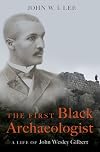
This is a fascinating life of John Wesley Gilbert, American archaeologist, educator, and Methodist missionary to the Congo.
Gilbert was born to slaves in Georgia and grew up in Augusta. He was named after John Wesley, the founder of Methodism. He grew up in the tumultuous Reconstruction era and this book suggests a life that successfully took advantage of the new opportunities and none of the travails such as those recounted in Klan War: Ulysses S. Grant and the Battle to Save Reconstruction show more are related here. In 1884, he enrolled in the newly opened Paine Institute (later known as Paine College), which had been established as an "interracial" venture between the Methodist Episcopal Church, South (MECS) and the Colored Methodist Episcopal Church (CME). George Williams Walker, the MECS minister and president of Paine from 1884 to 1910, became a lifelong mentor to Gilbert. In 1886, Gilbert was given financial assistance to transfer into the junior class of Brown University. The source of this assistance is obscure, but it feels to me like a community source and makes me that of that received by Nina Simone. There, he was among the first ten black students to attend the school and among the forty African-Americans to graduate from any northern university between 1885 and 1889. While at Brown, Gilbert received a scholarship to attend the American School of Classical Studies in Athens, Greece—at the encouragement of Albert Harkness, a prominent classicist and professor at Brown and a founding member of the American School's Managing Committee. This was during an exciting time when following Greece independence from the Ottoman Empire.
(Greece gained independence from the Ottoman Empire in the early 19th century after the Greek War of Independence of 1821–1829 against centuries of Ottoman rule. The conflict concluded with the Treaty of Adrianople, leading to Greek autonomy, which was solidified by the London Protocol in 1830. This established Greece as an independent kingdom, recognized by the Great Powers—Britain, France, and Russia—which had intervened to ensure a Greek victory.)
He was the first African American to attend that school, and remained the only one to have done so through 1901. He was there from 1890 to 1891 and conducted archaeological excavations on Eretria with John Pickard, producing the first map of Ancient Eretria. Their work supposedly uncovered the "tomb of Aristotle", a claim that was quickly disproven. For his work in Greece, Gilbert in 1891 became the first African-American to receive an advanced degree from Brown. He received his master's thesis on the topic of "The Demes of Attica" (now unfortunately lost).
In 1911 and 1912, Gilbert undertook a mission to the Belgian Congo with Walter Russell Lambuth, a (white) bishop of the Methodist Episcopal Church. Gilbert and Lambuth successfully established a church and school in the village of Wembo-Nyama. show less
Gilbert was born to slaves in Georgia and grew up in Augusta. He was named after John Wesley, the founder of Methodism. He grew up in the tumultuous Reconstruction era and this book suggests a life that successfully took advantage of the new opportunities and none of the travails such as those recounted in Klan War: Ulysses S. Grant and the Battle to Save Reconstruction show more are related here. In 1884, he enrolled in the newly opened Paine Institute (later known as Paine College), which had been established as an "interracial" venture between the Methodist Episcopal Church, South (MECS) and the Colored Methodist Episcopal Church (CME). George Williams Walker, the MECS minister and president of Paine from 1884 to 1910, became a lifelong mentor to Gilbert. In 1886, Gilbert was given financial assistance to transfer into the junior class of Brown University. The source of this assistance is obscure, but it feels to me like a community source and makes me that of that received by Nina Simone. There, he was among the first ten black students to attend the school and among the forty African-Americans to graduate from any northern university between 1885 and 1889. While at Brown, Gilbert received a scholarship to attend the American School of Classical Studies in Athens, Greece—at the encouragement of Albert Harkness, a prominent classicist and professor at Brown and a founding member of the American School's Managing Committee. This was during an exciting time when following Greece independence from the Ottoman Empire.
(Greece gained independence from the Ottoman Empire in the early 19th century after the Greek War of Independence of 1821–1829 against centuries of Ottoman rule. The conflict concluded with the Treaty of Adrianople, leading to Greek autonomy, which was solidified by the London Protocol in 1830. This established Greece as an independent kingdom, recognized by the Great Powers—Britain, France, and Russia—which had intervened to ensure a Greek victory.)
He was the first African American to attend that school, and remained the only one to have done so through 1901. He was there from 1890 to 1891 and conducted archaeological excavations on Eretria with John Pickard, producing the first map of Ancient Eretria. Their work supposedly uncovered the "tomb of Aristotle", a claim that was quickly disproven. For his work in Greece, Gilbert in 1891 became the first African-American to receive an advanced degree from Brown. He received his master's thesis on the topic of "The Demes of Attica" (now unfortunately lost).
In 1911 and 1912, Gilbert undertook a mission to the Belgian Congo with Walter Russell Lambuth, a (white) bishop of the Methodist Episcopal Church. Gilbert and Lambuth successfully established a church and school in the village of Wembo-Nyama. show less
You May Also Like
Associated Authors
Statistics
- Works
- 6
- Also by
- 5
- Members
- 103
- Popularity
- #185,854
- Rating
- 4.2
- Reviews
- 2
- ISBNs
- 19