
C. S. Richardson
Author of The End of the Alphabet
C. S. Richardson is CS Richardson (1). For other authors named CS Richardson, see the disambiguation page.
Works by C. S. Richardson
Tagged
Common Knowledge
- Legal name
- Richardson, Charles Scott
- Gender
- male
Members
Reviews
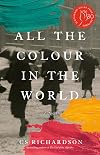
This non-traditional novel frustrated me at first, but I ended up loving it.
The novel, set in Toronto, begins with the birth of its protagonist Henry in 1916. Henry is raised by his grandmother who for his eighth birthday gifts him a box of colouring pencils, thus beginning his passion for colour and art which eventually translates into a career as an art historian. His love of art and the stories of the great artists also help him navigate through his life which includes struggle and show more tragedy.
The structure is not what one finds in most novels. Henry’s story is interspersed with factual information, most often about colour, artists, and artistic movements. It is best not to actually think of this book as a novel; it begins with a brief discussion of Sei Shōnagon’s Pillow Book, “a collection of anecdotes, musings about life . . . favourite quotations, poetry, lists, daily affirmations – to be for her eyes only” and a zibaldone, “an informal miscellany containing everything from landscape sketches to currency exchange rates, medicinal recipes to family trees.” This opening explains what this book is, a personal journal of sorts which Henry keeps within an art history textbook.
The book ends with a mention of the journals of Marcus Aurelius and their “notes and philosophical mementos intended solely for personal guidance and self-improvement . . . at times written in the second person, and vary in length from one sentence to several paragraphs.” Leonardo da Vinci’s description of his notebooks is quoted: “’without order, drawn from many papers, which I have copied here hoping to arrange them later, each in its place, according to the subjects of which they treat.’” These references again remind the reader of the author’s intention. Interestingly, the second person point of view is used in that Henry is addressed as “you.”
The non-fiction elements, which read like anecdotes that Henry in his role as professor or art history might mention in a class, are not entirely random: logical connections can be found. For instance, his despair after the death of a loved one is interspersed with references to Manet’s painting entitled Le Suicidé; suffering the psychological effects of warfare, Henry thinks about van Gogh’s mental health issues; and a woman introducing herself as Pazienza has Henry thinking of Behan’s engraving entitled Patientia. The Yann Martel quotation at the beginning (“Art is seed, art is memory, art is vaccine”) is an excellent summary of the theme of this book.
Readers will find themselves empathizing with Henry. He is a sensitive soul who struggles to find his way in life and who experiences more than one trauma. His comment about 1941 is truthful foreshadowing: “It is the last time you remember not having a worry in the world.” I kept hoping that he would find peace and happiness.
This book will not be for everyone. At first, I was frustrated with the constant digressions but I was won over. My interest in art and art history obviously influenced my reaction. I was familiar with some of the paintings referenced but not with others, and I can see myself re-reading the book and looking at photos of the paintings. I was reminded of my enjoyment of A History of the World in 10 ½ Chapters by Julian Barnes which includes a detailed analysis of Géricault's painting, The Raft of the Medusa.
This is not a lengthy read and a reader willing to be open-minded may be surprised by how the book will resonate.
Note: I received a digital galley from the publisher via NetGalley.
Please check out my reader's blog (https://schatjesshelves.blogspot.com/) and follow me on Twitter (@DCYakabuski). show less
The novel, set in Toronto, begins with the birth of its protagonist Henry in 1916. Henry is raised by his grandmother who for his eighth birthday gifts him a box of colouring pencils, thus beginning his passion for colour and art which eventually translates into a career as an art historian. His love of art and the stories of the great artists also help him navigate through his life which includes struggle and show more tragedy.
The structure is not what one finds in most novels. Henry’s story is interspersed with factual information, most often about colour, artists, and artistic movements. It is best not to actually think of this book as a novel; it begins with a brief discussion of Sei Shōnagon’s Pillow Book, “a collection of anecdotes, musings about life . . . favourite quotations, poetry, lists, daily affirmations – to be for her eyes only” and a zibaldone, “an informal miscellany containing everything from landscape sketches to currency exchange rates, medicinal recipes to family trees.” This opening explains what this book is, a personal journal of sorts which Henry keeps within an art history textbook.
The book ends with a mention of the journals of Marcus Aurelius and their “notes and philosophical mementos intended solely for personal guidance and self-improvement . . . at times written in the second person, and vary in length from one sentence to several paragraphs.” Leonardo da Vinci’s description of his notebooks is quoted: “’without order, drawn from many papers, which I have copied here hoping to arrange them later, each in its place, according to the subjects of which they treat.’” These references again remind the reader of the author’s intention. Interestingly, the second person point of view is used in that Henry is addressed as “you.”
The non-fiction elements, which read like anecdotes that Henry in his role as professor or art history might mention in a class, are not entirely random: logical connections can be found. For instance, his despair after the death of a loved one is interspersed with references to Manet’s painting entitled Le Suicidé; suffering the psychological effects of warfare, Henry thinks about van Gogh’s mental health issues; and a woman introducing herself as Pazienza has Henry thinking of Behan’s engraving entitled Patientia. The Yann Martel quotation at the beginning (“Art is seed, art is memory, art is vaccine”) is an excellent summary of the theme of this book.
Readers will find themselves empathizing with Henry. He is a sensitive soul who struggles to find his way in life and who experiences more than one trauma. His comment about 1941 is truthful foreshadowing: “It is the last time you remember not having a worry in the world.” I kept hoping that he would find peace and happiness.
This book will not be for everyone. At first, I was frustrated with the constant digressions but I was won over. My interest in art and art history obviously influenced my reaction. I was familiar with some of the paintings referenced but not with others, and I can see myself re-reading the book and looking at photos of the paintings. I was reminded of my enjoyment of A History of the World in 10 ½ Chapters by Julian Barnes which includes a detailed analysis of Géricault's painting, The Raft of the Medusa.
This is not a lengthy read and a reader willing to be open-minded may be surprised by how the book will resonate.
Note: I received a digital galley from the publisher via NetGalley.
Please check out my reader's blog (https://schatjesshelves.blogspot.com/) and follow me on Twitter (@DCYakabuski). show less
A Novel in Vignettes
Review of the Knopf Canada hardcover edition (January 17, 2023)
All the Colour in the World was longlisted and then was announced as one of the five books shortlisted for Canada's 2023 Scotiabank Giller Prize. The winner will be announced on November 13, 2023.
All the Colour in the World is a life story told in vignettes of the life of Henry, an art copyist, historian and teacher who was born in Toronto, Canada in the 1920s. It is somewhat experimental in the sense that it show more is not a continuous narrative. The chronological life story is often interrupted by information about the history of painting and drawing materials esp. the names and sources of colours. There are also anecdotes about significant paintings in history.
The book is perhaps not completely emotionally engaging due to the interruptions in the narrative. The 195 vignettes are very brief, many of them being less than half a page in length. There is much trauma and loss in the life of Henry, particularly after his experiences in the 2nd World War during the invasion of Sicily by the Allied Forces. The book has a resolution to Henry's trauma when he returns to Sicily many years afterwards.
I enjoyed reading All the Colour of the World perhaps more for the history of art, painting and colour than for Henry's story. But that is just me. This book fits more into the experimental side of the Giller shortlist along with Sarah Bernstein's Study for Obedience.
Other Reviews
A Celebration of Life by Brett Josef Grubisic, Toronto Star, January 19, 2023.
Trivia and Links
One of the paintings discussed in All the Colour in the World is "Las Meninas" (The Ladies in Waiting) (1656) by Diego Velázquez (1599-1660).
See painting at https://upload.wikimedia.org/wikipedia/commons/thumb/3/31/Las_Meninas%2C_by_Dieg...
Image sourced from Wikipedia.
I was especially pleased to read the anecdote about "Las Meninas" as I had previously encountered a humorous, but also thought provoking story about it:
Review of the Knopf Canada hardcover edition (January 17, 2023)
All the Colour in the World was longlisted and then was announced as one of the five books shortlisted for Canada's 2023 Scotiabank Giller Prize. The winner will be announced on November 13, 2023.
All the Colour in the World is a life story told in vignettes of the life of Henry, an art copyist, historian and teacher who was born in Toronto, Canada in the 1920s. It is somewhat experimental in the sense that it show more is not a continuous narrative. The chronological life story is often interrupted by information about the history of painting and drawing materials esp. the names and sources of colours. There are also anecdotes about significant paintings in history.
The book is perhaps not completely emotionally engaging due to the interruptions in the narrative. The 195 vignettes are very brief, many of them being less than half a page in length. There is much trauma and loss in the life of Henry, particularly after his experiences in the 2nd World War during the invasion of Sicily by the Allied Forces. The book has a resolution to Henry's trauma when he returns to Sicily many years afterwards.
I enjoyed reading All the Colour of the World perhaps more for the history of art, painting and colour than for Henry's story. But that is just me. This book fits more into the experimental side of the Giller shortlist along with Sarah Bernstein's Study for Obedience.
Other Reviews
A Celebration of Life by Brett Josef Grubisic, Toronto Star, January 19, 2023.
Trivia and Links
One of the paintings discussed in All the Colour in the World is "Las Meninas" (The Ladies in Waiting) (1656) by Diego Velázquez (1599-1660).
See painting at https://upload.wikimedia.org/wikipedia/commons/thumb/3/31/Las_Meninas%2C_by_Dieg...
Image sourced from Wikipedia.
I was especially pleased to read the anecdote about "Las Meninas" as I had previously encountered a humorous, but also thought provoking story about it:
"La primera vez que T. Gautier vio Las Meninas de Velázquez dijo: "¡¿Pero dónde está el cuadro!?". Es el mejor elogio que se le puede hacer a una obra de arte." - [author:Enrique Vila-Matas|25591].
"The first time T. Gautier saw Las Meninas by Velázquez, he said: "But where is the painting!?". That is the best compliment that can be paid to a work of art." - Enrique Vila-Matas.show less
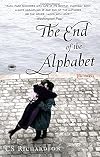
If you wish to fill a couple of hours of your life with a nicely written weepie, this is for you. Is it a novella? It is 140 small pages, large margins, double-spaced text. I've certainly read lots of 'short stories' this length.
It does consider a dilemma I've often wondered about. There are those quick deaths - one moment you are vacuuming or cooking dinner, next moment finito la musica. Death displaces life and you scarcely even have time to register it. There are the long ones, where you show more know for years what is going to happen and death simply becomes part of life, which goes on much as it had before.
Then there is finding out you have one month give or take, as the doctor says to Ambrose. I tried to make this sound better: 40,320 minutes. What do you do then? It makes me weep just thinking about it. Again. I had a friend to whom this happened. We were on the phone, we asked him to dinner, he said he couldn't for precisely that reason. He had 30 days, that was his news. There were so many things for which there was no longer time. We did see him for a coffee visit one morning during that 30 days, but in retrospect I feel terribly guilty about having taken that time from him, we just weren't important enough in his life to have justified 60 of those 40,320 minutes. Maybe, since you very devoutly believed in God despite this shitty situation, you will be reading this and if so, accept my apology, Richard.
This is Ambrose's account of those thirty days he discovered he had left. Completely different from my friend Richard's. Just as heart-breaking. show less
It does consider a dilemma I've often wondered about. There are those quick deaths - one moment you are vacuuming or cooking dinner, next moment finito la musica. Death displaces life and you scarcely even have time to register it. There are the long ones, where you show more know for years what is going to happen and death simply becomes part of life, which goes on much as it had before.
Then there is finding out you have one month give or take, as the doctor says to Ambrose. I tried to make this sound better: 40,320 minutes. What do you do then? It makes me weep just thinking about it. Again. I had a friend to whom this happened. We were on the phone, we asked him to dinner, he said he couldn't for precisely that reason. He had 30 days, that was his news. There were so many things for which there was no longer time. We did see him for a coffee visit one morning during that 30 days, but in retrospect I feel terribly guilty about having taken that time from him, we just weren't important enough in his life to have justified 60 of those 40,320 minutes. Maybe, since you very devoutly believed in God despite this shitty situation, you will be reading this and if so, accept my apology, Richard.
This is Ambrose's account of those thirty days he discovered he had left. Completely different from my friend Richard's. Just as heart-breaking. show less
"A man can see a hundred women, lust for a thousand more, but it is one scent that will open his eyes and turn him to love."
Ambrose Zephyr is a contented man, he shares a book-laden Victorian house with his loving wife, Zappora Ashkenazi, the love of his life. Zappora (Zipper) simply describes Ambrose as the only man she has ever loved. Without adjustment. They both have fulfilling jobs but no children because they simply didn't want any.
Then, just as he is turning fifty, Ambrose is told by show more his doctor that he has an unnamed illness and only one month to live. Reeling from the news, he and Zipper embark on a whirlwind expedition to the places he has most loved or has always longed to visit, from A to Z, Amsterdam to Zanzibar. As they travel to these romantic destinations, Zipper struggles to deal with the grand unfairness of their circumstances, whilst Ambrose reflects on his life.
'The End of The Alphabet' is a tender, intimate story of an ordinary life defined by an extraordinary love but is truth little more than a short story, (my copy only had 123 pages, wide margins and double spacing). Despite or perhaps because of its brevity Richardson’s prose has an honesty almost poetic in nature. This book is a very touching exploration of the nature of love, loss, and life which only took me about two hours to read. A simply beautiful piece of writing. show less
Ambrose Zephyr is a contented man, he shares a book-laden Victorian house with his loving wife, Zappora Ashkenazi, the love of his life. Zappora (Zipper) simply describes Ambrose as the only man she has ever loved. Without adjustment. They both have fulfilling jobs but no children because they simply didn't want any.
Then, just as he is turning fifty, Ambrose is told by show more his doctor that he has an unnamed illness and only one month to live. Reeling from the news, he and Zipper embark on a whirlwind expedition to the places he has most loved or has always longed to visit, from A to Z, Amsterdam to Zanzibar. As they travel to these romantic destinations, Zipper struggles to deal with the grand unfairness of their circumstances, whilst Ambrose reflects on his life.
'The End of The Alphabet' is a tender, intimate story of an ordinary life defined by an extraordinary love but is truth little more than a short story, (my copy only had 123 pages, wide margins and double spacing). Despite or perhaps because of its brevity Richardson’s prose has an honesty almost poetic in nature. This book is a very touching exploration of the nature of love, loss, and life which only took me about two hours to read. A simply beautiful piece of writing. show less
Lists
Awards


You May Also Like
Associated Authors
Statistics
- Works
- 3
- Members
- 869
- Popularity
- #29,448
- Rating
- 3.6
- Reviews
- 59
- ISBNs
- 40
- Languages
- 7