
Matthew Dennison (1)
Author of The Last Princess
For other authors named Matthew Dennison, see the disambiguation page.
About the Author
Matthew Dennison is the author of five critically acclaimed works of non-fiction, including Behind the Mask: The Life of Vita Sackville-West, a Book of the Year in The Times (London), The Spectator, The Independent, and The Observer. He is a contributor to Country Life and lives in the United show more Kingdom. show less
Works by Matthew Dennison
Associated Works
A Note of Explanation: An Undiscovered Story from Queen Mary's Dollhouse (2017) — Afterword, some editions — 69 copies, 4 reviews
Tagged
Common Knowledge
- Birthdate
- unknown
- Gender
- male
- Education
- Christ Church College, Oxford (BA, English)
University of Glasgow (MA, History of Decorative Arts) - Agent
- Georgina Capel Associates
- Nationality
- UK
- Associated Place (for map)
- UK
Members
Reviews
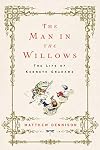
I did like Wind in the Willows as a kid. I liked parts of it still as an adult (maybe it was partly the illustrations by Ernest Shepard or Arthur Rackham - take your pick - that charmed me so). So Matthew Dennison's more-or-less graceful and more-or-less sympathetic biography of Kenneth Grahame caught my eye, as I knew basically nothing about this author of a classic novel for children. Spoiler alert: I don't think I'd want to be in the room with him. His childhood - a time and a state of show more mind he clung to with pathological intensity - was a very mixed bag indeed. Mother dead of scarlet fever when he was five, and Dad was an alcoholic. The four kids were farmed out to maternal grandmother of limited means and limited interest in raising the brood; they lived in a falling-apart house in the country. But that became the golden era of Grahame's unending love for the river and countryside as depicted in his stories. But then Dad decided he wanted the kids back, so back they went, and when he fell apart too, they were shipped back to grandma. Of an imaginative and literary bent, Grahame desperately wanted to go to Oxford, but there was no money. An uncle got him a clerk's job at the Bank of England instead, where he spent his working life, writing essays and stories on the side. He valorized the perfections of children and childhood, of a sunlit and perfectly contented rural life, no modernization or grownups tolerated, living a bachelor existence where long rambles in the country with various male friends were the pinnacle of happiness.
As he neared forty, a pretty spinster regaled him with adoring verses, and he kind of, well, went along with it. It was just what people did. He kept away from her with long visits elsewhere, but they wrote each other truly nauseating letters written in some sort of Cockney baby-talk with phonetic spellings. Finally, her attentions were compromising enough that he caved and they married. By the time to honeymoon was over, so was the relationship - but she was pregnant. A premature baby boy, blind in one eye, came along, plunging it into disaster. Mama believed he was God's gift to the universe, and he grew up believing it too, a volatile, even violent boy. The boy was frequently shunted off for weeks-long trips to the seaside with a nurse while his parents resided in separate parts of the house. Grahame wrote letters to him, stories of mole and rat and badger and the river and the sea, with the riotous, selfish, irresponsible and unbearable Mr. Toad based on the child himself.
Here I stop. It was all so creepily weird and unhealthy I didn't want to know any more, though I did learn in other sources that the wretched son lay down on the railroad tracks to be dismembered by a train when he was 20. So... my fond memories of a charming childhood story were rather trashed by the discovery of the misery from which it grew. Grahame also put me in mind of two other roughly contemporary writing men, J.M. Barrie and Charles Dodgson - purveyors of classic literature for kids, and all of whom retained obsessions about children, about remaining children themselves, and none of them very healthy adult men. Dickens, too - a champion of children (Copperfield, Twist, Jo...) whose actual kids couldn't stand him. What a weird era, for all the wonderful art and literature it fostered. I kinda wish I hadn't even picked this book up. show less
As he neared forty, a pretty spinster regaled him with adoring verses, and he kind of, well, went along with it. It was just what people did. He kept away from her with long visits elsewhere, but they wrote each other truly nauseating letters written in some sort of Cockney baby-talk with phonetic spellings. Finally, her attentions were compromising enough that he caved and they married. By the time to honeymoon was over, so was the relationship - but she was pregnant. A premature baby boy, blind in one eye, came along, plunging it into disaster. Mama believed he was God's gift to the universe, and he grew up believing it too, a volatile, even violent boy. The boy was frequently shunted off for weeks-long trips to the seaside with a nurse while his parents resided in separate parts of the house. Grahame wrote letters to him, stories of mole and rat and badger and the river and the sea, with the riotous, selfish, irresponsible and unbearable Mr. Toad based on the child himself.
Here I stop. It was all so creepily weird and unhealthy I didn't want to know any more, though I did learn in other sources that the wretched son lay down on the railroad tracks to be dismembered by a train when he was 20. So... my fond memories of a charming childhood story were rather trashed by the discovery of the misery from which it grew. Grahame also put me in mind of two other roughly contemporary writing men, J.M. Barrie and Charles Dodgson - purveyors of classic literature for kids, and all of whom retained obsessions about children, about remaining children themselves, and none of them very healthy adult men. Dickens, too - a champion of children (Copperfield, Twist, Jo...) whose actual kids couldn't stand him. What a weird era, for all the wonderful art and literature it fostered. I kinda wish I hadn't even picked this book up. show less
What a sad little book! And I do mean little, too - despite what Goodreads says, my hardcover copy is just over 200 pages, with less than 200 of actual narrative. It's a quick read - a quick read about a sad life, or at least a life of denial. Dennison does, I think, a good job; he uses quotes from correspondence for much of his sources, and he draws comparisons to Grahame's written work in a way that seems very legitimate. It doesn't feel like he's sensationalizing Grahame's life, show more especially as much of the biography is straight to the point, without lingering. I suppose one could argue that he chooses to present Grahame's life more negatively than is necessary, but based on the sheer facts he gives us, it's hard to make a case for that reading. At very least, we can say Kenneth Grahame was an unhappy person, given to - willfully or otherwise - choosing idyllic pastoral fantasy over reality, and (this is the crucial part) making himself and other people at least somewhat unhappy as a result (and far more than that, according to Dennison).
I think this is a hard read not just as a biography, but in particular for people like me who grew up loving The Wind in the Willows. Absolutely, you can't deny the book's conservatism; you can't deny what it says about class structure. But for those of us who encountered it as kids - especially kids outside of the UK - we always thought of it as, and probably do still think of it as, a comforting and delightful fantasy story. (Dennison himself points out how appealing it is to the "conservatism" of small children, who never want anything to change.) As a result, reading about its author as such an unhappy person is somewhat gutting and hard to read. The 3-star rating i have given the book, therefore, is for my enjoyment of its contents - not for the author's skill or accuracy, which, I think, are beyond reproach. show less
I think this is a hard read not just as a biography, but in particular for people like me who grew up loving The Wind in the Willows. Absolutely, you can't deny the book's conservatism; you can't deny what it says about class structure. But for those of us who encountered it as kids - especially kids outside of the UK - we always thought of it as, and probably do still think of it as, a comforting and delightful fantasy story. (Dennison himself points out how appealing it is to the "conservatism" of small children, who never want anything to change.) As a result, reading about its author as such an unhappy person is somewhat gutting and hard to read. The 3-star rating i have given the book, therefore, is for my enjoyment of its contents - not for the author's skill or accuracy, which, I think, are beyond reproach. show less
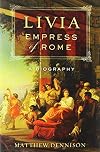
A well written, approachable and enjoyable book it doesn't really reveal anything overwhelmingly new about Livia but then there doesn't seem to be much out there at all. What I did enjoy was how he used what little there is known to create at least a feeling of what her life may have been like and to point out the inconsistencies and biases in the recorded histories that paint her as a villainess without trying to claim that none of them were true.
Not an earth shattering book but enjoyable, show more I came away with at least some feeling for what the life of a high level Roman woman may have been like. show less
Not an earth shattering book but enjoyable, show more I came away with at least some feeling for what the life of a high level Roman woman may have been like. show less
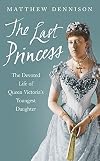
Princess Beatrice was the last daughter of Queen Victoria and Princes Albert. As a baby she petted, shown off, compared to fairies and was gay and delightful. This idyll was smashed with the death of her father. In her grief the Queen wrapped the sleeping Beatrice in one of Prince Albert’s nightshirts and clasped her sleeping daughter to her breast. Although Matthew Dennison thinks this probably apocryphal he concludes that even so it encapsulated their future relationship; the Queen show more vampire-like in her need for devotion and love from her unresisting daughter. The slow crushing of Beatrice’s lightness and the transformation of her into a dull, heavy, stay-at-home spinster, the Queen’s Benjamin is one of the most striking aspects of Dennison’s sensitive and excellent old-fashioned biography.
For Victoria Beatrice was ‘the flower of the flock’ until she fell in love. Prince Henry of Battenberg was like a real-life Lohengrin and Beatrice besotted. What Queen Victoria did next was to subject her to a psychological war and from May until November 1884 she did not speak to her. Once Beatrice agreed that after her marriage she would still live at home, with the addition of a tame, dashing husband, the Queen began to talk despite ‘such pain’ that she had failed in ‘the hope of keeping your one little ewe lamb entirely to yourself’, as Princess Alexandra sympathised.
Henry and Beatrice were allowed a five day honeymoon. The Queen called on them twice. Eventually Henry escaped, died from malaria and the two women carried on. Beatrice’s daughter the Queen of Spain said of her mother: ‘Her devotion and submission were complete.’ Her reaction on the Queen’s death was devastation: ‘I ... can hardly realize what life will be like without her’. But Beatrice lived on into a world whirling faster with change, wars and revolutions, the last of Victoria and Albert’s princesses. show less
For Victoria Beatrice was ‘the flower of the flock’ until she fell in love. Prince Henry of Battenberg was like a real-life Lohengrin and Beatrice besotted. What Queen Victoria did next was to subject her to a psychological war and from May until November 1884 she did not speak to her. Once Beatrice agreed that after her marriage she would still live at home, with the addition of a tame, dashing husband, the Queen began to talk despite ‘such pain’ that she had failed in ‘the hope of keeping your one little ewe lamb entirely to yourself’, as Princess Alexandra sympathised.
Henry and Beatrice were allowed a five day honeymoon. The Queen called on them twice. Eventually Henry escaped, died from malaria and the two women carried on. Beatrice’s daughter the Queen of Spain said of her mother: ‘Her devotion and submission were complete.’ Her reaction on the Queen’s death was devastation: ‘I ... can hardly realize what life will be like without her’. But Beatrice lived on into a world whirling faster with change, wars and revolutions, the last of Victoria and Albert’s princesses. show less
Lists
Writing (1)
Awards


You May Also Like
Associated Authors
Statistics
- Works
- 11
- Also by
- 1
- Members
- 946
- Popularity
- #27,176
- Rating
- 3.5
- Reviews
- 32
- ISBNs
- 79
- Languages
- 3