
Kimberly Weinberger
Author of Let's Read About: George Washington
About the Author
Series
Works by Kimberly Weinberger
Cardcaptors: Jr Ch Bk #1: Sakura & the New Boy: Sakura & The New Baby (Cardcaptors, Junior Chapter Book) (2001) 18 copies
Clifford Share and Be Fair 2 copies
¡Los niños mandan! 1 copy
Kiss of Death (Point Crime) 1 copy
Build your Own Toolbox 1-2-3 1 copy
Associated Works
Let's Read About Biographies for Early Readers: George Washington / Abraham Lincoln / Martin Luther King, Jr. / Rosa Parks / Ruby Bridges (2002) — Contributor — 13 copies, 1 review
Tagged
Common Knowledge
- Gender
- female
Members
Reviews

My first-grade niece read this to me. Why do biographies for children insist on over-simplifying and whitewashing to such a painful degree? Could we, for instance, include the fact that Washington was a slave-owner in a children's biography? Seriously. If they can learn about war, they can learn that people are not all 100% heroes. Let's start that critical thinking early, please!
My first-grade niece read this to me. Why do biographies for children insist on over-simplifying and whitewashing to such a painful degree? Could we, for instance, include the fact that Washington was a slave-owner in a children's biography? Seriously. If they can learn about war, they can learn that people are not all 100% heroes. Let's start that critical thinking early, please!
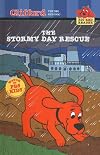
Poor Clifford gets confused when everyone yells at him for digging holes but then wants him to dig a ditch and form a berm to protect the town library from a storm surge. A good lesson about picking the appropriate time and place.
FOR REFERENCE:
Adapted by Kimberly Weinberger and illustrators Del and Dana Thompson from the television script "Stormy Weather" by Dev Ross for the Clifford the Big Red Dog PBS Kids animated series, Season 1, Episode 8, September 13, 2000. (Note: The book's title show more page gives a co-credit to Bruce Talkington for the television script, but his name is not in the actual episode's closing credits, only Dev Ross.) show less
FOR REFERENCE:
Adapted by Kimberly Weinberger and illustrators Del and Dana Thompson from the television script "Stormy Weather" by Dev Ross for the Clifford the Big Red Dog PBS Kids animated series, Season 1, Episode 8, September 13, 2000. (Note: The book's title show more page gives a co-credit to Bruce Talkington for the television script, but his name is not in the actual episode's closing credits, only Dev Ross.) show less

I really enjoyed this book because it gave an accurate description of Pocahontas’s real life, allowing the reader to learn about who the true Pocahontas was and not the character developed by Disney. The story is short and gives only a basic overview of the Native American Princess, so I was left with wanting to know more about her life. However, its simplicity is what makes it such a great children’s book. Young students can practice their reading skills and gain an introduction towards show more the non-fiction genre of, biographies.
When reviewing the criteria well written biographies often cover, this book would receive an average rating. Pocahontas is depicted as a peaceful mediator between the English settlers and her Native tribe, doing only good for both parties. While these strengths are important to her story, her weaknesses aren’t discussed, providing a single outlook that may be viewed as biased. That being said, Pocahontas’s actions were in favor of all people and conflicts arose over the land and resources of Virginia. I wouldn’t say the author, Kimberly Weinberger, presents a biased point of view, but instead a broad overview of what was happening at the time and how Pocahontas helped solve issues of her native people and new acquaintances. By not going into great detail on some of the gruesome acts that were occurring between these two groups, Weinberg maintains an appropriate reading/subject matter for the target audience.
This biography uses basic vocabulary for students learning to read, meaning more experienced readers like myself, may find the language to be bland. While the text isn’t very descriptive, it is clear and to the point, perfect for children learning to read. However, Pocahontas’s life is interesting, so it’s the storyline that keeps the reader engaged. The story is in chronological order of Pocahontas’s life, but the end feels very abrupt. One minute the reader is learning about her life overseas in England, and suddenly the last page appears, with a quick summary about how people today remember her as a, “brave woman who helped bring peace to her land,” I was left wondering what happened with the rest of her life and her newly formed family. I realize Weinberger probably wanted to keep the story concise, as not to lose her target audiences attention, but she should have at least given a quick overview of what happened to Pocahontas after leaving America, before coming to an end.
The people discussed were not characters as depicted in the Disney version of Pocahontas’s life, but rather an accurate account was shown. For example, the book mentioned how Pocahontas protected John Smith from her tribe by throwing herself in front of him, similar to one of the movies final, dramatic, scenes. The difference was that in reality, this brave act was just that, acting. Her tribe put on a play to show that John Smith was a friend of the Natives and they would protect him from harm.
Weinberger writes about Pocahontas in a third person point of view and as mentioned earlier, grabs the reader’s attention through the fascinating plot of the princess’s life. The conflicts between settlers and Native Americans keeps the audience wanting to find out more, as well as the way the text is spaced out. Weinberger repeatedly ended pages with captivating statements. For example, one page ended with, “Pocahontas was given a special role to act out in the play,” making the audience want to read on and discover what would happen next; in this case, what role she would take on.
The illustrations added to this effect since they provided realistic paintings of the events taking place, adding to the drama of the hardships and love being discussed. The paintings were dark and had a serious tone to them, fitting the darker themes of Pocahontas’s struggles. Between the continuous disagreements between parties and peaceful resolutions provided by Pocahontas, the reader was forced to consider both points of view and recognize how working with one another and putting aside ones differences was what allowed all people to thrive and be happy. When the settlers and Natives worked together, they could share resources through tough times like a harsh, cold winter. They could also learn about one another’s culture and in Pocahontas’s case, find love and make a family. The reader is left with the idea that helping all people, no matter their background, race, or customs, is beneficial for everyone and important for total success. show less
When reviewing the criteria well written biographies often cover, this book would receive an average rating. Pocahontas is depicted as a peaceful mediator between the English settlers and her Native tribe, doing only good for both parties. While these strengths are important to her story, her weaknesses aren’t discussed, providing a single outlook that may be viewed as biased. That being said, Pocahontas’s actions were in favor of all people and conflicts arose over the land and resources of Virginia. I wouldn’t say the author, Kimberly Weinberger, presents a biased point of view, but instead a broad overview of what was happening at the time and how Pocahontas helped solve issues of her native people and new acquaintances. By not going into great detail on some of the gruesome acts that were occurring between these two groups, Weinberg maintains an appropriate reading/subject matter for the target audience.
This biography uses basic vocabulary for students learning to read, meaning more experienced readers like myself, may find the language to be bland. While the text isn’t very descriptive, it is clear and to the point, perfect for children learning to read. However, Pocahontas’s life is interesting, so it’s the storyline that keeps the reader engaged. The story is in chronological order of Pocahontas’s life, but the end feels very abrupt. One minute the reader is learning about her life overseas in England, and suddenly the last page appears, with a quick summary about how people today remember her as a, “brave woman who helped bring peace to her land,” I was left wondering what happened with the rest of her life and her newly formed family. I realize Weinberger probably wanted to keep the story concise, as not to lose her target audiences attention, but she should have at least given a quick overview of what happened to Pocahontas after leaving America, before coming to an end.
The people discussed were not characters as depicted in the Disney version of Pocahontas’s life, but rather an accurate account was shown. For example, the book mentioned how Pocahontas protected John Smith from her tribe by throwing herself in front of him, similar to one of the movies final, dramatic, scenes. The difference was that in reality, this brave act was just that, acting. Her tribe put on a play to show that John Smith was a friend of the Natives and they would protect him from harm.
Weinberger writes about Pocahontas in a third person point of view and as mentioned earlier, grabs the reader’s attention through the fascinating plot of the princess’s life. The conflicts between settlers and Native Americans keeps the audience wanting to find out more, as well as the way the text is spaced out. Weinberger repeatedly ended pages with captivating statements. For example, one page ended with, “Pocahontas was given a special role to act out in the play,” making the audience want to read on and discover what would happen next; in this case, what role she would take on.
The illustrations added to this effect since they provided realistic paintings of the events taking place, adding to the drama of the hardships and love being discussed. The paintings were dark and had a serious tone to them, fitting the darker themes of Pocahontas’s struggles. Between the continuous disagreements between parties and peaceful resolutions provided by Pocahontas, the reader was forced to consider both points of view and recognize how working with one another and putting aside ones differences was what allowed all people to thrive and be happy. When the settlers and Natives worked together, they could share resources through tough times like a harsh, cold winter. They could also learn about one another’s culture and in Pocahontas’s case, find love and make a family. The reader is left with the idea that helping all people, no matter their background, race, or customs, is beneficial for everyone and important for total success. show less
You May Also Like


Associated Authors
Statistics
- Works
- 52
- Also by
- 1
- Members
- 5,555
- Popularity
- #4,476
- Rating
- 3.6
- Reviews
- 24
- ISBNs
- 91
- Languages
- 3
- Favorited
- 1