

Lee Lozano (1930–1999)
Author of Lee Lozano: Private Book 6
Works by Lee Lozano
In the Studio: Lee Lozano 1 copy
Associated Works
Tagged
Common Knowledge
- Canonical name
- Lozano, Lee
- Legal name
- Kastner, Lenore (birth)
- Other names
- E
Free, Lee - Birthdate
- 1930-11-05
- Date of death
- 1999-10-02
- Gender
- female
- Education
- Art Institute of Chicago (BFA|1960)
University of Chicago (BA|1951) - Occupations
- artist
- Cause of death
- cervical cancer
- Nationality
- USA
- Birthplace
- Newark, New Jersey, USA
- Places of residence
- Dallas, Texas, USA
New York, New York, USA
Chicago, Illinois, USA - Place of death
- Dallas, Texas, USA
- Associated Place (for map)
- USA
Members
Reviews
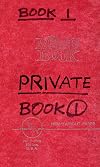
Before her self-imposed exile from the art world, Lee Lozano (1930–99) was a highly regarded painter who defined a generation of American artists infusing conceptualism with a new intensity. A prolific writer and documenter of both her art and her relationships, the public and private, Lozano kept a series of personal journals from 1968 to 1972 while living in New York’s SoHo neighborhood.
Eleven of these private books survive, containing notes on her work, detailed interactions with show more artist friends and commentary on the alienations of gender politics, as well as philosophical queries into art’s role in society and humorous asides from daily life.
In the decade before her infamous “dropout piece”―culminating in a move to Dallas where she would remain until her death―Lozano returned to these notebooks, editing the entries, sometimes blacking out entire pages. Private Book 1 is the first in the series of 11 pocket-sized books, which are printed as facsimiles.
Lee Lozano Private Books 1-3 by Madeline Weisburg
“Rebellion?” Lee Lozano asks in one of her late 1960s journals. “Ce-rebellion! Cerebellion.” The note, an offhand entry jotted out in ballpoint pen, seems a fitting way to describe the artist’s particular brand of artistic defiance, synthesizing as it does the tone, form, and ideology of her now-legendary conceptual practice, which manifested itself as a series of private acts of refusal. These acts reached an apex in 1970 with Dropout Piece, wherein Lozano “dropped out” of the New York art world at the high noon of Conceptual art and Postminimalism’s ascendancy.
“What type of world do I want?” she implicitly asked herself again and again. Her answer: not this one. Not quite a public rallying cry or attempt to galvanize a group into collective action, Lozano’s intellectual revolution and protest of art market strictures was instead an example of an artist carving out a space for herself in the world that was hers alone. Consequently, the idea of enacting a private rebellion of the mind—a “ce-rebellion”—is also part of the funny feeling of identification that occurs when reading through Lozano’s private notebooks, which the gallery and publisher Karma is now releasing, beautifully, in facsimile form.
Between 1967 and 1970, during a period of extreme intensity, Lozano kept a set of eleven pocket-sized and spiral-bound notebooks (three have been released by Karma so far), each cover numbered sequentially and emblazoned in chunky black marker with the word “PRIVATE.” While cited frequently in scholarly literature and understood as essential to her seismic experimentation with what she would call “Life-Art” (dematerialized art that involved action, information, and behavior as medium), these journals have remained largely out of public view. Now widely available and resting on my nightstand, these dutifully reproduced facsimiles could easily be mistaken as my own.
The handwritten notebooks are filled with a mixture of content banal and enthralling: friends’s phone numbers, political declarations, reading lists on math and science, aphorisms, horoscopes, puns, ideas for paintings, SoHo gossip, drug consumption. They include dozens of examples of Lozano’s “Life-Art” pieces, taking the form of highly personal instructions to herself, from No-Info Piece (“Live in solitary confinement for as long as I could stand it. No telephone, radio, records, reading, drugs, visitors, mail, window view, clock”) to Stop Smoking Cigarettes Piece (“Just do it when the current carton runs out. Do it abruptly, like the No-Grass Piece”) to Throwing Up Piece (“Throw the last 12 issues of Artforum up in the air”). Some texts read as artist’s statement: “Finally I must say something about why I write in such small books. It is to encourage myself to maintain terseness.” Others allude to her gradual turn out from the art world as already indelibly underway: “Stimulate interest in returning to private art, art ‘scene’ in artists’ cribs rather than public places…Just stimulate interest in this (no rules or boycotts, necessarily).” Importantly, although some of these texts were rewritten for public presentation in what the artist called “write-ups,” others, like Dropout Piece do not register in material form beyond the pages of her notebooks at all.
Details about Lozano’s daily life also flood the pages. Readers learn that she was in near-daily contact with Dan Graham: they watched the moon landing on TV together, attended a Grateful Dead concert, and shared a Thanksgiving dinner with Vito Acconci. She recalls complaining to her neighbors—to Joseph Kosuth about their broken elevator and to Christine Kozlov about the mailbox key. She projects an increasing reticence about meeting up with Yvonne Rainer and registers Eva Hesse’s death, unemotionally, by date and time of day. Her third notebook, which is filled with a pathologically detailed list of calls and visits she made and received between May 15, 1969 and July 21, 1970 likewise names prominent artists, dealers, and curators that made up her now-canonized cohort.
Although these details of Lozano’s personal life may read simply as gossip—and this is undeniably part of the pleasure of reading her journals—the notion of the private is closely related to overarching ideas that fundamentally formed her practice, in which boundaries between objectivity and intimacy, both in art and everyday life were often dissolved, or at least confused. While Lozano rendered personal behavior the subject of intensive study, her practice was not removed from the context of the greater cultural moment. Seen through the lens of Timothy Leary’s counterculture catchphrase “Turn on, tune in, drop out” or Herbert Marcuse’s “Great Refusal,” which encouraged people to transform the system or drop out of it, inwardness could be framed as an organizing concept in which to create a new liberating intellectual reality in the private sphere.
This understanding of privacy, as a conceit circumscribing Lozano’s journal activities is amplified by the directness of the artist’s prose and the intimacy of the notebook form. Part of Lozano’s brilliance as a writer is her simultaneous forthrightness and ambiguity, the fact that she can so forcefully conjure ideas while still withholding details of the outcomes of her actions—a tactic that renders her texts a kind of projection screen for subconscious ruminations from the depths of the reader’s brain. Her statements, which are almost always caustic, and often magnificently obnoxious, contain a type of vigorous idealism about how to pursue personal liberation in the face of an antagonistic social and economic order, which can be genuinely gripping.
Moreover, while the journals are clearly marked “private,” there is an uncanny sense that Lozano was aware of her future audience. In January 1972, she retrospectively edited the notebooks and dated her amendments—perhaps a final reshuffling of her legacy with a reading public in mind—before she dropped out of the mainstream art world to Dallas, where she would remain until her death in 1999. Because of this, while Karma’s editions are true to the original form (including tipped-in notes and the recognizable gradations of cheap, sticky ink), the act of snooping in someone else’s diary feels less like a forbidden activity, and more like an invitation to deliberate on all the ways that privacy can be activated as a personal and political position. For Lozano, insularity was a matter of ethics, worked out on a level of scale: privacy was a means to refuse participation in systems and institutions that she disagreed with but also involved shifting the daily conditions of her art production and reception to a micro-sphere. In this sense, the artist did not merely espouse her ideals—she lived them. There is something unmistakably powerful about committing to an ideology that fundamentally dictates how one lives, socializes, and creates—and to such an extreme.
Unlike some publications in the recent uptick in facsimile editions, this series of Lee Lozano’s radically intimate notebooks makes a major contribution to knowledge and understanding of the rigorous and reclusive artist’s life on the level of both content and form. They maintain their primary identity as artworks, instead of relics. And, most significantly, they give us access to the primary location of her ce-rebellious work during the late 1960s and early ’70s—the precise historical moment into which we most wish for a peek. show less
Eleven of these private books survive, containing notes on her work, detailed interactions with show more artist friends and commentary on the alienations of gender politics, as well as philosophical queries into art’s role in society and humorous asides from daily life.
In the decade before her infamous “dropout piece”―culminating in a move to Dallas where she would remain until her death―Lozano returned to these notebooks, editing the entries, sometimes blacking out entire pages. Private Book 1 is the first in the series of 11 pocket-sized books, which are printed as facsimiles.
Lee Lozano Private Books 1-3 by Madeline Weisburg
“Rebellion?” Lee Lozano asks in one of her late 1960s journals. “Ce-rebellion! Cerebellion.” The note, an offhand entry jotted out in ballpoint pen, seems a fitting way to describe the artist’s particular brand of artistic defiance, synthesizing as it does the tone, form, and ideology of her now-legendary conceptual practice, which manifested itself as a series of private acts of refusal. These acts reached an apex in 1970 with Dropout Piece, wherein Lozano “dropped out” of the New York art world at the high noon of Conceptual art and Postminimalism’s ascendancy.
“What type of world do I want?” she implicitly asked herself again and again. Her answer: not this one. Not quite a public rallying cry or attempt to galvanize a group into collective action, Lozano’s intellectual revolution and protest of art market strictures was instead an example of an artist carving out a space for herself in the world that was hers alone. Consequently, the idea of enacting a private rebellion of the mind—a “ce-rebellion”—is also part of the funny feeling of identification that occurs when reading through Lozano’s private notebooks, which the gallery and publisher Karma is now releasing, beautifully, in facsimile form.
Between 1967 and 1970, during a period of extreme intensity, Lozano kept a set of eleven pocket-sized and spiral-bound notebooks (three have been released by Karma so far), each cover numbered sequentially and emblazoned in chunky black marker with the word “PRIVATE.” While cited frequently in scholarly literature and understood as essential to her seismic experimentation with what she would call “Life-Art” (dematerialized art that involved action, information, and behavior as medium), these journals have remained largely out of public view. Now widely available and resting on my nightstand, these dutifully reproduced facsimiles could easily be mistaken as my own.
The handwritten notebooks are filled with a mixture of content banal and enthralling: friends’s phone numbers, political declarations, reading lists on math and science, aphorisms, horoscopes, puns, ideas for paintings, SoHo gossip, drug consumption. They include dozens of examples of Lozano’s “Life-Art” pieces, taking the form of highly personal instructions to herself, from No-Info Piece (“Live in solitary confinement for as long as I could stand it. No telephone, radio, records, reading, drugs, visitors, mail, window view, clock”) to Stop Smoking Cigarettes Piece (“Just do it when the current carton runs out. Do it abruptly, like the No-Grass Piece”) to Throwing Up Piece (“Throw the last 12 issues of Artforum up in the air”). Some texts read as artist’s statement: “Finally I must say something about why I write in such small books. It is to encourage myself to maintain terseness.” Others allude to her gradual turn out from the art world as already indelibly underway: “Stimulate interest in returning to private art, art ‘scene’ in artists’ cribs rather than public places…Just stimulate interest in this (no rules or boycotts, necessarily).” Importantly, although some of these texts were rewritten for public presentation in what the artist called “write-ups,” others, like Dropout Piece do not register in material form beyond the pages of her notebooks at all.
Details about Lozano’s daily life also flood the pages. Readers learn that she was in near-daily contact with Dan Graham: they watched the moon landing on TV together, attended a Grateful Dead concert, and shared a Thanksgiving dinner with Vito Acconci. She recalls complaining to her neighbors—to Joseph Kosuth about their broken elevator and to Christine Kozlov about the mailbox key. She projects an increasing reticence about meeting up with Yvonne Rainer and registers Eva Hesse’s death, unemotionally, by date and time of day. Her third notebook, which is filled with a pathologically detailed list of calls and visits she made and received between May 15, 1969 and July 21, 1970 likewise names prominent artists, dealers, and curators that made up her now-canonized cohort.
Although these details of Lozano’s personal life may read simply as gossip—and this is undeniably part of the pleasure of reading her journals—the notion of the private is closely related to overarching ideas that fundamentally formed her practice, in which boundaries between objectivity and intimacy, both in art and everyday life were often dissolved, or at least confused. While Lozano rendered personal behavior the subject of intensive study, her practice was not removed from the context of the greater cultural moment. Seen through the lens of Timothy Leary’s counterculture catchphrase “Turn on, tune in, drop out” or Herbert Marcuse’s “Great Refusal,” which encouraged people to transform the system or drop out of it, inwardness could be framed as an organizing concept in which to create a new liberating intellectual reality in the private sphere.
This understanding of privacy, as a conceit circumscribing Lozano’s journal activities is amplified by the directness of the artist’s prose and the intimacy of the notebook form. Part of Lozano’s brilliance as a writer is her simultaneous forthrightness and ambiguity, the fact that she can so forcefully conjure ideas while still withholding details of the outcomes of her actions—a tactic that renders her texts a kind of projection screen for subconscious ruminations from the depths of the reader’s brain. Her statements, which are almost always caustic, and often magnificently obnoxious, contain a type of vigorous idealism about how to pursue personal liberation in the face of an antagonistic social and economic order, which can be genuinely gripping.
Moreover, while the journals are clearly marked “private,” there is an uncanny sense that Lozano was aware of her future audience. In January 1972, she retrospectively edited the notebooks and dated her amendments—perhaps a final reshuffling of her legacy with a reading public in mind—before she dropped out of the mainstream art world to Dallas, where she would remain until her death in 1999. Because of this, while Karma’s editions are true to the original form (including tipped-in notes and the recognizable gradations of cheap, sticky ink), the act of snooping in someone else’s diary feels less like a forbidden activity, and more like an invitation to deliberate on all the ways that privacy can be activated as a personal and political position. For Lozano, insularity was a matter of ethics, worked out on a level of scale: privacy was a means to refuse participation in systems and institutions that she disagreed with but also involved shifting the daily conditions of her art production and reception to a micro-sphere. In this sense, the artist did not merely espouse her ideals—she lived them. There is something unmistakably powerful about committing to an ideology that fundamentally dictates how one lives, socializes, and creates—and to such an extreme.
Unlike some publications in the recent uptick in facsimile editions, this series of Lee Lozano’s radically intimate notebooks makes a major contribution to knowledge and understanding of the rigorous and reclusive artist’s life on the level of both content and form. They maintain their primary identity as artworks, instead of relics. And, most significantly, they give us access to the primary location of her ce-rebellious work during the late 1960s and early ’70s—the precise historical moment into which we most wish for a peek. show less
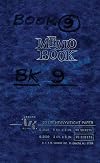
The ninth in Karma’s 11-volume edition of Lee Lozano’s (1930–99) Private Book project, this volume spans April to September 1970, the summer that preceded Lozano’s solo exhibition at the Whitney, where she showed her Wave Paintings. (Following this major show, Lozano ceased to paint altogether and increasingly turned her attention to text-based works.) Among the thoughts, manifestos and personal contacts scribbled in these entries is a callout to Lucy Lippard, who described Lozano as show more “the major female figure” in conceptual art during the 1960s: “Slogans written on postcards to Lucy Lippard & my parents: Love Your Planet / Plan-It / Lose your ego for peace / Put YOUTH in the black & white house.” show less
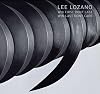
edited by Adam Szymczyk, includes essays by Todd Alden, among others. Win First Don’t Last, Win Last Don’t Care documents the artist’s art chronologically through photographs and notes.
This richly illustrated work is an extension of the exhibition, but can also be seen as a separate statement on the work and life of Lee Lozano. The many illustrations and insightful descriptions give an insight in her life as an artist and her works.
"A publication for the exhibition Lee Lozano – WIN show more FIRST DONT LAST WIN LAST DONT CARE: 08/10/2006 - 07/01/2007 Van Abbemuseum, 15/06/ - 27/08/2006 Kunsthalle Basel, has been published by Schwabe ag, in cooperation with the Kunsthalle Basel and the Van Abbemuseum.
The work of Lee Lozano (1930-1999) is one of the best-kept secrets in today’s contemporary art world. She was a woman artist who established herself and her work in New York in the 1960s in a world dominated by men and then decided to give it all up in the early 1970s and moved to Dallas. Lozano’s work, even in the short period she was active in New York, encompassed, and in many ways mastered, a wide range of styles from text works to abstract paintings, drawings to everyday activities declared art. She knew and collaborated with some of the most famous names of minimalism and conceptualism, but she always held herself a little apart. She fought for her own idealisms, matched it with her disillusionment and questioned feminism even as she made drawings of the absurdities of a patriarchal world where tools, machines, weapons and money dominate the imagination. Her later Language Pieces can now be understood as some of the most radical expressions of the conceptual movement at that time.
This publication assembles images from her work and archives together with a series of texts that outline her development as an artist from the 1950s and focus on particular activities or reminiscences. There is also the partial transcript of a unique recording of a lecture Lee Lozano gave at the Nova Scotia College of Art and Design in 1971 shortly before she left the art world.
In total, this book sheds light on a fascinating individual artist and also adds another point of view to the rich, complex story of the NewYork art scene in the 1960s and its continued resonance in our culture today. show less
This richly illustrated work is an extension of the exhibition, but can also be seen as a separate statement on the work and life of Lee Lozano. The many illustrations and insightful descriptions give an insight in her life as an artist and her works.
"A publication for the exhibition Lee Lozano – WIN show more FIRST DONT LAST WIN LAST DONT CARE: 08/10/2006 - 07/01/2007 Van Abbemuseum, 15/06/ - 27/08/2006 Kunsthalle Basel, has been published by Schwabe ag, in cooperation with the Kunsthalle Basel and the Van Abbemuseum.
The work of Lee Lozano (1930-1999) is one of the best-kept secrets in today’s contemporary art world. She was a woman artist who established herself and her work in New York in the 1960s in a world dominated by men and then decided to give it all up in the early 1970s and moved to Dallas. Lozano’s work, even in the short period she was active in New York, encompassed, and in many ways mastered, a wide range of styles from text works to abstract paintings, drawings to everyday activities declared art. She knew and collaborated with some of the most famous names of minimalism and conceptualism, but she always held herself a little apart. She fought for her own idealisms, matched it with her disillusionment and questioned feminism even as she made drawings of the absurdities of a patriarchal world where tools, machines, weapons and money dominate the imagination. Her later Language Pieces can now be understood as some of the most radical expressions of the conceptual movement at that time.
This publication assembles images from her work and archives together with a series of texts that outline her development as an artist from the 1950s and focus on particular activities or reminiscences. There is also the partial transcript of a unique recording of a lecture Lee Lozano gave at the Nova Scotia College of Art and Design in 1971 shortly before she left the art world.
In total, this book sheds light on a fascinating individual artist and also adds another point of view to the rich, complex story of the NewYork art scene in the 1960s and its continued resonance in our culture today. show less
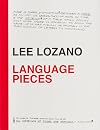
In the late 1960s, Lee Lozano (1930–99) conceived of and executed a series of "language pieces," written in the pages of her notebooks, consisting of rules and parameters for the actions that would constitute a piece. From offering money to houseguests to smoking as much marijuana as possible, Lozano boldly tested social norms, culminating in two of her most famous works: General Strike Piece (1969), which saw her retreating from the art world completely, and Decide to Boycott Women show more (1971), in which she ceased engaging with all members of her own gender. Lee Lozano: Language Pieces presents 46 of these pieces, beautifully reproducing them at full scale. Nearly five decades later, these radical manifestations of 1960s and '70s conceptualism continue to exert their political and artistic influence. show less
You May Also Like
Associated Authors
Statistics
- Works
- 12
- Also by
- 1
- Members
- 106
- Popularity
- #181,886
- Rating
- 5.0
- Reviews
- 11
- ISBNs
- 18
- Languages
- 2