
Robert Bruce Spencer
Author of The Politically Incorrect Guide to Islam (and the Crusades)
About the Author
Image credit: Spencer in 2021
Works by Robert Bruce Spencer
The Truth About Muhammad: Founder of the World’s Most Intolerant Religion (2006) 468 copies, 12 reviews
Islam Unveiled: Disturbing Questions About the World's Fastest-Growing Faith (2002) 216 copies, 4 reviews
Stealth Jihad: How Radical Islam is Subverting America without Guns or Bombs (2008) 82 copies, 1 review
The Critical Qur'an: Explained from Key Islamic Commentaries and Contemporary Historical Research (2022) 40 copies
The Palestinian Delusion: The Catastrophic History of the Middle East Peace Process (2019) 27 copies, 1 review
The Complete Infidel's Guide to Free Speech (and Its Enemies) (Complete Infidel's Guides) (2017) 13 copies, 1 review
Rating America's Presidents: An America-First Look at Who Is Best, Who Is Overrated, and Who Was An Absolute Disaster (2020) 10 copies, 2 reviews
Jihad Watch 1 copy
Plan for Genocide 1 copy
Tagged
Common Knowledge
- Canonical name
- Spencer, Robert Bruce
- Legal name
- Spencer, Robert Bruce
- Other names
- Spencer, Robert B.
Spencer, Robert - Gender
- male
Members
Reviews
The Complete Infidel's Guide to Free Speech (and Its Enemies) (Complete Infidel's Guides) by Robert Spencer

Robert Spencer ha solo messo in fila tutti i mattoncini della storia. E ne è uscito un piccolo capolavoro.
Ancora non sappiamo se è stato tradotto in italiano (se così non fosse gli editori dovrebbero fare a gara per accaparrarsi un blogger definito «New York Times bestelling author»). Il suo titolo originale è The Complete Infidel's Guide to Free Speech (and Its Enemies). La cultura occidentale e in specie quella americana (basata sul primo emendamento) ha come suo architrave la show more laicità dello Stato e la libertà di parola e di espressione in tutte le sue forme (free speech). Ebbene, queste caratteristiche non sono proprie degli Stati islamici. E su questo passi. Il libro di Spencer ci racconta, con fatti, date, interviste, sentenze, come stiamo rinunciando a questi principî. Dal caso Fallaci, che conosciamo, a quello del presentatore tv americano Schilling, fatto fuori per un tweet in cui diceva che solo il 5 per cento dei musulmani è terrorista, in confronto al 7 per cento dei tedeschi che era nazista. Kaputt, dopo una violenta campagna di stampa e nonostante le sue ripetute (e non dovute, secondo Spencer) scuse è stato radiato. E che dire di quell'ufficiale dell'esercito americano, Hassan, in corrispondenza (cosa che sapeva bene l'Fbi) con un reclutatore dell'Isis e mantenuto al suo posto di lavoro, anzi promosso, fino a quando ha ammazzato tredici persone?
L'Occidente, dice Spencer, è vittima del politicamente corretto, si autocensura sulle questioni che riguardano l'islam. Stiamo tragicamente seguendo il consiglio di Mohamed Atta, il leader degli attentatori dell'11 settembre, che ai passeggeri del suo volo diceva: «Dovete solo stare calmi e vedrete che tutto sarà ok». Lo hanno preso in parola e il volo American Airlines 11 si è schiantato su una delle Torri gemelle. E la nostra libertà di parola e di critica si sta affievolendo, almeno quando si parla di questioni che riguardano il mondo islamico. «La libertà di parola contiene esattamente la libertà di disturbare, di ridicolizzare e di offendere. Se così non fosse, la dottrina del free speech sarebbe lettera morta. Dopotutto, le parole, i discorsi inoffensivi non hanno alcun bisogno di protezione, per di più con un emendamento costituzionale». La cosa sembra banale, ma non lo è. E Spencer ricorda centinaia di casi, dalle vignette danesi alle denunce dei vicini di casa, in cui per il solo fatto che a essere toccato fosse un nervo islamico, l'Occidente, l'America, e le Nazioni Unite si sono fermati. D'altronde, come scrive l'Oic (la rispettata Organizzazione per la cooperazione islamica che riunisce 56 nazioni), «il mondo islamico considera le vignette satiriche come una versione differente dell'attacco dell'11 settembre». Come dire: insultare il Profeta è per la nostra cultura un delitto simile a quello che voi occidentali attribuite al perpetrare una strage. Spencer scrive poi che «la sinistra internazionale» ha le sue buone ragioni per condividere queste posizioni: non ha mai amato e tollerato il dissenso. O almeno dopo gli anni '60 la sua involuzione è stata autoritaria, è diventata allergica al dissenso. Un libro che varrebbe la pena tradurre il prima possibile. Ci riguarda da vicino e ci spiega come la tendenza Boldrini non sia una prerogativa italiana. Tutt'altro.
(Nicola Porro - Biblioteca liberale - Il Giornale) show less
Ancora non sappiamo se è stato tradotto in italiano (se così non fosse gli editori dovrebbero fare a gara per accaparrarsi un blogger definito «New York Times bestelling author»). Il suo titolo originale è The Complete Infidel's Guide to Free Speech (and Its Enemies). La cultura occidentale e in specie quella americana (basata sul primo emendamento) ha come suo architrave la show more laicità dello Stato e la libertà di parola e di espressione in tutte le sue forme (free speech). Ebbene, queste caratteristiche non sono proprie degli Stati islamici. E su questo passi. Il libro di Spencer ci racconta, con fatti, date, interviste, sentenze, come stiamo rinunciando a questi principî. Dal caso Fallaci, che conosciamo, a quello del presentatore tv americano Schilling, fatto fuori per un tweet in cui diceva che solo il 5 per cento dei musulmani è terrorista, in confronto al 7 per cento dei tedeschi che era nazista. Kaputt, dopo una violenta campagna di stampa e nonostante le sue ripetute (e non dovute, secondo Spencer) scuse è stato radiato. E che dire di quell'ufficiale dell'esercito americano, Hassan, in corrispondenza (cosa che sapeva bene l'Fbi) con un reclutatore dell'Isis e mantenuto al suo posto di lavoro, anzi promosso, fino a quando ha ammazzato tredici persone?
L'Occidente, dice Spencer, è vittima del politicamente corretto, si autocensura sulle questioni che riguardano l'islam. Stiamo tragicamente seguendo il consiglio di Mohamed Atta, il leader degli attentatori dell'11 settembre, che ai passeggeri del suo volo diceva: «Dovete solo stare calmi e vedrete che tutto sarà ok». Lo hanno preso in parola e il volo American Airlines 11 si è schiantato su una delle Torri gemelle. E la nostra libertà di parola e di critica si sta affievolendo, almeno quando si parla di questioni che riguardano il mondo islamico. «La libertà di parola contiene esattamente la libertà di disturbare, di ridicolizzare e di offendere. Se così non fosse, la dottrina del free speech sarebbe lettera morta. Dopotutto, le parole, i discorsi inoffensivi non hanno alcun bisogno di protezione, per di più con un emendamento costituzionale». La cosa sembra banale, ma non lo è. E Spencer ricorda centinaia di casi, dalle vignette danesi alle denunce dei vicini di casa, in cui per il solo fatto che a essere toccato fosse un nervo islamico, l'Occidente, l'America, e le Nazioni Unite si sono fermati. D'altronde, come scrive l'Oic (la rispettata Organizzazione per la cooperazione islamica che riunisce 56 nazioni), «il mondo islamico considera le vignette satiriche come una versione differente dell'attacco dell'11 settembre». Come dire: insultare il Profeta è per la nostra cultura un delitto simile a quello che voi occidentali attribuite al perpetrare una strage. Spencer scrive poi che «la sinistra internazionale» ha le sue buone ragioni per condividere queste posizioni: non ha mai amato e tollerato il dissenso. O almeno dopo gli anni '60 la sua involuzione è stata autoritaria, è diventata allergica al dissenso. Un libro che varrebbe la pena tradurre il prima possibile. Ci riguarda da vicino e ci spiega come la tendenza Boldrini non sia una prerogativa italiana. Tutt'altro.
(Nicola Porro - Biblioteca liberale - Il Giornale) show less
The Palestinian delusion : the catastrophic history of the Middle East peace process by Robert Spencer
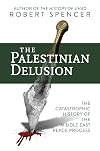
Spencer does a pretty good job of summarizing the traditional origin story as told by right-wing Israel. He starts off with an attempt to provide evidence that Israel was pretty much empty when the early Zionists began to arrive in the late 19th century, that they bought up rather than stole the land on which they settled, and there was not a distinct "Palestinian" community. In this version, it was only the Arabs who were ever violent, despite the economic and other tangible benefits they show more gained from the Jewish development. But he glosses over a lot of the details (including any pesky facts that undermine this narrative), and the result is mythology more than history.
Where his bias really comes through is his assertion that the conflict is religious and not nationalistic. He spends quite a bit of time quoting out-of-context verses from the Koran to paint Islam as Jihad-based and inherently antisemitic. In this worldview, it is impossible for Israel to ever achieve peace or even negotiate in good faith with its neighbours, because at best they are pretending to get along while they continue to plan and scheme to destroy the nasty Jews. This whole line of thinking disregards the possibility of secular Arabs, doesn't account for the existence of Christian Arabs, doesn't explain the peace treaties with Jordan, UAE, ignores the 1+ billion perfectly peaceful Muslims in the world, etc. Overall his worldview is so flawed that debunking it here would be a waste of time. Best to ignore and move on, keeping in mind that it underpins his entire approach to the conflict.
The rest of the book is a quick summary of modern times and the many failed attempts to get some sort of peace process going. Again, it's pretty much the story that any Likud politician would tell, how Barak and Olmert foolishly offered too much to Arafat and Abbas, and how even those overly generous offers were met with more violence and terrorism. The blame is 100% on the side of the Palestinians, no Israeli soldier ever did anything wrong, there is no "occupation" just necessary military activities carried out reluctantly in self-defense, etc. Again, mythology rather than history, rejecting any alternative explanations, ignoring contradictory facts, negating the need for any soul searching.
The book gets 2 stars because a lot of people believe this version of reality and it's important to understand it, and Spencer does a good a job as anyone to present it in a concise and clear manner. Especially in the wake of October 7, more Israelis have replaced hope with despair, and the conclusion presented here (forget about peace because it's not going to happen, focus on strength and security) is a lot more appealing to many that it was a few years ago. show less
Where his bias really comes through is his assertion that the conflict is religious and not nationalistic. He spends quite a bit of time quoting out-of-context verses from the Koran to paint Islam as Jihad-based and inherently antisemitic. In this worldview, it is impossible for Israel to ever achieve peace or even negotiate in good faith with its neighbours, because at best they are pretending to get along while they continue to plan and scheme to destroy the nasty Jews. This whole line of thinking disregards the possibility of secular Arabs, doesn't account for the existence of Christian Arabs, doesn't explain the peace treaties with Jordan, UAE, ignores the 1+ billion perfectly peaceful Muslims in the world, etc. Overall his worldview is so flawed that debunking it here would be a waste of time. Best to ignore and move on, keeping in mind that it underpins his entire approach to the conflict.
The rest of the book is a quick summary of modern times and the many failed attempts to get some sort of peace process going. Again, it's pretty much the story that any Likud politician would tell, how Barak and Olmert foolishly offered too much to Arafat and Abbas, and how even those overly generous offers were met with more violence and terrorism. The blame is 100% on the side of the Palestinians, no Israeli soldier ever did anything wrong, there is no "occupation" just necessary military activities carried out reluctantly in self-defense, etc. Again, mythology rather than history, rejecting any alternative explanations, ignoring contradictory facts, negating the need for any soul searching.
The book gets 2 stars because a lot of people believe this version of reality and it's important to understand it, and Spencer does a good a job as anyone to present it in a concise and clear manner. Especially in the wake of October 7, more Israelis have replaced hope with despair, and the conclusion presented here (forget about peace because it's not going to happen, focus on strength and security) is a lot more appealing to many that it was a few years ago. show less
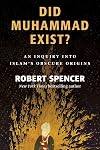
Oh, what a question? How could you even ask that? But, yes, this is exactly the kind of question Islam should be subjected to. For the last 200 years, beginning in the late 18th century, Christianity has come under critical scrutiny like no other faith. And yet, in the 21st century, questioning any aspect of Islam is commonly viewed as Islamophobia, pure and simple. Interestingly, the word Christophobia has yet to be coined.
Now if you are going to question Islam, there are two great places show more to start: the Qur’an and Muhammed himself. Others are doing a pretty good job of questioning the former. Spencer has chosen the latter.
And he hasn’t done a bad job at all. If anyone is wondering what Yasir Qadhi’s infamous “holes in the narrative” are, Spencer’s book is a great place to start. There are holes galore.
The obvious place to start is with Islamic writings about Muhammad. There’s scant reference to him in the Qur’an (if at all) and so we turn to the Hadith where there are literally tens of thousands. There’s a lot in here that is quite shocking concerning the kind of person he was (so much so that Muhammad’s first official biographer Ibn Ishaq admitted to leaving parts out that would “distress certain people”), but Spencer is more concerned about whether he was at all.
Seeing how rapidly and extensively Arab armies conquered their known world, it is surprising how little and how late any references to Muhammad occur in external sources known to us today. Some of these references are puzzling. For example, for someone of such apparently monumental contemporary importance, there is no specific mention of him until 90 years after his death. In fact, the date of his death doesn’t surface until over 100 years after 632, the date in Wikipedia. A couple of the vague mentions of him are accompanied with illustrations of crosses, not something you’re likely to see down your local masjid these days.
After trolling through pretty much all the historical sources he can find, Spencer summarises his argument in the final chapter. Based on the fact that it wasn’t until the late 7th century that specific references to Muhammad as we understand him today emerge, he proposes that the Umayyad’s found it politically expedient to place him as a figurehead hero of their movement. Thus, from that point on and in particular under the Abbasids, he becomes a central figure, in stark contrast to any reference to him prior to that in any sources, Islamic or otherwise.
It’s an interesting theory and one which makes sense. Whether it’s true or not is impossible to prove. But this is exactly the same dilemma historians have about Muhammad’s life: much of it is impossible to prove. While many might argue that warring tribes have little time to sit down and write up their diaries at night, contemporary historians have little else to refer to except text. It’s an historical necessity if we are to be certain of what was what.
As Spencer concludes:
“Did Muhammad exist? As a prophet of the Arabs who taught a vaguely defined monotheism, he may have existed. But beyond that, his life story is lost in the mists of legend, like those of Robin Hood and Macbeth. As the prophet of Islam, who received (or even claimed to receive) the perfect copy of the perfect eternal book from the supreme God, Muhammad almost certainly did not exist. There are too many gaps, too many silences, too many aspects of the historical record that simply do not accord, and cannot be made to accord, with the traditional account of the Arabian prophet teaching his Qur’an, energizing his followers to such an extent that they went out and conquered a good part of the world.”
p. 214 – 215
Scholarly criticism of Islam is currently gaining slow but sure momentum in the west, spurred on, no doubt, by the glasnost of the Interwebs. But vehement opposition to, say, even the idea of applying the historical-critical method to the Qur’an, continues to plague anyone who dares step into the arena.
“Even raising the question of whether Muhammad existed challenges the very premise of their belief system. No Muslim authorities have encouraged such scholarship, and those who have pursued this line of inquiry often labor under threat of death.”
p. 216
Those who are willing to walk that path though have started to publish some interesting results. It’s definitely a fascinating space to watch as scholarship, Muslim or not, takes bolder steps in that direction though. show less
Now if you are going to question Islam, there are two great places show more to start: the Qur’an and Muhammed himself. Others are doing a pretty good job of questioning the former. Spencer has chosen the latter.
And he hasn’t done a bad job at all. If anyone is wondering what Yasir Qadhi’s infamous “holes in the narrative” are, Spencer’s book is a great place to start. There are holes galore.
The obvious place to start is with Islamic writings about Muhammad. There’s scant reference to him in the Qur’an (if at all) and so we turn to the Hadith where there are literally tens of thousands. There’s a lot in here that is quite shocking concerning the kind of person he was (so much so that Muhammad’s first official biographer Ibn Ishaq admitted to leaving parts out that would “distress certain people”), but Spencer is more concerned about whether he was at all.
Seeing how rapidly and extensively Arab armies conquered their known world, it is surprising how little and how late any references to Muhammad occur in external sources known to us today. Some of these references are puzzling. For example, for someone of such apparently monumental contemporary importance, there is no specific mention of him until 90 years after his death. In fact, the date of his death doesn’t surface until over 100 years after 632, the date in Wikipedia. A couple of the vague mentions of him are accompanied with illustrations of crosses, not something you’re likely to see down your local masjid these days.
After trolling through pretty much all the historical sources he can find, Spencer summarises his argument in the final chapter. Based on the fact that it wasn’t until the late 7th century that specific references to Muhammad as we understand him today emerge, he proposes that the Umayyad’s found it politically expedient to place him as a figurehead hero of their movement. Thus, from that point on and in particular under the Abbasids, he becomes a central figure, in stark contrast to any reference to him prior to that in any sources, Islamic or otherwise.
It’s an interesting theory and one which makes sense. Whether it’s true or not is impossible to prove. But this is exactly the same dilemma historians have about Muhammad’s life: much of it is impossible to prove. While many might argue that warring tribes have little time to sit down and write up their diaries at night, contemporary historians have little else to refer to except text. It’s an historical necessity if we are to be certain of what was what.
As Spencer concludes:
“Did Muhammad exist? As a prophet of the Arabs who taught a vaguely defined monotheism, he may have existed. But beyond that, his life story is lost in the mists of legend, like those of Robin Hood and Macbeth. As the prophet of Islam, who received (or even claimed to receive) the perfect copy of the perfect eternal book from the supreme God, Muhammad almost certainly did not exist. There are too many gaps, too many silences, too many aspects of the historical record that simply do not accord, and cannot be made to accord, with the traditional account of the Arabian prophet teaching his Qur’an, energizing his followers to such an extent that they went out and conquered a good part of the world.”
p. 214 – 215
Scholarly criticism of Islam is currently gaining slow but sure momentum in the west, spurred on, no doubt, by the glasnost of the Interwebs. But vehement opposition to, say, even the idea of applying the historical-critical method to the Qur’an, continues to plague anyone who dares step into the arena.
“Even raising the question of whether Muhammad existed challenges the very premise of their belief system. No Muslim authorities have encouraged such scholarship, and those who have pursued this line of inquiry often labor under threat of death.”
p. 216
Those who are willing to walk that path though have started to publish some interesting results. It’s definitely a fascinating space to watch as scholarship, Muslim or not, takes bolder steps in that direction though. show less
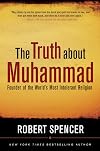
Wow, after reading this one-sided muckraking, one may wonder how anybody can revere this Muhammad. ("One-sided" because the opinions are basically only the author's and "muckraking" because the author's stated premise is that the worst historical facts about Muhammad can and should guide American policy.) While there can be benefit from raking the muck of Muhammad's martinet side (and why not The Crusades and Inquisition, too?), the author is not seeking a balanced view. I don't have any show more reason to disagree with any of his historical observations. I only disagree with his conclusions, such as that "Islam is peace" is a "mantra that controls American policy." I think many Muslim families would also disagree with that assessment.
However, drama aside, it basically suggests Islam as a religion can serve as a basis for a culture that can condone religious persecution and some abuse. As a textbook for Islamophobia I give it an A+, but it doesn't jive with the reality of a religion held by so many worldwide with most of them being decent people. show less
However, drama aside, it basically suggests Islam as a religion can serve as a basis for a culture that can condone religious persecution and some abuse. As a textbook for Islamophobia I give it an A+, but it doesn't jive with the reality of a religion held by so many worldwide with most of them being decent people. show less
Lists
You May Also Like
Associated Authors
Statistics
- Works
- 43
- Members
- 3,046
- Popularity
- #8,382
- Rating
- 3.8
- Reviews
- 57
- ISBNs
- 121
- Languages
- 5