
Peter Attia
Author of Outlive: The Science and Art of Longevity
About the Author
Works by Peter Attia
Outlive paperback 5 copies
Tagged
Common Knowledge
- Gender
- male
Members
Reviews
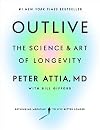
Contrary to appearances, this book is not about living longer. It's about living better and so, as a result, living longer. But Outlive isn't even really about living better, because it concludes with a question that makes everything that precedes it pale in comparison: What's the point of living better, or longer, if you don't enjoy it? What's the point if, in the end, no one has a nice word to say about you, or you don't have one to say about yourself?
The many practical lessons of this show more book (and there are so, so many)—about taking care of yourself and others, about finding what makes living better and more enjoyable—would apply even if you had just one more day to live. That's what it means to "outlive." Not dying at an age older than the average, but living a life that exceeds bare longevity—in health and enjoyment and love. show less
The many practical lessons of this show more book (and there are so, so many)—about taking care of yourself and others, about finding what makes living better and more enjoyable—would apply even if you had just one more day to live. That's what it means to "outlive." Not dying at an age older than the average, but living a life that exceeds bare longevity—in health and enjoyment and love. show less
This is one of those books that could change your life. I don't know if it will change mine: at 78, I'm a little old to initiate new long behaviours intended to add to my life span. But it may. His message is that exercise, nutrition, sleep, and emotional health can profoundly affect your lifespan, and even more important, your healthspan -- the number of years you remain independent and can do things you love. This is bolstered by extensive description and analysis of the diseases of old show more age that kill most of us, and by extensive explanation and description of what you can do about it. His prescriptions for action are daunting, demanding lots of time and lots of discipline. But I think they will actually change my behavior. One reason that this book is so powerful is that it is so personal, which is one reason why it is such a fascinating read. I can't recommend it too highly. show less
Let me begin my review in the middle of Outlive. The author asks us to list the ten tasks we want to do for the rest of our lives. He calls this list the centenarian decathlon. Here’s the top of the list for me: hike up to Third Burroughs Mountain. It’s 9 miles (14 km) in Mount Rainier National Park with 2500 feet (760 m.) of elevation gain. Why? I’m a hiker, and this is my favorite hike worldwide.
I’ve spent a fair amount of time thinking about how to keep hiking as I get older. I show more turned 65 in 2022; I would like to keep exploring mountains as long as possible, this is just the book to help me achieve my goal. Let me explain why.
First, Attia starts with the concept of healthspan – how well you live. There’s a tight coupling between healthspan and lifespan. As we age, we have left less of each. One difference is that lifespan is a discrete quantity; one day, you are alive, and the next, you are not. In contrast, our healthspan gradually diminishes over time. The author details three vectors (components) of healthspan: physical, cognitive, and emotional. The good news is that we can usually improve these components and our overall healthspan. How we do so is the core of the book.
The book’s first part outlines our current situation and a target goal. The most important lesson I learned: “Tactics without strategy is the noise before defeat.” a quote from Sun Tzu, an ancient Chinese military strategist. Been there, done that, got the T-shirt. So, how can I do better? The author has a great framework: first, objectives, then strategy, and finally, tactics. The author trained as an engineer, became a physician, and has worked in business consulting; his background shows throughout the book. I touched on objectives in the discussion of the centenarian decathlon; how about strategy?
The second part of Outlive is the science that can help you develop a strategy. There is a chapter on the science of centenarians; I think of this as a boundary condition. What are the factors that helped get someone to their 100th birthday? (I have a hiking friend who still gets out on walks at 101, I want to follow in her footsteps.) Next is a chapter on the details of how nutrition affects longevity. The last four chapters cover the science of how most of us die: metabolic disorders such as diabetes, heart disease, cancer, and neurodegenerative diseases. Understanding these problems will help you develop tactics to mitigate some issues. There are no magic bullets in these chapters; instead, it’s a well-researched survey of what we know as of 2022. Now that we know objectives and strategies, what tactics can we employ?
The final part of Outlive lays out four tactics:
Exercise (cardio, strength, and stability)
Nutrition
Sleep
Emotional health.
At 260 pages, this is the longest part of the book. It was detailed and beneficial to me. Rather than outline each section, let me list some tactics I am adding to my strategy:
Work on stability, specifically starting with a yoga class.
Use a continuous glucose monitor for a few months to optimize my diet.
Ensure I am getting enough protein intake of lysine, leucine, and methionine.
The last chapter on emotional health was the most impactful in the book. Attia opens up to the reader about his emotional health through the lens of a patient rather than a physician. It touched me deeply; I had some trauma in my teen years when my mom died. Fifty years later, I realized I should address some of these issues rather than wall them off.
Outlive is a book I will read several times. The book is challenging; I spent four weeks reading the book.
I made a ton of margin notes and back-of-the-book scrawling. There’s a lot to digest, and there are many references. For example, I want to read the paper Hallmarks of Aging by Carlos López-Otín and colleagues. This book catalyzed some great conversations with my friend Bill about healthspan. I will recommend Outlive to anyone interested in taking action to improve their healthspan.
One closing thought; there’s a missing chapter in the book. I believe social interaction and engagement can improve healthspan’s cognitive and emotional components. My experience is that forty years of marriage have improved my emotional health. I decided to ask ChatGPT: What studies have shown that social interaction and engagement can improve cognitive function and reduce the risk of cognitive decline and dementia in older adults? Here’s the answer:
“There have been several studies that have shown a positive correlation between social interaction and cognitive function in older adults. For example:
The Rush Memory and Aging Project: This study found that older adults who had higher levels of social activity experienced a slower rate of cognitive decline than those who were less socially active.
The MacArthur Study of Successful Aging: This study found that older adults who were more socially engaged were less likely to experience declines in cognitive function over time.
The Women’s Health Initiative Memory Study: This study found that women who reported higher levels of social engagement had a lower risk of developing cognitive impairment than those who were less socially engaged.
Overall, these studies suggest that social interaction and engagement can play an important role in maintaining cognitive function and reducing the risk of cognitive decline and dementia in older adults.” show less
I’ve spent a fair amount of time thinking about how to keep hiking as I get older. I show more turned 65 in 2022; I would like to keep exploring mountains as long as possible, this is just the book to help me achieve my goal. Let me explain why.
First, Attia starts with the concept of healthspan – how well you live. There’s a tight coupling between healthspan and lifespan. As we age, we have left less of each. One difference is that lifespan is a discrete quantity; one day, you are alive, and the next, you are not. In contrast, our healthspan gradually diminishes over time. The author details three vectors (components) of healthspan: physical, cognitive, and emotional. The good news is that we can usually improve these components and our overall healthspan. How we do so is the core of the book.
The book’s first part outlines our current situation and a target goal. The most important lesson I learned: “Tactics without strategy is the noise before defeat.” a quote from Sun Tzu, an ancient Chinese military strategist. Been there, done that, got the T-shirt. So, how can I do better? The author has a great framework: first, objectives, then strategy, and finally, tactics. The author trained as an engineer, became a physician, and has worked in business consulting; his background shows throughout the book. I touched on objectives in the discussion of the centenarian decathlon; how about strategy?
The second part of Outlive is the science that can help you develop a strategy. There is a chapter on the science of centenarians; I think of this as a boundary condition. What are the factors that helped get someone to their 100th birthday? (I have a hiking friend who still gets out on walks at 101, I want to follow in her footsteps.) Next is a chapter on the details of how nutrition affects longevity. The last four chapters cover the science of how most of us die: metabolic disorders such as diabetes, heart disease, cancer, and neurodegenerative diseases. Understanding these problems will help you develop tactics to mitigate some issues. There are no magic bullets in these chapters; instead, it’s a well-researched survey of what we know as of 2022. Now that we know objectives and strategies, what tactics can we employ?
The final part of Outlive lays out four tactics:
Exercise (cardio, strength, and stability)
Nutrition
Sleep
Emotional health.
At 260 pages, this is the longest part of the book. It was detailed and beneficial to me. Rather than outline each section, let me list some tactics I am adding to my strategy:
Work on stability, specifically starting with a yoga class.
Use a continuous glucose monitor for a few months to optimize my diet.
Ensure I am getting enough protein intake of lysine, leucine, and methionine.
The last chapter on emotional health was the most impactful in the book. Attia opens up to the reader about his emotional health through the lens of a patient rather than a physician. It touched me deeply; I had some trauma in my teen years when my mom died. Fifty years later, I realized I should address some of these issues rather than wall them off.
Outlive is a book I will read several times. The book is challenging; I spent four weeks reading the book.
I made a ton of margin notes and back-of-the-book scrawling. There’s a lot to digest, and there are many references. For example, I want to read the paper Hallmarks of Aging by Carlos López-Otín and colleagues. This book catalyzed some great conversations with my friend Bill about healthspan. I will recommend Outlive to anyone interested in taking action to improve their healthspan.
One closing thought; there’s a missing chapter in the book. I believe social interaction and engagement can improve healthspan’s cognitive and emotional components. My experience is that forty years of marriage have improved my emotional health. I decided to ask ChatGPT: What studies have shown that social interaction and engagement can improve cognitive function and reduce the risk of cognitive decline and dementia in older adults? Here’s the answer:
“There have been several studies that have shown a positive correlation between social interaction and cognitive function in older adults. For example:
The Rush Memory and Aging Project: This study found that older adults who had higher levels of social activity experienced a slower rate of cognitive decline than those who were less socially active.
The MacArthur Study of Successful Aging: This study found that older adults who were more socially engaged were less likely to experience declines in cognitive function over time.
The Women’s Health Initiative Memory Study: This study found that women who reported higher levels of social engagement had a lower risk of developing cognitive impairment than those who were less socially engaged.
Overall, these studies suggest that social interaction and engagement can play an important role in maintaining cognitive function and reducing the risk of cognitive decline and dementia in older adults.” show less
Dr. Peter Attia is an oncology surgeon, a data guy, and an extreme athlete with trauma in his past. That all plays into his approach to longevity: lots and lots of screening, monitoring, and "training" for old age as if you were training for a sporting event.
The chapters on exercise and nutrition were fantastic. My favorite quote: "Cardio or weights? Low-carb or plant-based? Olive oil or beef tallow? I don't know. Must we really take sides?" This is NOT a book telling you the One True Secret show more to long life; it all depends. Some certainties though: Exercise is the best medicine. If your metabolism is not functioning well, make it a priority to get that under control. Screen for everything, screen early, screen often.
Then come chapters on sleep and emotional health. I had really been looking forward to the chapter on sleep, as it's kind of a bugaboo for me. I had grown to feel I could trust his opinions, and I wanted know what he thought about better sleep through pharmaceuticals. He had stated in an early chapter that he had nothing against using medications in general where appropriate, such as statins; so it felt promising that I wouldn't get some knee-jerk anti-medication attitude.
I started reading the chapter one night shortly before bedtime, and didn't get up to any of the advice; just lots of emphatic "Sleep is crucial! Quality, uninterrupted sleep! It's a must! You risk Alzheimer's if you don't get it!" Nice scary nightmares to put a random chronic insomniac to sleep with.
The next night I delved in further. Alas, he's anti-Ambien. Ambien sleep isn't REAL sleep and yadda yadda yadda. However to give him credit, he had positive things to say about trazodone.
The whole sleep chapter was disappointing and did not feel nearly as data-driven as the previous chapters. It just felt like he got it in his head that sleep was very important to health and decided it warranted a whole chapter on a par with exercise & nutrition, but he didn't want to put any work into it.
For the emotional health chapter, I commend him for telling so much of his personal story. This chapter was driven by his own experience and that was OK.
I guess the real overarching theme of the book, though, was that everyone is different, and you must find what works for YOU. Your exercise ability, your own metabolic reactions - these are going to determine the "right" exercise and diet for you. He could have been a LITTLE more understanding about chronic insomnia, though, and respected that different things work (and don't work) for different people. As I said, a bit of a bugaboo for me… show less
The chapters on exercise and nutrition were fantastic. My favorite quote: "Cardio or weights? Low-carb or plant-based? Olive oil or beef tallow? I don't know. Must we really take sides?" This is NOT a book telling you the One True Secret show more to long life; it all depends. Some certainties though: Exercise is the best medicine. If your metabolism is not functioning well, make it a priority to get that under control. Screen for everything, screen early, screen often.
Then come chapters on sleep and emotional health. I had really been looking forward to the chapter on sleep, as it's kind of a bugaboo for me. I had grown to feel I could trust his opinions, and I wanted know what he thought about better sleep through pharmaceuticals. He had stated in an early chapter that he had nothing against using medications in general where appropriate, such as statins; so it felt promising that I wouldn't get some knee-jerk anti-medication attitude.
I started reading the chapter one night shortly before bedtime, and didn't get up to any of the advice; just lots of emphatic "Sleep is crucial! Quality, uninterrupted sleep! It's a must! You risk Alzheimer's if you don't get it!" Nice scary nightmares to put a random chronic insomniac to sleep with.
The next night I delved in further. Alas, he's anti-Ambien. Ambien sleep isn't REAL sleep and yadda yadda yadda. However to give him credit, he had positive things to say about trazodone.
The whole sleep chapter was disappointing and did not feel nearly as data-driven as the previous chapters. It just felt like he got it in his head that sleep was very important to health and decided it warranted a whole chapter on a par with exercise & nutrition, but he didn't want to put any work into it.
For the emotional health chapter, I commend him for telling so much of his personal story. This chapter was driven by his own experience and that was OK.
I guess the real overarching theme of the book, though, was that everyone is different, and you must find what works for YOU. Your exercise ability, your own metabolic reactions - these are going to determine the "right" exercise and diet for you. He could have been a LITTLE more understanding about chronic insomnia, though, and respected that different things work (and don't work) for different people. As I said, a bit of a bugaboo for me… show less
Lists
Awards


You May Also Like
Associated Authors
Statistics
- Works
- 4
- Members
- 1,483
- Popularity
- #17,315
- Rating
- 4.0
- Reviews
- 27
- ISBNs
- 19
- Languages
- 5
- Favorited
- 1