
Scott Nash (1)
Author of The High Skies Adventures of Blue Jay the Pirate
For other authors named Scott Nash, see the disambiguation page.
Works by Scott Nash
Monkey's Loose Tooth * 1 copy
Associated Works
Hooper Humperdink...? Not Him! (Bright & Early Books) (1976) — Illustrator, some editions — 1,103 copies, 11 reviews
Tagged
Common Knowledge
- Birthdate
- 20th century
- Occupations
- artist
illustrator
children's book author
teacher - Places of residence
- Portland, Maine, USA
- Associated Place (for map)
- Maine, USA
Members
Reviews
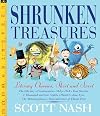
I'm giving this 4½**** rather than a full 5***** because it's the kind of collection which for everyone is going to include some pieces that will be preferred over others. It's a collection of nine pieces of verse each "summarizing" a literary classic and including accompanying illustrations:
My own favorites are The Odyssey, Jane Eyre (perhaps expectedly, considering my LT name), and to a degree Don Quixote; my least favorite, A Thousand and One Nights and Hamlet, my dislike for these stemming from their extreme departure from the canonical originals. (This is simply a bias on my part and some readers might find such departures clever, particularly in the case of Hamlet, where the hero has become a Great Dane dog digging holes throughout Elsinore.) My standards for judging include
While the quality of illustrations is uniformly talented, I am particularly taken by those of The Odyssey (a goofily cute Ulysses whose visage varies from fierce to lovable) and Jane Eyre (in which nearly every plot element is captured in just six or seven drawings). I also especially liked the limerick-styled verse of The Odyssey and, even more, Jane Eyre's take-off of "Three Blind Mice" with its gleeful but ultimately dark tone. In contrast, I found the drawings for Frankenstein a bit overdone and those for Moby Dick (along with its somewhat banal verse take-off of "Mary Had a Little Lamb") far too cheerful for the dark canonical original.
And then there's Remembrance of Things Past. A single illustration (with Proust himself somehow reminding me of Henri Rousseau's Pierre Loti). And just two lines of verse! "I dipped a sweet cake in my tea / And a whole world came back to me." Of this, Nash observes in his endnotes, "Although I have yet to finish reading this mammoth novel, I was able to craft a rhyme from what I have read, which, I am proud to say, is the shortest in the book." Could that be said more truthfully of any novel besides Finnegans Wake?
This entire collection will be a treat for any culturally literate adult, though children may find some of the material a bit puzzling. But give them time to grow into it over the years! show less
- Homer, The Odyssey
- Mary Shelley, Frankenstein
- Herman Melville, Moby Dick
- Charlotte Brontë, Jane Eyre
- A Thousand and One Nights
- William Shakespeare, Hamlet
- Miguel de Cervantes Saavedra, Don
- Quixote
- Franz Kafka, The Metamorphosis
- Marcel Proust, Remembrance of Things Past
My own favorites are The Odyssey, Jane Eyre (perhaps expectedly, considering my LT name), and to a degree Don Quixote; my least favorite, A Thousand and One Nights and Hamlet, my dislike for these stemming from their extreme departure from the canonical originals. (This is simply a bias on my part and some readers might find such departures clever, particularly in the case of Hamlet, where the hero has become a Great Dane dog digging holes throughout Elsinore.) My standards for judging include
- re-expressing the canonical original in a faithful (again, my bias which others might not share) but cleverly original way,
- quality of verse, and
- quality of illustrations.
While the quality of illustrations is uniformly talented, I am particularly taken by those of The Odyssey (a goofily cute Ulysses whose visage varies from fierce to lovable) and Jane Eyre (in which nearly every plot element is captured in just six or seven drawings). I also especially liked the limerick-styled verse of The Odyssey and, even more, Jane Eyre's take-off of "Three Blind Mice" with its gleeful but ultimately dark tone. In contrast, I found the drawings for Frankenstein a bit overdone and those for Moby Dick (along with its somewhat banal verse take-off of "Mary Had a Little Lamb") far too cheerful for the dark canonical original.
And then there's Remembrance of Things Past. A single illustration (with Proust himself somehow reminding me of Henri Rousseau's Pierre Loti). And just two lines of verse! "I dipped a sweet cake in my tea / And a whole world came back to me." Of this, Nash observes in his endnotes, "Although I have yet to finish reading this mammoth novel, I was able to craft a rhyme from what I have read, which, I am proud to say, is the shortest in the book." Could that be said more truthfully of any novel besides Finnegans Wake?
This entire collection will be a treat for any culturally literate adult, though children may find some of the material a bit puzzling. But give them time to grow into it over the years! show less
 This review was written for LibraryThing Early Reviewers.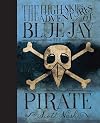
Written and illustrated by Scott Nash, The High Skies Adventures of Blue Jay the Pirate (Candlewick Press, 2012) reminded me, in a good way, of Brian Jacques' Redwall books, though geared for a slightly younger audience and without nearly as much of the world-building wonderfulness Jacques brought to his stories. But Blue Jay and his avian crew are great characters in their own right, and their adventures and battles make for a nice afternoon's read. The full-color illustrations complement show more the text beautifully. show less
I’ve always had a soft spot for humorous retellings of the classics, so I was thrilled to receive a copy of Scott Nash’s “Shrunken Treasures: Literary Classics Short, Sweet, and Silly” from the LibraryThing Early Reviewers program. Overall, the book lives up to its title. Nash includes shortened, kid-friendly poem versions of works ranging from “Hamlet” to “The Odyssey” to “The Metamorphosis.” Accompanying the cheerful verses are equally bright and lively illustrations, show more which appeal to readers of all ages. The result is a light-hearted book that would be at home in a nursery or a child’s bookshelf.
Of course, to make this work for younger audiences, Nash had to make considerable cuts and changes to the original plots of the works he selected. Consequently, adults curious on how he handles some of the darker themes, such as the bleakness in “The Metamorphosis” or the murders in “Hamlet,” might be disappointed if unsurprised to see that these elements are missing or changed. For instance, “The Metamorphosis” ends with Gregor Samsa, in bug form, dancing while his sister plays the violin, while “Moby-Dick” has the whale giving Ahab a ride on his back. In some cases, his interpretations add another layer of fun to the proceedings (such as making Hamlet a Great Dane who digs holes rather than killing people) or provide shortcuts for complex plots and conflicts (making Scheherazade a mouse trying to avoid being eaten by the sultan’s cat). While having the darkness, complexity, and ambiguity from these classic stories erased can be frustrating and maddening for adults who know and love the works in question, it does make the book work as an actual children’s book rather than as a parody of a children’s book (think “Go the F**k to Sleep”). What I found more problematic than the bowdlerized versions of the plots was the somewhat iffy rhymes that Nash employs (hidden and certain, boredom and him, and Baba and robber are a sample from just one poem).
Despite these caveats, “Shrunken Treasures” is a fun and jaunty look at well-known classics. If you are looking for a way to introduce youngsters to characters and basic plots from literature without overwhelming them (or scarring them for life), Nash has provided the perfect vehicle. show less
Of course, to make this work for younger audiences, Nash had to make considerable cuts and changes to the original plots of the works he selected. Consequently, adults curious on how he handles some of the darker themes, such as the bleakness in “The Metamorphosis” or the murders in “Hamlet,” might be disappointed if unsurprised to see that these elements are missing or changed. For instance, “The Metamorphosis” ends with Gregor Samsa, in bug form, dancing while his sister plays the violin, while “Moby-Dick” has the whale giving Ahab a ride on his back. In some cases, his interpretations add another layer of fun to the proceedings (such as making Hamlet a Great Dane who digs holes rather than killing people) or provide shortcuts for complex plots and conflicts (making Scheherazade a mouse trying to avoid being eaten by the sultan’s cat). While having the darkness, complexity, and ambiguity from these classic stories erased can be frustrating and maddening for adults who know and love the works in question, it does make the book work as an actual children’s book rather than as a parody of a children’s book (think “Go the F**k to Sleep”). What I found more problematic than the bowdlerized versions of the plots was the somewhat iffy rhymes that Nash employs (hidden and certain, boredom and him, and Baba and robber are a sample from just one poem).
Despite these caveats, “Shrunken Treasures” is a fun and jaunty look at well-known classics. If you are looking for a way to introduce youngsters to characters and basic plots from literature without overwhelming them (or scarring them for life), Nash has provided the perfect vehicle. show less
This review was written for LibraryThing Early Reviewers.Don’t let the flowing fonts on the cover page or the charming character portraits sprinkled throughout the book to fool you into thinking that this is just another lighthearted children’s story. Although the story follows the typical plot line, there’s more depth and maturity in Nash’s characters than one would expect from a kids’ novel. Blue Jay, the captain of the Grosbeak, has a fearsome reputation that precedes him, but his shipmates respect and admire him, which is enough to show more make him endearing to any reader. The trouble starts when the crew pick up a large egg to add to Jay’s collection. The navigator, Junco, intuitively knows that there is something special about the egg, and after rotating shifts with her shipmates to hatch it, out pops a gosling—a baby Branta goose. The fact that Gabriel the goose has an insatiable appetite, moves around clumsily, and has the potential wingspan equal to the width of the Grosbeak are only some of the problems the pirates face. They must also deal with a bout of the doldrums and, as a result of being unable to kedge long enough to catch an airstream, they must face treacherous crows who are led by Jay’s cousin, Teach. It will take luck, strategy, and a few unlikely alliances for Junco, Gabriel, Jay, and the rest of the Grosbeak to make it to Oak’s Eye Cay alive. The action and humour in The High-Skies Adventures of Blue Jay the Pirate as well as Nash’s company of charismatic characters will make fans of young and old alike.
Story & Pacing: 9
At 368 pages, this story is quite long for a children’s book, but the font is pretty big and there are pictures scattered throughout, which make it quite easy to get through it quickly. Of course, the story itself captures the reader’s attention. The chapters are short and easily digestible, and there are numerous conflicts that lead up to the crisis and climax of the story. The length of the story was actually a plus for me: as a child, I rather enjoyed longer stories in which I could invest in plot and character.
Characters: 9
With a large cast of characters, it is sometimes hard to make a connection with any one, but Nash has created strong birds with distinct personalities that it’s easy to empathize with any of them. Jay is a tough but fair captain; Junco’s maternal instincts soften the male-dominant crew; Gabriel is adorable as a gosling and honourable as full-fledged goose; and Poppa Fox is a respectable, elderly sparrow whose loyalty to his town and tavern make him the gentle grandpa of the story.
Setting: 8
The first part of the tale is set mostly in the air, high above the various bird-inhabited lands. The map that Nash gives at the beginning of the book helps to visualize the direction of the Grosbeak’s travels, and the various illustrations—including that of Briarloch, of the crew kedging before they are shipwrecked, and of the battle against the crows, among others—definitely enhance the action and atmosphere of the story. It would have been nice to see what Hillary’s underground maze looked like, too!
Style & Writing: 9
One thing that I really enjoyed in this book is Nash’s writing style. He is not afraid to use complex sentences peppered with polysyllabic words despite the fact that the story is geared for kids 9-13. I feel like he was treating his (targeted) audience as equals and in “speaking” to us as if we were adults, he both shows respect for our ability to understand the story and demands our attention to the fine details (both in his story and illustrations) of it.
Learnability & Teachability: 7
This is an excellent book for teachers to use in teaching the various parts of a plot graph. At the very least, readers will be introduced to a plethora of bird species from the crew of the Grosbeak alone. There are lots of deeper issues to discuss, too, including loyalty, bravery, and the kindness of strangers. That being said, this is more a book to read for leisure than for learning.
POTENTIAL TEACHABLES
Bird species; morality of piracy; codes among pirates; parts of a ship; duties on a ship; sword varieties and sword parts; plants and other vegetation; allusions to wars and other real events; colonization; banning migration; taxation/giving one’s earnings to the state; strategic planning; illustrations—choosing which scenes to depict and which vantage point to use. show less
Story & Pacing: 9
At 368 pages, this story is quite long for a children’s book, but the font is pretty big and there are pictures scattered throughout, which make it quite easy to get through it quickly. Of course, the story itself captures the reader’s attention. The chapters are short and easily digestible, and there are numerous conflicts that lead up to the crisis and climax of the story. The length of the story was actually a plus for me: as a child, I rather enjoyed longer stories in which I could invest in plot and character.
Characters: 9
With a large cast of characters, it is sometimes hard to make a connection with any one, but Nash has created strong birds with distinct personalities that it’s easy to empathize with any of them. Jay is a tough but fair captain; Junco’s maternal instincts soften the male-dominant crew; Gabriel is adorable as a gosling and honourable as full-fledged goose; and Poppa Fox is a respectable, elderly sparrow whose loyalty to his town and tavern make him the gentle grandpa of the story.
Setting: 8
The first part of the tale is set mostly in the air, high above the various bird-inhabited lands. The map that Nash gives at the beginning of the book helps to visualize the direction of the Grosbeak’s travels, and the various illustrations—including that of Briarloch, of the crew kedging before they are shipwrecked, and of the battle against the crows, among others—definitely enhance the action and atmosphere of the story. It would have been nice to see what Hillary’s underground maze looked like, too!
Style & Writing: 9
One thing that I really enjoyed in this book is Nash’s writing style. He is not afraid to use complex sentences peppered with polysyllabic words despite the fact that the story is geared for kids 9-13. I feel like he was treating his (targeted) audience as equals and in “speaking” to us as if we were adults, he both shows respect for our ability to understand the story and demands our attention to the fine details (both in his story and illustrations) of it.
Learnability & Teachability: 7
This is an excellent book for teachers to use in teaching the various parts of a plot graph. At the very least, readers will be introduced to a plethora of bird species from the crew of the Grosbeak alone. There are lots of deeper issues to discuss, too, including loyalty, bravery, and the kindness of strangers. That being said, this is more a book to read for leisure than for learning.
POTENTIAL TEACHABLES
Bird species; morality of piracy; codes among pirates; parts of a ship; duties on a ship; sword varieties and sword parts; plants and other vegetation; allusions to wars and other real events; colonization; banning migration; taxation/giving one’s earnings to the state; strategic planning; illustrations—choosing which scenes to depict and which vantage point to use. show less
Awards


You May Also Like
Associated Authors
Statistics
- Works
- 9
- Also by
- 12
- Members
- 314
- Popularity
- #75,176
- Rating
- 3.7
- Reviews
- 28
- ISBNs
- 35
