

Lynn Walker (1)
Author of Three Days Earlier
For other authors named Lynn Walker, see the disambiguation page.
Works by Lynn Walker
Tagged
Common Knowledge
Members
Reviews
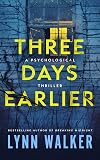
Lynn Walker’s Three Days Earlier takes the architecture of a suspense novel and fills it with something more intimate and disquieting: the psychic burden of living in anticipation of harm. Rachel Sharpe’s ability to sense catastrophe in others is, on its surface, a paranormal conceit. But through an intersectional feminist lens, it reads as something far more recognizable. Rachel’s dread, her self-surveillance, her careful avoidance of intimacy, and her fear that she may somehow be show more responsible for the violence and suffering around her all echo a deeply gendered condition. Women are so often expected to read danger before it arrives, absorb the emotional weight of that knowledge, and then carry the blame when harm occurs anyway.
What makes the premise especially sharp is that Rachel’s visions are not abstract. They are tied to illness, predation, and the disappearance of a woman, which places the novel in direct conversation with the ordinary structures of fear that shape women’s lives. Aaron’s death seems poised to become more than a private tragedy; it becomes a crucible for Rachel’s internalized guilt, that familiar and punishing instinct to turn grief inward. Likewise, the plotline involving a man stalking women and the subsequent disappearance of one of them touches a raw cultural nerve. The novel appears to understand that one of the most enduring horrors women face is not simply violence itself, but the experience of recognizing its signs and not being fully believed until it is too late.
What keeps this at four rather than five stars for me is that the novel’s feminist framework seems more fully realized than its intersectional one. The setup invites deeper questions about whose vulnerability is taken seriously, which women are most exposed to danger, and how institutions like law enforcement distribute care and credibility unevenly. A thriller with this premise has the capacity to do more than generate tension; it can expose the hierarchies beneath fear itself. Whether Walker fully follows that thread would determine how profound the novel ultimately feels.
Still, Three Days Earlier sounds like the kind of thriller that lingers because it understands that terror is rarely only supernatural. Often it is social, cumulative, and painfully familiar. That recognition gives the novel a resonance beyond plot. It is not just about seeing doom. It is about what it costs a woman to live as though doom is always near. show less
What makes the premise especially sharp is that Rachel’s visions are not abstract. They are tied to illness, predation, and the disappearance of a woman, which places the novel in direct conversation with the ordinary structures of fear that shape women’s lives. Aaron’s death seems poised to become more than a private tragedy; it becomes a crucible for Rachel’s internalized guilt, that familiar and punishing instinct to turn grief inward. Likewise, the plotline involving a man stalking women and the subsequent disappearance of one of them touches a raw cultural nerve. The novel appears to understand that one of the most enduring horrors women face is not simply violence itself, but the experience of recognizing its signs and not being fully believed until it is too late.
What keeps this at four rather than five stars for me is that the novel’s feminist framework seems more fully realized than its intersectional one. The setup invites deeper questions about whose vulnerability is taken seriously, which women are most exposed to danger, and how institutions like law enforcement distribute care and credibility unevenly. A thriller with this premise has the capacity to do more than generate tension; it can expose the hierarchies beneath fear itself. Whether Walker fully follows that thread would determine how profound the novel ultimately feels.
Still, Three Days Earlier sounds like the kind of thriller that lingers because it understands that terror is rarely only supernatural. Often it is social, cumulative, and painfully familiar. That recognition gives the novel a resonance beyond plot. It is not just about seeing doom. It is about what it costs a woman to live as though doom is always near. show less
 This review was written for LibraryThing Early Reviewers.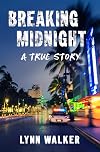
Lynn Walker knew her semi-estranged father had a story worth telling. A Miami cop turned drug smuggler, John Walker was never as close to his kids as he would have liked. A divorce, his prison sentence and a move to Ohio with their mother kept them further away.
Years later Lynn interviewed her father about his life and he told his story, warts and all. She has achieved the difficult – crafting a sympathetic character from a very flawed and potentially unlikeable individual. Except this is show more no fictional character. She details her father’s drug business, battles with addiction and subsequent health problems, and how it all prevented him from having a normal family life. All of it his own fault.
This is a gripping story, well-written, and you somehow come out at the end caring about John Walker despite his many, many failings. show less
Years later Lynn interviewed her father about his life and he told his story, warts and all. She has achieved the difficult – crafting a sympathetic character from a very flawed and potentially unlikeable individual. Except this is show more no fictional character. She details her father’s drug business, battles with addiction and subsequent health problems, and how it all prevented him from having a normal family life. All of it his own fault.
This is a gripping story, well-written, and you somehow come out at the end caring about John Walker despite his many, many failings. show less
This review was written for LibraryThing Early Reviewers.I love collecting knowledge about dog breeds, so one of my favorite parts of this book was being introduced to the Lagotto. I had never heard of them before, and Ruby completely stole my heart. As a trained search and rescue dog, she is not only impressive but also the one steady, grounding presence in Rachel Sharpe’s life.
Rachel is a compelling and complex character who is struggling to understand her premonitions. She constantly questions whether she is simply seeing these events before show more they happen or somehow causing them. This internal conflict adds a strong psychological layer to the story, and it keeps you thinking right along with her. Her evolving ESP abilities affect every part of her life, and watching her wrestle with what to do with these visions is both fascinating and unsettling.
The story really picks up at Bucatini’s and becomes difficult to put down from that point forward. There is a strong sense of momentum as Rachel becomes involved in the search for a missing woman, and the added thread of whether she might also find love brings balance to the tension.
I also appreciated the thoughtful inclusion of a trigger warning at the beginning. The book does contain difficult topics, including sexual predation, abuse, abduction, and a character’s memory of childhood molestation. These elements are handled in a way that adds depth to the story while acknowledging their impact.
Another standout aspect was the exploration of sexual offender reform and treatment. It offered a perspective that is not often explored in fiction and added another layer of complexity to the narrative.
Overall, this is a smart and intriguing book that keeps you engaged from beginning to end. Between the unique premise, the emotional depth, and the unforgettable presence of Ruby, it is a story that stays with you. I look forward to reading more from this author in the future. show less
Rachel is a compelling and complex character who is struggling to understand her premonitions. She constantly questions whether she is simply seeing these events before show more they happen or somehow causing them. This internal conflict adds a strong psychological layer to the story, and it keeps you thinking right along with her. Her evolving ESP abilities affect every part of her life, and watching her wrestle with what to do with these visions is both fascinating and unsettling.
The story really picks up at Bucatini’s and becomes difficult to put down from that point forward. There is a strong sense of momentum as Rachel becomes involved in the search for a missing woman, and the added thread of whether she might also find love brings balance to the tension.
I also appreciated the thoughtful inclusion of a trigger warning at the beginning. The book does contain difficult topics, including sexual predation, abuse, abduction, and a character’s memory of childhood molestation. These elements are handled in a way that adds depth to the story while acknowledging their impact.
Another standout aspect was the exploration of sexual offender reform and treatment. It offered a perspective that is not often explored in fiction and added another layer of complexity to the narrative.
Overall, this is a smart and intriguing book that keeps you engaged from beginning to end. Between the unique premise, the emotional depth, and the unforgettable presence of Ruby, it is a story that stays with you. I look forward to reading more from this author in the future. show less
This review was written for LibraryThing Early Reviewers.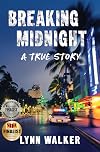
Breaking Midnight, Lynn Walker, author
This true story, related by the daughter of a man who lost his way from the straight and narrow to the crooked and wide, is as authentic as any crime story can be. The narrative is almost like a personal conversation with the accused, as he confesses to her. It is easy to read and puts the reader right there with John Walker as he travels from one point in his life to another. Seemingly, he is always trying to improve his attitude and behavior, but most show more often he is failing because crime has become his drug of choice. He loves the excitement of what to him is a “game”. He never once thinks realistically about the victims he leaves in his wake because of his criminal activity. What he does best is making up excuses for his behavior, justifying acts that cannot be justified.
From the very first, it is difficult to admire or even like John Walker. It is even hard to sympathize with his problems because they are man-made and selfish. In addition, he shows no remorse for his behavior or his failures as a husband, father or son. As a former cop, he is a terrible example. He highlights the example of a dirty cop, of police brutality and of the crooked justice system. He seems to enjoy beating the system more than working within it.
He loves the drug world that he learned to navigate as a narcotics investigator. Did he forget how to move between both worlds? Finally, brainwashed, did he settle into the wrong one? Was he suffering from the Stockholm Syndrome? What could make the son of a clergyman, who was a marine, a seminary student, and a policeman, go so completely wrong? As time passes, he sinks lower and lower into the abyss, using drugs with his kids, dealing with them, and ultimately, dealing with Pablo Escobar.
Did the Cocaine make him lose sight of the reality of what he was doing, the harm he was causing to those he professed to love? Did he simply have absolutely no moral compass? Was he a sociopath? Walker was proud of the fact that he was a successful drug dealer. He was proud of the fact that the notorious Pablo Escobar, trusted him. He was proud of the fact that Columbian drug lords welcomed him into their families. He was proud of the fact that he was always honest with the drug cartel! What kind of a man is proud of being honest, in a world of dishonesty and violence, instead of being proud of simply being honest, of doing hard work that brings pride to himself and his family as a reward? Walker was only proud of the money he earned. He really defined the idea of only a thin line separating a cop from a criminal.
In addition, why were so many women so desperate, that regardless of this man’s background, they wanted to marry him? He was married three times. He had umpteen girlfriends. Yet he was what can only be defined as a low life. In reality he was also a drunk, an addict, a smuggler and a dealer. He was best at living a double life. In one, he was loving and kind. In the other, he had no moral compass. He corrupted his kids and seemed to have no remorse about anything he did. He simply made- up excuses for his depraved behavior.
This man and the people who seemed to gravitate toward him confounded me. What could set up such a tragic set of circumstances for a young man who actually started out with all the right values? His father was a Reverend. His mother was a woman of faith. Did his friends and a foolish high school incident set the stage for the rest of his life? What set him on the wrong track? That question stayed with me. Why was John Walker trapped between the world of honor and the world of dishonor? Why was he far more comfortable in the world he was supposed to be playacting in, as an undercover narcotics agent, than the world of a hardworking police officer and upstanding citizen?
Perhaps, since it takes a certain kind of person to be able to live a double life, in the end, that person has to choose one life or the other. One would hope it would be the honest life. However, for Walker it was not. This book shows how easily one can slip from one identity to another. Walker became so entrenched in the life of his alter ego that he lost sight of who he was when he started out as an officer of the law. He was good at being a narcotics agent, he was good at selling himself and his product; the system trained him well to be both a cop and a criminal. Written by the daughter he had with his first wife, the story is authentic, as it represents the way he told it to her, the story of how he became a drug smuggler because he was a good undercover, narcotics agent. show less
This true story, related by the daughter of a man who lost his way from the straight and narrow to the crooked and wide, is as authentic as any crime story can be. The narrative is almost like a personal conversation with the accused, as he confesses to her. It is easy to read and puts the reader right there with John Walker as he travels from one point in his life to another. Seemingly, he is always trying to improve his attitude and behavior, but most show more often he is failing because crime has become his drug of choice. He loves the excitement of what to him is a “game”. He never once thinks realistically about the victims he leaves in his wake because of his criminal activity. What he does best is making up excuses for his behavior, justifying acts that cannot be justified.
From the very first, it is difficult to admire or even like John Walker. It is even hard to sympathize with his problems because they are man-made and selfish. In addition, he shows no remorse for his behavior or his failures as a husband, father or son. As a former cop, he is a terrible example. He highlights the example of a dirty cop, of police brutality and of the crooked justice system. He seems to enjoy beating the system more than working within it.
He loves the drug world that he learned to navigate as a narcotics investigator. Did he forget how to move between both worlds? Finally, brainwashed, did he settle into the wrong one? Was he suffering from the Stockholm Syndrome? What could make the son of a clergyman, who was a marine, a seminary student, and a policeman, go so completely wrong? As time passes, he sinks lower and lower into the abyss, using drugs with his kids, dealing with them, and ultimately, dealing with Pablo Escobar.
Did the Cocaine make him lose sight of the reality of what he was doing, the harm he was causing to those he professed to love? Did he simply have absolutely no moral compass? Was he a sociopath? Walker was proud of the fact that he was a successful drug dealer. He was proud of the fact that the notorious Pablo Escobar, trusted him. He was proud of the fact that Columbian drug lords welcomed him into their families. He was proud of the fact that he was always honest with the drug cartel! What kind of a man is proud of being honest, in a world of dishonesty and violence, instead of being proud of simply being honest, of doing hard work that brings pride to himself and his family as a reward? Walker was only proud of the money he earned. He really defined the idea of only a thin line separating a cop from a criminal.
In addition, why were so many women so desperate, that regardless of this man’s background, they wanted to marry him? He was married three times. He had umpteen girlfriends. Yet he was what can only be defined as a low life. In reality he was also a drunk, an addict, a smuggler and a dealer. He was best at living a double life. In one, he was loving and kind. In the other, he had no moral compass. He corrupted his kids and seemed to have no remorse about anything he did. He simply made- up excuses for his depraved behavior.
This man and the people who seemed to gravitate toward him confounded me. What could set up such a tragic set of circumstances for a young man who actually started out with all the right values? His father was a Reverend. His mother was a woman of faith. Did his friends and a foolish high school incident set the stage for the rest of his life? What set him on the wrong track? That question stayed with me. Why was John Walker trapped between the world of honor and the world of dishonor? Why was he far more comfortable in the world he was supposed to be playacting in, as an undercover narcotics agent, than the world of a hardworking police officer and upstanding citizen?
Perhaps, since it takes a certain kind of person to be able to live a double life, in the end, that person has to choose one life or the other. One would hope it would be the honest life. However, for Walker it was not. This book shows how easily one can slip from one identity to another. Walker became so entrenched in the life of his alter ego that he lost sight of who he was when he started out as an officer of the law. He was good at being a narcotics agent, he was good at selling himself and his product; the system trained him well to be both a cop and a criminal. Written by the daughter he had with his first wife, the story is authentic, as it represents the way he told it to her, the story of how he became a drug smuggler because he was a good undercover, narcotics agent. show less
This review was written for LibraryThing Early Reviewers.Awards


You May Also Like
Associated Authors
Statistics
- Works
- 4
- Members
- 154
- Popularity
- #135,794
- Rating
- 4.1
- Reviews
- 48
- ISBNs
- 14
- Favorited
- 1

