

Paul Buck
Author of Lisbon: A Cultural and Literary Companion (Cities of the Imagination)
Works by Paul Buck
Buck, Paul 2 copies
Associated Works
Tagged
Common Knowledge
Members
Reviews

This book is part of the Cities of Imagination series of nearly 40 books that explores the arts, culture and history of some of the world's great cities, and was written by a British poet, translator and playwright who has visited the Portuguese capital numerous times. Starting at the Praça do Comércio, the square of commerce which sits along the Rio Tejo (River Tagus) that was built after much of the city was destroyed in the 1755 earthquake, Buck provides the reader with a short history show more of Lisbon and its important place in Portuguese and European history. He introduces us to the concept of saudade, the nostalgia for the past that infuses the city and influences fado, the mournful musical genre that Lisbon is best known for. The Praça do Comércio sits between the city's two main ferry terminals, the Terreiro do Paço and the Cais do Sodré, and the author uses this vantage point to describe the first impressions of it by several famous writers, most notably and notoriously Lord Byron, along with Henry Fielding, Anais Nin and Paul Bowles. Several movies filmed in the city are mentioned in this section and subsequent ones, along with novels written by non-Portuguese visitors.
After leaving the river our tour guide takes us to central Lisbon, the heart and oldest section of the city, and introduces us to its preeminent writer, the poet and novelist Fernando Pessoa (1888-1935), whose sculpture is featured outside of his favorite meeting place, the Café a Brasileira in the Chiado neighborhood. As we "walk" through these neighborhoods Buck introduces us to several of the city's other authors, in particular the Nobel laureate José Saramago, Teolinda Gersão and Antonio Tabucchi, who was born in Italy but spent most of his life in Lisbon. We view the city from several miradouros, designated vantage points on one of the city's numerous hills, visit the Jardim Botânico (Botanical Garden), with its hundreds of topical plants, and the Gulbenkian Museum, where we learn about two major modern artists, Maria Helena Vieira da Silva and Paula Rego, go to a fado house and listen to singers influenced by Amália Rodrigues and hopefully hear morna, the music from Cape Verde, Angola and Mozambique, watch a jazz set in the tiny Hot Clube, and finish with a meal of bacalhau (salted cod) and port wine in an all night restaurant. On subsequent days Buck takes us to the other major neighborhoods to the north, east and west, along with the historically important towns of Bélem and Sintra.
Lisbon: A Cultural and Literary Companion is a superb introduction to the Portuguese capital, particularly for first time visitors like myself who are interested in its history, culture and vibe. Paul Buck's portrayal of Lisbon is affectionate and enticing without being overly effusive, and I plan to go through this book once more before I make my first visit to the city next month. show less
After leaving the river our tour guide takes us to central Lisbon, the heart and oldest section of the city, and introduces us to its preeminent writer, the poet and novelist Fernando Pessoa (1888-1935), whose sculpture is featured outside of his favorite meeting place, the Café a Brasileira in the Chiado neighborhood. As we "walk" through these neighborhoods Buck introduces us to several of the city's other authors, in particular the Nobel laureate José Saramago, Teolinda Gersão and Antonio Tabucchi, who was born in Italy but spent most of his life in Lisbon. We view the city from several miradouros, designated vantage points on one of the city's numerous hills, visit the Jardim Botânico (Botanical Garden), with its hundreds of topical plants, and the Gulbenkian Museum, where we learn about two major modern artists, Maria Helena Vieira da Silva and Paula Rego, go to a fado house and listen to singers influenced by Amália Rodrigues and hopefully hear morna, the music from Cape Verde, Angola and Mozambique, watch a jazz set in the tiny Hot Clube, and finish with a meal of bacalhau (salted cod) and port wine in an all night restaurant. On subsequent days Buck takes us to the other major neighborhoods to the north, east and west, along with the historically important towns of Bélem and Sintra.
Lisbon: A Cultural and Literary Companion is a superb introduction to the Portuguese capital, particularly for first time visitors like myself who are interested in its history, culture and vibe. Paul Buck's portrayal of Lisbon is affectionate and enticing without being overly effusive, and I plan to go through this book once more before I make my first visit to the city next month. show less

Raised by a fascist father in Nazi Germany, the Surrealist artist Hans Bellmer (1902-1975) dedicated his œuvre to a perverse rewriting of the symbolic order. Famous for the two dolls he constructed in the mid-1930s, his transgressive ideas around the body as anagram were shared by his partner Unica Zürn. Both broke received codes of behaviour and the implicit rules of language, providing fertile ground for artists and other thinkers, including feminists, to similarly rewrite the body. This show more publication gathers responses to its themes: body as letter, word and sentence; perversion and enjoyment; technical and forensic drawing in pursuit of pleasure; the other than human—becoming object, plant, animal. This book is a way to think through and with works of art and their histories, involving multiple textual forms, collage, and drawing, which take the radical and transgressive energy of Bellmer and Zürn in unexpected directions.
Contributors to the publication: Paul Buck, Lola Bunting, Alice Butler, Paul Chan, Iris Colomb, Vincent Dachy, Zoë Dowlen, Rachel Genn, Aurelia Guo, Mathew Hale, Tom Hastings, Rebecca Jagoe, Sharon Kivland, Sarah Lederman, Kate Macfarlane, Kumi Machida, Louis Mason, Reba Maybury, Jade Montserrat, John Murphy, Michael Newman, Bernard Noël, Tamarin Norwood , Francesco Urbano Ragazzi, Aura Satz, Sophie Seita, Anne Lesley Selcer, Isabel Seligman, Sarah Wilson show less
Contributors to the publication: Paul Buck, Lola Bunting, Alice Butler, Paul Chan, Iris Colomb, Vincent Dachy, Zoë Dowlen, Rachel Genn, Aurelia Guo, Mathew Hale, Tom Hastings, Rebecca Jagoe, Sharon Kivland, Sarah Lederman, Kate Macfarlane, Kumi Machida, Louis Mason, Reba Maybury, Jade Montserrat, John Murphy, Michael Newman, Bernard Noël, Tamarin Norwood , Francesco Urbano Ragazzi, Aura Satz, Sophie Seita, Anne Lesley Selcer, Isabel Seligman, Sarah Wilson show less

Mostly unintelligible pretention, with a few good bits. Shame, as the book itself is well made and lovely to hold. I might, perhaps, get the latest edition out of curiosity to see whether it's a less deliberately obtuse collection.
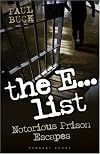
Really disappointing. Couldn't finish it. Great subject matter: catalogue of prison escapes more and less recent. Shame then that it is so poorly written - no style or engagement in the individual stories - just effectively a list of names and the basic elements of each escape method. Not really very engaging. All in all a nice idea vey poorly executed.
Lists
You May Also Like
Associated Authors
Statistics
- Works
- 27
- Also by
- 2
- Members
- 83
- Popularity
- #218,810
- Rating
- 3.3
- Reviews
- 6
- ISBNs
- 30
- Languages
- 2