
Christopher Burke
Author of Paul Renner: The Art of Typography
Works by Christopher Burke
Associated Works
Tagged
Common Knowledge
- Other names
- Burke, Dr Christopher
- Gender
- male
- Occupations
- typographer
Members
Reviews

Based on extensive archival research, this open access book provides a fresh perspective on the early history of Isotype and pictographic communication, with new information about largely unknown episodes throughout its development.
The picture-script Isotype (International System of Typographic Picture Education), previously conceived as the Vienna Method of Pictorial Statistics, evolved through numerous publications and exhibitions in the early 20th century. Christopher Burke and Günther show more Sandner trace how its development responded to differing cultural and political climates, through a period when the idea of a universal language – an artificial or planned language – was linked to ideas of internationality and democratic planning. This book explores in depth, for the first time, the early picture-statistical work carried out at Austrian institutions during a new era of visual education and communication during and after World War II.
Examining the work of Isotype’s initiators – Otto Neurath, the founding director of The Social and Economic Museum of Vienna, the artist Gerd Arntz, and Marie Reidemeister, who performed the role of ‘transformer’, a prototype of the modern information designer – this book challenges existing conceptions of an enormously influential pictographic language. Richly illustrated throughout with over 60 examples of work by key figures, this book provides a comprehensive history of Isotype and offers critical reflections on its legacy within, and relevance to, contemporary design practice. show less
The picture-script Isotype (International System of Typographic Picture Education), previously conceived as the Vienna Method of Pictorial Statistics, evolved through numerous publications and exhibitions in the early 20th century. Christopher Burke and Günther show more Sandner trace how its development responded to differing cultural and political climates, through a period when the idea of a universal language – an artificial or planned language – was linked to ideas of internationality and democratic planning. This book explores in depth, for the first time, the early picture-statistical work carried out at Austrian institutions during a new era of visual education and communication during and after World War II.
Examining the work of Isotype’s initiators – Otto Neurath, the founding director of The Social and Economic Museum of Vienna, the artist Gerd Arntz, and Marie Reidemeister, who performed the role of ‘transformer’, a prototype of the modern information designer – this book challenges existing conceptions of an enormously influential pictographic language. Richly illustrated throughout with over 60 examples of work by key figures, this book provides a comprehensive history of Isotype and offers critical reflections on its legacy within, and relevance to, contemporary design practice. show less
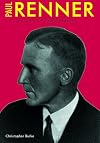
German typographer Paul Renner is best known as the designer of the typeface Futura, which stands as a landmark of modern typographic design. Paul Renner, still the only study in any language of Renner's brilliant career, details his life and work to reveal the breadth of his accomplishments and influence. Christopher Burke presents a wealth of hithertounpublished materials, drawing on primary sources and archival research and clearly written with an eye to today's reader. Beautifully show more designed, Paul Renner is an inspiring tour de force portrait of this typographer's extraordinary career and his ongoing influence on the graphic arts. show less
Jan Tschichold (1902-1974) is considered by many to be the most influential typographer of the twentieth century. A leading voice of the modernist movement, Tschichold oversaw the redesign of the Penguin and Pelican paperbacks in the late 1940s and devised for them a standardized set of typographic rules. The classical type designs of his late career qualify him as perhaps the first typographic postmodernist. Active Literature, an in-depth study of Jan Tschichold's modernist period, is based show more on extensive archival research that uncovered a wealth of new photographs of his design work. Author Christopher Burke presents a full portrait of the designer's career and puts into context Tschichold's own account of his life and work. show less
You May Also Like
Associated Authors
Statistics
- Works
- 8
- Also by
- 4
- Members
- 131
- Popularity
- #154,466
- Rating
- 4.7
- Reviews
- 3
- ISBNs
- 14
- Languages
- 1