
Bae Suah
Author of Untold Night and Day
About the Author
Image credit: Bae Suah
Works by Bae Suah
Untold Night and Day 8 copies
Tagged
Common Knowledge
- Birthdate
- 1965
- Gender
- female
- Nationality
- South Korea
- Birthplace
- Seoul, South Korea
- Associated Place (for map)
- Seoul, South Korea
Members
Reviews

‘’By the time the heatwave came to an end, nothing remained of the people but ash. They became fused into panes of glass: grey and opaque.’’
Five people search the streets of Seoul for something to grasp at. An actress, an aspiring poet, a teacher, a director, a novelist from abroad. A group of individuals linked by a personal story of loneliness, unfulfillment and the fear of the unknown. But who are they? Why are they wandering in a city smothered by an absurd heatwave? There is no show more wind, no bird songs, no colours in the sky. A radio switches on and off by itself, blindness and haziness walk hand-in-hand with surreal dreams, apparitions, faces with scars and blood-stained clothes.
A day and a night in a loop where each character is merged into the other, events are seen as if from the window of a car driving in the night, the city lights coming alive and fading away. It is a dinner in a blackout restaurant, a visit to a gallery, the reading of a poem, the performance of an audio theatre. It is life depicted in black-and-white photographs, phone calls with no caller or recipient. It is a drop of sweat, a pianist in the park, a cry of fear in the face of the absolute void....
The Translator’s Note by Deborah Smith is as beautiful and haunting as the novel itself. Her translation elevates the novel to an other realm.
‘’Don’t go far away, even for just one day, because
Because… a day is long, and
I will wait for you.’’
My reviews can also be found on https://theopinionatedreaderblog.wordpress.com/ show less
Five people search the streets of Seoul for something to grasp at. An actress, an aspiring poet, a teacher, a director, a novelist from abroad. A group of individuals linked by a personal story of loneliness, unfulfillment and the fear of the unknown. But who are they? Why are they wandering in a city smothered by an absurd heatwave? There is no show more wind, no bird songs, no colours in the sky. A radio switches on and off by itself, blindness and haziness walk hand-in-hand with surreal dreams, apparitions, faces with scars and blood-stained clothes.
A day and a night in a loop where each character is merged into the other, events are seen as if from the window of a car driving in the night, the city lights coming alive and fading away. It is a dinner in a blackout restaurant, a visit to a gallery, the reading of a poem, the performance of an audio theatre. It is life depicted in black-and-white photographs, phone calls with no caller or recipient. It is a drop of sweat, a pianist in the park, a cry of fear in the face of the absolute void....
The Translator’s Note by Deborah Smith is as beautiful and haunting as the novel itself. Her translation elevates the novel to an other realm.
‘’Don’t go far away, even for just one day, because
Because… a day is long, and
I will wait for you.’’
My reviews can also be found on https://theopinionatedreaderblog.wordpress.com/ show less

Untold Night and Day is an unusual novel with a lot to unpack. It’s very clever, full of symbolism with themes of identity and how we are heard through different lenses. It’s not a book that you read with 10% of your brain, but one that takes concentration to get the most out of this cleverly constructed novel. Towards the end, I found myself wishing for more linear development and simplicity, yet appreciating the skill involved in this fractured, surreal story of summer in Seoul.
Ayami show more is an actress and the central character in Untold Night and Day. She works at a theatre for the blind, but this is the last day for the theatre. Jobless, she and her former boss close the theatre and wander the hot, dark streets of Seoul looking for their friend. She’s gone to the hospital, but has asked Ayami to go to the airport early the next morning to meet an author friend. By day, Ayami shows him around while he complains and the story flows into fever dream territory. What is real, what is not and what is only perceived by some becomes a blur in the heat and fatigue of the day.
The story is more linear to begin, focusing on Ayami (such as her legs and scars) with exploration of those around her and her childhood. These people and motifs recur through the novel with increasing frequency as the novel progresses, asking the reader to question how these connect with each other and what do they mean? Deborah Smith’s skills as a translator shine here, with the motifs and images increasing in familiarity as the fever pitch as to what is real and what is imagined reaches its peak. (Her translator’s note explains this in depth; I’d suggest reading first if you want the heads up on what to watch for). The heat and humidity increase as night turns into day, adding to the surreal quality of the novel as the day goes on. Ultimately, the reader is left to make their own decisions as to who Ayami is, what her past is and what is real. Is any of it real and does it really matter if it isn’t?
This would be a great novel to pick apart in study if you are willing to put in the effort to savour it. I must admit that I didn’t always do that, particularly at the end where the disorientation was strong. I like to ‘get’ things, and I didn’t always get this. However, Untold Night and Day is a very clever novel with amazing structure, just not for tired end of day reading.
http://samstillreading.wordpress.com show less
Ayami show more is an actress and the central character in Untold Night and Day. She works at a theatre for the blind, but this is the last day for the theatre. Jobless, she and her former boss close the theatre and wander the hot, dark streets of Seoul looking for their friend. She’s gone to the hospital, but has asked Ayami to go to the airport early the next morning to meet an author friend. By day, Ayami shows him around while he complains and the story flows into fever dream territory. What is real, what is not and what is only perceived by some becomes a blur in the heat and fatigue of the day.
The story is more linear to begin, focusing on Ayami (such as her legs and scars) with exploration of those around her and her childhood. These people and motifs recur through the novel with increasing frequency as the novel progresses, asking the reader to question how these connect with each other and what do they mean? Deborah Smith’s skills as a translator shine here, with the motifs and images increasing in familiarity as the fever pitch as to what is real and what is imagined reaches its peak. (Her translator’s note explains this in depth; I’d suggest reading first if you want the heads up on what to watch for). The heat and humidity increase as night turns into day, adding to the surreal quality of the novel as the day goes on. Ultimately, the reader is left to make their own decisions as to who Ayami is, what her past is and what is real. Is any of it real and does it really matter if it isn’t?
This would be a great novel to pick apart in study if you are willing to put in the effort to savour it. I must admit that I didn’t always do that, particularly at the end where the disorientation was strong. I like to ‘get’ things, and I didn’t always get this. However, Untold Night and Day is a very clever novel with amazing structure, just not for tired end of day reading.
http://samstillreading.wordpress.com show less
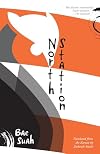
Bae Suah in experimental mode.
The 7 stories in North Station display many aspects of this author's formidable powers. Unlike the novels of hers I've read, this collection depicts similar characters in a greater variety of situations, while not relying on dramatic plotting. They are very slow, and will not be to everyone's taste. Pre-eminent themes include the contemplation of loss, and the melancholy of inertia. The narrative contains more voice than action. These stories resonate with show more controlled desperation, contained storms. They play with language and time, and seethe, even while they slowly dissipate in the mind.
With effortless complexity and poetic lyricism, Suah weaves together unconventional travel narratives, amid psychological stability, confronting the mobility of the mind, and navigating the chaotic urban landscapes with rock-solid perceptual analysis.
There is a little German flavor to her works, which only makes sense considering she is a translator of German works into Korean. There are traces of Mann, Hesse, Kafka & Goethe, Rilke and others I'm not familiar with. The solid, striking prose is organized into defensive walls of intelligent arguments crafted through bulky, content-rich paragraphs. But this is not to say she does not have a delicate touch all the same. The mechanics are elaborate while the characters are never hurried. They are collected and observant in the extreme.
Her translator's mentality informs her fiction writing. Suah takes her time composing exquisite images which converge, like coupling trains of thought, to flow and separate again. She asks: how much of a writer's personality does a work contain in "Owl." Her characters are People "vainly flirting with life" fighting off with deep meditation the slow trickle toward death. But there is always an awareness of art's impact on the human soul and the barriers we erect between each other - either as an emotional coping mechanism or as a filter through which we encounter life on our own terms.
In some ways, her writing resembles Akutagawa's. Especially in the way she combines elements of Eastern and Western culture, how she explores another culture as a foreigner, and how she interprets these cultural anomalies through her own lens. Some of the descriptions are reminiscent of "Mandarins" - especially the fascination with trains.
Without a doubt, her writing possesses the intelligence and innate sensitivity of timeless literature. Yoko Tawada is another inevitable comparison, as she too lived in Germany. Suah provides commentary on Goethe's strictness and exactitude as she employs certain literary disciplines with a master's touch and she does not seem to borrow too often from her home country's myths and history. What these stories lack in plot, they make up with psychological tension and insight.
The debt life owes to death is one of her characters' preoccupations. "Nature maintains equilibrium. Man Grieves." By blending dialogue, monologue and straight narration, Suah enlivens her extended essays on human mortality in the storyteller's framework, while also commenting on art and the responsibility of the creator to their own vision, and how exposure compromises that. The final story provides a scenario similar to Perec's Life, a User's Manual. Suah's style is well-suited to endless permutations of detail. As a result, there is also great musicality in the deft translation we are given in English, such as in the subtle word order: "vividly revived," and "secret creases."
Complex sentences can either be a joy or a pain. In this case, they are Suah's stock and trade. The display of ruined mentalities in characters shifting through life's tribulations, lugging around their baggage of uncertainty, and the exploration of human psychic borders, provide an unflinching examination of our bodies and spirits in the cold metaphysical environments we inhabit. Combined with the elegant, ravishing descriptions, and the gorgeous atmosphere, this made for a luscious read. Her Mishima-like control of narration, the contemplation of the writerly life, and the academic versus literary ambitions on display fully qualify Suah as an important figure in world literature. Her literary theory, criticism and analysis, integrated smoothly into her novels and stories, along with the fragmentary hints which compose the tableau of life as we perceive it suggest that she has a deep and heartfelt understanding of human nature. The searing holes left in the tapestry by loss and grief are some of the most striking moments in her fiction.
I look forward to reading every word of this author's work as it makes its way, inch by inch, into English translation. show less
The 7 stories in North Station display many aspects of this author's formidable powers. Unlike the novels of hers I've read, this collection depicts similar characters in a greater variety of situations, while not relying on dramatic plotting. They are very slow, and will not be to everyone's taste. Pre-eminent themes include the contemplation of loss, and the melancholy of inertia. The narrative contains more voice than action. These stories resonate with show more controlled desperation, contained storms. They play with language and time, and seethe, even while they slowly dissipate in the mind.
With effortless complexity and poetic lyricism, Suah weaves together unconventional travel narratives, amid psychological stability, confronting the mobility of the mind, and navigating the chaotic urban landscapes with rock-solid perceptual analysis.
There is a little German flavor to her works, which only makes sense considering she is a translator of German works into Korean. There are traces of Mann, Hesse, Kafka & Goethe, Rilke and others I'm not familiar with. The solid, striking prose is organized into defensive walls of intelligent arguments crafted through bulky, content-rich paragraphs. But this is not to say she does not have a delicate touch all the same. The mechanics are elaborate while the characters are never hurried. They are collected and observant in the extreme.
Her translator's mentality informs her fiction writing. Suah takes her time composing exquisite images which converge, like coupling trains of thought, to flow and separate again. She asks: how much of a writer's personality does a work contain in "Owl." Her characters are People "vainly flirting with life" fighting off with deep meditation the slow trickle toward death. But there is always an awareness of art's impact on the human soul and the barriers we erect between each other - either as an emotional coping mechanism or as a filter through which we encounter life on our own terms.
In some ways, her writing resembles Akutagawa's. Especially in the way she combines elements of Eastern and Western culture, how she explores another culture as a foreigner, and how she interprets these cultural anomalies through her own lens. Some of the descriptions are reminiscent of "Mandarins" - especially the fascination with trains.
Without a doubt, her writing possesses the intelligence and innate sensitivity of timeless literature. Yoko Tawada is another inevitable comparison, as she too lived in Germany. Suah provides commentary on Goethe's strictness and exactitude as she employs certain literary disciplines with a master's touch and she does not seem to borrow too often from her home country's myths and history. What these stories lack in plot, they make up with psychological tension and insight.
The debt life owes to death is one of her characters' preoccupations. "Nature maintains equilibrium. Man Grieves." By blending dialogue, monologue and straight narration, Suah enlivens her extended essays on human mortality in the storyteller's framework, while also commenting on art and the responsibility of the creator to their own vision, and how exposure compromises that. The final story provides a scenario similar to Perec's Life, a User's Manual. Suah's style is well-suited to endless permutations of detail. As a result, there is also great musicality in the deft translation we are given in English, such as in the subtle word order: "vividly revived," and "secret creases."
Complex sentences can either be a joy or a pain. In this case, they are Suah's stock and trade. The display of ruined mentalities in characters shifting through life's tribulations, lugging around their baggage of uncertainty, and the exploration of human psychic borders, provide an unflinching examination of our bodies and spirits in the cold metaphysical environments we inhabit. Combined with the elegant, ravishing descriptions, and the gorgeous atmosphere, this made for a luscious read. Her Mishima-like control of narration, the contemplation of the writerly life, and the academic versus literary ambitions on display fully qualify Suah as an important figure in world literature. Her literary theory, criticism and analysis, integrated smoothly into her novels and stories, along with the fragmentary hints which compose the tableau of life as we perceive it suggest that she has a deep and heartfelt understanding of human nature. The searing holes left in the tapestry by loss and grief are some of the most striking moments in her fiction.
I look forward to reading every word of this author's work as it makes its way, inch by inch, into English translation. show less
Very little fiction captures the utterly disorientating atemporal feeling that many dreams have. It's mostly experienced in retrospect after you wake up, when trying to sort dream-images into a sequence or narrative of some kind in search of meaning. 'Untold Night and Day' manages to evoke just this feeling with recurring images, sentences, and events. Adding to the disorientation is the oppressive humid heat, which Suah evokes unpleasantly viscerally. The narrative covers a day and night, show more during which the two protagonists repeatedly encounter each other and themselves in unsettling yet ostensibly mundane contexts. Their identities seem fractured and confused. The setting is Seoul, the atmosphere of which emerges through little details. I particularly liked the shipping forecast as a recurring motif:
What a haunting novella. I don't quite know what to make of it, but was impressed by how distinctively unsettling I found the reading experience. The translator's note has some fascinating cultural and historical context for Suah's writing (and was sensibly placed at the end of the book). show less
Today's. Temperature. Forty. Degrees. Celsius. No wind. No cloud. Danger. Of burning. Forty. Degrees. Absence. Of wind. Absence. Of cloud. Daytime. City. Mirage. Scheduled. To appear. Absence. Of wind. Absence. Of cloud. Absence. Of colour. In the sky.
What a haunting novella. I don't quite know what to make of it, but was impressed by how distinctively unsettling I found the reading experience. The translator's note has some fascinating cultural and historical context for Suah's writing (and was sensibly placed at the end of the book). show less
Lists
Awards


You May Also Like


Associated Authors
Statistics
- Works
- 16
- Members
- 556
- Popularity
- #44,899
- Rating
- 3.6
- Reviews
- 26
- ISBNs
- 25
- Languages
- 5