
Flora Jessop
Author of Church of Lies
About the Author
Image credit: Flora Jessop
Works by Flora Jessop
Tagged
Common Knowledge
- Legal name
- Jessop, Flora Mae
- Birthdate
- 1969-06-12
- Gender
- female
- Education
- G.E.D.
- Occupations
- topless dancer
activist - Organizations
- Fundamentalist Church of Latter Day Saints
Help the Child Brides
Child Protection Project - Agent
- Craig Wiley
- Relationships
- Jessop, Fred (Flora's uncle)
Jessop, Carolyn (Flora's cousin by marriage) - Nationality
- USA
- Places of residence
- Colorado City, Arizona, USA (birth & childhood)
Hildale, Colorado, USA (birth)
Phoenix, Arizona, USA - Associated Place (for map)
- Arizona, USA
Members
Reviews

Flora Jessop's memoir, Church of Lies, goes beyond the scope of the FLDS tell-alls and survivor memoirs, and becomes an instructive story of what is needed for people not just to fight for their own freedom, but for that of others.
Jessop's memoir is one of a number of memoirs released contemporaneously (circa 2006-2009) that document the horrific abuse suffered by children and women in the Fundamentalist Church of Latter-Day Saints (FLDS) under Warren Jeffs and his uncle Rulon Jeffs. show more Although Jessop did not stay in an FLDS marriage, she experienced the worst kind of religiously-sanctioned abuses. Not for the faint-of-heart, Jessop details child rape, incest, and molestation; domestic violence, imprisonment, and what can only be described as torture; and forced marriage, attempted kidnapping, and coercive, threatening, and violent behavior on the part of numerous members of the FLDS. Finally and perhaps most depressingly, she also describes the routine failure of government agencies entrusted with protection of children to do their job, a failure that must in part be ascribed to institutional sexism as well as corruption and cowardice.
In the face of all that, though, Jessop's memoir is more than a survivor memoir and a revealing look at some of the worst abuses of fundamentalist religious sects. Jessop's memoir is also an activist memoir, and it tells a much less common story than the familiar cycle of abuse, self-abuse, and ultimate survival: after recovery, Jessop became an activist, and has since worked tirelessly to protect children from the religious-based oppression of the FLDS. The latter half of the book tells this part of her story.
To me, therefore, this story marked a refreshing change from some of the stories coming out of the FLDS and similar religious sects, where people escaped or escaped with their children -- like Brent Jeffs' Lost Boy and Elissa Wall's Stolen Innocence, Flora Jessop's Church of Lies is also a story of fighting back, and the redemptive powers of fighting not just for oneself but for others. Recommended.
Note: Regarding the literary values of Church of Lies: Jessop's memoir is competently written, her story is clearly told, and her voice -- at turns disillusioned, angry, and hopeful -- emerges clearly, which is what I look for from memoirists. I prefer not to comment further on the literary values of memoirs unless they stand out in some way; the point of a memoir, to me, is a window on that person's life or experience, not the elegance of the prose.
(One final note -- as a freethinker one can't help but be struck by the thought that the title is more than a bit redundant.) show less
Jessop's memoir is one of a number of memoirs released contemporaneously (circa 2006-2009) that document the horrific abuse suffered by children and women in the Fundamentalist Church of Latter-Day Saints (FLDS) under Warren Jeffs and his uncle Rulon Jeffs. show more Although Jessop did not stay in an FLDS marriage, she experienced the worst kind of religiously-sanctioned abuses. Not for the faint-of-heart, Jessop details child rape, incest, and molestation; domestic violence, imprisonment, and what can only be described as torture; and forced marriage, attempted kidnapping, and coercive, threatening, and violent behavior on the part of numerous members of the FLDS. Finally and perhaps most depressingly, she also describes the routine failure of government agencies entrusted with protection of children to do their job, a failure that must in part be ascribed to institutional sexism as well as corruption and cowardice.
In the face of all that, though, Jessop's memoir is more than a survivor memoir and a revealing look at some of the worst abuses of fundamentalist religious sects. Jessop's memoir is also an activist memoir, and it tells a much less common story than the familiar cycle of abuse, self-abuse, and ultimate survival: after recovery, Jessop became an activist, and has since worked tirelessly to protect children from the religious-based oppression of the FLDS. The latter half of the book tells this part of her story.
To me, therefore, this story marked a refreshing change from some of the stories coming out of the FLDS and similar religious sects, where people escaped or escaped with their children -- like Brent Jeffs' Lost Boy and Elissa Wall's Stolen Innocence, Flora Jessop's Church of Lies is also a story of fighting back, and the redemptive powers of fighting not just for oneself but for others. Recommended.
Note: Regarding the literary values of Church of Lies: Jessop's memoir is competently written, her story is clearly told, and her voice -- at turns disillusioned, angry, and hopeful -- emerges clearly, which is what I look for from memoirists. I prefer not to comment further on the literary values of memoirs unless they stand out in some way; the point of a memoir, to me, is a window on that person's life or experience, not the elegance of the prose.
(One final note -- as a freethinker one can't help but be struck by the thought that the title is more than a bit redundant.) show less
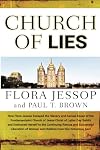
I can't help but be fascinated by polygamy and the FLDS as much as I am horrified by it. This is the amazing memoir of a woman who grew up in polygamy and did eventually escape it. She fights for the women and children abused by the FLDS to this day. Flora recounts her abusive childhood including a rape by her own father, her marriage to her first cousin and the horrifying other abuses that she saw. A really fascinating and horrifying read.
I sometimes have a really hard time writing a review of a memoir, because I feel like I'm critiquing the person's life, and not the book itself - isn't it one and the same? This one is no different.
I had a really, really hard time liking Flora Jessop, though naturally I felt sympathy for what she went through. But she's awfully big on martyrdom, the "poor me" syndrome (which I can't get, because I can't imagine what she went through), but she also constantly praises herself for how awesome show more she is, even when she's doing drugs and stripping. I understand that, too - lack of self confidence usually turns into a "look at me, look at how great I am!"
The big thing that really bugged me about the whole book, and made me doubt a lot of what Flora said, was the one line she devotes to quitting drugs - she basically just says "I decided to stop, so I did". I've never done drugs, never even smoked a cigarette, but I've never heard of anyone quitting drugs by just deciding to. You're telling me she never once looked back? She never once struggled with her addiction? I get that her drug abuse wasn't the story here - saving the kids from abuse is - but it really bugged me that she just casually mentions quitting drugs & never mentions it again. What else was she over simplifying?
She also makes out that she's the only person ever who tries to rescue the kids and she's the only one ever in the whole world who could possibly actually rescue a child - and that's just not true. She likes to paint CPS as the bad guys, but that's discrimination - claiming everyone who works there is a bad guy is as bad as any other discrimination/racism/etc. CPS is trying to work within the laws of our country - for better or for worse. I'm not saying that they are actually helping the kids - clearly, they aren't - but they are trying to follow the law, and that doesn't make someone working for CPS as evil, just someone who's trying to follow the law. show less
I had a really, really hard time liking Flora Jessop, though naturally I felt sympathy for what she went through. But she's awfully big on martyrdom, the "poor me" syndrome (which I can't get, because I can't imagine what she went through), but she also constantly praises herself for how awesome show more she is, even when she's doing drugs and stripping. I understand that, too - lack of self confidence usually turns into a "look at me, look at how great I am!"
The big thing that really bugged me about the whole book, and made me doubt a lot of what Flora said, was the one line she devotes to quitting drugs - she basically just says "I decided to stop, so I did". I've never done drugs, never even smoked a cigarette, but I've never heard of anyone quitting drugs by just deciding to. You're telling me she never once looked back? She never once struggled with her addiction? I get that her drug abuse wasn't the story here - saving the kids from abuse is - but it really bugged me that she just casually mentions quitting drugs & never mentions it again. What else was she over simplifying?
She also makes out that she's the only person ever who tries to rescue the kids and she's the only one ever in the whole world who could possibly actually rescue a child - and that's just not true. She likes to paint CPS as the bad guys, but that's discrimination - claiming everyone who works there is a bad guy is as bad as any other discrimination/racism/etc. CPS is trying to work within the laws of our country - for better or for worse. I'm not saying that they are actually helping the kids - clearly, they aren't - but they are trying to follow the law, and that doesn't make someone working for CPS as evil, just someone who's trying to follow the law. show less
I got this book from the library and only made it about a quarter of the way through. Ms. Jessop's writing is really engaging and keeps you interested, and her story is unmatchable and the description of the book really intrigued me. I found it to be too heavy though, considering that I read to wind down and have some positive quiet time to myself.
I think it's important that her story be told, and telling your story when you've gone through what she has can be extremely healing. However, I show more felt like I got the gist of it within the first several chapters, and it was just taking too big of a toll on me emotionally. It did get me thinking and start wondering what people like me could do to help other young women in that situation, which has been Ms. Jessop's mission, but I didn't need to read the entire book in order to come to that place.
There are graphic scenes of sexual abuse against herself and other young girls, and especially having a daughter of my own, I found that I could not stomach them and had to skip over them. This book is for reading by pretty tough people, of which I am not one. But even in reading only the first several chapters, she did get her point across, and I have incredibly admiration for her courage and strength. show less
I think it's important that her story be told, and telling your story when you've gone through what she has can be extremely healing. However, I show more felt like I got the gist of it within the first several chapters, and it was just taking too big of a toll on me emotionally. It did get me thinking and start wondering what people like me could do to help other young women in that situation, which has been Ms. Jessop's mission, but I didn't need to read the entire book in order to come to that place.
There are graphic scenes of sexual abuse against herself and other young girls, and especially having a daughter of my own, I found that I could not stomach them and had to skip over them. This book is for reading by pretty tough people, of which I am not one. But even in reading only the first several chapters, she did get her point across, and I have incredibly admiration for her courage and strength. show less
Lists
Cults (1)
You May Also Like


Associated Authors
Statistics
- Works
- 1
- Members
- 195
- Popularity
- #112,376
- Rating
- 3.7
- Reviews
- 10
- ISBNs
- 8