
About the Author
Rip Esselstyn in the author of The Engine 2 Seven-Day Rescue Diet, The Engine 2 Cookbook, and the New York Times bestselling Plant-Strong. A Former Austin, Texas firefighter, Esselstyn currently travels around the world promoting the Engine 2 lifestyle. You can visit his website at show more www.Engine2Diet.com. show less
Works by Rip Esselstyn
The Engine 2 Diet: The Texas Firefighter's 28-Day Save-Your-Life Plan that Lowers Cholesterol and Burns Away the Pounds (2009) 355 copies, 17 reviews
My Beef with Meat: The Healthiest Argument for Eating a Plant-Strong Diet--Plus 140 New Engine 2 Recipes (2013) 141 copies, 7 reviews
The Engine 2 Cookbook: More than 130 Lip-Smacking, Rib-Sticking, Body-Slimming Recipes to Live Plant-Strong (2017) 76 copies, 1 review
The Engine 2 Seven-Day Rescue Diet: Eat Plants, Lose Weight, Save Your Health (2016) 65 copies, 1 review
Tagged
Common Knowledge
- Gender
- male
- Education
- University of Texas (1986)
- Occupations
- triathlete
firefighter - Nationality
- USA
- Birthplace
- New York, USA
- Places of residence
- New York, USA
Austin, Texas, USA - Associated Place (for map)
- USA
Members
Reviews
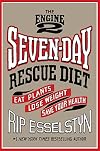
I really like RIp Esselstyn and believe in the basic tenets of his Engine 2 Plan. I don't really think what Rip is proposing is a diet, it's a lifestyle: 100% plant based, whole food eating, with no oils as well.
I do prefer his previous book, The Engine 2 Diet, however. It takes a longer view of transitioning to this lifestyle and feels more...forgiving. This Seven-Day book comes across a bit harsh at times, and while everything he is saying is - in my experience - factual, I still think show more you get more flies with honey (though honey is a no-no). People are skeptical enough of veganism - coax them, don't scold them.
But Rip is an inspiring guy and he brings compelling data to the table, so hopefully this encourages more readers to find a healthier path when filling their plates. show less
I do prefer his previous book, The Engine 2 Diet, however. It takes a longer view of transitioning to this lifestyle and feels more...forgiving. This Seven-Day book comes across a bit harsh at times, and while everything he is saying is - in my experience - factual, I still think show more you get more flies with honey (though honey is a no-no). People are skeptical enough of veganism - coax them, don't scold them.
But Rip is an inspiring guy and he brings compelling data to the table, so hopefully this encourages more readers to find a healthier path when filling their plates. show less
My Beef with Meat: The Healthiest Argument for Eating a Plant-Strong Diet--Plus 140 New Engine 2 Recipes by Rip Esselstyn
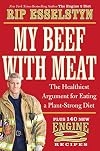
I read this during the time I was also reading Whole, by Colin Campbell. Both are arguments to eat a whole foods, plant-based diet- even referred to by Dr. Campbell as the WFPB diet - for your health and for the health of the planet (and the animals). But they approach the subject from different angles. I think it's useful and instructive to read both.
Esselstyn's book is a combination: half is the logical scientific arguments against eating animal foods and in favor of plant-based whole show more foods. It is, as he says himself, all of the answers to the meat-eaters' questions. Campbell's book is both narrower and broader: it provides the scientific background, simplified for the intelligent lay reader, for treating nutrition in a "wholistic" rather than a "reductionist" way. Throw out the single-element studies and study, instead, the whole body and how it reacts to whole foods, says Campbell.
Esselstyn agrees that the only healthy way to eat is to eat the whole food. He makes cases that are a bit more reductionist than Campbell, however. He looks at individual dietary needs and shows how plants satisfy those requrements (Campbell, by contrast, shows how simplistic calculating nutrients can be).
Beyond that, however, Esselstyn counters the actual challenges that have been thrown at him over the years. He makes the case that "plant strong" (his term) eating is cheap, easy, and delicious. He addresses supplements (no need to take any), grass-fed as opposed to grain-fed cattle, the myths about oils, and more. What's more, he does so with confidence, humor, and simplicity. Each chapter is short - no more than three pages - and addresses a single question. Anyone reading (and rereading) these chapters is going to be ready for anything the meat-eater wants to ask.
The second half of the book is the recipes. A generous 140 recipes culled from all over the place, tested and retested. Each one is plant-strong, uses no added oils, little or no salt, and only natural sweeteners. Each is easy to make and includes ingredients that should not be hard to find. I have tried several and loved them all. The lasagna takes a lot of prep but goes together easily and is wonderful (great for a potluck). The brownies were a hit at a vegan gathering recently.
It's a nice combination - the information you need and the recipes you will love. show less
Esselstyn's book is a combination: half is the logical scientific arguments against eating animal foods and in favor of plant-based whole show more foods. It is, as he says himself, all of the answers to the meat-eaters' questions. Campbell's book is both narrower and broader: it provides the scientific background, simplified for the intelligent lay reader, for treating nutrition in a "wholistic" rather than a "reductionist" way. Throw out the single-element studies and study, instead, the whole body and how it reacts to whole foods, says Campbell.
Esselstyn agrees that the only healthy way to eat is to eat the whole food. He makes cases that are a bit more reductionist than Campbell, however. He looks at individual dietary needs and shows how plants satisfy those requrements (Campbell, by contrast, shows how simplistic calculating nutrients can be).
Beyond that, however, Esselstyn counters the actual challenges that have been thrown at him over the years. He makes the case that "plant strong" (his term) eating is cheap, easy, and delicious. He addresses supplements (no need to take any), grass-fed as opposed to grain-fed cattle, the myths about oils, and more. What's more, he does so with confidence, humor, and simplicity. Each chapter is short - no more than three pages - and addresses a single question. Anyone reading (and rereading) these chapters is going to be ready for anything the meat-eater wants to ask.
The second half of the book is the recipes. A generous 140 recipes culled from all over the place, tested and retested. Each one is plant-strong, uses no added oils, little or no salt, and only natural sweeteners. Each is easy to make and includes ingredients that should not be hard to find. I have tried several and loved them all. The lasagna takes a lot of prep but goes together easily and is wonderful (great for a potluck). The brownies were a hit at a vegan gathering recently.
It's a nice combination - the information you need and the recipes you will love. show less
The Engine 2 Diet: The Texas Firefighter's 28-Day Save-Your-Life Plan that Lowers Cholesterol and Burns Away the Pounds by Rip Esselstyn
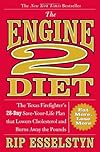
I got this book mostly for the recipes (which I haven't tried yet - I'm a plant-strong recipe hoarder). The book part itself is pretty decent, but there wasn't any new information for me there. Recommended for those who are just starting, or starting to consider, a plant-strong (vegan) diet. It's geared toward being twenty-eight days long, but I would hope that once one is on a vegan diet for almost a month, they'll be less inclined to go back to the SAD (Standard American Diet).
The Engine 2 Diet: The Texas Firefighter's 28-Day Save-Your-Life Plan that Lowers Cholesterol and Burns Away the Pounds by Rip Esselstyn
The Engine 2 Diet has typical self-help elements—personal success story, user testimonials, good advice, and bold claims for positive life-changing results. The advice is simple; Esselstyn summarizes it in just eight points. Like the advice in most self-help books, it’s been preached elsewhere. Esselstyn’s contribution summarizes the evidence for significant health benefits from a “plant-strong” diet, adds a dash of exercise, and lays out how to identify healthful choices and fix a show more variety of dishes from breakfast through desert.
Esselstyn’s “plant-strong” means vegan. Engine 2 adds strict limits on sodium, fat, and sugar. It may be smart to avoid the vegan label. Engine 2 is aiming for the mainstream. There’s no mention of saving animals, just a healthy lifestyle saving people. Another thing you won’t find, there’s no advice to limit how much you eat. The diet focuses exclusively on what you eat, claiming you can eat as much as you want of the allowed foods, be healthier, and lose weight.
I love many things about Engine 2. It gives people excellent goals for better health and explains in detail how to achieve those goals. I found the chapter on reading labels extremely helpful, especially the specific criteria for the grocery store aisles. The large recipe section includes many simple everyday dishes and few elaborate dishes. It offers replacements for animal-sourced high-fat workhorses like mayonnaise, salad dressing, and sandwich fillings. The book’s strength is showing how to live this lifestyle every working day.
The recipes are easy to follow, instructions are clear, and I usually end up with what I expect. I had trouble finding ingredients for some of the recipes, especially on the first trial, and had to substitute and omit. Substituting firm tofu for soft in the mousse was unsuccessful. The result was grainy and runny—edible but not appealing. With the right type of tofu, this was very nice, not as rich as a high-fat dairy version but nearly the same consistency, very tasty, and totally acceptable to my household. Omitting nutritional yeast from the salad dressing changed the consistency only slightly and made an acceptable dressing. The black bean sandwich spread, on rye with the fixing, will be a regular lunch. The curry-seasoned tofu sandwich spread was good with rice and chutney in a tortilla. The simple sweet potato fries didn’t last long. I really liked the meat-less loaf, although the rest of my household was less enthusiastic. The sloppy joes were easy and tasty, with nice serving suggestions.
Coming from a former professional triathlete, I expected exercise would get more coverage. Esselstyn gives a basic workout, fine if you aren’t already exercising regularly. He emphasizes that anyone can exercise without joining a health club or installing a home gym. I really loved this; I am living proof. Aside from one basic chapter on exercise, this book is about the diet.
Many readers will encounter real difficulties adopting the Engine 2 plan. The book glosses over difficulties and makes a couple of rather silly recommendations. Readers are to empty and refill their kitchens over a weekend to immerse themselves in the Engine 2 plan. I laughed out loud. What working family can afford to throw or give away hundreds of dollars worth of food? Not mine. Engine 2 recommends that you get several medical tests to compare before and after results. What insurers will pay for medically unnecessary tests just to see if a new diet works? These put me off.
Readers who can’t or won’t mostly buy fresh and cook from scratch will find it hard to adhere to the Engine 2 plan. Finding Engine 2 approved packaged prepared foods as well as some specialty ingredients is a significant difficultly. There’s not much at my local Safeway. At My Organic Market (MOM), I find only a few canned and frozen foods that met the Engine 2 guidelines, even among the brands and products mentioned in the book. (And the stuff at MOM is pricey.) There are other stores and the internet but this is starting to eat up considerable time and money. As an environmentalist, I object to extra miles driving from store to store.
Most readers will have to give up many foods we are currently eating. Even with strong motivation, it’s hard to give up favorite foods cold tofurky. The promised benefits are great enough that my household will adopt as much of the plan as our resources and willpower permit. But, it will definitely take much longer than 28 days and we will certainly make compromises between what Engine 2 recommends on one hand and what foods we can find, how much time we can devote to extra shopping and cooking, and what we can bring ourselves to give up on the other. Instead of a 28-day sprint, this will be a longer journey for us. show less
Esselstyn’s “plant-strong” means vegan. Engine 2 adds strict limits on sodium, fat, and sugar. It may be smart to avoid the vegan label. Engine 2 is aiming for the mainstream. There’s no mention of saving animals, just a healthy lifestyle saving people. Another thing you won’t find, there’s no advice to limit how much you eat. The diet focuses exclusively on what you eat, claiming you can eat as much as you want of the allowed foods, be healthier, and lose weight.
I love many things about Engine 2. It gives people excellent goals for better health and explains in detail how to achieve those goals. I found the chapter on reading labels extremely helpful, especially the specific criteria for the grocery store aisles. The large recipe section includes many simple everyday dishes and few elaborate dishes. It offers replacements for animal-sourced high-fat workhorses like mayonnaise, salad dressing, and sandwich fillings. The book’s strength is showing how to live this lifestyle every working day.
The recipes are easy to follow, instructions are clear, and I usually end up with what I expect. I had trouble finding ingredients for some of the recipes, especially on the first trial, and had to substitute and omit. Substituting firm tofu for soft in the mousse was unsuccessful. The result was grainy and runny—edible but not appealing. With the right type of tofu, this was very nice, not as rich as a high-fat dairy version but nearly the same consistency, very tasty, and totally acceptable to my household. Omitting nutritional yeast from the salad dressing changed the consistency only slightly and made an acceptable dressing. The black bean sandwich spread, on rye with the fixing, will be a regular lunch. The curry-seasoned tofu sandwich spread was good with rice and chutney in a tortilla. The simple sweet potato fries didn’t last long. I really liked the meat-less loaf, although the rest of my household was less enthusiastic. The sloppy joes were easy and tasty, with nice serving suggestions.
Coming from a former professional triathlete, I expected exercise would get more coverage. Esselstyn gives a basic workout, fine if you aren’t already exercising regularly. He emphasizes that anyone can exercise without joining a health club or installing a home gym. I really loved this; I am living proof. Aside from one basic chapter on exercise, this book is about the diet.
Many readers will encounter real difficulties adopting the Engine 2 plan. The book glosses over difficulties and makes a couple of rather silly recommendations. Readers are to empty and refill their kitchens over a weekend to immerse themselves in the Engine 2 plan. I laughed out loud. What working family can afford to throw or give away hundreds of dollars worth of food? Not mine. Engine 2 recommends that you get several medical tests to compare before and after results. What insurers will pay for medically unnecessary tests just to see if a new diet works? These put me off.
Readers who can’t or won’t mostly buy fresh and cook from scratch will find it hard to adhere to the Engine 2 plan. Finding Engine 2 approved packaged prepared foods as well as some specialty ingredients is a significant difficultly. There’s not much at my local Safeway. At My Organic Market (MOM), I find only a few canned and frozen foods that met the Engine 2 guidelines, even among the brands and products mentioned in the book. (And the stuff at MOM is pricey.) There are other stores and the internet but this is starting to eat up considerable time and money. As an environmentalist, I object to extra miles driving from store to store.
Most readers will have to give up many foods we are currently eating. Even with strong motivation, it’s hard to give up favorite foods cold tofurky. The promised benefits are great enough that my household will adopt as much of the plan as our resources and willpower permit. But, it will definitely take much longer than 28 days and we will certainly make compromises between what Engine 2 recommends on one hand and what foods we can find, how much time we can devote to extra shopping and cooking, and what we can bring ourselves to give up on the other. Instead of a 28-day sprint, this will be a longer journey for us. show less
Awards

You May Also Like


Statistics
- Works
- 8
- Members
- 644
- Popularity
- #39,180
- Rating
- 3.7
- Reviews
- 29
- ISBNs
- 19
- Languages
- 1
- Favorited
- 1
