
Edward F. Campbell, Jr.
Author of Ruth: A New Translation with Introduction, Notes and Commentary
About the Author
Works by Edward F. Campbell, Jr.
The chronology of the Amarna letters, with special reference to the hypothetical coregency of Amenophis III and Akhenaten (1964) 9 copies
Biblical Archaeologist Reader, The 2 copies
Essays in Honor of George Ernest Wright (Bulletin of the American Schools of Oriental Research ; No. 220/221) (1976) — Editor — 1 copy
Associated Works
Scripture and Other Artifacts: Essays on the Bible and Archaeology in Honor of Philip J. King (1994) — Contributor — 49 copies
Shechem V: The Late Bronze Age Pottery from Field XIII at Shechem / Tell Balâtah (2015) — Editor — 1 copy
Tagged
Common Knowledge
- Canonical name
- Campbell, Edward F., Jr.
- Legal name
- Campbell, Edward Fay, Jr.
- Birthdate
- 1932
- Gender
- male
Members
Reviews
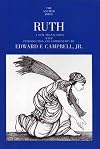
Ruth, a tale of human kindness and just dealing far beyond the norm, contains elements that for centuries have been the subject of debate. With a sprightly translation and a commentary rich in informed speculation, Edward Campbell considers the questions of layman and scholar alike.
Finding no overt mighty acts, the layman asks, “Why was Ruth included in the Bible at all? Where is God?” Campbell shows that God is not only present throughout but is indeed the moving force behind all the show more developments of the story. Naomi, Ruth, and Boaz each act as God to each other, by taking extraordinary responsibility and performing extraordinary acts of kindness. And it is God who is responsible for the series of coincidences on which the plot hinges.
The scholar’s questions deal with such matters as purpose, date, and genre. Campbell’s research into ancient customs and linguistics suggests to him that Ruth is a historical novelette, entertaining and instructive, composed not long after the reign of King David, during the time of Solomon or within the subsequent century. Campbell demonstrates the storyteller’s skill with sensitive analysis of form, pacing, and wordplay. By delving into word origins and nuances he shows how convincingly the characters are developed. One instance: Naomi and Boaz use obsolescent language, emphasizing the generation gap between them and Ruth.
In addition, the illustrations help the reader understand unfamiliar elements of the story—the setting, the agricultural seasons and harvesting, the clothing of the times, the city gate where elders and interested villagers gather to make sure that all is done in a just and godly way. show less
Finding no overt mighty acts, the layman asks, “Why was Ruth included in the Bible at all? Where is God?” Campbell shows that God is not only present throughout but is indeed the moving force behind all the show more developments of the story. Naomi, Ruth, and Boaz each act as God to each other, by taking extraordinary responsibility and performing extraordinary acts of kindness. And it is God who is responsible for the series of coincidences on which the plot hinges.
The scholar’s questions deal with such matters as purpose, date, and genre. Campbell’s research into ancient customs and linguistics suggests to him that Ruth is a historical novelette, entertaining and instructive, composed not long after the reign of King David, during the time of Solomon or within the subsequent century. Campbell demonstrates the storyteller’s skill with sensitive analysis of form, pacing, and wordplay. By delving into word origins and nuances he shows how convincingly the characters are developed. One instance: Naomi and Boaz use obsolescent language, emphasizing the generation gap between them and Ruth.
In addition, the illustrations help the reader understand unfamiliar elements of the story—the setting, the agricultural seasons and harvesting, the clothing of the times, the city gate where elders and interested villagers gather to make sure that all is done in a just and godly way. show less
You May Also Like


Associated Authors
Statistics
- Works
- 14
- Also by
- 4
- Members
- 546
- Popularity
- #45,668
- Rating
- 3.8
- Reviews
- 2
- ISBNs
- 12