
Hubert G. Locke
Author of Searching for God in Godforsaken Times and Places: Reflections on the Holocaust, Racism, and Death
About the Author
Hubert G. Locke is a Detroit native who served as administrative aide to the Detroit commissioner of police in 1967. He was dean and professor emeritus at the Daniel Evans Graduate School of the University of Washington and sat on the board of directors for the Police Foundation for over a decade. show more The Hubert Locke Distinguished Service Award at the University of Nebraska-Omaha is named in his honor to recognize an individual who has demonstrated exemplary commitment to public service. show less
Works by Hubert G. Locke
Associated Works
Anguished Hope: Holocaust Scholars Confront the Palestinian-Israeli Conflict (2008) — Contributor — 13 copies
Tagged
Common Knowledge
There is no Common Knowledge data for this author yet. You can help.
Members
Reviews
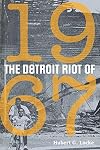
Locke was a DPD admin at the time of the riots, and hence, he was able to give this detailed survey, a chronological account as received by Detroit Police. There is even provided a map so you can visualize--or try to imagine--the extent of this, which would be considered the worse riot of its time. Fifty cities in America had riots in 1967. Detroit has not yet fully recovered from theirs.
I felt impressed by Locke's ability to empathize with all perspectives, while providing analysis and show more commentary. On the one hand, more complicated analysis is necessary than is given in this slim volume, and that this was an early account written in 1969. But on the other hand, we may never fully know what happened or why.
The riots were the beginning of the full abandonment of Detroit. Known as "white flight," what was left behind were vast numbers of vacant buildings and properties. Just as DPD was inundated by the riots, the local governments were completely overwhelmed with the complexity of Detroit's problems.
Locke, For both racial components [black and white]...there is deeply held convictions, again for drastically different reasons, that American society, "the system," is in shambles, that the cities of America are tragically symbolic of this societal confusion, and that in some form or other violence is inevitable. show less
I felt impressed by Locke's ability to empathize with all perspectives, while providing analysis and show more commentary. On the one hand, more complicated analysis is necessary than is given in this slim volume, and that this was an early account written in 1969. But on the other hand, we may never fully know what happened or why.
The riots were the beginning of the full abandonment of Detroit. Known as "white flight," what was left behind were vast numbers of vacant buildings and properties. Just as DPD was inundated by the riots, the local governments were completely overwhelmed with the complexity of Detroit's problems.
Locke, For both racial components [black and white]...there is deeply held convictions, again for drastically different reasons, that American society, "the system," is in shambles, that the cities of America are tragically symbolic of this societal confusion, and that in some form or other violence is inevitable. show less
You May Also Like
Associated Authors
Statistics
- Works
- 10
- Also by
- 3
- Members
- 93
- Popularity
- #200,858
- Rating
- 4.1
- Reviews
- 1
- ISBNs
- 12