
Andrea Canobbio
Author of Naturale disordine delle cose
Works by Andrea Canobbio
Associated Works
Tagged
Common Knowledge
- Birthdate
- 1962
- Gender
- male
- Education
- University of Turin
- Occupations
- writer
translator - Nationality
- Italy
- Birthplace
- Turin, Italy
- Associated Place (for map)
- Turin, Italy
Members
Reviews
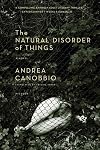
Claudio Fratta is a landscape and garden designer who likes to get his hands dirty. Prior to the beginning of The Natural Disorder of Things he witnesses a murder at night in a deserted grocery store parking lot. A man he is watching is run over by a white van. Seconds later, another car drives over the fallen man, finishing the job. Claudio follows the car, which in a short while careens out of control and off the road. Claudio rescues the injured woman from behind the wheel, takes her to show more hospital emergency, and leaves her there, never learning her name. Five months later he receives a call from a woman, who identifies herself as Elisabetta Renal, asking him to design a garden for her and her husband. Intrigued by her voice, which sounds like the woman he rescued, he agrees to meet and discuss the job. The story that develops from this point is (somewhat like a garden) surprising, compelling, and occasionally meandering. A lot of space is devoted to Claudio’s back story, his complex and tragic family history. But the back story is necessary as it is here that the key to everything is to be found. Andrea Canobbio’s fifth novel (and first to be made available in English) is something of a hybrid, sitting on the fence between contemporary literary fiction and noirish murder mystery. Throughout, the writing is lush and atmospheric (Abigail Asher’s fluid translation from the Italian is to be commended). Undeniably, there are times when events strain credibility, but it’s probably a matter of opinion whether or not this in any way diminishes Canobbio’s accomplishment. Some minor flaws aside, a strong argument can be made that The Natural Disorder of Things succeeds in telling its tale of revenge and star-crossed love in an exceedingly entertaining manner. show less
So far my novel of the year. About memory, consciousness, the difficulty of understanding others and ourselves. As I did in 2014 with Life after Life, I must immediately read it again!
Dear Fellow Readers,
An experience I had the other night in my small reading group has caused me to think about how to read and respond to literary fiction without shutting down discussion. One of our fellow readers tends to immediately jump in and express her opinions before there’s an opportunity to explore a book’s many themes and characters. In this case, she said the book made her feel claustrophobic and it was difficult for her to finish it.
What can you say after a statement like show more that? I probed a little, asking what it was that made her feel claustrophobic, wondering if it was something in herself she was reacting too and not just the book. As Lionel Trilling once said, novels can read us as much as we read them. I forget what my fellow reader said, but the damage had been done. Her strong reaction dampened further comments. It's natural to dislike certain characters just as we do people we run into in actual life. But as readers, don't we want to understand what it is about the character/person we dislike? What psychological elements are at play in this situation? It's an opportunity for self-reflection and self-knowledge, one of the main reasons I read.
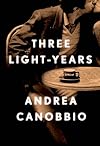
We were discussing Italian author Andrea Canobbio's prize-winning novel, Three Light-Years. The title suggests that the narrative will move at a lightning pace, but it doesn’t. It’s a sedate stroll through the lives of its three main characters, Cecilia, her sister Sylvia, and Claudio. The narrator, another character, has a minor role as the son of this triad, and the narrative is his attempt to piece together what had led to his birth.
The author/narrator does a masterful job of exploring the emotional dynamics (or lack of them) that brought these three people together, and as a reader I felt it deeply when Cecilia and Claudio failed to connect more fully. Therefore, I had hoped my fellow readers and I could have a serious exploration of the psychological dynamics operating between these two characters, as well as the cultural pressures they lived under. Both had been married previously. Both were still bound in multiple ways to their pasts. It seemed like a rich opportunity to learn something both about Italian culture, if one can generalize that much, and also about the interior lives of these three characters. I also had hoped we could discuss the work's structure, images, and more.
When it comes to reading and responding to literary works, I believe it’s important to take the inductive approach, saving our judgments until we’ve not only finished reading the book but also until after we’ve been engaged in a thorough discussion of it. Otherwise we are prejudging and jumping to unwarranted conclusions. We also are missing out on the kind insights other group members can bring to the conversation. show less
An experience I had the other night in my small reading group has caused me to think about how to read and respond to literary fiction without shutting down discussion. One of our fellow readers tends to immediately jump in and express her opinions before there’s an opportunity to explore a book’s many themes and characters. In this case, she said the book made her feel claustrophobic and it was difficult for her to finish it.
What can you say after a statement like show more that? I probed a little, asking what it was that made her feel claustrophobic, wondering if it was something in herself she was reacting too and not just the book. As Lionel Trilling once said, novels can read us as much as we read them. I forget what my fellow reader said, but the damage had been done. Her strong reaction dampened further comments. It's natural to dislike certain characters just as we do people we run into in actual life. But as readers, don't we want to understand what it is about the character/person we dislike? What psychological elements are at play in this situation? It's an opportunity for self-reflection and self-knowledge, one of the main reasons I read.
We were discussing Italian author Andrea Canobbio's prize-winning novel, Three Light-Years. The title suggests that the narrative will move at a lightning pace, but it doesn’t. It’s a sedate stroll through the lives of its three main characters, Cecilia, her sister Sylvia, and Claudio. The narrator, another character, has a minor role as the son of this triad, and the narrative is his attempt to piece together what had led to his birth.
The author/narrator does a masterful job of exploring the emotional dynamics (or lack of them) that brought these three people together, and as a reader I felt it deeply when Cecilia and Claudio failed to connect more fully. Therefore, I had hoped my fellow readers and I could have a serious exploration of the psychological dynamics operating between these two characters, as well as the cultural pressures they lived under. Both had been married previously. Both were still bound in multiple ways to their pasts. It seemed like a rich opportunity to learn something both about Italian culture, if one can generalize that much, and also about the interior lives of these three characters. I also had hoped we could discuss the work's structure, images, and more.
When it comes to reading and responding to literary works, I believe it’s important to take the inductive approach, saving our judgments until we’ve not only finished reading the book but also until after we’ve been engaged in a thorough discussion of it. Otherwise we are prejudging and jumping to unwarranted conclusions. We also are missing out on the kind insights other group members can bring to the conversation. show less
Very unique story of a gardener caught up in a series of crimes and murders. Difficult in that the narrator tells many white lies to the characters--as well as the reader.
Awards


Statistics
- Works
- 11
- Also by
- 1
- Members
- 133
- Popularity
- #152,659
- Rating
- 3.5
- Reviews
- 6
- ISBNs
- 28
- Languages
- 5