
About the Author
Richard Stearns was the longest-serving president of World Vision US, serving for twenty years and logging more than three million air miles to hear the stories of the world's poorest people. He came to World Vision after a long corporate career. Today, as president emeritus for World Vision US, show more Rich continues to speak and write about biblical justice, faith in action, and responding to global poverty. He and his wife, Rene, have five children and five grandchildren of their own, plus millions more around the world. show less
Image credit: Richard Stearns, president World Vision US By World Vision - Own work, CC BY-SA 3.0, https://commons.wikimedia.org/w/index.php?curid=29153488
Works by Richard Stearns
The Hole in Our Gospel: What Does God Expect of Us? The Answer That Changed My Life and Might Just Change the World (2009) — Author — 1,847 copies, 23 reviews
Lead Like It Matters to God: Values-Driven Leadership in a Success-Driven World (2021) 41 copies, 3 reviews
Lead Like It Matters to God Study Guide: Eight Sessions on Becoming a Values-Driven Leader (Lead Like It Matters to God Set) (2021) 5 copies
The Hole in Our Gospel 2025 Edition: What Does God Expect of Us? The Answer That Changed My Life and Might Just Change the World (2025) 4 copies
Unfinished 1 copy
Tagged
Common Knowledge
- Birthdate
- 1951
- Gender
- male
- Education
- Cornell University
University of Pennsylvania - Occupations
- executive
- Organizations
- Parker Brothers
Franklin Mint
Lenox
World Vision - Nationality
- USA
- Birthplace
- Syracuse, New York, USA
- Associated Place (for map)
- New York, USA
Members
Reviews
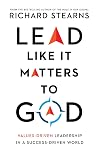
Summary: In contrast to many leadership books that outline steps to success, describes what it is like to give value-shaped leadership in both for profit and non-profit settings.
No question. Good leadership is a gift to any organization or political entity. Richard Sterns, out of his Christian faith, takes a different approach from many other leadership books. His focus is not on skills or “steps to success.” Sterns should know from work at Gillette and CEO experiences at Parker show more Brothers, Lenox, and World Vision. He contends that what matters most are the values that shape one’s leadership. After introducing this approach, Sterns devotes a chapter each to seventeen different values.
Beside values you might expect like excellence, vision, courage, self-awareness, and perseverance, Sterns includes values you might not associate with executive leadership. These include sacrifice, love, humility, integrity, generosity, forgiveness, balance, humor, encouragement and listening. He begins with surrender, describing his own painful experience of getting fired twice in a two year period and spending fourteen months unemployed. He describes this period of being “benched” by God as one that convinced him that God wanted his Mondays through Saturdays and not just his Sunday, a life of daily surrender. Likewise, he describes the value of trust, particularly trust in God, as one that enables leading in the face of adversity with calm.
Even typical corporate values like excellence are re-shaped by Sterns’ Christian commitments. He states that “excellence means that we will always strive to use the gifts and abilities that God has given us to the fullest extent possible.” He believes “good outcomes do not lead to excellence; excellence leads to good outcome” (italics in original). He argues for love for the workers in an organization, no matter the title.
One of the endearing things about this book is that Sterns not only values humor but he is practices it, usually laughing at himself. He illustrates humility with his experience of plugging up and surreptitiously plungering his private executive toilet on his first day as CEO at Lenox and describes the “shroud of Turin” he left on a glass window he mistook for a door as he rushed to a meeting with the governor of Tennessee, arriving bloody nosed, quipping, “You should see the other guy.”
He speaks compellingly of the power of encouragement by contrasting two bosses, the one who told him he had no marketing talent, while the second kept encouraging him and giving him stretch assignments that affirmed his confidence. He credits the second boss with grooming him for his first CEO position. He argues for corporate and personal matters, describing the time he was his angriest at World Vision, and it all had to do with pumpkin seeds. And in his description of the balanced leader, he notes the role of reading in the lives of great leaders. I might quibble with some of his examples though–while Harry Truman and Warren Buffett strike me as balanced and sensible, I’m not sure about Bill Gates, Mark Zuckerberg, or Elon Musk–all of whom are great readers.
The book concludes with a challenge for Christians to take God to work and offers several closing stories of the unseen acts of faithfulness through which God works, including the child sponsored by a couple through World Vision who became the sixth archbishop of the Anglican church in Kenya. I would commend this book to every aspiring leader. For all the reasons above, it is both substantive and engaging. Note the values that you want to cultivate more deeply in your leadership and get to work. If Sterns is right, it all matters to God.
____________________________
Disclosure of Material Connection: I received a complimentary review copy of this book from the publisher in exchange for an honest review. The opinions I have expressed are my own. show less
No question. Good leadership is a gift to any organization or political entity. Richard Sterns, out of his Christian faith, takes a different approach from many other leadership books. His focus is not on skills or “steps to success.” Sterns should know from work at Gillette and CEO experiences at Parker show more Brothers, Lenox, and World Vision. He contends that what matters most are the values that shape one’s leadership. After introducing this approach, Sterns devotes a chapter each to seventeen different values.
Beside values you might expect like excellence, vision, courage, self-awareness, and perseverance, Sterns includes values you might not associate with executive leadership. These include sacrifice, love, humility, integrity, generosity, forgiveness, balance, humor, encouragement and listening. He begins with surrender, describing his own painful experience of getting fired twice in a two year period and spending fourteen months unemployed. He describes this period of being “benched” by God as one that convinced him that God wanted his Mondays through Saturdays and not just his Sunday, a life of daily surrender. Likewise, he describes the value of trust, particularly trust in God, as one that enables leading in the face of adversity with calm.
Even typical corporate values like excellence are re-shaped by Sterns’ Christian commitments. He states that “excellence means that we will always strive to use the gifts and abilities that God has given us to the fullest extent possible.” He believes “good outcomes do not lead to excellence; excellence leads to good outcome” (italics in original). He argues for love for the workers in an organization, no matter the title.
One of the endearing things about this book is that Sterns not only values humor but he is practices it, usually laughing at himself. He illustrates humility with his experience of plugging up and surreptitiously plungering his private executive toilet on his first day as CEO at Lenox and describes the “shroud of Turin” he left on a glass window he mistook for a door as he rushed to a meeting with the governor of Tennessee, arriving bloody nosed, quipping, “You should see the other guy.”
He speaks compellingly of the power of encouragement by contrasting two bosses, the one who told him he had no marketing talent, while the second kept encouraging him and giving him stretch assignments that affirmed his confidence. He credits the second boss with grooming him for his first CEO position. He argues for corporate and personal matters, describing the time he was his angriest at World Vision, and it all had to do with pumpkin seeds. And in his description of the balanced leader, he notes the role of reading in the lives of great leaders. I might quibble with some of his examples though–while Harry Truman and Warren Buffett strike me as balanced and sensible, I’m not sure about Bill Gates, Mark Zuckerberg, or Elon Musk–all of whom are great readers.
The book concludes with a challenge for Christians to take God to work and offers several closing stories of the unseen acts of faithfulness through which God works, including the child sponsored by a couple through World Vision who became the sixth archbishop of the Anglican church in Kenya. I would commend this book to every aspiring leader. For all the reasons above, it is both substantive and engaging. Note the values that you want to cultivate more deeply in your leadership and get to work. If Sterns is right, it all matters to God.
____________________________
Disclosure of Material Connection: I received a complimentary review copy of this book from the publisher in exchange for an honest review. The opinions I have expressed are my own. show less
The Hole in Our Gospel: What does God expect of Us? The Answer that Changed my Life and Might Just Change the World by Richard Stearns
This book seriously messed me up!
Richard Stearns in the president of World Vision US. In THE HOLE IN OUR GOSPEL, Stearns tells how he came from being a high-earning CEO to be the president of World Vision. He also masterfully shares the greatest problems/needs around the world and does a great job discussing why the world at large tends to ignore those in the greatest need and what we as the Church should be doing to help.
If you want to carry on with life as usual, the DO NOT read this book! show more This book will increase your heart for missions, increase your compassion for "the least of these", and will cause you seriously re-evaluate your own lifestyle of consumerism.
One of the most inspiring parts of this book is when Stearns details how he came to Christ and then wrestled with God's calling to lead this non-profit. It's an honest story of doubt and the the "chasing" that God often does when we resist his purposes for our lives. I can't recommend this book highly enough! show less
Richard Stearns in the president of World Vision US. In THE HOLE IN OUR GOSPEL, Stearns tells how he came from being a high-earning CEO to be the president of World Vision. He also masterfully shares the greatest problems/needs around the world and does a great job discussing why the world at large tends to ignore those in the greatest need and what we as the Church should be doing to help.
If you want to carry on with life as usual, the DO NOT read this book! show more This book will increase your heart for missions, increase your compassion for "the least of these", and will cause you seriously re-evaluate your own lifestyle of consumerism.
One of the most inspiring parts of this book is when Stearns details how he came to Christ and then wrestled with God's calling to lead this non-profit. It's an honest story of doubt and the the "chasing" that God often does when we resist his purposes for our lives. I can't recommend this book highly enough! show less
The Hole in Our Gospel: What Does God Expect of Us? The answer that changed my life and just might change the world. by Richard Stearns
The World versus the Pulpit
A few years ago, my theological convictions about the world shifted. Born and raised in a conservative evangelical church, I found the things I observed in the world to differ from the things I heard from the pulpit.
A defining quality of the church I attended during my youth as well as the evangelical church as a whole is the ability to focus seemingly on salvation exclusively. One is supposed to first worry about his or her own salvation, then immediately begin show more converting everyone else.
This emphasis on securing a place in the afterlife resulted in the neglect of obligations in the current life. Of course, if pressed, anyone attending the church would assuredly affirm missions, charitable giving, and assisting the poor as a good thing. But, the fear of liberal theology and social justice led them to an individualistic ethos. Put simply, one must do good things for others but should not expect to hear any communal decrees on the issue.
The Preferential Option for the Poor
The more I read the gospels, the more I found a Jesus not mentioned during the Sundays of my youth. While Jesus certainly discussed the Kingdom of God in future terms, he also continuously urged his disciples to understand the Kingdom of God in the here and now. Stated differently, Jesus focused an inordinate amount of his little time on earth serving the poor.
Right at the crossroads of this debate between the Kingdom of God in the present and the Kingdom of God in the future resides The Hole in Our Gospel by Richard Stearns.
The president of World Vision – one of the largest relief and development organization in the world – Stearns gives testimony of his journey from influential CEO to the leader of an NGO seeking to make a difference in the lives of the poor around the world.
The Hole in Our Gospel
Having seen poverty firsthand, Stearns uses strong language in order to shake the American church out of its stupor.
“[God] is sick of churches and people who just ‘go through the motions.’ And he is weary of seeing a shiny veneer of faith but no depth of commitment. That is the hole in our gospel, and until we fill it, ours is an empty religion, one that God despises” (184-185).
Similar to my own observations about the American church, Stearns recognizes the schism between those that believe in meeting the needs of the poor and those who find it necessary to convert the world to Christianity.
Discussing the source of the split in the 1920s, Stearns writes,
“And so began a kind of war between faith and works. It continues to be played out today. The ‘works’ proponents downplayed the importance of soul-winning and instead emphasized the works of caring for the poor and fighting injustice wherever it is found. The ‘faith-only’ proponents, on the other hand, considered this view worldly. They focused solely on efforts to get the world to accept God’s redeeming grace – a salvation by faith alone” (201).
In my mind, this split is a false dichotomy. In the gospels, Jesus speaks both about the present and the future.
Similarly, Christians ought not to focus on merely the here or merely the not yet, it is their imperative to hold them in unison, to be concerned both with the immediate needs of humanity but also their spiritual state.
A Bunch of Rich People Doing Nothing
For this reason, The Hole in Our Gospel must be mandatory reading for those in the American church. In a clear and convicting fashion, Stearns outlines the grim statistics:
“It is important to put the American Church in perspective. Simply stated, it is the wealthiest community of Christians in the history of Christendom. How wealthy? The total income of American churchgoers is $5.2 trillion. (That’s more than five thousand billion dollars.) It would take just a little over 1 percent of the income of American Christians to lift the poorest one billion people in the world out of extreme poverty. Said another way, American Christians, who make up about 5 percent of the Church worldwide, control about half of global Christian wealth; a lack of money is not our problem” (216).
One of many examples, this quote functions as a wakeup call. If Christians are to follow Scripture, they must rethink charitable giving.
One Dollar per Year
Luckily, Stearns mixes these shocking statistics with statements of hope:
“The lack of clean water causes millions of needless child deaths each year. Yet the cost to bring clean water to one person costs only one dollar per year! When you realize that a gift as small as a dollar can save a life, it is hard to argue that you’re not wealthy enough to make a difference” (267).
Can you part with one dollar per year? If all Christians could rethink the gospel and accept the present and the future ramifications, could we end poverty? Stearns believes we can even if it is much more difficult than his previous statement paints the issue. All it takes is mending The Hole in Our Gospel.
Read this book.
Originally published at http://wherepenmeetspaper.blogspot.com show less
A few years ago, my theological convictions about the world shifted. Born and raised in a conservative evangelical church, I found the things I observed in the world to differ from the things I heard from the pulpit.
A defining quality of the church I attended during my youth as well as the evangelical church as a whole is the ability to focus seemingly on salvation exclusively. One is supposed to first worry about his or her own salvation, then immediately begin show more converting everyone else.
This emphasis on securing a place in the afterlife resulted in the neglect of obligations in the current life. Of course, if pressed, anyone attending the church would assuredly affirm missions, charitable giving, and assisting the poor as a good thing. But, the fear of liberal theology and social justice led them to an individualistic ethos. Put simply, one must do good things for others but should not expect to hear any communal decrees on the issue.
The Preferential Option for the Poor
The more I read the gospels, the more I found a Jesus not mentioned during the Sundays of my youth. While Jesus certainly discussed the Kingdom of God in future terms, he also continuously urged his disciples to understand the Kingdom of God in the here and now. Stated differently, Jesus focused an inordinate amount of his little time on earth serving the poor.
Right at the crossroads of this debate between the Kingdom of God in the present and the Kingdom of God in the future resides The Hole in Our Gospel by Richard Stearns.
The president of World Vision – one of the largest relief and development organization in the world – Stearns gives testimony of his journey from influential CEO to the leader of an NGO seeking to make a difference in the lives of the poor around the world.
The Hole in Our Gospel
Having seen poverty firsthand, Stearns uses strong language in order to shake the American church out of its stupor.
“[God] is sick of churches and people who just ‘go through the motions.’ And he is weary of seeing a shiny veneer of faith but no depth of commitment. That is the hole in our gospel, and until we fill it, ours is an empty religion, one that God despises” (184-185).
Similar to my own observations about the American church, Stearns recognizes the schism between those that believe in meeting the needs of the poor and those who find it necessary to convert the world to Christianity.
Discussing the source of the split in the 1920s, Stearns writes,
“And so began a kind of war between faith and works. It continues to be played out today. The ‘works’ proponents downplayed the importance of soul-winning and instead emphasized the works of caring for the poor and fighting injustice wherever it is found. The ‘faith-only’ proponents, on the other hand, considered this view worldly. They focused solely on efforts to get the world to accept God’s redeeming grace – a salvation by faith alone” (201).
In my mind, this split is a false dichotomy. In the gospels, Jesus speaks both about the present and the future.
Similarly, Christians ought not to focus on merely the here or merely the not yet, it is their imperative to hold them in unison, to be concerned both with the immediate needs of humanity but also their spiritual state.
A Bunch of Rich People Doing Nothing
For this reason, The Hole in Our Gospel must be mandatory reading for those in the American church. In a clear and convicting fashion, Stearns outlines the grim statistics:
“It is important to put the American Church in perspective. Simply stated, it is the wealthiest community of Christians in the history of Christendom. How wealthy? The total income of American churchgoers is $5.2 trillion. (That’s more than five thousand billion dollars.) It would take just a little over 1 percent of the income of American Christians to lift the poorest one billion people in the world out of extreme poverty. Said another way, American Christians, who make up about 5 percent of the Church worldwide, control about half of global Christian wealth; a lack of money is not our problem” (216).
One of many examples, this quote functions as a wakeup call. If Christians are to follow Scripture, they must rethink charitable giving.
One Dollar per Year
Luckily, Stearns mixes these shocking statistics with statements of hope:
“The lack of clean water causes millions of needless child deaths each year. Yet the cost to bring clean water to one person costs only one dollar per year! When you realize that a gift as small as a dollar can save a life, it is hard to argue that you’re not wealthy enough to make a difference” (267).
Can you part with one dollar per year? If all Christians could rethink the gospel and accept the present and the future ramifications, could we end poverty? Stearns believes we can even if it is much more difficult than his previous statement paints the issue. All it takes is mending The Hole in Our Gospel.
Read this book.
Originally published at http://wherepenmeetspaper.blogspot.com show less
3.5 stars.
I really liked how each chapter is short-ish and can be digested either on its own or as part of a longer reading session. Correlating Bible verses and quotes at the beginning of each are also useful and thought-provoking.
I particularly enjoyed how Stearns first worked in the business world, only going into ministry/non-profit work later in life; a majority of the books I've read lately are from authors who started in ministry and stayed there, or went on to other business show more endeavors. Both are fine; it was just nice to have something different! I really appreciated the insights on how to live out my faith in a secular environment.
This is very much, first and foremost, a leadership book; it's written by a Christian whose faith plays a huge role in his life (which is fantastic), but, is not a theology book per se. I'll also note there does seem to be some soft critical race theory included.
Only after starting the book did I realize Stearns headed World Vision for a number of years. I'm very familiar with this organization, also based out of the Pacific Northwest, and have interacted with it in multiple ways over the years (including sponsoring a child), and was particularly aware of the organization in the news during early 2014 as it changed (and then reversed said change) a longstanding policy on marriage. This incident was briefly referenced in the book, but not explicitly; I would not have picked up on the reference without having already known about its broader scope.
I received an eARC of the book from the publisher via NetGalley. All opinions are my own. show less
I really liked how each chapter is short-ish and can be digested either on its own or as part of a longer reading session. Correlating Bible verses and quotes at the beginning of each are also useful and thought-provoking.
I particularly enjoyed how Stearns first worked in the business world, only going into ministry/non-profit work later in life; a majority of the books I've read lately are from authors who started in ministry and stayed there, or went on to other business show more endeavors. Both are fine; it was just nice to have something different! I really appreciated the insights on how to live out my faith in a secular environment.
This is very much, first and foremost, a leadership book; it's written by a Christian whose faith plays a huge role in his life (which is fantastic), but, is not a theology book per se. I'll also note there does seem to be some soft critical race theory included.
Only after starting the book did I realize Stearns headed World Vision for a number of years. I'm very familiar with this organization, also based out of the Pacific Northwest, and have interacted with it in multiple ways over the years (including sponsoring a child), and was particularly aware of the organization in the news during early 2014 as it changed (and then reversed said change) a longstanding policy on marriage. This incident was briefly referenced in the book, but not explicitly; I would not have picked up on the reference without having already known about its broader scope.
I received an eARC of the book from the publisher via NetGalley. All opinions are my own. show less
Awards

You May Also Like


Statistics
- Works
- 21
- Members
- 2,370
- Popularity
- #10,834
- Rating
- 4.1
- Reviews
- 31
- ISBNs
- 44
- Languages
- 3