
Michael Panush
Author of American Nightmares
About the Author
Image credit: Michael Panush
Series
Works by Michael Panush
Tagged
Common Knowledge
There is no Common Knowledge data for this author yet. You can help.
Members
Reviews
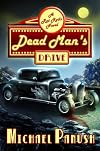
Dead Man's Drive: A Rot Rods Novel (Rot Rods #1) by Michael Panush is a clever and fun book about supernatural beings protecting their part of town from scoundrels. It is a real hoot with fun characters you can't help but like and silly situations and wonderful dialogue. Even the title, Rot Rods instead of Hot Rods...cute! Roscoe is the zombie and has amnesia, he is a real softy except with the bad guys. He is also a super gear-head. His goal retrieve his memory. There is a shaman and friend show more of Roscoe named Angel that wears a Zoot suit. Hot Betty rides with Wooster the cowboy. Betty is a sorceress and Wooster was a bank robber and knows how to drive like a demon and shoot like one too. Great fun characters and a fun book. show less
This review and more can be found on my blog: The Muses Circle
4.5 out of 5 stars
Dead Man's Drive by Michael Panush is perhaps one of the most originally entertaining novels I've ever had the pleasure of reading. Set in La Cruz, California in the 1950's, it was a time of hot rods, zoot suits, cool music, zombies, demons, werewolves, yetis---yes, you read that right! The book definitely has a magical realism feel-- the author pays such close attention to details-- the clothing, cars, even the show more language of the characters read authentic. And at the heart of the story is Roscoe, a zombie driver and mechanic at Donovan Motors. But that's more of a disguise, for his real job, along with his team of eccentric misfits, is to protect and defend the town of La Cruz from evil entities and things that go bump in the night.
There is so much to love about Dead Man's Drive, but the lively, colorful characters were what drove this story. There's Angel, Roscoe's loyal Mexican best friend. Wooster, the gruff ex-bank robber who has one explosive secret. Betty Bright who serves as a kind of mother figure to the rough bunch. Let's not forget Basil Barrow, the undertaker at the local cemetery that helps the drivers at Donovan Motors dispose of bodies. With any novel, you always have your favorite character. In this case, I absolutely loved the Deadbeat, a DJ that uses his radio show as a way to inform Roscoe and the others of any suspicious occult activities.
The Deadbeat's voice oozed back across the airwaves."Evening, cool kids and ghoul kids. That was Zap Telford and the Boo Babies with a real hot number called My Phantom Girl. Now here's your La Cruz news update." He cleared his throat. "Dig it--there's a new power coming to our little town and his name is Strickland.'"
I also found Eldgridge Swann, the Negro crime lord who controlled Butcher's row, very interesting. There have been a few reviewers that complained at the author's use of the word "negro" when describing Eldgridge Swann. I find that annoying because in the 50's that is EXACTLY what they called African Americans. I'm half black and didn't find it the least bit offensive. I think people need to stop being so sensitive and focus on the literature, the setting, etc. I appreciate that Panush stayed true to the time period in which he was writing about.
Michael Panush is not only great with creating charismatic characters that seem to come off the pages, but it is quite clear he knows how to write. His use of figurative language really helped create images in my mind as I read along. Here are a few of my favorites:
"He remembered speed, the sensation of zooming down an open highway with an engine roaring and the wind battering your face like the flailing strikes of a boxer about to be defeated."
"He kept it hot, boiling enough so that the steam billowed out of the pot like an impatient ghost."
"His tie was loud, with geometric designs, and he had a fat, golden ring."
Dead Man's Drive is also filled with humor which was a pleasant surprise. It's been a long time since I've read a novel that has made me laugh out loud. There are two scenes that I thought were hilarious. The first one is when Roscoe cuts off his ear and throws it at a table full of villains, hoping it will help him "hear" their conversation:
"I thought hearing comes from those holes on the side of your head--not the ear itself." [Angel says]
"It's called magic." Roscoe wiggled the severed ear in Angel's direction. "It doesn't have to make sense."
Then he tossed the ear across the bar. It was a light, underhanded throw. The ear landed under the table where Torrance and Mr. Roach were talking. Nobody noticed. Roscoe sat back up, covered the ear remaining on his head and did his best to listen.
You know it's the 50's when the boys are fighting in suits:
"You okay?" Roscoe called to him.
"Yeah." Angel glanced down at his zoot suit, now splotched with black marks from dead gore. "Ah, no," he muttered. "Got my threads dirty. Brains-- they never come out in the wash. He grabbed one of his pistols and started shooting again.
The most unique aspect of this novel is Panush's ability to weave in other historical milestones, such as Hitler and the Crusades. I'm not going to get into detail here to stay away from spoilers, but I was blown away that the author was able to add in all of these elements without making it feel too busy or confusing.
The only issue I had was with the vague zombie mythology. Roscoe is a walking dead, but nothing like what we have been taught to believe. I am absolutely okay if an author wants to switch things up and Roscoe was a breath of fresh air. But it felt like Panush didn't address the why and the how. How did he luck out and not turn into the zombies that were in Strickland/Roach's army? Is there more zombies like Roscoe out there? He can eat anything, so zombies eating raw meat is just a myth in the world of the story? Does he smell? I just wish the author had spent a little more time on this.
Dead Man's Drive is an action packed, thrill ride that keeps you in a constant state of suspense until the very last page. With plenty of humor and a colorful cast of characters, I can totally see this book being turned into a tv series. But don't let the funny parts fool you. Roscoe is quite a complex character, plagued with amnesia and spends the majority of the story struggling to remember his past and the reason for his reanimation. If you are looking for some thrills and chills, I highly recommend this unique zombie tale!
Mia @ The Muses Circle show less
4.5 out of 5 stars
Dead Man's Drive by Michael Panush is perhaps one of the most originally entertaining novels I've ever had the pleasure of reading. Set in La Cruz, California in the 1950's, it was a time of hot rods, zoot suits, cool music, zombies, demons, werewolves, yetis---yes, you read that right! The book definitely has a magical realism feel-- the author pays such close attention to details-- the clothing, cars, even the show more language of the characters read authentic. And at the heart of the story is Roscoe, a zombie driver and mechanic at Donovan Motors. But that's more of a disguise, for his real job, along with his team of eccentric misfits, is to protect and defend the town of La Cruz from evil entities and things that go bump in the night.
There is so much to love about Dead Man's Drive, but the lively, colorful characters were what drove this story. There's Angel, Roscoe's loyal Mexican best friend. Wooster, the gruff ex-bank robber who has one explosive secret. Betty Bright who serves as a kind of mother figure to the rough bunch. Let's not forget Basil Barrow, the undertaker at the local cemetery that helps the drivers at Donovan Motors dispose of bodies. With any novel, you always have your favorite character. In this case, I absolutely loved the Deadbeat, a DJ that uses his radio show as a way to inform Roscoe and the others of any suspicious occult activities.
The Deadbeat's voice oozed back across the airwaves."Evening, cool kids and ghoul kids. That was Zap Telford and the Boo Babies with a real hot number called My Phantom Girl. Now here's your La Cruz news update." He cleared his throat. "Dig it--there's a new power coming to our little town and his name is Strickland.'"
I also found Eldgridge Swann, the Negro crime lord who controlled Butcher's row, very interesting. There have been a few reviewers that complained at the author's use of the word "negro" when describing Eldgridge Swann. I find that annoying because in the 50's that is EXACTLY what they called African Americans. I'm half black and didn't find it the least bit offensive. I think people need to stop being so sensitive and focus on the literature, the setting, etc. I appreciate that Panush stayed true to the time period in which he was writing about.
Michael Panush is not only great with creating charismatic characters that seem to come off the pages, but it is quite clear he knows how to write. His use of figurative language really helped create images in my mind as I read along. Here are a few of my favorites:
"He remembered speed, the sensation of zooming down an open highway with an engine roaring and the wind battering your face like the flailing strikes of a boxer about to be defeated."
"He kept it hot, boiling enough so that the steam billowed out of the pot like an impatient ghost."
"His tie was loud, with geometric designs, and he had a fat, golden ring."
Dead Man's Drive is also filled with humor which was a pleasant surprise. It's been a long time since I've read a novel that has made me laugh out loud. There are two scenes that I thought were hilarious. The first one is when Roscoe cuts off his ear and throws it at a table full of villains, hoping it will help him "hear" their conversation:
"I thought hearing comes from those holes on the side of your head--not the ear itself." [Angel says]
"It's called magic." Roscoe wiggled the severed ear in Angel's direction. "It doesn't have to make sense."
Then he tossed the ear across the bar. It was a light, underhanded throw. The ear landed under the table where Torrance and Mr. Roach were talking. Nobody noticed. Roscoe sat back up, covered the ear remaining on his head and did his best to listen.
You know it's the 50's when the boys are fighting in suits:
"You okay?" Roscoe called to him.
"Yeah." Angel glanced down at his zoot suit, now splotched with black marks from dead gore. "Ah, no," he muttered. "Got my threads dirty. Brains-- they never come out in the wash. He grabbed one of his pistols and started shooting again.
The most unique aspect of this novel is Panush's ability to weave in other historical milestones, such as Hitler and the Crusades. I'm not going to get into detail here to stay away from spoilers, but I was blown away that the author was able to add in all of these elements without making it feel too busy or confusing.
The only issue I had was with the vague zombie mythology. Roscoe is a walking dead, but nothing like what we have been taught to believe. I am absolutely okay if an author wants to switch things up and Roscoe was a breath of fresh air. But it felt like Panush didn't address the why and the how. How did he luck out and not turn into the zombies that were in Strickland/Roach's army? Is there more zombies like Roscoe out there? He can eat anything, so zombies eating raw meat is just a myth in the world of the story? Does he smell? I just wish the author had spent a little more time on this.
Dead Man's Drive is an action packed, thrill ride that keeps you in a constant state of suspense until the very last page. With plenty of humor and a colorful cast of characters, I can totally see this book being turned into a tv series. But don't let the funny parts fool you. Roscoe is quite a complex character, plagued with amnesia and spends the majority of the story struggling to remember his past and the reason for his reanimation. If you are looking for some thrills and chills, I highly recommend this unique zombie tale!
Mia @ The Muses Circle show less

(Reprinted from the Chicago Center for Literature and Photography [cclapcenter.com]. I am the original author of this essay, as well as the owner of CCLaP; it is not being reprinted illegally.)
I don't know if it's been simple mistakes I've been experiencing recently, or if the public is having a harder and harder time telling the difference, or if it's a case of publishers trying to eat their cake and have it too, but it seems lately that I've been receiving a growing amount of review books show more specifically marketed to me as grown-up titles, when after reading them I've realized that they are actually Young Adult at best, or even juvenilia at worst. I mean, take Michael Panush's The Stein & Candle Detective Agency, Volume 1 for example, which I know for a fact was publicized as adult fiction when first pitched to me at the electronic ARC service NetGalley.com, because I just checked again right this second and it's still listed there as such; but after reading just the first few stories in this blam-blam alt-history serial actioner, I came to realize not only that it's something only an overly caffeinated thirteen-year-old boy could love, but that it even sounds like an overly caffeinated thirteen-year-old boy wrote it, a cartoonishly immature thriller in which a whole series of easy cliches (steampunk, private eyes, Nazis, '50s biker gangs, vampires, etc) are haphazardly stirred together into a muddled, unsatisfying stew, and then garnished with the kinds of jokes you might hear at a junior-high-school talent show. I'm not sure whether to be more troubled by the fact that this was thought to be appropriate to pitch to me as a middle-aged reviewer of exclusively adult fiction, or that this would indeed be appropriate anymore with an alarmingly high number of genre-fiction litbloggers; and while I agree that it's unfair to single out Stein & Candle for this entire phenomenon, this is certainly the first time that I've specifically stopped and thought out loud, "This was glaringly inappropriate to publicize to someone like me, and it really bothers me that the publisher has received justification from our arrested-development culture at large to do so anyway." Buyer beware.
Out of 10: 6.4 show less
I don't know if it's been simple mistakes I've been experiencing recently, or if the public is having a harder and harder time telling the difference, or if it's a case of publishers trying to eat their cake and have it too, but it seems lately that I've been receiving a growing amount of review books show more specifically marketed to me as grown-up titles, when after reading them I've realized that they are actually Young Adult at best, or even juvenilia at worst. I mean, take Michael Panush's The Stein & Candle Detective Agency, Volume 1 for example, which I know for a fact was publicized as adult fiction when first pitched to me at the electronic ARC service NetGalley.com, because I just checked again right this second and it's still listed there as such; but after reading just the first few stories in this blam-blam alt-history serial actioner, I came to realize not only that it's something only an overly caffeinated thirteen-year-old boy could love, but that it even sounds like an overly caffeinated thirteen-year-old boy wrote it, a cartoonishly immature thriller in which a whole series of easy cliches (steampunk, private eyes, Nazis, '50s biker gangs, vampires, etc) are haphazardly stirred together into a muddled, unsatisfying stew, and then garnished with the kinds of jokes you might hear at a junior-high-school talent show. I'm not sure whether to be more troubled by the fact that this was thought to be appropriate to pitch to me as a middle-aged reviewer of exclusively adult fiction, or that this would indeed be appropriate anymore with an alarmingly high number of genre-fiction litbloggers; and while I agree that it's unfair to single out Stein & Candle for this entire phenomenon, this is certainly the first time that I've specifically stopped and thought out loud, "This was glaringly inappropriate to publicize to someone like me, and it really bothers me that the publisher has received justification from our arrested-development culture at large to do so anyway." Buyer beware.
Out of 10: 6.4 show less
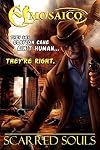
Clayton Cane was not born, he was created. During the American Civil War, in a plantation house a scientist used the darkest of arts to try and create a new source of soldiers for the beleaguered south by stitching together and animating the corpses of the fallen. He was destroyed before he could produce more than one – but Clayton Cane, with the memories of dozens, if not hundreds, of soldiers, was born.
He is now a bounty hunter. Reviled by most because of his heavily scarred appearance, show more he is exceptionally good at his job, hunting and killing people and monsters no matter what arcane arts they practice
But he is more than just a hunter and more than a monster, as we follow Caine through his adventures that take him across the United States and far beyond, there is definitely more man than monster to him. A man that can be moved by compassion, a man that won’t tolerate the victimisation of the innocent – and a man who is becoming tired of the trials of his life.
I really like Clayton Cane as a protagonist. His monstrosity of both creation and appearance often separates him from humanity. A separation that is only increased by his job – bounty hunter, killer for hire – and his extreme skill at it. And he is good at his job and works to be this cold hearted, ruthless gun-for-hire. Yet he is human, he has a heart of cold, a conscience and a powerful sense of compassion that constantly drives him to help those who deserve it. His ruthlessly efficient dispatching of the guilty instantly melts when facing the innocent. Together it not only creates an awesomely complex character but also a character with a lot of pain, especially in the later stories where Cane is, more clearly, feeling the burden of living the life he does. Just by showing these conflicting sides and the constant rejection he faces, we have a far greater sense of his pain than we would have got from pages and pages of angsty whining.
The setting was also intriguing because it was so wide. We have the character and we have the time period – in the 19th century. But Cane can be called not only across the United States and Mexico, but to London and Egypt as well – he roams to follow his work ensuring a great diversity of settings
I have said it before and I’ll, no doubt, say it again – I don’t like short stories. I find they’re usually very badly rushed to cram everything in, contain info-dumping, have little character development and either needed to be part of a greater story or didn’t need to exist at all. Which is why I was quite pleased to read this book because all the short stories in it did it right. Each story carefully contained, there were no loose threads and they were clearly more than prologues for a greater series or novel. They didn’t contain any irrelevant information, they didn’t pad and they didn’t rush. They’re wonderful little stories and they all stand on their own – with stories like these I could grow to like the short story format.
The problem is that I am nearly sure that each of these stories did stand on their own in separate publications. In these separate books, they would have been excellent. But they don’t work nearly so well in one book.
Read More show less
He is now a bounty hunter. Reviled by most because of his heavily scarred appearance, show more he is exceptionally good at his job, hunting and killing people and monsters no matter what arcane arts they practice
But he is more than just a hunter and more than a monster, as we follow Caine through his adventures that take him across the United States and far beyond, there is definitely more man than monster to him. A man that can be moved by compassion, a man that won’t tolerate the victimisation of the innocent – and a man who is becoming tired of the trials of his life.
I really like Clayton Cane as a protagonist. His monstrosity of both creation and appearance often separates him from humanity. A separation that is only increased by his job – bounty hunter, killer for hire – and his extreme skill at it. And he is good at his job and works to be this cold hearted, ruthless gun-for-hire. Yet he is human, he has a heart of cold, a conscience and a powerful sense of compassion that constantly drives him to help those who deserve it. His ruthlessly efficient dispatching of the guilty instantly melts when facing the innocent. Together it not only creates an awesomely complex character but also a character with a lot of pain, especially in the later stories where Cane is, more clearly, feeling the burden of living the life he does. Just by showing these conflicting sides and the constant rejection he faces, we have a far greater sense of his pain than we would have got from pages and pages of angsty whining.
The setting was also intriguing because it was so wide. We have the character and we have the time period – in the 19th century. But Cane can be called not only across the United States and Mexico, but to London and Egypt as well – he roams to follow his work ensuring a great diversity of settings
I have said it before and I’ll, no doubt, say it again – I don’t like short stories. I find they’re usually very badly rushed to cram everything in, contain info-dumping, have little character development and either needed to be part of a greater story or didn’t need to exist at all. Which is why I was quite pleased to read this book because all the short stories in it did it right. Each story carefully contained, there were no loose threads and they were clearly more than prologues for a greater series or novel. They didn’t contain any irrelevant information, they didn’t pad and they didn’t rush. They’re wonderful little stories and they all stand on their own – with stories like these I could grow to like the short story format.
The problem is that I am nearly sure that each of these stories did stand on their own in separate publications. In these separate books, they would have been excellent. But they don’t work nearly so well in one book.
Read More show less
You May Also Like
Associated Authors
Statistics
- Works
- 12
- Members
- 79
- Popularity
- #226,896
- Rating
- 3.5
- Reviews
- 10
- ISBNs
- 17