
Dimitra Fimi
Author of A Secret Vice: Tolkien on Invented Languages
About the Author
Dimitra Fimi lectures in English Literature at the University of Wales Institute, Cardiff (UWIC). Her research interests include the history of fantasy literature, folklore and popular culture, literary adaptations, and the interaction between literature and visual culture.
Image credit: The One Ring
Works by Dimitra Fimi
Associated Works
Picturing Tolkien: Essays on Peter Jackson's the Lord of the Rings Film Trilogy (2011) — Contributor — 33 copies
Queering Faith in Fantasy Literature: Fantastic Incarnations and the Deconstruction of Theology (Perspectives on Fantasy) (2022) — Series Editor — 7 copies
Tagged
Common Knowledge
- Gender
- female
- Education
- University of Athens (BA | English Language and Literature)
Cardiff University (MA | Early Celtic Studies) - Nationality
- Greece
- Associated Place (for map)
- Greece
Members
Reviews
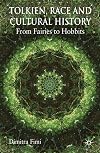
Just like the dwarves in J. R. R. Tolkien's The Hobbit, Dimitra Fimi would have done better to stick to the road in the wilderness.
This is an award-winning look at the evolution of Tolkien's mythology, and it deserves much of its acclaim. It points out, in greater detail than any other work I know of, how Tolkien's internal mythology evolved from a cutesy world of little Tinkerbell-like fairies and "goblin feet" into the alternate universe of The Lord of the Rings. This is something that show more readers of Tolkien really need to understand: A lot of Tolkien's late comments about his likes and dislikes, while probably true at the time he made them, do not represent the views that he held during his entire career. His final views were the result of an intense consideration on a scale most of us never even contemplate. I'm not sure Fimi really understands how Tolkien reached the conclusions he did, but she certainly does a good job of documenting them.
She also makes it very clear that Tolkien's claims that his language came before his mythology isn't really true. The interest in language came first -- it was, in the formal sense of the term, a "special interest" that occupied him all his life. But it arose separately from his interest in folktale. It's a minor distinction; the main thing to keep in mind is that it was when he started working on them together that he started creating his "legendarium." And, not coincidentally, redirecting the silliness that English folklore had become.
When she gets away from that, though, there are some mis-steps. It just so happens that she examines one area I work on with a Tolkien-like obsessiveness (folklore) and another that fascinates me (linguistic history). In folklore, it's hard to point out specific faults -- because Fimi doesn't really talk folklore. Things like the Kalevala don't really count; it's an assembled work. She doesn't get into the ditch-work of field collection. Neither did Tolkien, to be sure, but it's clear that he knew it better -- and that his knowledge was part of the reason why his elves grew to full stature and his goblins became orcs.
And Fimi's discussions of language are just plain wrong in many places. A few examples:
Page 81: "there is no literature preserved in [Gothic]" (important, because Tolkien was deeply interested in Gothic). Not true. The Bible was translated into Gothic by Ulfilas (Wulfilas), and although much of that version has been lost, we still have substantial fragments. Google "Codex Argenteus"; it contains a bit more than half the Gospels. Other Bible fragments are much smaller, but there are some. And Ulfilas's translation was quite literal, so it allows us a good sense of how Gothic works. One could say that there is no native literature preserved in Gothic; all we have is works in other languages translated into Gothic. But that's not what Fimi said.
Page 87: Welsh is "linguistically unrelated to English." No, it's not. Welsh is not a close relative of English, as German or Dutch or Old Norse is, but it is related; both are descended from Indo-European. Hard to believe this came from someone who teaches in Cardiff, Wales!
Page 91: "Lewis Carroll and his nonsensical 'portmanteau' words in the poem 'Jabberwocky.'" Nonsense words and portmanteau words are not synonymous; not every nonsense word in "Jabberwocky" is a portmanteau word, and for that matter portmanteau words need not be nonsense!
Page 93: "According to the Scriptures, God gave the perfect language for all mankind to Adam." There is no such statement in the Bible; indeed, Genesis 2:19 says that Adam, not God, gave the animals their names. There is a legend that God gave Adam a perfect language (and another legend that that language was Hebrew), but this is not in the Bible.
Page 101: Indo-European is "reconstructed" and "made-up." Linguistic reconstruction is not "making up." A reconstruction may be wrong at some points, but it is a logical, consistent process resembling a mathematical proof. And while we're at it, a change in a language is not a decline; it's just change. Eventually one language, allowed to go its way, will cease to be recognizable and become another. Tolkien knew this; he was what was known as a descriptivist, not a prescriptivist -- that is, he was interested in language as it was actually used, not the way someone (Fowler or whoever) said it "should" be. Just as in biology, the evolution of language is not progress or decline; there is no "ideal" language or species, and the evolution of either does not move toward a "goal." It just changes.
I am -- like Tolkien -- a nitpicker. These relatively minor errors do not fatally flaw what is mostly an important book. But, if you're into this sort of thing, they really do grate. This is a book that needed a more knowledgeable editor. Someone, in fact, like Tolkien himself. show less
This is an award-winning look at the evolution of Tolkien's mythology, and it deserves much of its acclaim. It points out, in greater detail than any other work I know of, how Tolkien's internal mythology evolved from a cutesy world of little Tinkerbell-like fairies and "goblin feet" into the alternate universe of The Lord of the Rings. This is something that show more readers of Tolkien really need to understand: A lot of Tolkien's late comments about his likes and dislikes, while probably true at the time he made them, do not represent the views that he held during his entire career. His final views were the result of an intense consideration on a scale most of us never even contemplate. I'm not sure Fimi really understands how Tolkien reached the conclusions he did, but she certainly does a good job of documenting them.
She also makes it very clear that Tolkien's claims that his language came before his mythology isn't really true. The interest in language came first -- it was, in the formal sense of the term, a "special interest" that occupied him all his life. But it arose separately from his interest in folktale. It's a minor distinction; the main thing to keep in mind is that it was when he started working on them together that he started creating his "legendarium." And, not coincidentally, redirecting the silliness that English folklore had become.
When she gets away from that, though, there are some mis-steps. It just so happens that she examines one area I work on with a Tolkien-like obsessiveness (folklore) and another that fascinates me (linguistic history). In folklore, it's hard to point out specific faults -- because Fimi doesn't really talk folklore. Things like the Kalevala don't really count; it's an assembled work. She doesn't get into the ditch-work of field collection. Neither did Tolkien, to be sure, but it's clear that he knew it better -- and that his knowledge was part of the reason why his elves grew to full stature and his goblins became orcs.
And Fimi's discussions of language are just plain wrong in many places. A few examples:
Page 81: "there is no literature preserved in [Gothic]" (important, because Tolkien was deeply interested in Gothic). Not true. The Bible was translated into Gothic by Ulfilas (Wulfilas), and although much of that version has been lost, we still have substantial fragments. Google "Codex Argenteus"; it contains a bit more than half the Gospels. Other Bible fragments are much smaller, but there are some. And Ulfilas's translation was quite literal, so it allows us a good sense of how Gothic works. One could say that there is no native literature preserved in Gothic; all we have is works in other languages translated into Gothic. But that's not what Fimi said.
Page 87: Welsh is "linguistically unrelated to English." No, it's not. Welsh is not a close relative of English, as German or Dutch or Old Norse is, but it is related; both are descended from Indo-European. Hard to believe this came from someone who teaches in Cardiff, Wales!
Page 91: "Lewis Carroll and his nonsensical 'portmanteau' words in the poem 'Jabberwocky.'" Nonsense words and portmanteau words are not synonymous; not every nonsense word in "Jabberwocky" is a portmanteau word, and for that matter portmanteau words need not be nonsense!
Page 93: "According to the Scriptures, God gave the perfect language for all mankind to Adam." There is no such statement in the Bible; indeed, Genesis 2:19 says that Adam, not God, gave the animals their names. There is a legend that God gave Adam a perfect language (and another legend that that language was Hebrew), but this is not in the Bible.
Page 101: Indo-European is "reconstructed" and "made-up." Linguistic reconstruction is not "making up." A reconstruction may be wrong at some points, but it is a logical, consistent process resembling a mathematical proof. And while we're at it, a change in a language is not a decline; it's just change. Eventually one language, allowed to go its way, will cease to be recognizable and become another. Tolkien knew this; he was what was known as a descriptivist, not a prescriptivist -- that is, he was interested in language as it was actually used, not the way someone (Fowler or whoever) said it "should" be. Just as in biology, the evolution of language is not progress or decline; there is no "ideal" language or species, and the evolution of either does not move toward a "goal." It just changes.
I am -- like Tolkien -- a nitpicker. These relatively minor errors do not fatally flaw what is mostly an important book. But, if you're into this sort of thing, they really do grate. This is a book that needed a more knowledgeable editor. Someone, in fact, like Tolkien himself. show less
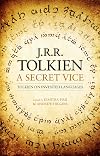
I think I personally would have been more successful with the material if I could have enjoyed it presented as initially done, live/as a lecture (can we invent time travel now, please? Lol).
I got turned off by the lengthy introduction, such that by the time the topic in question even got started, I had mentally checked out. I’m afraid I’m not the right audience for the material presented in this fashion.
I got turned off by the lengthy introduction, such that by the time the topic in question even got started, I had mentally checked out. I’m afraid I’m not the right audience for the material presented in this fashion.

The recently begun Amazon series The Lord of the Rings: The Rings of Power set uring a time of relative peace and covers all the major events of Middle-earth's Second Age: the forging of the Rings of Power, the rise of the Dark Lord Sauron.
From "The Hobbit: An Unexpected Journey Extended Edition Scene Guide":
The author's website is a great adjunct to this brisk and broad overview of Tolkein's inspirations and creation. show less
From "The Hobbit: An Unexpected Journey Extended Edition Scene Guide":
show more
2:06:55 – The goblins start searching the dwarves for weapons, and empty out a large bag of what appears to be Elvish cutlery and candlesticks. The Goblin King examines a gold
candelabra and turns it over: “Made in Rivendell?” he says “Bah – Second Age, couldn’t give it away!” he exclaims, and tosses it aside.
The author's website is a great adjunct to this brisk and broad overview of Tolkein's inspirations and creation. show less
Lists
Awards


You May Also Like
Associated Authors
Statistics
- Works
- 6
- Also by
- 4
- Members
- 385
- Popularity
- #62,809
- Rating
- 4.1
- Reviews
- 3
- ISBNs
- 14