
Grada Kilomba
Author of Plantation Memories
About the Author
Image credit: Grada Kilomba©2016
Works by Grada Kilomba
Tagged
Common Knowledge
Members
Reviews
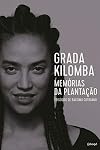
Memórias da Plantação é um desses livros incontornáveis que infelizmente eu estava contornando desde que finalmente foi lançado no Brasil, mas antes tarde do que nunca.
Grada Kilomba vai no cerne da sua experiência como mulher negra em países europeus com Portugal e Alemanha, lugares conhecidos por sua história de serem berços genocidas do Outro e como essa história colonizadora e xenófoba reflete ainda hoje nesses lugares.
E no qual o contexto brasileiro disso? Amplamente show more identificável com o jeito de agir da população branca brasileira que também segrega o povo negro em bairros distantes da população branca, ainda encara os aspectos da negritude com exoticidade, ainda trata o povo negro com condescendência e paternalismo fingindo que nada disso é racismo.
Munida de vários outros depoimentos de mulheres negras na Alemanha, Grada tece uma perspectiva bem esclarecedora tanto psicanaliticamente quanto pragmática dos aspectos de ser considerado o Outro na sociedade europeia que serve como um belo tapa na cara também para os brancos brasileiros.
Digo e volto a dizer: Escutem e leiam mulheres negras, é um soco no estômago perceber que os brancos descontruídos não são tão decoloniais quanto pensam. show less
Grada Kilomba vai no cerne da sua experiência como mulher negra em países europeus com Portugal e Alemanha, lugares conhecidos por sua história de serem berços genocidas do Outro e como essa história colonizadora e xenófoba reflete ainda hoje nesses lugares.
E no qual o contexto brasileiro disso? Amplamente show more identificável com o jeito de agir da população branca brasileira que também segrega o povo negro em bairros distantes da população branca, ainda encara os aspectos da negritude com exoticidade, ainda trata o povo negro com condescendência e paternalismo fingindo que nada disso é racismo.
Munida de vários outros depoimentos de mulheres negras na Alemanha, Grada tece uma perspectiva bem esclarecedora tanto psicanaliticamente quanto pragmática dos aspectos de ser considerado o Outro na sociedade europeia que serve como um belo tapa na cara também para os brancos brasileiros.
Digo e volto a dizer: Escutem e leiam mulheres negras, é um soco no estômago perceber que os brancos descontruídos não são tão decoloniais quanto pensam. show less
Plantation Memories by Grada Kilomba is the kind of read that can benefit every reader. It will be uncomfortable for some (if they are truly engaging with it and being honest with themselves) while it will likely be empowering for others. And many things in between.
While the book and the incidents are focused on German society it is not applicable only there. The theory Kilomba cites when analyzing the separate incidents touch on racism around the globe, so this speaks just as well to show more someone in the United States (such as myself) as to someone in Germany.
I was particularly pleased that she took the time to explain her methodology and rationale for how she conducted her research. I think it makes it easier to appreciate what we are reading as well as sets the reader up to approach the material with a better understanding.
When one uses specific incidents to extrapolate broader trends and meanings, there is the inherent need to read things into the specific incident that may not be there in order to explain the larger picture within which the specific incident took place. As an example, based strictly on what is included in the book, the example of a doctor asking a young girl to come on vacation with his family and basically be their servant carries a lot of racist baggage. In the discussion, Kilomba expands the incident to include how the wife and daughters think of the girl when, based on what is included in the book, they weren't there and weren't even aware the doctor had broached the subject. That doesn't make the inclusion of the fictional part of the incident less important since it could have been part of the girl's understanding of the offer, so it is valid. But it is not part of the actual incident, it is part of the baggage that makes initial suggestion even more racist than it first appears. I have no doubt I expressed my point poorly here, I am not trying to say the analysis, which goes beyond the actual incident, is wrong or even misleading, just that as written it implies that people who may not have even known the offer was extended are, in fact, looking down on the girl, when we have no evidence that, in this specific incident, that is the case. That said, I would not be at all surprised if, had things gone further, those people would have displayed those feelings. The more important point, and the one Kilomba emphasizes throughout, is that these "maybes" are part of the reception by these Black women, and thus must be brought into the discussion. Otherwise, these women are not really being heard.
I would highly recommend this to readers who want to know more about the interlocking and intersecting elements of racism and sexism in contemporary society.
Reviewed from a copy made available by the publisher via NetGalley. show less
While the book and the incidents are focused on German society it is not applicable only there. The theory Kilomba cites when analyzing the separate incidents touch on racism around the globe, so this speaks just as well to show more someone in the United States (such as myself) as to someone in Germany.
I was particularly pleased that she took the time to explain her methodology and rationale for how she conducted her research. I think it makes it easier to appreciate what we are reading as well as sets the reader up to approach the material with a better understanding.
When one uses specific incidents to extrapolate broader trends and meanings, there is the inherent need to read things into the specific incident that may not be there in order to explain the larger picture within which the specific incident took place. As an example, based strictly on what is included in the book, the example of a doctor asking a young girl to come on vacation with his family and basically be their servant carries a lot of racist baggage. In the discussion, Kilomba expands the incident to include how the wife and daughters think of the girl when, based on what is included in the book, they weren't there and weren't even aware the doctor had broached the subject. That doesn't make the inclusion of the fictional part of the incident less important since it could have been part of the girl's understanding of the offer, so it is valid. But it is not part of the actual incident, it is part of the baggage that makes initial suggestion even more racist than it first appears. I have no doubt I expressed my point poorly here, I am not trying to say the analysis, which goes beyond the actual incident, is wrong or even misleading, just that as written it implies that people who may not have even known the offer was extended are, in fact, looking down on the girl, when we have no evidence that, in this specific incident, that is the case. That said, I would not be at all surprised if, had things gone further, those people would have displayed those feelings. The more important point, and the one Kilomba emphasizes throughout, is that these "maybes" are part of the reception by these Black women, and thus must be brought into the discussion. Otherwise, these women are not really being heard.
I would highly recommend this to readers who want to know more about the interlocking and intersecting elements of racism and sexism in contemporary society.
Reviewed from a copy made available by the publisher via NetGalley. show less
Grada Kilomba writes:
"Every semester, on the very first day of my seminar, I quiz my students to give them a sense of how knowledge and racial power intertwine. We first count how many people in the room. Then I start by asking very simple questions: What was the Berlin Conference of 1884-5? Which African countries were colonized by Germany? How many years did German colonization in the continent of Africa last? I conclude with more specific questions: Who was Queen Nzinga and what role did show more she play in the struggle against European colonization? Who wrote Black Skin, White Masks? Who was May Ayim?
Not surprisingly, most of the white students seated in the room are unable to answer the questions, while the Black students answer most of them successfully. Suddenly, those who are usually unseen become visible, while those who are always seen become invisible. Those who are usually silent start speaking, while those who always speak become silent. Silent, not because they cannot articulate their voices or their tongues, but rather because they do not possess that knowledge. Who knows what? Who doesn’t? And why?" show less
"Every semester, on the very first day of my seminar, I quiz my students to give them a sense of how knowledge and racial power intertwine. We first count how many people in the room. Then I start by asking very simple questions: What was the Berlin Conference of 1884-5? Which African countries were colonized by Germany? How many years did German colonization in the continent of Africa last? I conclude with more specific questions: Who was Queen Nzinga and what role did show more she play in the struggle against European colonization? Who wrote Black Skin, White Masks? Who was May Ayim?
Not surprisingly, most of the white students seated in the room are unable to answer the questions, while the Black students answer most of them successfully. Suddenly, those who are usually unseen become visible, while those who are always seen become invisible. Those who are usually silent start speaking, while those who always speak become silent. Silent, not because they cannot articulate their voices or their tongues, but rather because they do not possess that knowledge. Who knows what? Who doesn’t? And why?" show less
Plantation Memories is a compilation of episodes of everyday racism written in the form of short psychoanalytical stories. From the question »Where do you come from?« to Hair Politics to the N-Word, the book is a strong, eloquent, and elaborate piece, which deconstructs the normality of everyday racism and exposes the violence of being placed as the Other.
-----------------
Plantation Memories ist eine Zusammenstellung kurzer psychoanalytischer Geschichten über Episoden des alltäglichen show more Rassismus. Von der Frage “Woher kommst du?” über Haarpolitik bis hin zum N-Wort ist das Buch ein starkes, eloquentes und ausgefeiltes Stück, das die Normalität des alltäglichen Rassismus dekonstruiert und die Gewalt aufzeigt, die ›Othering‹ mit sich bringt. show less
-----------------
Plantation Memories ist eine Zusammenstellung kurzer psychoanalytischer Geschichten über Episoden des alltäglichen show more Rassismus. Von der Frage “Woher kommst du?” über Haarpolitik bis hin zum N-Wort ist das Buch ein starkes, eloquentes und ausgefeiltes Stück, das die Normalität des alltäglichen Rassismus dekonstruiert und die Gewalt aufzeigt, die ›Othering‹ mit sich bringt. show less
Lists
Awards

Statistics
- Works
- 1
- Members
- 127
- Popularity
- #158,247
- Rating
- 4.2
- Reviews
- 6
- ISBNs
- 9
- Languages
- 3