
Joumana Haddad
Author of I Killed Scheherazade: Confessions of an Angry Arab Woman
About the Author
Image credit: Joumana Haddad - Gaeta, Italy - 2 marzo 2012
Works by Joumana Haddad
Cuando me hice fruta 3 copies
Adrenalina 2 copies
HIJA DE LA COSTURERA, LA 2 copies
Associated Works
Don't Panic, I'm Islamic: Words and Pictures on How to Stop Worrying and Learn to Love the Alien Next Door (2017) — Contributor — 18 copies
Tagged
Common Knowledge
- Birthdate
- 1970-12-06
- Gender
- female
- Birthplace
- Beirut, Lebanon
- Map Location
- Lebanon
Members
Reviews

Joumana Haddad is a writer, poet and intellectual who celebrates the liberation of the body in her native Arabic and as well in remarkably fluent English, French, German, Italian, Armenian and Spanish. In terms of her linguistic capacity's reach, sexual freedom has never had a more effective and articulate spokeswoman (or should we say spokesman?) than this amazing polyglot. "I Killed Scheherazade: Confessions of an Angry Arab Woman" is a quick-read in the tradition of political pamphlets show more such as the "Communist Manifesto." If this work doesn't hold its own on the polemical bookshelf, I'm sure Haddad has yet more incisive works up their sleeve. The timing couldn't be better, with the unfolding Arab Spring. Her writing is also of universal relevance. I live in China, and I plan to lend this book out to my English-speaking female friends (a Chinese translation is certainly called for), who need merely substitute the word "China" for "Arab" to see how much it speaks to them, in a country where the virginity cult is alive and well amidst futuristic skyscrapers, luxury consumerism, and even strikingly revealing clothing on the streets in the summertime.
Reacting to this as a white male growing up in the US and Canada in the 1970s and tail-end of the 60s (I can already hear women clamoring in condemnation of my having the nerve to arrogate the right to speak about or on behalf of women, let alone Arab women, though this only underscores the freedom of speech Western women have secured), I have to say, I don't know, I have just never been able to fathom this virginity thing. It simply never occurred to much less bothered me or anyone else around me when we became sexually active in our teens and thereafter whether girls were virgins or not. I assumed no men considered it important anymore until years later I chanced upon those incomprehensible news stories about Middle-Eastern women being punished or killed for real or imagined sexual transgressions, including pre or extra-marital sex. So I have a different angle on this. No, I am not threatened by sexual women, more power to you, the world needs a lot more of you. On the other hand, as Haddad points out, Western Judeo-Christian culture is not as sexually free as we assume. As an atheist I have no Christian guilt or hang-ups, but in no society anywhere is sexual discourse and action very free. Sexual abuse and harassment remain a big problem in all societies. We can't talk frankly about sex except in terms of its dangers and the proper (moralistic) channeling of it. Americans are notoriously uptight about their bodies; American women can't breastfeed in public without being arrested or accused of lewd activity. And so on. Perhaps everyone should give Haddad's paean to the sexualized body a read.
I do have a sticking point. Haddad cites the Marquis de Sade as one of her prime inspirations and literary influences, as he was mine. You have to actually sit down and read Sade to understand this. His novel "Justine" (Justine, Philosophy in the Bedroom, and Other Writings) blew up in my face like a bomb as a freshman in college, and I had to set aside all my homework to finish it. Sade is not simply about sadomasochism; he is about the working out of mental freedom. He pushed obscenity to the point where it took on philosophical depth and profundity, to the point he inhabited this realm exclusively and mined it for its knowledge. The obscene becomes perfectly logical in any bourgeois or patriarchal society disturbed by it, which relegates it to the private and the unspeakable. The whole Sadeian point is that privacy and domesticity themselves are obscene. Sadeian freedom is also a metaphor for the freedom of language. I wish I could hone my own language to a sharp enough point that with a single sentence I could slay the virginity dragon, convince so many young Chinese females to cast off the brainwashing and fear that presses them into the virginity cult, which is nothing other than the modern version of the brutal foot-binding their foremothers experienced.
Haddad's assured style slackens in the rather generic incantatory formulations that conclude the book, when what I'd like to see more of is a celebration of the obscene, starting with her own sexuality. It's nice to know, as she tells us, that she masturbates, prefers red bras (but wait - you didn't get that idea from Chinese women did you, who are traditionally indoctrinated into believing they must wear red bras and underwear when their Chinese horoscope year comes up?) and shaves her armpits (damn! nothing is more erotic than a woman's hairy underarms), but that's about it. There is scant concrete information about the men (and women?) in her life, her sexual experiences. To paraphrase Nabakov, I want the divine SEXUAL detail. What is her actual erotic life like in the particular and close-up? Could she really be worried about her privacy after reading Sade? Here she might take a page from the scandalous Chinese blogger Mu Zimei, who has written up her scores (or is it hundreds?) of sexual experiences with men in loving detail and posted them online (and has been translated into French ("Journal sexuel d'une jeune Chinoise sur le net") and German (Mein intimes Tagebuch). I haven't yet had the pleasure of reading her and hope it's an invigorating and not a tawdry read, but along with Joumana she's another woman I'd like to get to know. show less
Reacting to this as a white male growing up in the US and Canada in the 1970s and tail-end of the 60s (I can already hear women clamoring in condemnation of my having the nerve to arrogate the right to speak about or on behalf of women, let alone Arab women, though this only underscores the freedom of speech Western women have secured), I have to say, I don't know, I have just never been able to fathom this virginity thing. It simply never occurred to much less bothered me or anyone else around me when we became sexually active in our teens and thereafter whether girls were virgins or not. I assumed no men considered it important anymore until years later I chanced upon those incomprehensible news stories about Middle-Eastern women being punished or killed for real or imagined sexual transgressions, including pre or extra-marital sex. So I have a different angle on this. No, I am not threatened by sexual women, more power to you, the world needs a lot more of you. On the other hand, as Haddad points out, Western Judeo-Christian culture is not as sexually free as we assume. As an atheist I have no Christian guilt or hang-ups, but in no society anywhere is sexual discourse and action very free. Sexual abuse and harassment remain a big problem in all societies. We can't talk frankly about sex except in terms of its dangers and the proper (moralistic) channeling of it. Americans are notoriously uptight about their bodies; American women can't breastfeed in public without being arrested or accused of lewd activity. And so on. Perhaps everyone should give Haddad's paean to the sexualized body a read.
I do have a sticking point. Haddad cites the Marquis de Sade as one of her prime inspirations and literary influences, as he was mine. You have to actually sit down and read Sade to understand this. His novel "Justine" (Justine, Philosophy in the Bedroom, and Other Writings) blew up in my face like a bomb as a freshman in college, and I had to set aside all my homework to finish it. Sade is not simply about sadomasochism; he is about the working out of mental freedom. He pushed obscenity to the point where it took on philosophical depth and profundity, to the point he inhabited this realm exclusively and mined it for its knowledge. The obscene becomes perfectly logical in any bourgeois or patriarchal society disturbed by it, which relegates it to the private and the unspeakable. The whole Sadeian point is that privacy and domesticity themselves are obscene. Sadeian freedom is also a metaphor for the freedom of language. I wish I could hone my own language to a sharp enough point that with a single sentence I could slay the virginity dragon, convince so many young Chinese females to cast off the brainwashing and fear that presses them into the virginity cult, which is nothing other than the modern version of the brutal foot-binding their foremothers experienced.
Haddad's assured style slackens in the rather generic incantatory formulations that conclude the book, when what I'd like to see more of is a celebration of the obscene, starting with her own sexuality. It's nice to know, as she tells us, that she masturbates, prefers red bras (but wait - you didn't get that idea from Chinese women did you, who are traditionally indoctrinated into believing they must wear red bras and underwear when their Chinese horoscope year comes up?) and shaves her armpits (damn! nothing is more erotic than a woman's hairy underarms), but that's about it. There is scant concrete information about the men (and women?) in her life, her sexual experiences. To paraphrase Nabakov, I want the divine SEXUAL detail. What is her actual erotic life like in the particular and close-up? Could she really be worried about her privacy after reading Sade? Here she might take a page from the scandalous Chinese blogger Mu Zimei, who has written up her scores (or is it hundreds?) of sexual experiences with men in loving detail and posted them online (and has been translated into French ("Journal sexuel d'une jeune Chinoise sur le net") and German (Mein intimes Tagebuch). I haven't yet had the pleasure of reading her and hope it's an invigorating and not a tawdry read, but along with Joumana she's another woman I'd like to get to know. show less
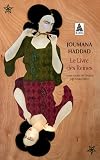
Reine de cœur, de carreau, de pique et de trèfle : 4 reines qui représentent les 4 femmes d'une même famille, de différente génération.
ça parle du génocide arménien, de la guerre au Liban, en Palestine.
Un livre sur le destin, l'héritage familial, douloureusement féministe.
ça parle du génocide arménien, de la guerre au Liban, en Palestine.
Un livre sur le destin, l'héritage familial, douloureusement féministe.
Aug 19, 2022 (Edited)French
Lists
Awards

You May Also Like
Associated Authors
Statistics
- Works
- 27
- Also by
- 3
- Members
- 190
- Popularity
- #114,773
- Rating
- 3.5
- Reviews
- 3
- ISBNs
- 50
- Languages
- 9


