
Natalio Fernández Marcos
Author of The Septuagint in Context: Introduction to the Greek Version of the Bible
About the Author
Natalio Fernandez Marcos is a research professor at the Institute of Philology, where he served as director from 1988 to 1992
Works by Natalio Fernández Marcos
Associated Works
Scripture in Transition: Essays on Septuagint, Hebrew Bible, and Dead Sea Scrolls in Honour of Raija Sollamo (Supplements to the Journal for the Study of Judaism) (2008) — Contributor — 13 copies
Jerusalem, Alexandria, Rome : studies in ancient cultural interaction in honour of A. Hilhorst (2004) — Contributor — 13 copies
Flores Florentino: Dead Sea Scrolls and Other Early Jewish Studies in Honour of Florentino Garcia Martfnez (Supplements to the Journal for the Study of Judaism) (2007) — Contributor — 10 copies
XIV Congress of the Ioscs, Helsinki, 2010 (Septuagint and Cognate Studies Series) (2013) — Contributor — 9 copies
After Qumran: Old and Modern Editions of the Biblical Texts (Bibliotheca Ephemeridum Theologicarum Lovaniensium) (2012) — Contributor — 2 copies
Tagged
Common Knowledge
- Birthdate
- 1940
- Gender
- male
- Education
- University of Madrid (PhD|Classical Philology)
Members
Reviews
The Septuagint in Context: Introduction to the Greek Version of the Bible by Natalio Fernández Marcos
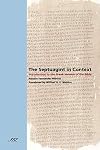
Did someone put the wrong cover on this book?
I ask that because the title says it's about the Septuagint -- the original translation of the Hebrew Bible into Greek. And, yes, the book has a lot of material about the Septuagint. But it also contains a great deal that is not about the Septuagint.
It's not that that material is necessarily un-interesting. But there are two main reasons why we study the Septuagint. One is to learn more about the New Testament -- the Septuagint was the Bible of show more the early Christian Church, and the New Testament tends to cite the Hebrew Bible according to the Septuagint, not according to the readings of the Hebrew as it now stands. Plus the Septuagint's use of Greek words often determined how those words would be used in the New Testament. To understand the subtleties of the New Testament, one must understand the Septuagint.
Also, the Hebrew Bible was written many centuries before the earliest surviving manuscripts of it. If it were a secular work, we would have expected it to become corrupt over all those centuries of copying. And the best evidence is that this indeed happened -- because, in many cases, it is clear that the Septuagint translated a different Hebrew text than that surviving in our (much later) Hebrew copies. For most of the Hebrew Bible, the Septuagint is the only source we have that predates the Great Standardization that started to take place around the beginning of the Christian Era.
So to summarize: We care about the Septuagint because we want to use it to understand the New Testament, and because we want to use it in textual criticism to correct the corruptions found in our extant Hebrew manuscripts.
Yet this book devotes a tremendous amount of space to other issues -- the translations of the Hebrew Bible by Aquila, Theodotian, and Symmachus; some other translations -- including even modern translations from Hebrew into modern Greek. Commentary manuscripts. Non-biblical literature. Translations of the Septuagint into other languages. Many of these are genuinely interesting, but they aren't about the Septuagint. Even Aquila and Symmachus aren't really relevant to the studies of the earliest Greek version; they hoped to supplant the Septuagint, but failed -- we don't have a single complete book of the Bible in either translation, let alone a complete copy of the entire work. (We have a bit more of Theodotian, although there is now much dispute about just who and what "Theodotian" really was).
So if you're really interested in the Septuagint (as opposed to the Hebrew Bible as it occurs in other languages), this book has perhaps too much irrelevant material -- and that irrelevant material often distracts badly from the issue of textual criticism. The book doesn't even really have a catalog of important manuscripts of the Septuagint! It does better on the Christian tie-ins, but even on that, there are some distracting tangents.
And, of course, it's a translation. Sometimes a rather mechanical translation, with the result that it can be hard to understand for non-Spanish speakers. And sometimes the translation has mistakes, too. Not a lot, but enough to require some caution.
All of this may make the book sound rather bad. It is not. The number of good general introductions to the Septuagint is far too small, and (in my opinion) all of them lack something. The earliest and most often-cited, H. B. Swete's Introduction to the Old Testament in Greek, is the best discussion of the manuscripts -- but it's a century old, and discoveries since then have rendered it badly out-of-date. Sir Frederic Kenyon's Our Bible and the Ancient Manuscripts is clear and easy to read, but it too is old, and the Septuagint isn't its only topic; the material on the Greek Old Testament is too short to be comprehensive. Jennifer M Dines's The Septuagint ignores textual issues. Karen H. Jobes and Moisés Silva's Invitation to the Septuagint has a lot of useful information but doesn't really form a coherent whole, and it too is weak on textual matters. So if you want to learn about the Septuagint, Fernández Marcos's volume is very useful. But you will certainly need other books as well, even if all you want is an introductory overview. show less
I ask that because the title says it's about the Septuagint -- the original translation of the Hebrew Bible into Greek. And, yes, the book has a lot of material about the Septuagint. But it also contains a great deal that is not about the Septuagint.
It's not that that material is necessarily un-interesting. But there are two main reasons why we study the Septuagint. One is to learn more about the New Testament -- the Septuagint was the Bible of show more the early Christian Church, and the New Testament tends to cite the Hebrew Bible according to the Septuagint, not according to the readings of the Hebrew as it now stands. Plus the Septuagint's use of Greek words often determined how those words would be used in the New Testament. To understand the subtleties of the New Testament, one must understand the Septuagint.
Also, the Hebrew Bible was written many centuries before the earliest surviving manuscripts of it. If it were a secular work, we would have expected it to become corrupt over all those centuries of copying. And the best evidence is that this indeed happened -- because, in many cases, it is clear that the Septuagint translated a different Hebrew text than that surviving in our (much later) Hebrew copies. For most of the Hebrew Bible, the Septuagint is the only source we have that predates the Great Standardization that started to take place around the beginning of the Christian Era.
So to summarize: We care about the Septuagint because we want to use it to understand the New Testament, and because we want to use it in textual criticism to correct the corruptions found in our extant Hebrew manuscripts.
Yet this book devotes a tremendous amount of space to other issues -- the translations of the Hebrew Bible by Aquila, Theodotian, and Symmachus; some other translations -- including even modern translations from Hebrew into modern Greek. Commentary manuscripts. Non-biblical literature. Translations of the Septuagint into other languages. Many of these are genuinely interesting, but they aren't about the Septuagint. Even Aquila and Symmachus aren't really relevant to the studies of the earliest Greek version; they hoped to supplant the Septuagint, but failed -- we don't have a single complete book of the Bible in either translation, let alone a complete copy of the entire work. (We have a bit more of Theodotian, although there is now much dispute about just who and what "Theodotian" really was).
So if you're really interested in the Septuagint (as opposed to the Hebrew Bible as it occurs in other languages), this book has perhaps too much irrelevant material -- and that irrelevant material often distracts badly from the issue of textual criticism. The book doesn't even really have a catalog of important manuscripts of the Septuagint! It does better on the Christian tie-ins, but even on that, there are some distracting tangents.
And, of course, it's a translation. Sometimes a rather mechanical translation, with the result that it can be hard to understand for non-Spanish speakers. And sometimes the translation has mistakes, too. Not a lot, but enough to require some caution.
All of this may make the book sound rather bad. It is not. The number of good general introductions to the Septuagint is far too small, and (in my opinion) all of them lack something. The earliest and most often-cited, H. B. Swete's Introduction to the Old Testament in Greek, is the best discussion of the manuscripts -- but it's a century old, and discoveries since then have rendered it badly out-of-date. Sir Frederic Kenyon's Our Bible and the Ancient Manuscripts is clear and easy to read, but it too is old, and the Septuagint isn't its only topic; the material on the Greek Old Testament is too short to be comprehensive. Jennifer M Dines's The Septuagint ignores textual issues. Karen H. Jobes and Moisés Silva's Invitation to the Septuagint has a lot of useful information but doesn't really form a coherent whole, and it too is weak on textual matters. So if you want to learn about the Septuagint, Fernández Marcos's volume is very useful. But you will certainly need other books as well, even if all you want is an introductory overview. show less
You May Also Like
Associated Authors
Statistics
- Works
- 14
- Also by
- 5
- Members
- 106
- Popularity
- #181,886
- Rating
- 4.0
- Reviews
- 1
- ISBNs
- 29
- Languages
- 3