
Neely Tucker
Author of Love in the Driest Season: A Family Memoir
About the Author
Neely Tucker is a staff writer for the Washington Post
Image credit: Ann Beattie discusses "A Wonderful Stroke of Luck" with Neely Tucker at the National Book Festival, August 31, 2019. Photo by Ralph Small/Library of Congress.By Library of Congress Life - 20190831RS0285.jpg, CC0, https://commons.wikimedia.org/w/index.php?curid=82899274
Series
Works by Neely Tucker
Tagged
Common Knowledge
- Gender
- male
Members
Reviews
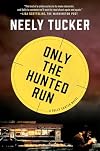
Only the Hunted Run is the newest book in Neely Tucker's Sully Carter series.
I've read the first two books and really enjoyed them, so I happily picked up this newly released third entry.
Sully is a newspaper reporter in Washington, DC. I'm going to borrow from one of my previous descriptions of Sully:
"The best protagonists for crime books are the walking wounded, the ones who buck authority, the ones who just can't let things be or let justice go unserved. Sully Carter fills the bill on show more every count. He's battling PTSD, alcohol and anger issues, his bosses and manages to step on toes everywhere he goes. He's also a confidant of the one of DC's crime lords. Flawed but driven."
Sully is in the Capitol building on an assignment when a shooter goes on a rampage. Sully, instead of running, moves further into the building, chasing the story. He gets close, manages to hide, and is a first hand witness to the carnage. The shooter himself makes the 911 call, but manages to walk out without being apprehended. After reading Sully's story, he calls him, insisting they have similarities in their lives. And that they should talk.....
I always love keeping an eye out for the title cue as I read. In this case, it comes from Terry Waters, the shooter:
"Sully, okay. You've got to understand this. It's key. Only the hunted run. I, me, I'm not the hunted. I'm not running. I hunt. I am the hunter."
But Sully too is hunting - hunting for who Terry Waters is and the whys and wherefores of his killing spree.
The journey for those answers makes for addictive reading. It was only when I finished the book that I discovered that Neely had (again) woven in fact with fiction. It was hard to believe that these horrific historical details were sickeningly real.
What makes this such a great series? Well, I love the main character, flaws and all. Sully is making progress on the anger, drinking and PTSD, but it's two steps forward, one step back. Tucker has given Sully an expanded personal life with Alexis that I hope lasts - I quite like her. There seems to be an exit for one supporting character that I will be sad to see leave. But I am looking forward to seeing what his replacement will bring to the series.
The writing is fantastic - great pacing, dialogue, setting and plotting. And no wonder - Tucker himself is a writer at The Washington Post. He's also been a war correspondent in over sixty countries. Tucker brings that experience and knowledge to his writing. And to Sully as well - I do wonder how much of Tucker himself is woven into the character?
Only the Hunted Run was another great read for me. I look forward to number four. show less
I've read the first two books and really enjoyed them, so I happily picked up this newly released third entry.
Sully is a newspaper reporter in Washington, DC. I'm going to borrow from one of my previous descriptions of Sully:
"The best protagonists for crime books are the walking wounded, the ones who buck authority, the ones who just can't let things be or let justice go unserved. Sully Carter fills the bill on show more every count. He's battling PTSD, alcohol and anger issues, his bosses and manages to step on toes everywhere he goes. He's also a confidant of the one of DC's crime lords. Flawed but driven."
Sully is in the Capitol building on an assignment when a shooter goes on a rampage. Sully, instead of running, moves further into the building, chasing the story. He gets close, manages to hide, and is a first hand witness to the carnage. The shooter himself makes the 911 call, but manages to walk out without being apprehended. After reading Sully's story, he calls him, insisting they have similarities in their lives. And that they should talk.....
I always love keeping an eye out for the title cue as I read. In this case, it comes from Terry Waters, the shooter:
"Sully, okay. You've got to understand this. It's key. Only the hunted run. I, me, I'm not the hunted. I'm not running. I hunt. I am the hunter."
But Sully too is hunting - hunting for who Terry Waters is and the whys and wherefores of his killing spree.
The journey for those answers makes for addictive reading. It was only when I finished the book that I discovered that Neely had (again) woven in fact with fiction. It was hard to believe that these horrific historical details were sickeningly real.
What makes this such a great series? Well, I love the main character, flaws and all. Sully is making progress on the anger, drinking and PTSD, but it's two steps forward, one step back. Tucker has given Sully an expanded personal life with Alexis that I hope lasts - I quite like her. There seems to be an exit for one supporting character that I will be sad to see leave. But I am looking forward to seeing what his replacement will bring to the series.
The writing is fantastic - great pacing, dialogue, setting and plotting. And no wonder - Tucker himself is a writer at The Washington Post. He's also been a war correspondent in over sixty countries. Tucker brings that experience and knowledge to his writing. And to Sully as well - I do wonder how much of Tucker himself is woven into the character?
Only the Hunted Run was another great read for me. I look forward to number four. show less
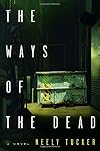
This is a hard hitting, well written start to a new crime series. Investigative reporter Sully, is battle scared in body and soul, he is the stereotypical type of the old school journalists, who believed that getting the right story is all that matters. He does not smoke incessantly, but boy does he drink. The crime takes place in the underbelly of Washington D.C., not in the part that the tourists see, not the area around the capitol building. This is only a few blocks away but it is in an show more area where white is not the prevalent color, where crack is king and prostitutes are available for little money.
The investigation starts here after a young, white girl is killed. That it is a judges daughter, maybe the next supreme court appointee, makes this a very hot case. Sully, does not look for easy answers, he is in your face and questioning whomever he needs to, often in the past this has caused him problems. Of course when rocks are overturned often snakes slither out and so it goes......
I loved this character, one can tell that the author has made good use of his background in writing this novel. The atmosphere is pervasive, the writing amazing. From the beginning I knew I was in good hands with this author and that this is his first novel is unbelievable. So glad this will be a series and can't wait for the next one. show less
The investigation starts here after a young, white girl is killed. That it is a judges daughter, maybe the next supreme court appointee, makes this a very hot case. Sully, does not look for easy answers, he is in your face and questioning whomever he needs to, often in the past this has caused him problems. Of course when rocks are overturned often snakes slither out and so it goes......
I loved this character, one can tell that the author has made good use of his background in writing this novel. The atmosphere is pervasive, the writing amazing. From the beginning I knew I was in good hands with this author and that this is his first novel is unbelievable. So glad this will be a series and can't wait for the next one. show less
This story, set in 2002, takes place in Washington, D.C., where Sullivan “Sully” Carter, a former foreign war correspondent for "The Paper" (presumably "The Washington Post”), now works on the metro beat. His traumatic wartime experiences left him with serious PTSD and a bad drinking problem. Still, he manages to solve crimes that elude the police.
As the book begins, Sully is at the U.S. Capitol chasing a story about environmental regulations when he hears the burst of an automatic show more weapon and runs over to find a number of dead and wounded. It is, he muses, the new American nightmare:
“The national anxiety during the Cold War had been a Russian nuclear strike, millions of god-fearing Americans vaporized in an instant. By the turn of the century, the national anxiety had devolved into a crazy man with a gun, god-fearing Americans picked off half a dozen at a time. Slow motion suicide instead of instant annihilation.”
Instead of hiding, Sully, a self-admitted chaos junkie, looks for the shooter, eventually finding the mutilated body of a congressman from Oklahoma who was apparently the main intended victim. He also overhears the killer calling 911 and identifying himself as Terry Waters of Oklahoma.
Sully, first on the scene, gets the exclusive and continues to follow the story after the shooter, on the run, calls Sully and wants to talk. When Waters follows Sully and shoots at him and his date - fellow reporter Alexis di Rossi - Waters is taken into custody and put in St. Elizabeths, the famous mental hospital in Southeast D.C. Sully then heads out to Oklahoma to see what he can find out about this man and why he went ballistic. As Sully tells the FBI:
“That’s the problem with victims and perps . . . . ‘Line’s so thin. Stop the clock yesterday morning, he’s a sad story. By nightfall, he’s a monster. I don’t buy he made the transition in the afternoon. Grief is a patient bastard. It’ll take it’s time, twist you into something you never were.”
What Sully finds is shocking (and based on real historical facts), and leads to a crazily tense and exciting denouement.
Discussion: I love this series, for several reasons. One is that Sully is a great character - damaged, with a mix of ruthlessness and compassion, and an ability to cross back and forth over the borders in D.C. in a way most inhabitants there don’t. That there are two worlds within D.C. is not commonly known by tourists:
“It never failed to astonish him how vast the seat of power on the Hill was, a center of clout, senators and representatives who could change the lives of the entire nation, if not the world . . . and, one lousy block east, you crossed a two-lane and you were in a Washington neighborhood of row houses and corner markets and alleyways, where streetlights didn’t work, air-conditioning units hung out of most of the windows, you could buy dope in the parks, and nobody gave a rat’s ass about who you knew.”
In each book in the series so far, Tucker takes pains to expose the very interesting and stark contrast between the class and race divides in D.C. (As Atlantic Magazine reported in 2012: "The top 5 percent of households in Washington, D.C., made more than $500,000 on average last year, while the bottom 20 percent earned less than $9,500 - a ratio of 54 to 1.")
I also like that Tucker’s writing is so adept and evocative, as indeed you might expect from an actual staff writer at “The Washington Post,” as with this passage:
“The deputy clerk, seated just in front of the judge, scarcely looked up. Her monotone, born of a thousand days and a million defendants, had all the spontaneity and excitement of a washing machine clicking over to the rinse cycle.”
Evaluation: This third book in the series featuring reporter Sully Carter keeps you turning the pages. I especially like the way in which the author integrates local history and color into the plot. The dialogue is a good mix of insider jargon, cynical shorthand, and gritty realism. Fans of hard-boiled crime fiction, especially those who like D.C. settings, will welcome this latest installment. show less
As the book begins, Sully is at the U.S. Capitol chasing a story about environmental regulations when he hears the burst of an automatic show more weapon and runs over to find a number of dead and wounded. It is, he muses, the new American nightmare:
“The national anxiety during the Cold War had been a Russian nuclear strike, millions of god-fearing Americans vaporized in an instant. By the turn of the century, the national anxiety had devolved into a crazy man with a gun, god-fearing Americans picked off half a dozen at a time. Slow motion suicide instead of instant annihilation.”
Instead of hiding, Sully, a self-admitted chaos junkie, looks for the shooter, eventually finding the mutilated body of a congressman from Oklahoma who was apparently the main intended victim. He also overhears the killer calling 911 and identifying himself as Terry Waters of Oklahoma.
Sully, first on the scene, gets the exclusive and continues to follow the story after the shooter, on the run, calls Sully and wants to talk. When Waters follows Sully and shoots at him and his date - fellow reporter Alexis di Rossi - Waters is taken into custody and put in St. Elizabeths, the famous mental hospital in Southeast D.C. Sully then heads out to Oklahoma to see what he can find out about this man and why he went ballistic. As Sully tells the FBI:
“That’s the problem with victims and perps . . . . ‘Line’s so thin. Stop the clock yesterday morning, he’s a sad story. By nightfall, he’s a monster. I don’t buy he made the transition in the afternoon. Grief is a patient bastard. It’ll take it’s time, twist you into something you never were.”
What Sully finds is shocking (and based on real historical facts), and leads to a crazily tense and exciting denouement.
Discussion: I love this series, for several reasons. One is that Sully is a great character - damaged, with a mix of ruthlessness and compassion, and an ability to cross back and forth over the borders in D.C. in a way most inhabitants there don’t. That there are two worlds within D.C. is not commonly known by tourists:
“It never failed to astonish him how vast the seat of power on the Hill was, a center of clout, senators and representatives who could change the lives of the entire nation, if not the world . . . and, one lousy block east, you crossed a two-lane and you were in a Washington neighborhood of row houses and corner markets and alleyways, where streetlights didn’t work, air-conditioning units hung out of most of the windows, you could buy dope in the parks, and nobody gave a rat’s ass about who you knew.”
In each book in the series so far, Tucker takes pains to expose the very interesting and stark contrast between the class and race divides in D.C. (As Atlantic Magazine reported in 2012: "The top 5 percent of households in Washington, D.C., made more than $500,000 on average last year, while the bottom 20 percent earned less than $9,500 - a ratio of 54 to 1.")
I also like that Tucker’s writing is so adept and evocative, as indeed you might expect from an actual staff writer at “The Washington Post,” as with this passage:
“The deputy clerk, seated just in front of the judge, scarcely looked up. Her monotone, born of a thousand days and a million defendants, had all the spontaneity and excitement of a washing machine clicking over to the rinse cycle.”
Evaluation: This third book in the series featuring reporter Sully Carter keeps you turning the pages. I especially like the way in which the author integrates local history and color into the plot. The dialogue is a good mix of insider jargon, cynical shorthand, and gritty realism. Fans of hard-boiled crime fiction, especially those who like D.C. settings, will welcome this latest installment. show less
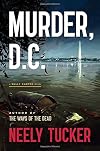
This story, set in 2000, takes place in fictional “Frenchman’s Bend” in Southwest D.C. (At the point where the Potomac and Anacostia Rivers intersect, there is indeed a “bend” if not one called as such in real life.)
Right at the geographical bend, the author situates a blighted drug park, full of “brown dirt and weeds too dumb to die and scraps of paper and brightly colored plastic bags, trash flitting across the scrub.” Thus we are introduced to a recurring theme of show more Tucker’s: the dichotomy between the rich, powerful, and wealthy sections of D.C., and the rest of the city. Most tourists, he opines, would be shocked by the contrast between the “emerald idyll” of East Potomac Park, and the “broken glass and the hard hustle” near “some of the most brutal projects in the city” where you can find “smack freaks, crack whores, smoke hounds, drunken assholes, the lowest forms of prostitution known to mankind.” (In the book, a reporter at "The Washington Post" makes fun of the naïve tourists: “yahoos from flyover, a-damn-mazed this happened in sight of the Capitol Building? . . .You’d think they’d read the papers before they got here….”)
No one lives in The Bend: “It was just open ground. It was where D.C. went to kill and be killed,” the “murder capital of the murder capital.” Moreover, most cases remained unsolved “because no one who knew enough cared to get involved.”
[The author posits that The Bend was the primary site of D.C.’s most notorious antebellum slave market. In actual fact, while The Bend itself is fictional, there were a number of white slave traders who operated in Washington as well as nearby Virginia, including the Alexandria slave-trading firm that became the largest in the country for an eight-year period, Franklin & Armfield. As the Pulitzer Prize winning historian David Levering Lewis wrote, “The auction block, the lash, and the manacled gangs on their way to the Deep South were as much a part of Washington as the steamy climate, the malaria, the marshes, and the dust.”
Spaces in taverns and in jails were rented out for placement of shackled slaves. There were also privately owned slave holding areas, called “Georgia Pens,” which were notoriously bad. One of the worst of those dungeons was known as Williams Private Jail or “The Yellow House” and was located just south of the current grounds of the Smithsonian Institution.]
The hero of Tucker’s series of stories about D.C. crime (this is the second) is Sullivan “Sully” Carter, a former foreign war correspondent for "The Washington Post" who now works on the metro beat. His traumatic wartime experiences left him with serious PTSD and a bad alcohol problem. Still, he manages to solve crimes that elude the police.
As the book begins, the press has just learned of the death of 21-year-old Billy Ellison, the scion of a black elite family with a long history in Washington. Billy’s father died years before, but his mother, Delores, was on the White House social list. She worked as a strategist for the powerful attorney, Shellie Stevens, who met with Sully only to warn him off the case. But that just amounted to a challenge for Sully. Furthermore, Sully wants to tie the death into the history of The Bend. He also wants to pull in the subject of other recent deaths in The Bend; it looked like a war was picking up between rival drug gangs, and interviews lead him to believe that Ellison was somehow involved. To get the inside info, he contacts Sly Hastings, “one of the deadliest men in the city, a killer and a sociopath, and perhaps his best source in town.”
Sly tries to educate Sully about what has been happening with the drug scene:
"‘That there is the problem with you reporters,’ he said. ‘Y’all always looking at the wrong thing, barking up the wrong goddamn tree. Woof woof over here, woof woof over there. Look here. Follow the money. Ain’t that what y’all like to say?”
Sully chases down the story, in many instances at his own mortal peril. But, as he muses:
"…stories were nothing but fever dreams that came ad passed through you and, later, left you looking back, wondering how the thing had possessed you so completely.”
And solving crimes? That was like “a crossword puzzle with gore.” He couldn’t resist even if he wanted to do so.
Evaluation: This gritty follow-up to the first book in the series, The Ways of the Dead, keeps you turning the pages. I especially liked the way in which the author integrates local history into the plot, adding a lot of interest to what otherwise might just be another well-written noir who-done-it. show less
Right at the geographical bend, the author situates a blighted drug park, full of “brown dirt and weeds too dumb to die and scraps of paper and brightly colored plastic bags, trash flitting across the scrub.” Thus we are introduced to a recurring theme of show more Tucker’s: the dichotomy between the rich, powerful, and wealthy sections of D.C., and the rest of the city. Most tourists, he opines, would be shocked by the contrast between the “emerald idyll” of East Potomac Park, and the “broken glass and the hard hustle” near “some of the most brutal projects in the city” where you can find “smack freaks, crack whores, smoke hounds, drunken assholes, the lowest forms of prostitution known to mankind.” (In the book, a reporter at "The Washington Post" makes fun of the naïve tourists: “yahoos from flyover, a-damn-mazed this happened in sight of the Capitol Building? . . .You’d think they’d read the papers before they got here….”)
No one lives in The Bend: “It was just open ground. It was where D.C. went to kill and be killed,” the “murder capital of the murder capital.” Moreover, most cases remained unsolved “because no one who knew enough cared to get involved.”
[The author posits that The Bend was the primary site of D.C.’s most notorious antebellum slave market. In actual fact, while The Bend itself is fictional, there were a number of white slave traders who operated in Washington as well as nearby Virginia, including the Alexandria slave-trading firm that became the largest in the country for an eight-year period, Franklin & Armfield. As the Pulitzer Prize winning historian David Levering Lewis wrote, “The auction block, the lash, and the manacled gangs on their way to the Deep South were as much a part of Washington as the steamy climate, the malaria, the marshes, and the dust.”
Spaces in taverns and in jails were rented out for placement of shackled slaves. There were also privately owned slave holding areas, called “Georgia Pens,” which were notoriously bad. One of the worst of those dungeons was known as Williams Private Jail or “The Yellow House” and was located just south of the current grounds of the Smithsonian Institution.]
The hero of Tucker’s series of stories about D.C. crime (this is the second) is Sullivan “Sully” Carter, a former foreign war correspondent for "The Washington Post" who now works on the metro beat. His traumatic wartime experiences left him with serious PTSD and a bad alcohol problem. Still, he manages to solve crimes that elude the police.
As the book begins, the press has just learned of the death of 21-year-old Billy Ellison, the scion of a black elite family with a long history in Washington. Billy’s father died years before, but his mother, Delores, was on the White House social list. She worked as a strategist for the powerful attorney, Shellie Stevens, who met with Sully only to warn him off the case. But that just amounted to a challenge for Sully. Furthermore, Sully wants to tie the death into the history of The Bend. He also wants to pull in the subject of other recent deaths in The Bend; it looked like a war was picking up between rival drug gangs, and interviews lead him to believe that Ellison was somehow involved. To get the inside info, he contacts Sly Hastings, “one of the deadliest men in the city, a killer and a sociopath, and perhaps his best source in town.”
Sly tries to educate Sully about what has been happening with the drug scene:
"‘That there is the problem with you reporters,’ he said. ‘Y’all always looking at the wrong thing, barking up the wrong goddamn tree. Woof woof over here, woof woof over there. Look here. Follow the money. Ain’t that what y’all like to say?”
Sully chases down the story, in many instances at his own mortal peril. But, as he muses:
"…stories were nothing but fever dreams that came ad passed through you and, later, left you looking back, wondering how the thing had possessed you so completely.”
And solving crimes? That was like “a crossword puzzle with gore.” He couldn’t resist even if he wanted to do so.
Evaluation: This gritty follow-up to the first book in the series, The Ways of the Dead, keeps you turning the pages. I especially liked the way in which the author integrates local history into the plot, adding a lot of interest to what otherwise might just be another well-written noir who-done-it. show less
Lists
Awards


You May Also Like


Statistics
- Works
- 10
- Members
- 564
- Popularity
- #44,321
- Rating
- 4.1
- Reviews
- 45
- ISBNs
- 45
- Languages
- 2
- Favorited
- 1