
Alexis Siegel
Author of The Photographer: Into War-torn Afghanistan with Doctors Without Borders
Works by Alexis Siegel
The Photographer: Into War-torn Afghanistan with Doctors Without Borders (2009) — Introduction — 579 copies, 27 reviews
Associated Works
Tagged
Common Knowledge
There is no Common Knowledge data for this author yet. You can help.
Members
Reviews
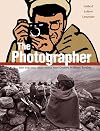
The Photographer pairs the work of French photographer Didier Lefèvre with the art of Emmanuel Guibert to create a haunting, suspenseful, and memorable story about a 1986 Doctors Without Borders mission into the most isolated and war-torn areas of Afghanistan.
The narrative will keep you turning the pages (but be careful, the book is over-sized and a bit heavy! :-) and it's perfectly woven throughout the images - seamlessly providing a story in both words and images. The use of multiple show more media in the telling of the story results in the reader quickly becoming emotionally connected to the doctors, guides, community warlords and leaders, and the patients - many of whom have suffered horrific injuries. The journey the mission takes from Pakistan is beyond arduous, beyond dangerous, and beyond beautiful.
What I found most revealing about The Photographer was how dangerous Western hubris can be in a climate and culture as remote and different as this one. Lefèvre, a savvy, open-minded hiker in better than average shape, is the weak link in his group - not just physically but in his ignorance of how unlike France, and even Pakistan, Afghanistan will be. To his credit, he's a quick study who tries to adapt (and the people he meets love having their photos taken, so that helps to bridge barriers!) but his failure to adapt his Western style thought and behavior patterns to the realities of the landscape, political climate, and social norms nearly results in his demise. If anything, this is the most valuable lesson any of us can take away from his story and his work. show less
The narrative will keep you turning the pages (but be careful, the book is over-sized and a bit heavy! :-) and it's perfectly woven throughout the images - seamlessly providing a story in both words and images. The use of multiple show more media in the telling of the story results in the reader quickly becoming emotionally connected to the doctors, guides, community warlords and leaders, and the patients - many of whom have suffered horrific injuries. The journey the mission takes from Pakistan is beyond arduous, beyond dangerous, and beyond beautiful.
What I found most revealing about The Photographer was how dangerous Western hubris can be in a climate and culture as remote and different as this one. Lefèvre, a savvy, open-minded hiker in better than average shape, is the weak link in his group - not just physically but in his ignorance of how unlike France, and even Pakistan, Afghanistan will be. To his credit, he's a quick study who tries to adapt (and the people he meets love having their photos taken, so that helps to bridge barriers!) but his failure to adapt his Western style thought and behavior patterns to the realities of the landscape, political climate, and social norms nearly results in his demise. If anything, this is the most valuable lesson any of us can take away from his story and his work. show less
Didier Lefevre was a French photojournalist who was recruited by Medecins Sans Frontieres to accompany one of their missions into war-torn Afghanistan at the height of the Soviet-Afghan conflict. The mission had to cross into Afghanistan illegally, make their way through hostile and forbidding territory on foot and then set up treatment facilities in the most remote and rudimentary of surroundings. MSF doctors treated all comers, including combatants, and Lefevre caught it all on film.
This show more book is a posthumous tribute to Lefevre and the MSF team, combining the photos that he took with a graphic account of their journey. It's one of the most effective uses of the "graphic novel" format that I have read; the photos that Lefevre took at the time give a photojournalistic account of scene and character, and the drawings and text tell the story behind them, while also filling in the gaps where there were no photos.
It may just have been the setting, but the graphic parts of this book reminded me strongly of Tintin in Tibet. This may not be an accident, as the text refers to Tintin at one point.
This is an inspiring and dramatic story about some unsung heroes and the travails they endured to help others. The risks they took were potentially fatal and the end notes reinforce just how big those risks were. show less
This show more book is a posthumous tribute to Lefevre and the MSF team, combining the photos that he took with a graphic account of their journey. It's one of the most effective uses of the "graphic novel" format that I have read; the photos that Lefevre took at the time give a photojournalistic account of scene and character, and the drawings and text tell the story behind them, while also filling in the gaps where there were no photos.
It may just have been the setting, but the graphic parts of this book reminded me strongly of Tintin in Tibet. This may not be an accident, as the text refers to Tintin at one point.
This is an inspiring and dramatic story about some unsung heroes and the travails they endured to help others. The risks they took were potentially fatal and the end notes reinforce just how big those risks were. show less
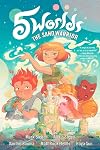
Since you are all well aware of my obsession with Middle Grade fiction at this point, let's go ahead and skip that. Can we instead please focus on the growing existence of Middle Grade graphic novels? I am so pleased that there are more and more of these out there, and I'm determined to champion all of them! Kazu Kibuishi's blurb had me from the moment I saw this book. So I was thrilled when I was asked to join the blog tour. Warning: there's some gushing ahead. Let's go ahead and get the show more small qualms that I had out of the way first, though.
I think this graphic novel could definitely have benefited from a bit more action. It was heartening to see that the authors weren't afraid to bring the real idea of war alive on these pages. I love when MG readers aren't treated with kid gloves. However I think this book needed to move at a bit quicker of a pace. The illustrations are gorgeous, (I can't wait to actually see them all in color.) but some of the filler panels felt like a bit much. I wanted more of Oona's quest, more of their desperate rush to save the day, and just more tension in general. This first volume was missing that epic feeling that stories like this usually have for me.
That being said, the characters were absolutely lovely. Oona, An Tzu and Jax were all vivid, and easy to fall in love with. I loved how each of them came from a different background. The concept of race is alive and well in this book, and the idea of racism is gently touched upon as well. It makes me happy to see authors putting these things out into the world for readers of this age group to start to digest. Oona overhears people of different worlds talking badly about people of other worlds, and making mean jokes. She sees some people get upset about what others are saying. Young readers can start to get a grasp here on unity, diversity, and especially empathy. It's an amazing thing.
Add in the fact that the ending of this book has a twist I wasn't expecting, complete with a cliffhanger, and you have my complete attention. Mark Siegel and Alexis Siegel have started something beautiful and magical with the 5 Worlds series. They've opened up a dialog that I think is important, in a way that is easy to digest and a lot of fun to read! Readers, young and old alike, will love this series. My only regret is that there isn't more of Oona's story to devour yet. I NEED to know what happens next. show less
I think this graphic novel could definitely have benefited from a bit more action. It was heartening to see that the authors weren't afraid to bring the real idea of war alive on these pages. I love when MG readers aren't treated with kid gloves. However I think this book needed to move at a bit quicker of a pace. The illustrations are gorgeous, (I can't wait to actually see them all in color.) but some of the filler panels felt like a bit much. I wanted more of Oona's quest, more of their desperate rush to save the day, and just more tension in general. This first volume was missing that epic feeling that stories like this usually have for me.
That being said, the characters were absolutely lovely. Oona, An Tzu and Jax were all vivid, and easy to fall in love with. I loved how each of them came from a different background. The concept of race is alive and well in this book, and the idea of racism is gently touched upon as well. It makes me happy to see authors putting these things out into the world for readers of this age group to start to digest. Oona overhears people of different worlds talking badly about people of other worlds, and making mean jokes. She sees some people get upset about what others are saying. Young readers can start to get a grasp here on unity, diversity, and especially empathy. It's an amazing thing.
Add in the fact that the ending of this book has a twist I wasn't expecting, complete with a cliffhanger, and you have my complete attention. Mark Siegel and Alexis Siegel have started something beautiful and magical with the 5 Worlds series. They've opened up a dialog that I think is important, in a way that is easy to digest and a lot of fun to read! Readers, young and old alike, will love this series. My only regret is that there isn't more of Oona's story to devour yet. I NEED to know what happens next. show less
I didn't know what to expect when I read a review of The Photographer, calling it a "photographic graphic novel." It is quite unique and simply put, amazing. In three parts, The Photographer tells the story of how the aid workers of Medecins Sans Frontieres, smuggled across the border from Pakistan into Afghanistan disguised as women in chadri, provided medical support to small communities during conflict. Didier Lefleve, a French photojournalist, traveled with the group to Zaragandara show more during the Afghan-Soviet War of 1986. In this district of Yaftali Sufla MSF establishes a field hospital while staffing a second one. The final part is Didier Lefleve's nearly disastrous solo departure from Afghanistan. As the tagline for MSF reads, "We go where we are needed most," The photographs and journal of Lefleve tell the entire story in intimate detail. It is a powerful print documentary.
It seems impossible for there to be humor in The Photographer, especially when you read of children with their eyes apparently glued shut and paralyzed by shrapnel, but it exists. One word: peaches. I confess. I giggled. That's all I can say about that. show less
It seems impossible for there to be humor in The Photographer, especially when you read of children with their eyes apparently glued shut and paralyzed by shrapnel, but it exists. One word: peaches. I confess. I giggled. That's all I can say about that. show less
Lists
Awards


You May Also Like
Associated Authors
Statistics
- Works
- 2
- Also by
- 8
- Members
- 1,130
- Popularity
- #22,721
- Rating
- 3.8
- Reviews
- 44
- ISBNs
- 25
- Languages
- 9