
Paul Cody
Author of Love Is Both Wave and Particle
Works by Paul Cody
Tagged
Common Knowledge
Members
Reviews

Mental illness and mass murder. The death penalty for a perpetrator who was grotesquely victimized by those he murdered. Hints of satanic ritual abuse (which could just as easily have been Jack Connor's delusions or dreams rather than memories), though the very real psychological abuse and daily double-binds he suffered at the controlling hands of his sadistic grandmother were just as satanic, and certainly the most destructive and damning forces in the long sad haul of his sorry, isolated show more existence (I won't call it a life), that he endured in a bleak house that might as well have been Death Row.
Is it seriously possible to empathize with this immature and mentally ill man who killed his grandmother and parents? Probably not. Not even when we see how his parents regularly threatened him with yet another psychiatric month-long incarceration at the local institution if he didn't shape up, and stop shuffling around late at night in his dreary attic room, keeping them awake with worry or driving them crazy, as if they needed any further assistance in the crazy department. Yet Paul Cody accomplishes this impossible feat, using "eyewitness" vignettes from a multitude of sources who knew him in school or from the psychiatric hospital, in rendering the decades-long process it took for Jack Connor to become that irreparably damaged human being capable of then being that automatic monster the police and media made of him, after the fact. But Jack Connor was not a psychopath.
Cody gave a knowing nod to Denis Johnson's first novel, Angels, and to Joan Didion, quoting both as a preface to his novel. Fans of either Johnson or Didion might be already predisposed toward appreciating a complexly disturbing novel like Cody's as I was, which is not to say that Cody, while certainly skilled as a storyteller, is as accomplished a writer as they are. Regardless, So Far Gone is still unforgettable, if uncomfortable, to read and then contemplate, considering how the murders might've been prevented or how Jack Connor, like unknown numbers of mentally ill, fall through the system's cracks, especially in light of too many recent mass murders in the news. show less
Is it seriously possible to empathize with this immature and mentally ill man who killed his grandmother and parents? Probably not. Not even when we see how his parents regularly threatened him with yet another psychiatric month-long incarceration at the local institution if he didn't shape up, and stop shuffling around late at night in his dreary attic room, keeping them awake with worry or driving them crazy, as if they needed any further assistance in the crazy department. Yet Paul Cody accomplishes this impossible feat, using "eyewitness" vignettes from a multitude of sources who knew him in school or from the psychiatric hospital, in rendering the decades-long process it took for Jack Connor to become that irreparably damaged human being capable of then being that automatic monster the police and media made of him, after the fact. But Jack Connor was not a psychopath.
Cody gave a knowing nod to Denis Johnson's first novel, Angels, and to Joan Didion, quoting both as a preface to his novel. Fans of either Johnson or Didion might be already predisposed toward appreciating a complexly disturbing novel like Cody's as I was, which is not to say that Cody, while certainly skilled as a storyteller, is as accomplished a writer as they are. Regardless, So Far Gone is still unforgettable, if uncomfortable, to read and then contemplate, considering how the murders might've been prevented or how Jack Connor, like unknown numbers of mentally ill, fall through the system's cracks, especially in light of too many recent mass murders in the news. show less
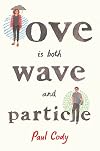
Literary Merit: Good
Characterization: Good
Recommendation: Recommended
Grades: 9-12
Levon and Sam are paired together by their teacher to work on a year long senior project in which they write their autobiographies. Meg, their teacher, is also collecting pieces from their friends and family members to add to the finished product. Sam is new to the Clock School, a charter school serving gifted youth who have psychiatric issues, but Levon has been a student there since being kicked out of his show more public school several years prior. He is widely admired for his intelligence and good looks though he remains mostly a mystery to his classmates because of this loner tendencies. Sam has had some pretty horrible prior experiences with schools, but she acclimates to the Clock School quickly and makes friends, seemingly putting past issues behind her. However, both Levon and Sam will have to face up to some difficult realities before their senior year comes to an end.
Sam and Levon are complex characters who have not been successful in a typical learning environment for a variety of reasons. Levon has Asperger's (according to his mother) while Sam has struggled with depression and attempted suicide. Through these characters, the author shows us that mental illness is never as simple as a label and the roots can be both genetic and environmental. The conceit of having friends and family make contributions to the autobiographies allows the novel to be told from a variety of different perspectives in a way that makes sense. Some POVs are more effective than others. The chapters from the parents’ points of view are particularly enlightening (maybe more so for an adult reader). Sam and Levon’s relationship has a realistic arc with the two starting out understandably shy with one another and eventually becoming friends. Though romance does come into play, it’s not the main point of the book.
Overall, I enjoyed reading this book. The writing was a bit over the top at times, “Here we were in moonlight, I thought, two fools, late of a Thursday, desperate to see each other, full of hope like every two fools who had ever loved each other.” I actually didn’t mind it and it fit with the characters, but it’s not going to be for everyone. There was one plot point that made absolutely no sense to me (SPOILER: when Sam hooks up with her friend and then it is never mentioned again), but otherwise, it was a sweet love story that also dealt with mental illness and how it can impact and be impacted by families. show less
Characterization: Good
Recommendation: Recommended
Grades: 9-12
Levon and Sam are paired together by their teacher to work on a year long senior project in which they write their autobiographies. Meg, their teacher, is also collecting pieces from their friends and family members to add to the finished product. Sam is new to the Clock School, a charter school serving gifted youth who have psychiatric issues, but Levon has been a student there since being kicked out of his show more public school several years prior. He is widely admired for his intelligence and good looks though he remains mostly a mystery to his classmates because of this loner tendencies. Sam has had some pretty horrible prior experiences with schools, but she acclimates to the Clock School quickly and makes friends, seemingly putting past issues behind her. However, both Levon and Sam will have to face up to some difficult realities before their senior year comes to an end.
Sam and Levon are complex characters who have not been successful in a typical learning environment for a variety of reasons. Levon has Asperger's (according to his mother) while Sam has struggled with depression and attempted suicide. Through these characters, the author shows us that mental illness is never as simple as a label and the roots can be both genetic and environmental. The conceit of having friends and family make contributions to the autobiographies allows the novel to be told from a variety of different perspectives in a way that makes sense. Some POVs are more effective than others. The chapters from the parents’ points of view are particularly enlightening (maybe more so for an adult reader). Sam and Levon’s relationship has a realistic arc with the two starting out understandably shy with one another and eventually becoming friends. Though romance does come into play, it’s not the main point of the book.
Overall, I enjoyed reading this book. The writing was a bit over the top at times, “Here we were in moonlight, I thought, two fools, late of a Thursday, desperate to see each other, full of hope like every two fools who had ever loved each other.” I actually didn’t mind it and it fit with the characters, but it’s not going to be for everyone. There was one plot point that made absolutely no sense to me (SPOILER: when Sam hooks up with her friend and then it is never mentioned again), but otherwise, it was a sweet love story that also dealt with mental illness and how it can impact and be impacted by families. show less
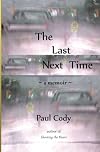
With scorched-soul honesty, Paul Cody reveals the consequences of his addiction and points out the largely unacknowledged dangers of widely-prescribed, readily-available, and all-to-often misused benzodiazepines. The Last Next Time is as thoughtful and responsible as it is personal. The author's journey from successful and respected novelist and beloved teacher to brain-fogged, dissembling substance-abuser is harrowing; and his return trip to wellness is beautifully rendered with acute show more self-knowledge, humility, and generosity. This memoir stands with William Styron's Darkness Visible as an heroic account of one man's frailty and his quest for wholeness. In providing a measured and balanced reckoning of the seemingly weird compulsion that is addiction's dark heart, it is a gift to troubled souls who live in this shadow, and to everyone who loves them. show less
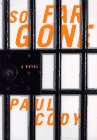
This is a chilling look into the mind and history of a man awaiting execution for killing his parents and paternal grandmother. Jack Connor is the first person to be slated for execution in the state of MA in fifty years. The reader is also given a glimpse into the peripheral players in this man's life - a neighbor, a journalist, a prison guard, etc. Somehow, along the way, a sympathy is developed for Jack, who grew up in the most dysfunctional family possible where drugs, alcohol, show more abandonment, abuse and mental illness were integral to his chldhood. Each of the victims carried baggage from his or her own childhood, and we are left realizing the inevitability of Jack's horrific crime as his soul was destroyed.
I am impressed with Paul Cody's writing, and his skill in portraying Jack's memories in a way that makes him as much a victim as his parents and grandmother. show less
I am impressed with Paul Cody's writing, and his skill in portraying Jack's memories in a way that makes him as much a victim as his parents and grandmother. show less
Lists
Statistics
- Works
- 7
- Members
- 116
- Popularity
- #169,720
- Rating
- 3.8
- Reviews
- 8
- ISBNs
- 13
- Languages
- 1