
Helen Matthews (2)
Author of Lies Behind the Ruin
For other authors named Helen Matthews, see the disambiguation page.
Works by Helen Matthews
Tagged
Common Knowledge
There is no Common Knowledge data for this author yet. You can help.
Members
Reviews
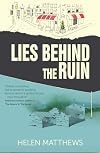
Emma and her husband Paul are holidaying in France with their daughter, Molly, and Emma's son, Owen. On a whim they visit a crumbling cottage that is for sale. It's in a countryside setting but close to a village and despite Emma's reservations, Paul goes ahead and buys it, initially as a holiday home but he soon wants to flee his problems at work in England and move the whole family to France. Their new life is not easy for Emma as Paul is missing for months at a time finishing work show more projects, but she starts to settle in and make a new life for herself. However, as the title suggests, there are lies and secrets and Emma doesn't know how precarious the family's new start is, not only with what's going on behind the scenes with Paul, but also with the Brexit referendum looming large and threatening the life of Brits in Europe.
Lies Behind the Ruin had everything I want in a book. It's a story of family, relationships and what makes a home. I liked Emma so much and I really enjoyed how she made her life in France work for her, forging new friendships and finding ways to keep the family afloat. Paul, on the other hand, I found weak and deceitful. Revenge for Paul's behaviour by a third party added a psychological thriller aspect into the mix and gave the story an edgy feel.
This is the third of Helen Matthews' books I have read and I've thoroughly enjoyed them all. She's a fantastic writer of gripping plots, tangled and messy lives, and tricky situations. The characterisations work perfectly, from the main players down to the bit parts, and I felt like I was fully immersed in the life that Emma makes for herself. This story of a toxic relationship told from both sides kept me gripped. Matthews is definitely a favourite author of mine. show less
Lies Behind the Ruin had everything I want in a book. It's a story of family, relationships and what makes a home. I liked Emma so much and I really enjoyed how she made her life in France work for her, forging new friendships and finding ways to keep the family afloat. Paul, on the other hand, I found weak and deceitful. Revenge for Paul's behaviour by a third party added a psychological thriller aspect into the mix and gave the story an edgy feel.
This is the third of Helen Matthews' books I have read and I've thoroughly enjoyed them all. She's a fantastic writer of gripping plots, tangled and messy lives, and tricky situations. The characterisations work perfectly, from the main players down to the bit parts, and I felt like I was fully immersed in the life that Emma makes for herself. This story of a toxic relationship told from both sides kept me gripped. Matthews is definitely a favourite author of mine. show less
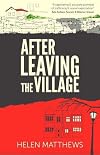
Odeta is an Albanian girl, 17 years old and from a small village. When dashing Kreshnik tells her she could have a more exciting life in London, she can't wait to leave her father's shop behind. But she's an innocent - she doesn't know what lies ahead for her in London. She ends up being held in the house next door to Kate, a journalist who subjects her family to an experiment of living with no internet, which leaves her at odds with her husband and son.
We start the book with Odeta leaving show more Albania and arriving in London. Poor Odeta, she had no idea how much she would yearn to be back in the simple life she had before. We witness her confusion and distress at the way she is being treated and see her trying to adjust, before we are introduced to Kate. I hadn't reread the blurb before starting to read this book and so was a little surprised when the story switched in this way and Kate was brought in. Newly moved to the area, she's trying to make friends with her neighbours - don't they say that each area of London is a village? But she's also from a small village in Wales and a trip there makes her remember something that happened when she herself was a teenager. I must admit I'm not entirely sure what this added to the story, apart from to flesh out Kate's own story, but I suppose it was a good way of illustrating the meaning of the title - both of these women had left behind a village and this was their story of what happened next.
And what brilliant and fascinating stories these are. From the time we meet Kate the story is told in alternate chapters from Odeta's and Kate's points of view. Comparisons between the completely different lives these two women are living, next door to each other, are inevitable and from being completely separate, they end up becoming intertwined, leading up to a very exciting conclusion.
After Leaving the Village is a fantastic read. I loved every minute of it. Towards the end my heart was racing and I couldn't put it down as I was desperately rooting for the two women to succeed, to survive. It's a stark reminder of how vulnerable girls can be preyed on, trafficked and abused. It's also a look at how the internet has taken over our lives, becoming something we (almost) can't do without.
I really wouldn't have known this was a debut novel. It's so well-written and has obviously been researched in detail. I think Helen Matthews has done an amazing job with this book. It's insightful, intense, interesting and really quite thrilling. show less
We start the book with Odeta leaving show more Albania and arriving in London. Poor Odeta, she had no idea how much she would yearn to be back in the simple life she had before. We witness her confusion and distress at the way she is being treated and see her trying to adjust, before we are introduced to Kate. I hadn't reread the blurb before starting to read this book and so was a little surprised when the story switched in this way and Kate was brought in. Newly moved to the area, she's trying to make friends with her neighbours - don't they say that each area of London is a village? But she's also from a small village in Wales and a trip there makes her remember something that happened when she herself was a teenager. I must admit I'm not entirely sure what this added to the story, apart from to flesh out Kate's own story, but I suppose it was a good way of illustrating the meaning of the title - both of these women had left behind a village and this was their story of what happened next.
And what brilliant and fascinating stories these are. From the time we meet Kate the story is told in alternate chapters from Odeta's and Kate's points of view. Comparisons between the completely different lives these two women are living, next door to each other, are inevitable and from being completely separate, they end up becoming intertwined, leading up to a very exciting conclusion.
After Leaving the Village is a fantastic read. I loved every minute of it. Towards the end my heart was racing and I couldn't put it down as I was desperately rooting for the two women to succeed, to survive. It's a stark reminder of how vulnerable girls can be preyed on, trafficked and abused. It's also a look at how the internet has taken over our lives, becoming something we (almost) can't do without.
I really wouldn't have known this was a debut novel. It's so well-written and has obviously been researched in detail. I think Helen Matthews has done an amazing job with this book. It's insightful, intense, interesting and really quite thrilling. show less
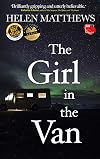
The Girl in the Van begins with Laura travelling in her campervan to Wales from London for a singles holiday. Laura is familiar with the area as it's where she lived until a traumatic event involving her daughter, Ellie, made her leave everything behind. This holiday sets in motion a series of unexpected and disturbing situations for Laura when she meets a girl named Miriana who reminds her very much of Ellie. Miriana has her own harrowing story to tell and Laura starts to see similarities show more with Ellie.
This book comes across from the cover and blurb as a psychological thriller and at times I would describe it that way but much of it is more in the realms of a domestic drama and I really liked that about it. In fact, I very much enjoyed how Laura's home life, both in the past in Wales and in the present in London, kept offering the psychological thriller hints that eventually came to the fore in the last quarter or so of the book.
Helen Matthews is a fantastic writer, making this a compelling story of a lost girl, and the parents who were lost without her, alongside that of another young girl who finds herself cast adrift and struggling to survive. The plotting is genius, especially with regard to that ending I mentioned which I really didn't see coming at all. In fact, I was starting to pin things on at least two other characters.
There are some big issues contained within this story and I feel like they were things that the author really cared about. I've read Matthews before and she excels at taking important and relevant topics and portraying them sensitively and sympathetically.
I highly recommend The Girl in the Van. I found myself eager to get back to it to see what would happen next. A gripping and emotive read. show less
This book comes across from the cover and blurb as a psychological thriller and at times I would describe it that way but much of it is more in the realms of a domestic drama and I really liked that about it. In fact, I very much enjoyed how Laura's home life, both in the past in Wales and in the present in London, kept offering the psychological thriller hints that eventually came to the fore in the last quarter or so of the book.
Helen Matthews is a fantastic writer, making this a compelling story of a lost girl, and the parents who were lost without her, alongside that of another young girl who finds herself cast adrift and struggling to survive. The plotting is genius, especially with regard to that ending I mentioned which I really didn't see coming at all. In fact, I was starting to pin things on at least two other characters.
There are some big issues contained within this story and I feel like they were things that the author really cared about. I've read Matthews before and she excels at taking important and relevant topics and portraying them sensitively and sympathetically.
I highly recommend The Girl in the Van. I found myself eager to get back to it to see what would happen next. A gripping and emotive read. show less
I received a copy of this novel from the publisher via NetGalley.
I really didn't enjoy this: Emma's husband Paul buys a ruined house in France for them to renovate without asking her first. He then tells her he has lost his job and they will have to sell their house, move to France, and live in their property in a caravan. Emma therefore allows her first husband custody of their son (without taking legal advice) because she believes she is not entitled to take him to France. Paul later show more claims he has to return to the UK to work, leaving Emma and their daughter in the caravan trying to get a bar business off the ground. And so on and so on.
It was all so depressing (there was not one moment of humour in the whole book). Emma put up with totally unreasonable behaviour from Paul, who course, is lying to her right left and centre. For a while not much happened apart from the author employing unnecessarily complicated switches in viewpoint and time frame, but then towards the end all hell broke loose. I didn't like anyone, couldn't believe in any of their behaviour and I think the author might come to regret focussing so much on the Brexit angle. show less
I really didn't enjoy this: Emma's husband Paul buys a ruined house in France for them to renovate without asking her first. He then tells her he has lost his job and they will have to sell their house, move to France, and live in their property in a caravan. Emma therefore allows her first husband custody of their son (without taking legal advice) because she believes she is not entitled to take him to France. Paul later show more claims he has to return to the UK to work, leaving Emma and their daughter in the caravan trying to get a bar business off the ground. And so on and so on.
It was all so depressing (there was not one moment of humour in the whole book). Emma put up with totally unreasonable behaviour from Paul, who course, is lying to her right left and centre. For a while not much happened apart from the author employing unnecessarily complicated switches in viewpoint and time frame, but then towards the end all hell broke loose. I didn't like anyone, couldn't believe in any of their behaviour and I think the author might come to regret focussing so much on the Brexit angle. show less
Statistics
- Works
- 5
- Members
- 43
- Popularity
- #352,015
- Rating
- 4.1
- Reviews
- 5
- ISBNs
- 18