
Caroline Light (1)
Author of Stand Your Ground: A History of America's Love Affair with Lethal Self-Defense
For other authors named Caroline Light, see the disambiguation page.
Caroline Light (1) has been aliased into Caroline E. Light.
About the Author
Image credit: from Harvard University faculty page
Works by Caroline Light
Works have been aliased into Caroline E. Light.
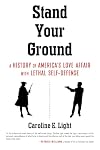
Stand Your Ground: A History of America's Love Affair with Lethal Self-Defense (2017) 60 copies, 11 reviews
Tagged
Common Knowledge
There is no Common Knowledge data for this author yet. You can help.
Members
Reviews
Smart, detailed, unlike any history I've read of America. Light shows how intricately the "right" to bear arms is tied to Enlightenment philosophy's ideas of the individual, defined as a property-owning, generally Euro-descended male. She shows how the US, even before its official birth, differed from England over gun rights and generously quotes from and evaluates her sources, dissecting the close connection between gun rights and sexual and racial violence. We need to understand these show more intertwined phenomena, Light argues, if we want to respond to this country's overwhelming gun culture. show less
 This review was written for LibraryThing Early Reviewers.
The title, Stand Your Ground: A History of America’s Love Affair with Lethal Self-Defense, embodied two topics about which I am passionate, history and the oddity of US gun-use and abuse. I am very glad I got it.
The author, Caroline Light, starts her history before the American Revolution and continues on to the present day. The book is very dense; with legal cases with names, dates, and the legal theory which inform the decisions; excerpts from the trial transcripts; and cultural milieu show more of the cases. With notes for each chapter and a good index, the book is set to be a text in a college course.
The law which is supposed to be the basis of American law, English common law, was thrown aside for the issue of white male self-defense. English common law “imposed a robust duty to retreat” from threat as much as possible before using lethal force. The new United States considered, and still considers the duty to retreat “incompatible with the ideals of the ‘true man’ and the American mind.” The “true man” is a white property owner of course.
In the first US self defense case presented is Selfridge v. State [Boston, MA 1806] the defense went so far as to say “if Selfridge had failed to defend himself, had simply endured the beating … the assault on his honor would have left him nothing to live for.” The fact that he had impugned the assailant's father’s honor in a newspaper was not considered evidence for defense of the dead victim and the verdict of not guilty set us on our current course. Free white men who own property have the right to defend their honor to the death. Nobody else has the right to defend their life at all.
White men. With property. No females. Nobody who happens to be descended from anybody not full-blood western European. No GLBTx. No anybody “different” in any way. As the cases build on top of each other I feel the white male elite’s fear of falling even a little from their noble position. If anybody else has rights, the rights of the white male are somehow lessened. And that is fought. Hard and hellishly. The whole lethal self-defense laws are built on that fear and the lies and myths used to feed the fear.
The truths were hard to endure, but necessary and verifiable. The examples of the lies I learned are pulled back as a curtain and I can see the unspeakable violence and pain they hid. As a woman and a prison chaplain I have seen a little of this, but not enough. I need to question all of my assumptions, again, and see where I can help, if I can. show less
The author, Caroline Light, starts her history before the American Revolution and continues on to the present day. The book is very dense; with legal cases with names, dates, and the legal theory which inform the decisions; excerpts from the trial transcripts; and cultural milieu show more of the cases. With notes for each chapter and a good index, the book is set to be a text in a college course.
The law which is supposed to be the basis of American law, English common law, was thrown aside for the issue of white male self-defense. English common law “imposed a robust duty to retreat” from threat as much as possible before using lethal force. The new United States considered, and still considers the duty to retreat “incompatible with the ideals of the ‘true man’ and the American mind.” The “true man” is a white property owner of course.
In the first US self defense case presented is Selfridge v. State [Boston, MA 1806] the defense went so far as to say “if Selfridge had failed to defend himself, had simply endured the beating … the assault on his honor would have left him nothing to live for.” The fact that he had impugned the assailant's father’s honor in a newspaper was not considered evidence for defense of the dead victim and the verdict of not guilty set us on our current course. Free white men who own property have the right to defend their honor to the death. Nobody else has the right to defend their life at all.
White men. With property. No females. Nobody who happens to be descended from anybody not full-blood western European. No GLBTx. No anybody “different” in any way. As the cases build on top of each other I feel the white male elite’s fear of falling even a little from their noble position. If anybody else has rights, the rights of the white male are somehow lessened. And that is fought. Hard and hellishly. The whole lethal self-defense laws are built on that fear and the lies and myths used to feed the fear.
The truths were hard to endure, but necessary and verifiable. The examples of the lies I learned are pulled back as a curtain and I can see the unspeakable violence and pain they hid. As a woman and a prison chaplain I have seen a little of this, but not enough. I need to question all of my assumptions, again, and see where I can help, if I can. show less
This review was written for LibraryThing Early Reviewers.
Professor Light’s examination of self-defense and stand your ground (SYG) laws traces the doctrine back to the early 19th century. Here Light shows that the idea of armed self-defense was limited by the “castle” doctrine (a man’s home is his castle). The issue was, how far did the boundaries of that castle extend? As the author shows, over the next 150 years, the limits of the castle gradually expanded to include any public space where a man had a right to be.
And the key word is man. show more Plowing through court cases, Light shows that SYG laws evolved to allow men, especially white men, to defend themselves and their property against “others”, primarily people of color. As her review of the last twenty years demonstrates, people of color, women abused by intimate partners, and transgender people need not apply. Too often, SYG laws fail to protect the marginalized and the weak from predators who are white and male.
This is an important and timely book. Although Light occasionally bogs down in the jargon of race and sexual identity, she clearly establishes her points. I strongly recommend this book to people concerned about the growing gun culture and violence of our society. show less
And the key word is man. show more Plowing through court cases, Light shows that SYG laws evolved to allow men, especially white men, to defend themselves and their property against “others”, primarily people of color. As her review of the last twenty years demonstrates, people of color, women abused by intimate partners, and transgender people need not apply. Too often, SYG laws fail to protect the marginalized and the weak from predators who are white and male.
This is an important and timely book. Although Light occasionally bogs down in the jargon of race and sexual identity, she clearly establishes her points. I strongly recommend this book to people concerned about the growing gun culture and violence of our society. show less
This review was written for LibraryThing Early Reviewers.I was frankly blown away by the history presented here, having been previously unaware of just how closely gun proliferation has been entwined with sexism and racism. The US now has 4 percent of the world's population and between 40 and 50 percent of privately owned guns. There are more guns in the US than people. But those weapons are in the hands of an increasingly small percentage of the US population. Meanwhile, women, non-whites and LGBT are increasingly LESS safe. This is essential show more reading for anyone wondering how we got here. Highly recommended. show less
This review was written for LibraryThing Early Reviewers.Lists
You May Also Like
Associated Authors
Statistics
- Works
- 1
- Members
- 60
- Popularity
- #277,519
- Rating
- 4.0
- Reviews
- 11
- ISBNs
- 6
