
Laura Thomas
Author of Just Eat It: How intuitive eating can help you get your shit together around food
About the Author
Laura Thomas, PhD, PgDip, RNutr, is a Registered Nutritionist and Director of London Centre for Intuitive Eating, where she helps her clients build healthy relationship with food and their bodies. Laura's work has appeared in the Guardian, Grazia and Huffington Post. She is the host of the Don't show more Salt My Game podcast and the author of the bestselling book Just Eat It. show less
Series
Works by Laura Thomas
Just Eat It: How intuitive eating can help you get your shit together around food (2019) 66 copies, 5 reviews
How to Just Eat It: A Step-by-Step Guide to Escaping Diets and Finding Food Freedom (2021) 15 copies
Fairy Wings 1 copy
Feliz Ano Novo! 1 copy
Warp+Weft 1 copy
Associated Works
The Dictionary of Animal Languages (2018) — Book & cover designer, some editions — 98 copies, 21 reviews
Crash of the Heavens: The Remarkable Story of Hannah Senesh and the Only Military Mission to Rescue Europe's Jews During World War II (2025) — Cover designer, some editions — 23 copies, 2 reviews
Airmail : taking women of letters to the world (2015) — Book & cover designer, some editions — 7 copies
Let's Have a Picnic!: A Touch-and-Feel Adventure (Raggedy Ann and Me!) (2008) — Illustrator — 5 copies
Tagged
Common Knowledge
There is no Common Knowledge data for this author yet. You can help.
Members
Reviews
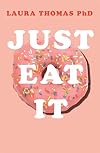
I spotted this book in the library and decided to read it mainly as a challenge for myself. My relationship with food is not great, to put it mildly, but lately I’ve been working to improve it. I skimmed the first few pages and thought it seemed sensible, so borrowed it. ‘Just Eat It’ is definitely not a diet book and, in fact, makes every effort to counter diet culture. The essential idea is to relearn how to eat whatever you want whenever you’re hungry, without imposing rules or show more guilt on yourself about it. The chapters take you through a step-by-step process for this, with the idea being to work through them over time. Some elements overlap with cognitive behavioural therapy, notably mindfulness and self-compassion. Others are food-specific, such as rating your hunger out of ten and giving yourself unconditional permission to eat. Everything is explained clearly.
I powered through the whole book in an evening however, I’m not going to lie, it wasn’t easy. If you have a difficult relationship with food, reading it will upset you. I was getting along fine until suddenly, a hundred pages in, I burst out crying. No particular sentence or paragraph brought this on, it was just an accumulation of thoughts. If this happens to you, I recommend writing out the thoughts and having some mint tea (perhaps the ultimate calming beverage). I kept reading, though, because Thomas makes some very important points and suggests some potentially useful techniques. Refreshingly, she emphasises the need for body neutrality, rather than positivity. One suggestion I found powerful is to try thanking your body, rather than reflexively criticising it. Her whole approach to food is radical in a world that obsessively stigmatises it. We all need food to live, yet it is so fraught with confusion, judgement, and a great deal of guilt. The only other book I’ve come across that managed to decouple food from guilt is Ruby Tandoh’s [b:Eat Up: Food, Appetite and Eating What You Want|36340052|Eat Up Food, Appetite and Eating What You Want|Ruby Tandoh|https://i.gr-assets.com/images/S/compressed.photo.goodreads.com/books/1515132196l/36340052._SY75_.jpg|58020058].
Predictably, I really liked the fact that ‘Just Eat It’ blames capitalism and patriarchy for making people, especially women, insecure about their appearance and afraid of food for the purposes of profit. The book is not trying to sell you anything or dictate the pace and exact sequence of what you should do to eat more intuitively. This is especially good as I’m not exactly the target audience and certain parts don’t apply to me. I’ve never been on a diet or actually tried to lose weight, but have always been anxious and weird about food to a greater or lesser extent. I don’t like eating, so elements of the intuitive eating approach may not be entirely suitable. If I gave myself unconditional permission to eat what I wanted, what worries me is that I’d eat less rather than more. The underlying problem is the same, though: fear of food. Thus there are a number of suggestions that I’ll take note of. Apart from the food stuff, the chapters on exercise and body image are also really good. Despite the sadness it brought up, I ultimately found the book calming. It takes a systematic, evidence-based approach to reassuring you that food needn’t be feared and that your body is OK.
As it’s pretty clear scaring people doesn’t help them feel better or make positive life changes, such a constructive approach should be more widespread. For example, I absolutely hate those bus stop posters that just say ‘OBESITY CAUSES CANCER’. I can’t imagine how awful it must feel to have that shoved in your face if your BMI labels you obese. That has never been the case for me, yet those posters still make me worry that I have that invisible fat around my organs which I read an article about and can kill you, etc, etc. Do the ads make me feel more anxious? Absolutely. Do they encourage me to eat more vegetables? No. Whatever their aim was, I doubt it is being achieved. The sole complaint I have about ‘Just Eat It’ is how pink the cover is. But I have a pretty low tolerance for pink so am just being petty. It’s a good book and has given me some helpful ideas that, frankly, I wish I’d come across 16 or more years ago. show less
I powered through the whole book in an evening however, I’m not going to lie, it wasn’t easy. If you have a difficult relationship with food, reading it will upset you. I was getting along fine until suddenly, a hundred pages in, I burst out crying. No particular sentence or paragraph brought this on, it was just an accumulation of thoughts. If this happens to you, I recommend writing out the thoughts and having some mint tea (perhaps the ultimate calming beverage). I kept reading, though, because Thomas makes some very important points and suggests some potentially useful techniques. Refreshingly, she emphasises the need for body neutrality, rather than positivity. One suggestion I found powerful is to try thanking your body, rather than reflexively criticising it. Her whole approach to food is radical in a world that obsessively stigmatises it. We all need food to live, yet it is so fraught with confusion, judgement, and a great deal of guilt. The only other book I’ve come across that managed to decouple food from guilt is Ruby Tandoh’s [b:Eat Up: Food, Appetite and Eating What You Want|36340052|Eat Up Food, Appetite and Eating What You Want|Ruby Tandoh|https://i.gr-assets.com/images/S/compressed.photo.goodreads.com/books/1515132196l/36340052._SY75_.jpg|58020058].
Predictably, I really liked the fact that ‘Just Eat It’ blames capitalism and patriarchy for making people, especially women, insecure about their appearance and afraid of food for the purposes of profit. The book is not trying to sell you anything or dictate the pace and exact sequence of what you should do to eat more intuitively. This is especially good as I’m not exactly the target audience and certain parts don’t apply to me. I’ve never been on a diet or actually tried to lose weight, but have always been anxious and weird about food to a greater or lesser extent. I don’t like eating, so elements of the intuitive eating approach may not be entirely suitable. If I gave myself unconditional permission to eat what I wanted, what worries me is that I’d eat less rather than more. The underlying problem is the same, though: fear of food. Thus there are a number of suggestions that I’ll take note of. Apart from the food stuff, the chapters on exercise and body image are also really good. Despite the sadness it brought up, I ultimately found the book calming. It takes a systematic, evidence-based approach to reassuring you that food needn’t be feared and that your body is OK.
As it’s pretty clear scaring people doesn’t help them feel better or make positive life changes, such a constructive approach should be more widespread. For example, I absolutely hate those bus stop posters that just say ‘OBESITY CAUSES CANCER’. I can’t imagine how awful it must feel to have that shoved in your face if your BMI labels you obese. That has never been the case for me, yet those posters still make me worry that I have that invisible fat around my organs which I read an article about and can kill you, etc, etc. Do the ads make me feel more anxious? Absolutely. Do they encourage me to eat more vegetables? No. Whatever their aim was, I doubt it is being achieved. The sole complaint I have about ‘Just Eat It’ is how pink the cover is. But I have a pretty low tolerance for pink so am just being petty. It’s a good book and has given me some helpful ideas that, frankly, I wish I’d come across 16 or more years ago. show less
Registered dietician Laura Thomas has written this book to help anyone who has ever had issues surrounding food, body image, dieting etc. and to help them adopt intuitive eating (IE). IE is NOT another diet in disguise as a healthy eating plan, and not another way to restrict what we eat – Thomas makes it clear that that is the polar opposite of what she wants to achieve.
This book resonated strongly with me, as someone who has had a mixed up relationship with food and body image for show more something like 30 years. It actually made me cry at certain times as I recognised the symptoms of disordered eating which she writes about. Crucially though, for the first time, I felt like there is light at the end of the tunnel and that there IS a way to get out of this cycle, and to have a healthy relationship with food.
Written in an engaging, entertaining and accessible way (Thomas is quite sweary and so am I, so this didn’t bother me, but may be worth pointing out to some readers), there are exercises for the reader to complete and each chapter focuses on different aspects of the issues being discussed.
This is an important book, and one which I highly recommend to anyone who has ever felt bad for eating too much, gone on yet another restrictive diet to lose weight, judged foods as good as bad, and or let a number on the scales dictate how good a day they are going to have. show less
This book resonated strongly with me, as someone who has had a mixed up relationship with food and body image for show more something like 30 years. It actually made me cry at certain times as I recognised the symptoms of disordered eating which she writes about. Crucially though, for the first time, I felt like there is light at the end of the tunnel and that there IS a way to get out of this cycle, and to have a healthy relationship with food.
Written in an engaging, entertaining and accessible way (Thomas is quite sweary and so am I, so this didn’t bother me, but may be worth pointing out to some readers), there are exercises for the reader to complete and each chapter focuses on different aspects of the issues being discussed.
This is an important book, and one which I highly recommend to anyone who has ever felt bad for eating too much, gone on yet another restrictive diet to lose weight, judged foods as good as bad, and or let a number on the scales dictate how good a day they are going to have. show less

I feel like no time has passed between the first book and this one, though it’s clear that things have shifted with Sophie since she’s been in Paris. Though this can be read as a standalone, I highly recommend reading the first book in the series as well, as it really helps set the tone for this series and helps build the dynamic of this world.
This mystery has a sinister plot that deals with stalking, a former abusive ex-boyfriend, and secrets that Sophie hoped would never be revealed. show more I’ve got to be honest, this story triggered me more than usual. Having gone through a situation that eerily mirrored this account was jarring to say the least. Still, I was happy to see everything work out for Sophie like it eventually worked out for me. Like Sophie, I had to truly step out in faith and let it all go. It was still one of the hardest things I ever had to endure, but God saw me through, and I am thankful every day that He did.
Despite this, I enjoyed the novel overall. I adored the meet-cute between Miles and Sophie, the flow is nice, and the imagery of the English cottage, bakeries, and countryside was so pleasant. I also enjoy these characters so much. Miles and Sophie are adorable together and their relationship is refreshing as you see them help one another not only physically and emotionally but spiritually as well. I can’t wait to see what happens in the next installment as it’s going to feature a character that I’ve had some questions about so I can’t wait to see things from her unique perspective.
*I have voluntarily reviewed a copy of this book which I received from the author/publisher. All views and opinions expressed are completely honest, and my own. show less
This mystery has a sinister plot that deals with stalking, a former abusive ex-boyfriend, and secrets that Sophie hoped would never be revealed. show more I’ve got to be honest, this story triggered me more than usual. Having gone through a situation that eerily mirrored this account was jarring to say the least. Still, I was happy to see everything work out for Sophie like it eventually worked out for me. Like Sophie, I had to truly step out in faith and let it all go. It was still one of the hardest things I ever had to endure, but God saw me through, and I am thankful every day that He did.
Despite this, I enjoyed the novel overall. I adored the meet-cute between Miles and Sophie, the flow is nice, and the imagery of the English cottage, bakeries, and countryside was so pleasant. I also enjoy these characters so much. Miles and Sophie are adorable together and their relationship is refreshing as you see them help one another not only physically and emotionally but spiritually as well. I can’t wait to see what happens in the next installment as it’s going to feature a character that I’ve had some questions about so I can’t wait to see things from her unique perspective.
*I have voluntarily reviewed a copy of this book which I received from the author/publisher. All views and opinions expressed are completely honest, and my own. show less
The first thing that jumped out at me when I started this book was that the author states she is a nutritionist. The main difference between a dietitian and nutritionist is that being a dietitian requires a degree in food/nutrition science, while a nutritionist means a person can label themselves as such without a degree or certification. (mind you, some nutritionists ARE certified and/or have formal training so I am not knocking those nutritionists) but I have seen a fair amount of these show more diet books written by nutritionists in the last decade that have bad advice, or were written to support the Fat Acceptance/Health At Every Size movement. So when someone labels themselves as a nutritionist instead of a dietitian/dietician, it always makes me a bit suspicious.
However, I do give this book 2 stars because this is a bit better than the "health" books written by FA?HAES advocates. There is indeed practical advice in here, and the author is not wrong about how toxic diet/beauty/thinness culture can be. She's not wrong about accepting a few extra pounds, or enjoying what you eat.
However, intuitive eating is not practical if you practice it all the time. I speak from personal experience that it can be shocking to find out the amount of fat, cholesterol, and/or sugar can be in foods that are labeled healthy. It's also not practical for many people to always eat what they gravitate towards instead of actually analyzing the nutrition information because let's be real, many will gravitate towards less healthy food without practicing conscious self-control.
Intuitive eating is good in small amounts, but in the end, a healthy lifestyle is going to require conscious self-control and saying no to urges. I see way too many FA/HAES advocates use 'intuitive eating' as a label/excuse for bad eating habits, and believe me, I've struggled with food/weight myself, and it felt to me that some parts of the book were saying that people should just stop struggling to maintain a diet even if they're obese/suffering health issues because of such, and in the end, that's why I can't give this book a higher rating even though some parts of this book were actually good. show less
However, I do give this book 2 stars because this is a bit better than the "health" books written by FA?HAES advocates. There is indeed practical advice in here, and the author is not wrong about how toxic diet/beauty/thinness culture can be. She's not wrong about accepting a few extra pounds, or enjoying what you eat.
However, intuitive eating is not practical if you practice it all the time. I speak from personal experience that it can be shocking to find out the amount of fat, cholesterol, and/or sugar can be in foods that are labeled healthy. It's also not practical for many people to always eat what they gravitate towards instead of actually analyzing the nutrition information because let's be real, many will gravitate towards less healthy food without practicing conscious self-control.
Intuitive eating is good in small amounts, but in the end, a healthy lifestyle is going to require conscious self-control and saying no to urges. I see way too many FA/HAES advocates use 'intuitive eating' as a label/excuse for bad eating habits, and believe me, I've struggled with food/weight myself, and it felt to me that some parts of the book were saying that people should just stop struggling to maintain a diet even if they're obese/suffering health issues because of such, and in the end, that's why I can't give this book a higher rating even though some parts of this book were actually good. show less
You May Also Like
Associated Authors
Statistics
- Works
- 21
- Also by
- 20
- Members
- 139
- Popularity
- #147,350
- Rating
- 3.7
- Reviews
- 8
- ISBNs
- 28
- Languages
- 3