
Angela Chen (1)
Author of Ace: What Asexuality Reveals About Desire, Society, and the Meaning of Sex
For other authors named Angela Chen, see the disambiguation page.
Works by Angela Chen
Ace: What Asexuality Reveals About Desire, Society, and the Meaning of Sex (2020) 895 copies, 27 reviews
Tagged
Common Knowledge
- Birthdate
- 20th century
- Gender
- female
- Occupations
- journalist
editor - Nationality
- USA
- Associated Place (for map)
- USA
Members
Reviews
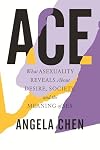
The Publisher Says: An engaging exploration of what it means to be asexual in a world that’s obsessed with sexual attraction, and what the ace perspective can teach all of us about desire and identity.
What exactly is sexual attraction and what is it like to go through life not experiencing it? What does asexuality reveal about gender roles, about romance and consent, and the pressures of society? This accessible examination of asexuality shows that the issues that aces face—confusion show more around sexual activity, the intersection of sexuality and identity, navigating different needs in relationships—are the same conflicts that nearly all of us will experience. Through a blend of reporting, cultural criticism, and memoir, Ace addresses the misconceptions around the “A” of LGBTQIA and invites everyone to rethink pleasure and intimacy.
Journalist Angela Chen creates her path to understanding her own asexuality with the perspectives of a diverse group of asexual people. Vulnerable and honest, these stories include a woman who had blood tests done because she was convinced that “not wanting sex” was a sign of serious illness, and a man who grew up in a religious household and did everything “right,” only to realize after marriage that his experience of sexuality had never been the same as that of others. Disabled aces, aces of color, gender-nonconforming aces, and aces who both do and don’t want romantic relationships all share their experiences navigating a society in which a lack of sexual attraction is considered abnormal. Chen’s careful cultural analysis explores how societal norms limit understanding of sex and relationships and celebrates the breadth of sexuality and queerness.
I RECEIVED A DRC OF THIS BOOK FROM BEACON PRESS VIA EDELWEISS+. THANK YOU.
My Review: This is the most eye-opening read of 2020. "The map is not the territory" is a truism I'd stopped short of applying to sexual attraction. Behavior, yes, but not attraction, that "energy {aces} have no idea what {allos} are talking about." Attraction is an energy; I'm so deep in its gravity well, see the world so completely through its lens, that I'm blankly surprised that others don't. Author Chen continues my seventh-decade growth spurt.
Aces! Allos! Things I'd sorta-kinda heard about a while ago, maybe, but had zero context for. This is fascinating.
As an old queer gent, one whose queerness goes beyond being vanilla-gay, I've been in the place of ace and aro people, being judged and branded as abnormal within a community that is itself branded as abnormal by outsiders. The principal issue is, if we are made invisible, or mainstreamed as we now call it, those of us in actual danger of our lives (in intolerant countries like Dagestan and Nigeria) do not realize there is a large and thriving world where we're simply ourselves, not monstrous or dangerous or Other:
I wanted lots of sex most of my life; I'm old enough now that the Urge is muted, and doesn't bedevil my every thought. I have a partner whose presence in my world is a cause for joy and celebration. He's a gift. And also mixed race, three and a half decades younger than me, and just starting what I hope will be a long and happy career as a chef. I won't be there to see his full-on selfhood; I will be in his full-on selfhood because our relationship has formed each of us as we are now. I'm a whole lot nicer with him than I was without him.
We're neither ace nor aro; we're Othered by the nature of our connection. And, like Author Chen's subject, intergenerational love is not visible or, when revealed, well thought of. He's an adult, was when we met, but there lingers about an old man and a young man the disagreeable whiff of pedophilia. People I consider dear and close friends simply clam up and/or change the subject when I talk about him, have never ever one time asked how he's doing on the frint lines of the plague's workers (whom do you imagine makes the delivery food you're eating?), where if he was a she they'd be solicitous and interested.
As bitter as that sounds, the pain of it is old and familiar, as it has always been this way. It's simply a fact that Author Chen presents in a slightly different light, one that shines as bright on bedrock homophobia as it does on prejudices more visible:
For white read straight; and then examine y'all's consciences.
The basic argument Author Chen makes in this deeply felt, thoroughly researched book is, to me at least, one that includes me at every level:
All the fascinating stuff about people not like me aside, I read this book to hear that phrase, the simple formulation that explains me to myself. I haven't been on Earth this long not to realize when I'm being spoken to. There is nothing whatsoever in this that is any way a threat to you, your relationship, and the life you've built. Why, then, are so many of you demonizing and rejecting people who are simply doing exactly what you're doing...finding, building, living a relationship to their authentic selves and to others?
Author Chen's words are direct and simple, her subject wildly important, and her conclusions elegantly simple. I challenge you to challenge yourself in this unpleasant moment of our shared history, with viruses and unrest and human ugliness pounding our sleepy complacent senses of self, to stretch out and incorporate more ways of being into your head and your life.
Build back better isn't, or needn't be, an empty slogan. show less
What exactly is sexual attraction and what is it like to go through life not experiencing it? What does asexuality reveal about gender roles, about romance and consent, and the pressures of society? This accessible examination of asexuality shows that the issues that aces face—confusion show more around sexual activity, the intersection of sexuality and identity, navigating different needs in relationships—are the same conflicts that nearly all of us will experience. Through a blend of reporting, cultural criticism, and memoir, Ace addresses the misconceptions around the “A” of LGBTQIA and invites everyone to rethink pleasure and intimacy.
Journalist Angela Chen creates her path to understanding her own asexuality with the perspectives of a diverse group of asexual people. Vulnerable and honest, these stories include a woman who had blood tests done because she was convinced that “not wanting sex” was a sign of serious illness, and a man who grew up in a religious household and did everything “right,” only to realize after marriage that his experience of sexuality had never been the same as that of others. Disabled aces, aces of color, gender-nonconforming aces, and aces who both do and don’t want romantic relationships all share their experiences navigating a society in which a lack of sexual attraction is considered abnormal. Chen’s careful cultural analysis explores how societal norms limit understanding of sex and relationships and celebrates the breadth of sexuality and queerness.
I RECEIVED A DRC OF THIS BOOK FROM BEACON PRESS VIA EDELWEISS+. THANK YOU.
My Review: This is the most eye-opening read of 2020. "The map is not the territory" is a truism I'd stopped short of applying to sexual attraction. Behavior, yes, but not attraction, that "energy {aces} have no idea what {allos} are talking about." Attraction is an energy; I'm so deep in its gravity well, see the world so completely through its lens, that I'm blankly surprised that others don't. Author Chen continues my seventh-decade growth spurt.
Aces! Allos! Things I'd sorta-kinda heard about a while ago, maybe, but had zero context for. This is fascinating.
The ace world is not an obligation. Nobody needs to identify, nobody is trapped, nobody needs to stay forever and pledge allegiance. The words are gifts. If you know which terms to search, you know how to find others who might have something to teach.
As an old queer gent, one whose queerness goes beyond being vanilla-gay, I've been in the place of ace and aro people, being judged and branded as abnormal within a community that is itself branded as abnormal by outsiders. The principal issue is, if we are made invisible, or mainstreamed as we now call it, those of us in actual danger of our lives (in intolerant countries like Dagestan and Nigeria) do not realize there is a large and thriving world where we're simply ourselves, not monstrous or dangerous or Other:
Normal is often treated as a moral judgment, when it is often simply a statistical matter. The question of what everyone else is doing is less important than the question of what works for the two people in the actual relationship. It matters that everyone’s needs are carefully considered and respected, not that everyone is doing the same thing.
–and–
“It seems that the message is ‘we have liberated our sexuality, therefore we must now celebrate it and have as much sex as we want,’” says Jo, an ace policy worker in Australia. “Except ‘as much sex as we want’ is always lots of sex and not no sex, because then we are oppressed, or possibly repressed, and we’re either not being our true authentic selves, or we haven’t discovered this crucial side of ourselves that is our sexuality in relation to other people, or we haven’t grown up properly or awakened yet.”
I wanted lots of sex most of my life; I'm old enough now that the Urge is muted, and doesn't bedevil my every thought. I have a partner whose presence in my world is a cause for joy and celebration. He's a gift. And also mixed race, three and a half decades younger than me, and just starting what I hope will be a long and happy career as a chef. I won't be there to see his full-on selfhood; I will be in his full-on selfhood because our relationship has formed each of us as we are now. I'm a whole lot nicer with him than I was without him.
We're neither ace nor aro; we're Othered by the nature of our connection. And, like Author Chen's subject, intergenerational love is not visible or, when revealed, well thought of. He's an adult, was when we met, but there lingers about an old man and a young man the disagreeable whiff of pedophilia. People I consider dear and close friends simply clam up and/or change the subject when I talk about him, have never ever one time asked how he's doing on the frint lines of the plague's workers (whom do you imagine makes the delivery food you're eating?), where if he was a she they'd be solicitous and interested.
As bitter as that sounds, the pain of it is old and familiar, as it has always been this way. It's simply a fact that Author Chen presents in a slightly different light, one that shines as bright on bedrock homophobia as it does on prejudices more visible:
Picture whiteness as a neutral backdrop, a white wall. It is easier to paint a white wall light blue than it is to paint a dark green wall light blue. The dominant media is filled with images of many types of white people; white people, for the most part, have the freedom to be anything they like. People of color need to scrub away the dark green—racial stereotypes and expectations—before determining whether we are really ace.
For white read straight; and then examine y'all's consciences.
The basic argument Author Chen makes in this deeply felt, thoroughly researched book is, to me at least, one that includes me at every level:
Relationships should always be a game of mix and match, not a puzzle that you have to perfectly snap into, or a Jenga tower that will collapse as soon as you try to wiggle one block out of place. Customizability is the best part, yet most people try so hard to make their relationship stick to its premade form, a one-size-fits-all shape. Many people don’t take advantage of their own freedom.
All the fascinating stuff about people not like me aside, I read this book to hear that phrase, the simple formulation that explains me to myself. I haven't been on Earth this long not to realize when I'm being spoken to. There is nothing whatsoever in this that is any way a threat to you, your relationship, and the life you've built. Why, then, are so many of you demonizing and rejecting people who are simply doing exactly what you're doing...finding, building, living a relationship to their authentic selves and to others?
Author Chen's words are direct and simple, her subject wildly important, and her conclusions elegantly simple. I challenge you to challenge yourself in this unpleasant moment of our shared history, with viruses and unrest and human ugliness pounding our sleepy complacent senses of self, to stretch out and incorporate more ways of being into your head and your life.
Build back better isn't, or needn't be, an empty slogan. show less

A revelatory examination of the Asexual identity and how compulsory sexuality has shaped our culture. The author speaks from her own experience but also her research based upon interviews of other asexuals.
I've had curiosity about this designation for a long time, and was excited to read a whole book on the topic. I found it to be extremely mind-bending, as sexuality is such an engrained part of most peoples' lives. Even for asexuals, it can often be a bit of a puzzle to unravel as we are show more inundated from a young age about the importance of sexual desire.
Thinking about what relationships mean without this common ingredient was enlightening and world-expanding. I still think I'm processing and mulling over some of the things I learned but would highly recommend the read to anyone at all regardless of sexual identity. show less
I've had curiosity about this designation for a long time, and was excited to read a whole book on the topic. I found it to be extremely mind-bending, as sexuality is such an engrained part of most peoples' lives. Even for asexuals, it can often be a bit of a puzzle to unravel as we are show more inundated from a young age about the importance of sexual desire.
Thinking about what relationships mean without this common ingredient was enlightening and world-expanding. I still think I'm processing and mulling over some of the things I learned but would highly recommend the read to anyone at all regardless of sexual identity. show less
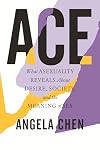
I'd only heard good things about this book and it did not disappoint. I had some extra interest in this topic as the majority of friends I have made in fandom identify somewhere in the ace/aro spectrum/area. In the book, Chen mentions the tension between writing to give those who are asexual an opportunity to see themselves and writing to explain asexuality to allos (the rest of us), and I think the final product is a vital piece of the conversation for anyone wanting to think deeply about show more desire and identity.
The combination of personal reflection, interviews, and cultural criticism worked very well for me. I especially appreciated that Chen's commitment to exploring intersectionality with ace identity wasn't just one chapter of the book, it really WAS the book. The way societal scripts of how we are "supposed to" experience desire are so determined by gender, race, ability... Wouldn't we all be better off if we felt less bound to these predetermined scripts? show less
The combination of personal reflection, interviews, and cultural criticism worked very well for me. I especially appreciated that Chen's commitment to exploring intersectionality with ace identity wasn't just one chapter of the book, it really WAS the book. The way societal scripts of how we are "supposed to" experience desire are so determined by gender, race, ability... Wouldn't we all be better off if we felt less bound to these predetermined scripts? show less
Back in 2015 I read an academic book collecting chapters on asexuality from different disciplines, [b:Asexualities: Feminist and Queer Perspectives|18058324|Asexualities Feminist and Queer Perspectives|Megan Milks|https://i.gr-assets.com/images/S/compressed.photo.goodreads.com/books/1393224749l/18058324._SY75_.jpg|25348284]. I found this fascinating, as several disciplines simply did not know what to do with people who don't experience sexual attraction. Notably, Freudian and Lacanian show more psychoanalytic theory centre sexuality to such an extent that they elide it with the life drive, implying that asexuals are all longing to die. (At least that's how I remember it; I haven't read any psychoanalytic theory for years.) 'Ace' builds on such previous work by combining qualitative analysis, synthesis of research, and personal memoir. It uses these methods to explore how the concept of asexuality destabilises not only academic assumptions but also social norms around sexuality, romance, gender, and health. Chen writes in a thoughtful, considered, and clear style. I really appreciated her author's note at the start: '[This book] is deliberately limited to the people that psychologists call WEIRD: Western, educated, industrialised, rich (or at least middle class), and democratic. Most are also American and liberal.' This is too rarely specified; I am very tired of social science writing that assumes being WEIRD is a universal condition of humanity.
I found the entirety of 'Ace' fascinating, thought-provoking, and well-written. Chen's discussions of disability and asexuality, the culture of compulsory sexuality, and the intersection of asexuality and gender and racial stereotypes are all excellent. The stand out chapter for me, though, was on romantic attraction. The implications of asexuality for popular conceptions of romance are hardly touched upon, let alone analysed, in previous books I've read on the topic (list here). Yet this is one of the most significant questions raised by the orientation: if you remove sexual attraction from the Western concept of romantic love, how can it be defined? This certainly gets a lot of consideration in online asexual spaces, but this is the first book I've read that digs into it at length. To her great credit, Chen has no easy answers to such a tricky question:
It's difficult enough to describe an absence of sexual attraction without having experienced it - rather like a medieval monk trying to draw a lion having only read a couple of second-hand descriptions of such a beast. Romantic attraction, if indeed this can be readily distinguished from sexual attraction, is even harder to understand and describe. Chen's examination of it through the lens of her own experience and of asexuals more widely is the best thing I've read about this to date:
I think this a fascinating thing for anyone, of any sexuality, to contemplate if they've grown up with classic Western assumptions about romance. What is romance?? We just don't know. Indeed, the whole book is full of ideas that challenge simple assumptions. I really hope it will be read beyond asexual circles, as there's so much of interest to everyone who wants to understand and critique Western society and culture's underpinning norms. This book dissects the ways these concepts are socially constructed.
I also have great respect for how candid Chen is about her own ambivalence:
That is a powerful point to make. If you do not want the socially desirable form of relationship: sexual, romantic, monogamous, and hetero, then it is so easy to think there's something seriously wrong with you. Having an identity label(s) and community(ies) that makes this difference into a point of solidarity and pride doesn't negate the prevailing social norms you've been surrounded by all your life. They still weigh you down. It's good to acknowledge that in the context of books like this, which chip away at social norms in a constructive and hopeful way. show less
I found the entirety of 'Ace' fascinating, thought-provoking, and well-written. Chen's discussions of disability and asexuality, the culture of compulsory sexuality, and the intersection of asexuality and gender and racial stereotypes are all excellent. The stand out chapter for me, though, was on romantic attraction. The implications of asexuality for popular conceptions of romance are hardly touched upon, let alone analysed, in previous books I've read on the topic (list here). Yet this is one of the most significant questions raised by the orientation: if you remove sexual attraction from the Western concept of romantic love, how can it be defined? This certainly gets a lot of consideration in online asexual spaces, but this is the first book I've read that digs into it at length. To her great credit, Chen has no easy answers to such a tricky question:
To isolate romantic feeling, I asked that we peel away social role and performance, but the differences seem partially created by both. 'Platonic' and 'romantic' are types of feeling while 'friend' and 'romantic partner' are social designations, and the latter moulds the former.
It's difficult enough to describe an absence of sexual attraction without having experienced it - rather like a medieval monk trying to draw a lion having only read a couple of second-hand descriptions of such a beast. Romantic attraction, if indeed this can be readily distinguished from sexual attraction, is even harder to understand and describe. Chen's examination of it through the lens of her own experience and of asexuals more widely is the best thing I've read about this to date:
Differentiating emotion, like figuring out whether someone experiences sexual attraction, is a problem of phenomenology. No-one has invented a way to perfectly compare if my experience of a bitter taste is the same as yours, or whether we're feeling the same thing but you call it romantic love and I call it platonic love because of how we have been socialised. Or whether the emotion we feel towards different people is the same, but we change what we call that feeling based on the role someone plays in our life. I am infatuated with Noah in a way I am not with Jane - but this may partly be because it is common and expected to continuously praise your romantic partner and the same is not true for friends. Perhaps, over time, the emotions grow to be different because of the different ways we reinforce them, having been taught to praise and feed in one case and to benignly neglect in another.
Don't get me wrong. I am not claiming that romantic and platonic love are secretly the same; there can be any number of small factors or combinations of factors that differentiate the two. [...] I am saying that people think of romantic and platonic love as two distinctly separate categories, but, frequently, there is overlap and no clean separation, no one common emotional feature or essential component that makes a relationship one or the other.
I think this a fascinating thing for anyone, of any sexuality, to contemplate if they've grown up with classic Western assumptions about romance. What is romance?? We just don't know. Indeed, the whole book is full of ideas that challenge simple assumptions. I really hope it will be read beyond asexual circles, as there's so much of interest to everyone who wants to understand and critique Western society and culture's underpinning norms. This book dissects the ways these concepts are socially constructed.
I also have great respect for how candid Chen is about her own ambivalence:
My personal curse is that I do question incessantly yet serve as a cautionary tale that knowledge alone can have hard limits. This sad state of affairs is sometimes called the insight fallacy, or the mistaken belief that understanding a problem will solve it. As Zee [an asexual person] said, knowing about asexuality was a first step but not a quick fix. It did not prevent Zee from feeling that their partner was entitled to sex with them. Writing an entire book about asexuality has done little to assuage the anxiety that sometimes underlies my relationship.
[...]
I wanted to obscure the truth for Noah [Chen's partner]. I felt protective, worried that if people knew this about me, that they would feel sorry for him, even though I am far more bothered than he. And I wanted to obscure the truth for myself. I believe I am right when I think about compulsory sexuality and its negative effects, but self-righteousness is not as useful an emotion as I once believed. It's not an adequate buffer against the other ideas that float in the air and that I have ingested over my life. When it comes to the personal, I frequently lack the courage of my convictions.
That is a powerful point to make. If you do not want the socially desirable form of relationship: sexual, romantic, monogamous, and hetero, then it is so easy to think there's something seriously wrong with you. Having an identity label(s) and community(ies) that makes this difference into a point of solidarity and pride doesn't negate the prevailing social norms you've been surrounded by all your life. They still weigh you down. It's good to acknowledge that in the context of books like this, which chip away at social norms in a constructive and hopeful way. show less
Lists
Awards


You May Also Like
Associated Authors
Statistics
- Works
- 1
- Members
- 895
- Popularity
- #28,622
- Rating
- 4.1
- Reviews
- 27
- ISBNs
- 10
- Languages
- 1
