
Nick Rennison
Author of Sherlock Holmes: The Unauthorized Biography
About the Author
Nick Rennison is a writer, editor and bookseller. He has published books on a wide variety of subjects from Sherlock Holmes to London's blue plaques. He is a regular reviewer for the Sunday Times and for BBC History magazine. His titles for Pocket Essentials include Roget: The Man Who Became a Book show more and Robin Hood: Myth, History and Culture. He lives near Manchester. show less
Series
Works by Nick Rennison
Supernatural Sherlocks: Stories from The Golden Age of the Occult Detective (2017) — Editor — 34 copies, 1 review
The Rivals of Dracula: Stories from the Golden Age of Gothic Horror (2016) — Editor — 25 copies, 2 reviews
100 Must-read Prize-Winning Novels: Discover Your Next Great Read... (Bloomsbury Good Reading Guides) (2010) 14 copies, 1 review
Riots and Rebels: Popular Protest in Britain from the Peasants' Revolt to Extinction Rebellion (2025) 6 copies
Tagged
Common Knowledge
- Birthdate
- 1955-06-19
- Gender
- male
- Occupations
- bookseller
editor
reviewer - Short biography
- NICK RENNISON worked as a bookseller, editor and writer in London for many years. He is the author of The London Blue Plaque Guide (Sutton 2003) and Waterstone's Guide to London Writing (Waterstone's 1999). His other books include The Good Reading Guide (Bloomsbury 2001) and The Good Reading Guide to Crime Fiction (Bloomsbury 2003).
- Nationality
- UK
- Birthplace
- Yorkshire, England, UK
- Map Location
- England, UK
Members
Reviews
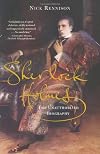
Is it possible to write a "biography" of a fictional character? Apparently it is, for Nick Rennison has done it, and done a lovely job of it to boot. His Sherlock Holmes: The Unauthorized Biography (just out from Atlantic Monthly Press) is a full-length, scholarly treatment of the life and times of the world's greatest detective: the fact that Holmes never really existed is really of little matter at all.
Rennison has culled every available biographical fact from the Holmes canon and used show more them to full advantage, while filling in around the edges with entirely plausible additional details. We learn of Holmes' childhood on the Yorkshire moors, his whereabouts and business during the "Great Hiatus" when the world thought him dead at the foot of Reichenbach Falls (he was traveling, Rennison suggests, on assignment for the British government in Tibet, Mecca, and the Sudan). We learn about the extent of Holmes' involvement in the Jack the Ripper case, his pursuit of Irish terrorists, and of other great unrecorded achievements.
In this book, we also learn much about Holmes' erstwhile Boswell, Dr. Watson, and about the detective's great enemies Moriarty and Moran. The relationship between Holmes, Watson and the "literary agent" Arthur Conan Doyle are also outlined in some detail; Holmes, we come to find, was rather picky about his portrayal in print, and did not hesitate in sharing his concerns with the man with whom his name has become inextricably linked.
Skillfully utilizing the Holmes stories as well as an extensive knowledge of the later Victorian period, Rennison has fashioned a readable, interesting and wonderfully detailed biography of Holmes - from the bibliography (read the whole thing) to the footnotes and beyond. If you are a Holmes fan - casual or otherwise - I cannot recommend this new volume highly enough.
http://philobiblos.blogspot.com/2006/11/book-review-sherlock-holmes.html show less
Rennison has culled every available biographical fact from the Holmes canon and used show more them to full advantage, while filling in around the edges with entirely plausible additional details. We learn of Holmes' childhood on the Yorkshire moors, his whereabouts and business during the "Great Hiatus" when the world thought him dead at the foot of Reichenbach Falls (he was traveling, Rennison suggests, on assignment for the British government in Tibet, Mecca, and the Sudan). We learn about the extent of Holmes' involvement in the Jack the Ripper case, his pursuit of Irish terrorists, and of other great unrecorded achievements.
In this book, we also learn much about Holmes' erstwhile Boswell, Dr. Watson, and about the detective's great enemies Moriarty and Moran. The relationship between Holmes, Watson and the "literary agent" Arthur Conan Doyle are also outlined in some detail; Holmes, we come to find, was rather picky about his portrayal in print, and did not hesitate in sharing his concerns with the man with whom his name has become inextricably linked.
Skillfully utilizing the Holmes stories as well as an extensive knowledge of the later Victorian period, Rennison has fashioned a readable, interesting and wonderfully detailed biography of Holmes - from the bibliography (read the whole thing) to the footnotes and beyond. If you are a Holmes fan - casual or otherwise - I cannot recommend this new volume highly enough.
http://philobiblos.blogspot.com/2006/11/book-review-sherlock-holmes.html show less
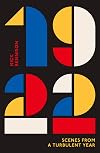
This short book filled with “factoid” anecdotal events from 1922 with a culture heavy Western (UK, Ireland and the USA) bias might be dismissed as trivial, if it were not so educational and fun. This is not at all the type of detail heavy history book that I usually read, but it is wonderfully informative and interesting.
Despite its brevity, there are a few entries that appear to add nothing to our understanding of living in 1922, such as the death of a pope and election of his show more successor, which is completely unremarkable, and the accidental killing of Vladmir Nabokov’s father in a failed assassination attempt. The article that takes the prize here though is the entry that starts “May. The cricket season begins in England.”
The historical stories are enlivened by humour where appropriate, such as the following about radio and the formation of the BBC: “When (a famous opera singer) arrived at the Marconi works, it soon became clear that Dame Nellie (Melba) had little notion of how radio worked. She was taken on a tour by a proud employee who pointed out the 140-foot tall transmitters, from the top of which her voice would be broadcast to listeners around the world. ‘Young man,’ she boomed in reply, ‘if you think I’m going to climb up there, you are very much mistaken.’”
A useful short bibliography is provided,with an acknowledgment to Robert Grave’s social history of Britain in the inter-war years, The Long Weekend, which perhaps provided an inspiration for the style of this book.
Overall, being easy, fun and informative, this book gives an entertainingly kaleidoscopic impression of 1922, providing the reader with contemporary tabloid sensations and sporting highlights, but also detailing the truly historic political and cultural events of the time, whose importance might only be recognised with hindsight.
I received a Netgalley copy of this book, but this review is my honest opinion. show less
Despite its brevity, there are a few entries that appear to add nothing to our understanding of living in 1922, such as the death of a pope and election of his show more successor, which is completely unremarkable, and the accidental killing of Vladmir Nabokov’s father in a failed assassination attempt. The article that takes the prize here though is the entry that starts “May. The cricket season begins in England.”
The historical stories are enlivened by humour where appropriate, such as the following about radio and the formation of the BBC: “When (a famous opera singer) arrived at the Marconi works, it soon became clear that Dame Nellie (Melba) had little notion of how radio worked. She was taken on a tour by a proud employee who pointed out the 140-foot tall transmitters, from the top of which her voice would be broadcast to listeners around the world. ‘Young man,’ she boomed in reply, ‘if you think I’m going to climb up there, you are very much mistaken.’”
A useful short bibliography is provided,with an acknowledgment to Robert Grave’s social history of Britain in the inter-war years, The Long Weekend, which perhaps provided an inspiration for the style of this book.
Overall, being easy, fun and informative, this book gives an entertainingly kaleidoscopic impression of 1922, providing the reader with contemporary tabloid sensations and sporting highlights, but also detailing the truly historic political and cultural events of the time, whose importance might only be recognised with hindsight.
I received a Netgalley copy of this book, but this review is my honest opinion. show less
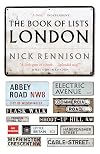
This book contains some fascinating facts about London's past, its geography, transport, references in film and literature, famous people... it has all the bases covered! I think it will appeal to Londoners and non-Londoners, as this book has so many odd facts. When I nest go to London, I will have a look at this book, and make a point of trying to imagine London when it was a collection of villages, or how is was before the Great Fires or how it was during the blitz. A lot is packed into show more this shortish work. show less
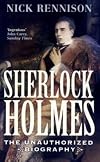
This is a detailed (obviously fictionalised) biography, following in a tradition established by W S Baring Gould back in the 1960s. However, unlike its predecessor, this book goes well beyond the clues contained in Conan Doyle's stories by inventing a whole backdrop to Holmes's family going back centuries and depicting Holmes involved in combating Fenian nationalism in the 1880s and being in at the inception of MI5 and MI6, among many other key events. Needless to say, the cases of Jack the show more Ripper and Dr Crippen also feature. Rennison takes the literary conceit that Arthur Conan Doyle was merely Dr Watson's literary agent and populariser of Holmes's cases to extremes, and shows all kinds of encounters between them, including Holmes assisting Conan Doyle in investigating the real life cases of injustice of George Edalji and Oscar Slater. It all makes for an engrossing read for anyone very familiar with the Sherlock Holmes's stories and their cultural and political background, but I couldn't help feeling the invention of large amounts of material not based on anything in the original stories was a bit of a cheat. On the plus side, Holmes doesn't here survive to an extreme old age and fight Nazis in his 80s as he did in Baring Gould's works (attempting to make the Basil Rathbone films canonical). Overall, worth a read if you're a big fan of the original stories. show less
Awards

You May Also Like


Associated Authors
Statistics
- Works
- 43
- Members
- 1,189
- Popularity
- #21,620
- Rating
- 3.6
- Reviews
- 27
- ISBNs
- 117
- Languages
- 6
- Favorited
- 1