
Vincent Lam (1)
Author of Bloodletting and Miraculous Cures: Stories
For other authors named Vincent Lam, see the disambiguation page.
About the Author
Image credit: Margarita Lam Antoniades
Works by Vincent Lam
Tagged
Common Knowledge
- Canonical name
- Lam, Vincent
- Gender
- male
- Occupations
- physician
writer - Agent
- Chalfont, Sarah
- Nationality
- Canada
- Associated Place (for map)
- Canada
Members
Reviews
WARNING: This review contains spoilers.
****
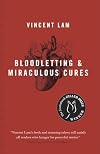
A very good collection of stories, especially considering that this was the author's first book! He has faithfully followed the maxim of "write what you know", drawing on his experiences as an emergency room physician to write a series of short stories connected by four protagonists (Chen, Ming, Sri and Fitz) as they make their way through medical school and eventually come to terms with their work as doctors, dealing with personal problems and how show more they relate to their patients. He is a very vivid writer, with well-chosen details and of course a mastery of the medical jargon, but it does not seem an excessive amount of jargon (indeed, there is a glossary of medical terms at the back of the book, at least in the edition I read).
Apart from the medical scenarios, another thing Lam does well is give a sense of place. Or perhaps this is true for people who have been to or lived in Ottawa or Toronto. Since I am familiar with these cities, the details he chose for his stories really brought back memories for me and I could picture the scene very clearly, especially the bike accident -- as soon as the narrator mentioned the intersection that Fitz was approaching, I thought "OH NO he's going to get hit by a bus." It's rather a dangerous intersection for cyclists.
One story that was particularly interesting was "Winston", about a man who has a psychotic break. The reader is immersed in his viewpoint for a great deal of the story, and the way Lam brings in reality and simply presents the two competing perspectives is really good. It would make an excellent topic of discussion in an English class.
My favourite story would probably be "Contact Tracing", probably because it does an excellent job of showcasing Lam's medical writing and makes the reader really emotionally invested in the characters. I also enjoyed the consultation notes, if only because I translate medical reports and am somewhat familiar with the format. The only criticism I would have for this story is that Sri's death offstage (discussed briefly by Chen and Fitz) seemed rather gratuitous. This is probably my biggest criticism overall, that and maybe a couple of stories are too open-ended. Most of them ended with just enough closure for my liking, though.
To sum up, this is a great book, and if you've been on the fence about it, go pick it up. It's thought-provoking, educational and an absorbing read. show less
****
A very good collection of stories, especially considering that this was the author's first book! He has faithfully followed the maxim of "write what you know", drawing on his experiences as an emergency room physician to write a series of short stories connected by four protagonists (Chen, Ming, Sri and Fitz) as they make their way through medical school and eventually come to terms with their work as doctors, dealing with personal problems and how show more they relate to their patients. He is a very vivid writer, with well-chosen details and of course a mastery of the medical jargon, but it does not seem an excessive amount of jargon (indeed, there is a glossary of medical terms at the back of the book, at least in the edition I read).
Apart from the medical scenarios, another thing Lam does well is give a sense of place. Or perhaps this is true for people who have been to or lived in Ottawa or Toronto. Since I am familiar with these cities, the details he chose for his stories really brought back memories for me and I could picture the scene very clearly, especially the bike accident -- as soon as the narrator mentioned the intersection that Fitz was approaching, I thought "OH NO he's going to get hit by a bus." It's rather a dangerous intersection for cyclists.
One story that was particularly interesting was "Winston", about a man who has a psychotic break. The reader is immersed in his viewpoint for a great deal of the story, and the way Lam brings in reality and simply presents the two competing perspectives is really good. It would make an excellent topic of discussion in an English class.
My favourite story would probably be "Contact Tracing", probably because it does an excellent job of showcasing Lam's medical writing and makes the reader really emotionally invested in the characters. I also enjoyed the consultation notes, if only because I translate medical reports and am somewhat familiar with the format. The only criticism I would have for this story is that Sri's death offstage (discussed briefly by Chen and Fitz) seemed rather gratuitous. This is probably my biggest criticism overall, that and maybe a couple of stories are too open-ended. Most of them ended with just enough closure for my liking, though.
To sum up, this is a great book, and if you've been on the fence about it, go pick it up. It's thought-provoking, educational and an absorbing read. show less
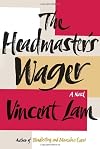
Percival Chen is the Chinese headmaster of an English school in Saigon. He was forced to leave his beloved China when the Japanese invaded in the 1930's and he chose to flee to Vietnam where there were rumors of abundance despite the wartime austerity elsewhere in Asia and because his own father had long since gone to Vietnam to find his fortune. With him, Chen Pie Sou, renamed Percival by the English teachers in Hong Kong, took his new wife Cecelia, a woman with whom he had long been in show more love but who resents the fact that this lower class man is her only means of escape from the very real threat of atrocities. Many years later, in Cholon, the Chinese section just outside of Saigon, Percival is thriving as the headmaster of the school he and his closest friend, Teacher Mak, founded in the former rice warehouse of his father; he and Cecelia are divorced; and he is raising their only son Dai Jai very strictly in accordance with his Chinese heritage. Percival has amassed quite a lot of money and he never hesitates to use it to his and the school's advantage. His political affiliations are fluid and flexible depending on just who holds the power in the rapidly changing city. He ignores the civil war raging in the country and focuses instead on catering to those who can most help him line his own pockets. He is a gambler, both in mah jong and other games of chance but also with his life and livelihood.
When sixteen year old Dai Jai makes a show of resistance, refusing to take Vietnamese language classes as the new educational edict requires (and despite the fact that Dai Jai as a Vietnam-born Chinese is fluent in the language, even having a Vietnamese girlfriend), Percival's life starts to change and his blithe indolence comes face to face with the reality of what we in the West call the Vietnam War and the brutal personalities created and elevated by war. Percival adores his son and with the help of Teacher Mak, he spirits Dai Jai out of Vietnam, sending him back to China just in time to suffer the excesses of Mao's Cultural Revolution, not that Percival knows this. Once Dai Jai is gone, Percival must settle the enormous debts he accrued in rescuing his boy and in one of the riskiest bets he's made so far, he wins an enormous amount of money and an introduction to a beautiful metisse (half Vietnamese half French) woman whom he makes his mistress. As the war gets ever closer to Saigon, Percival finds solace in the arms of the beautiful Jacqueline, he trusts in his colleague Mak, and he continues to use the school to further his own desires without regard to the worsening political climate and ever advancing war.
Readers with even a passing familiarity with the timeline of the Vietnam War will know by the dates heading each section of the book just how dangerous Percival's deliberate obtuseness about the war is growing and they will tense in anticipation of the blows that must historically come. This is a very different look at the Vietnam War though, neither from the Vietnamese perspective or the American perspective but from an ex-pat Chinese man who, despite having lived in the country for so long, feels no unity with the local people, feels that this war is not his and that he and his family can stay outside the conflict, spending money to maintain their neutrality and without understanding the complete and total loyalty to them that the prevailing regime expects. In fact, the reader has to sympathize with Percival, who despite being a gambler, does not recognize that the stakes have changed and that his hand is no longer high.
This is a multi-layered, pleasingly complex tale with fantastic characterizations, unexpected but believable plot twists, and a firm grounding in the attitudes of the foreign-born people populating the Saigon of the time. Race, divided loyalties, the covert nature of war, calculated and foolish risk, and love are all woven masterfully throughout the narrative. Thoroughly engrossing, this is a novel the reader will find hard to put down and even harder to walk away from even after closing the back cover of the novel, continuing to speculate on Percival Chen's biggest wager of all. What you can bet on with this novel is that you'll be glad to have read it and will definitely recommend it to other thoughtful readers who appreciate a well-crafted, riveting tale. show less
When sixteen year old Dai Jai makes a show of resistance, refusing to take Vietnamese language classes as the new educational edict requires (and despite the fact that Dai Jai as a Vietnam-born Chinese is fluent in the language, even having a Vietnamese girlfriend), Percival's life starts to change and his blithe indolence comes face to face with the reality of what we in the West call the Vietnam War and the brutal personalities created and elevated by war. Percival adores his son and with the help of Teacher Mak, he spirits Dai Jai out of Vietnam, sending him back to China just in time to suffer the excesses of Mao's Cultural Revolution, not that Percival knows this. Once Dai Jai is gone, Percival must settle the enormous debts he accrued in rescuing his boy and in one of the riskiest bets he's made so far, he wins an enormous amount of money and an introduction to a beautiful metisse (half Vietnamese half French) woman whom he makes his mistress. As the war gets ever closer to Saigon, Percival finds solace in the arms of the beautiful Jacqueline, he trusts in his colleague Mak, and he continues to use the school to further his own desires without regard to the worsening political climate and ever advancing war.
Readers with even a passing familiarity with the timeline of the Vietnam War will know by the dates heading each section of the book just how dangerous Percival's deliberate obtuseness about the war is growing and they will tense in anticipation of the blows that must historically come. This is a very different look at the Vietnam War though, neither from the Vietnamese perspective or the American perspective but from an ex-pat Chinese man who, despite having lived in the country for so long, feels no unity with the local people, feels that this war is not his and that he and his family can stay outside the conflict, spending money to maintain their neutrality and without understanding the complete and total loyalty to them that the prevailing regime expects. In fact, the reader has to sympathize with Percival, who despite being a gambler, does not recognize that the stakes have changed and that his hand is no longer high.
This is a multi-layered, pleasingly complex tale with fantastic characterizations, unexpected but believable plot twists, and a firm grounding in the attitudes of the foreign-born people populating the Saigon of the time. Race, divided loyalties, the covert nature of war, calculated and foolish risk, and love are all woven masterfully throughout the narrative. Thoroughly engrossing, this is a novel the reader will find hard to put down and even harder to walk away from even after closing the back cover of the novel, continuing to speculate on Percival Chen's biggest wager of all. What you can bet on with this novel is that you'll be glad to have read it and will definitely recommend it to other thoughtful readers who appreciate a well-crafted, riveting tale. show less
After Anouk Markovits' I Am Forbidden blew my mind, I was pretty curious to see what Hogarth's other offerings would be like, and if they continue putting out books as good as this and I Am Forbidden, then I will be a very happy, happy readergirl.
Forgive me in advance for my clumsy attempt to summarize this novel; it is more rich than what I can articulate. Set in 1960s Vietnam, the story follows Percival Chen, a Chinese headmaster living in Cholon with his son. As the country shifts from show more being a French colony, as the conflict with China grows, as the American presence (and impact) in Vietnam increases, Chen's English-language school gains and loses privilege in the shifting political landscape. When Chen's son makes an stupid, patriotic gesture that has violent ramifications, Chen is forced to confront the changes around him and the loss of power the Chinese community once had. Chen's vices -- women and gambling -- become his escape and his punishment, and he constantly re-evaluates just what he'll wager to save what -- and who -- he loves.
Lam's writing is lovely, descriptive but not weighty. I'm wholly unfamiliar with the Chinese community in Vietnam but I was able to understand Chen's life, his values, his passions, his foibles, as well as the shifting politics of the place, and in Chen, I found a very flawed, very sad, very fascinating character. (Although I'll be honest: I really want a novel about his ex-wife Cecilia! She's a flinty one.)
Even at 400+ pages, this novel read quickly. Lam balances sex, violence, war, and inner turmoil wonderfully; his cast is complicated and interesting. Those who might not consider themselves interested in the Vietnam War will find this a fascinating read for the unusual angle, the focus on family, race, identity, and community. As with Nayana Currimbhoy's Miss Timmins' School for Girls, I loved seeing the 1960s and 1970s in non-Western way. show less
Forgive me in advance for my clumsy attempt to summarize this novel; it is more rich than what I can articulate. Set in 1960s Vietnam, the story follows Percival Chen, a Chinese headmaster living in Cholon with his son. As the country shifts from show more being a French colony, as the conflict with China grows, as the American presence (and impact) in Vietnam increases, Chen's English-language school gains and loses privilege in the shifting political landscape. When Chen's son makes an stupid, patriotic gesture that has violent ramifications, Chen is forced to confront the changes around him and the loss of power the Chinese community once had. Chen's vices -- women and gambling -- become his escape and his punishment, and he constantly re-evaluates just what he'll wager to save what -- and who -- he loves.
Lam's writing is lovely, descriptive but not weighty. I'm wholly unfamiliar with the Chinese community in Vietnam but I was able to understand Chen's life, his values, his passions, his foibles, as well as the shifting politics of the place, and in Chen, I found a very flawed, very sad, very fascinating character. (Although I'll be honest: I really want a novel about his ex-wife Cecilia! She's a flinty one.)
Even at 400+ pages, this novel read quickly. Lam balances sex, violence, war, and inner turmoil wonderfully; his cast is complicated and interesting. Those who might not consider themselves interested in the Vietnam War will find this a fascinating read for the unusual angle, the focus on family, race, identity, and community. As with Nayana Currimbhoy's Miss Timmins' School for Girls, I loved seeing the 1960s and 1970s in non-Western way. show less
The book is an easy, engaging read (it took me a few days). I didn't realize the chapters were meant to be interrelated short stories until much further down the work. It's an excellent "insider view" from a doctor's perspective, the dilemmas of those in the medical profession: the body politic of the health system, the de-sensitized conditioning necessary to meet high volume and demand, the inevitability of sickness and death, and the tension between remaining professional, yet show more compassionate, while retaining a sense of one's own boundaries and needs. It speaks of the undeniable need to address more than the physiological, but also the breadth and scope of the fragility of the human condition---be it physical or otherwise---for doctors and patients. show less
Lists
Awards


You May Also Like
Associated Authors
Statistics
- Works
- 7
- Members
- 1,909
- Popularity
- #13,484
- Rating
- 3.7
- Reviews
- 83
- ISBNs
- 60
- Languages
- 3