
Stoney Compton
Author of Russian Amerika
About the Author
Image credit: Stoney Compton
Works by Stoney Compton
Whalesong {novelette} 1 copy
Associated Works
Tagged
Common Knowledge
- Canonical name
- Stoney Compton
- Other names
- Compton, Leonard
- Birthdate
- 20th Century
- Gender
- male
- Education
- Anchorage Community College
Univ of Missouri
Central MO State
Southeast MO State, BGS
University of Alaska Anchorage - Occupations
- graphic artist
novelist
publication designer - Organizations
- United States Navy
- Awards and honors
- Second Place in 4th quarter 1993 Writers of the Future contest
- Relationships
- Colette Herring Compton. spouse
- Nationality
- USA
- Birthplace
- Grand Island, Nebraska, USA
- Places of residence
- Grand Island, Nebraska, USA (birth)
Alaska, USA
Washington, USA
Las Vegas, Nevada, USA - Associated Place (for map)
- USA
Members
Reviews
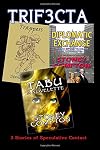
A juicy and satisfying collection containing three stories about contacts with otherness. In the first one, an old time fur trapper encounters something that wants the same natural resource he's after. The second story, Diplomatic Exchange is a fun comedic romp involving accidental time travel, in which we meet three figures from American history. This story I thought would make quite a fun [stage] play, and while reading it I couldn't help but think about how some of the scenes could play show more out on a stage. The third story is a thoughtful "what-if" situation involving re-contact with a lost human colony among the stars. After finishing this one, I felt it was a little too compressed and could have been longer and been just as satisfying... I definitely wanted to read more about the Tregellion Alliance, and was hoping the author has more stories in that universe.
The whole book is not very long, and it would be a nice one to take along to read while traveling. show less
The whole book is not very long, and it would be a nice one to take along to read while traveling. show less
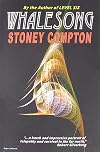
This is a really exciting book, full of non-stop action from start to finish. Sometimes I found myself holding my breath and plunging forward page after page, as fast as my eyes could go. The story begins in Alaska, a couple decades after a devastating apocalypse. The protagonist at first is sort of an outcast with mental powers, and at the beginning it's not clear whether he'll be a hero or an anti-hero. Soon enough, the plot goes in a completely unexpected direction. The author's handling show more of the non-human intelligence and cetacean world view are quite good, I thought. A nice book for anyone who has ever loved big, rollicking sea adventure, psychic powers, and "alien intelligence" sci-fi. show less

In this "alternative history" novel, the premise is that WWII was won by the Germans who developed an A-bomb first, then used it to wipe out Washington DC. The American surrender left the continent pretty much controlled by Germany. But parts of the northwest, specifically the area known as Alaska Prefecture, are controlled by the Japanese Empire.
The year is 1967. As the novel opens, Levi Fischer, an American and one of the few people of Jewish descent left, is tapped as a supervisor for show more railway workers. Around the area of Fairbanks in central Alaska, the Japanese army is building a rocket meant to get them to the moon, following Germany's recent successful landings. That's where things begin.
Mr Compton knows his stuff about Alaska, and in addition to the rugged, forceful characters one would expect to find in a frontier area, he brings the land to life -- for example with vivid descriptions of the ice-melt and flooding along the Yukon River as spring begins.
We see the whole story from a number of different perspectives, too, as the author doesn't concentrate just on one viewpoint with the "good guys". We get insight into both the Japanese and German commands as well as individuals, so we can watch events unfold on a vaster stage.
There are a lot of characters in the book, and a variety of threads are started right off the bat. As things gradually come together, we learn more secrets about what's really going on, both with the Japanese and the locals. By the time I got about 2/3 of the way through the book, it became pretty much impossible to put down. I spent a lovely Sunday afternoon into early evening, hardly pausing until I'd finished the last page. show less
The year is 1967. As the novel opens, Levi Fischer, an American and one of the few people of Jewish descent left, is tapped as a supervisor for show more railway workers. Around the area of Fairbanks in central Alaska, the Japanese army is building a rocket meant to get them to the moon, following Germany's recent successful landings. That's where things begin.
Mr Compton knows his stuff about Alaska, and in addition to the rugged, forceful characters one would expect to find in a frontier area, he brings the land to life -- for example with vivid descriptions of the ice-melt and flooding along the Yukon River as spring begins.
We see the whole story from a number of different perspectives, too, as the author doesn't concentrate just on one viewpoint with the "good guys". We get insight into both the Japanese and German commands as well as individuals, so we can watch events unfold on a vaster stage.
There are a lot of characters in the book, and a variety of threads are started right off the bat. As things gradually come together, we learn more secrets about what's really going on, both with the Japanese and the locals. By the time I got about 2/3 of the way through the book, it became pretty much impossible to put down. I spent a lovely Sunday afternoon into early evening, hardly pausing until I'd finished the last page. show less
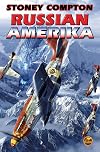
This was a very interesting and unique alternative history read. I enjoyed the Native American twist and the fragmented countries of North America with their competing interests and political intrigue. I thought the author's depiction of the geographic and political make-up of a fragmented North America was very clever. However I felt that several key issues of the book were very hard to reconcile.
While the Dena revolution was believable on many different levels, I thought 9 months for a show more revolution was not very realistic. Most revolutions historically take years to decades.
I also thought that the way both personal relationships and allegiances were established was rather naive and quick. Former combatants became allies and compatriots almost immediately following their defeat as well as friends and even spouse with little to no time to establish trust.
Nonetheless I have put aside my criticism and I enjoyed the book and intend to read the sequel. show less
While the Dena revolution was believable on many different levels, I thought 9 months for a show more revolution was not very realistic. Most revolutions historically take years to decades.
I also thought that the way both personal relationships and allegiances were established was rather naive and quick. Former combatants became allies and compatriots almost immediately following their defeat as well as friends and even spouse with little to no time to establish trust.
Nonetheless I have put aside my criticism and I enjoyed the book and intend to read the sequel. show less
You May Also Like
Associated Authors
Statistics
- Works
- 9
- Also by
- 5
- Members
- 150
- Popularity
- #138,699
- Rating
- 3.9
- Reviews
- 8
- ISBNs
- 12
