
Taisen Deshimaru (1914–1982)
Author of The Zen Way to Martial Arts: A Japanese Master Reveals the Secrets of the Samurai (Compass)
About the Author
Works by Taisen Deshimaru
The Zen Way to Martial Arts: A Japanese Master Reveals the Secrets of the Samurai (Compass) (1983) 264 copies, 5 reviews
La pratique du zen : za-zen suivi des textes sacrés du zen Hokyo Zan Mai et San Do Kai et de Teisho, enseignement donnà (1999) 4 copies, 1 review
Zen en de oosterse martiale kunsten een Japanse meester onthult de geheimen van de samoerai (1987) 3 copies
El tesoro del zen: Los textos fundamentales del maestro Dogén (El Viaje Interior) (Spanish Edition) (2011) 3 copies
Enseignement oral de maître Taisen Deshimaru volume 3 LeLivre du Kesa (Shobogenzo, tome 2) (2000) 1 copy
Za-Zen la practica del Zen 1 copy
lo zen passo per passo 1 copy
Vrai Zen 1 copy
Sagesse des arts martiaux : Coffret 3 volulmes, Traité des cinq roues ; Zen & arts martiaux ; Contes et récits des arts martiaux (2012) 1 copy, 1 review
a tigela e o bastão 1 copy
Za-zen: la práctica del zen 1 copy
Za-Zen la práctica del zen 1 copy
ZEN och kampkonsterna 1 copy
Tagged
Common Knowledge
- Canonical name
- Deshimaru, Taisen
- Birthdate
- 1914-11-29
- Date of death
- 1982-04-30
- Gender
- male
- Occupations
- businessman
Zen master - Organizations
- Association Zen Internationale (founder)
Soto school of Zen Buddhism - Relationships
- Sawaki, Kodo (zen teacher)
- Nationality
- Japan (birth)
France (immigrated) - Birthplace
- Kyūshū, Japan
- Places of residence
- Paris, France
- Associated Place (for map)
- Kyūshū, Japan
Members
Reviews

Interest in Taisen Deshimaru's unorthodox (he would have said unpolluted) practice of Soto Zen has been swelling, and in the space of a few years his Questions to a Zen Master and The Zen Way to the Martial Arts have already become classics of a sort. This set of discourses culled from his later lectures, delivered shortly before his own death, are the last and perhaps most radical teachings of the late Zen master. They emphasize the circularity of life and death and make up perhaps his most show more direct and philosophical work yet published. Some of the sections include 'The Eight Ways to Wake Up a Geat Person,' 'True Freedom,' and 'Unfathomable Emptiness, Nothing sacred.' Deshimaru again proves himself unequaled as a modern interperter of the elemental, original zen.
Trained in the traditionally rigorous Soto Zen school, yet himself a bit of a rebel, Taisen Deshimaru Roshi took it as his life's mission to transmit the authentic teachings of Zen Buddhism to the West. At the time of his death in Paris in 1982, he had published some fifteen books in various European languages and gathered a following of many thousands from all over the world, including some of the most sophisticated minds of the West.
Contents
Translator's Preface
Compilers' Preface
Zen is Zazan
Fukanzazengi: The what and how of zazen according to Master Dogen
The seven principles of dogen's zen
Shin jin datsu rakku: Body and mind dropped away
Gyoji: Practice every day
The spirit of Zen
Komyozo Zanmai: the samadhi of the storehouse of great wisdom
Hokyo Zanmai: the mirror samadhi
Penetrate our true nature
Mushotoku: No goal or desire for gain
The middle way
the righter the light, the deeper the shadow: The interdependence of phenomena
Body-mind is one
Karma and self
Illusion=satori
The eight ways to wake up a great person
hishiryo: Beyond thinking and not-thinking
Bodai Shin: the resolve to wake up
Love, suffering, faith, compassion
True freedom
Master-disciple
Here and now
Mujo: impermanence
Life and death
Essence and phenomena intermingle
Kakunen Musho: Unfathomable emptiness, nothing sacred
Ku: Vacuity
Ku soku ze shiki, shiki soku ze ku: Vacuity becomes phenmena, phenomena become vacuity show less
Trained in the traditionally rigorous Soto Zen school, yet himself a bit of a rebel, Taisen Deshimaru Roshi took it as his life's mission to transmit the authentic teachings of Zen Buddhism to the West. At the time of his death in Paris in 1982, he had published some fifteen books in various European languages and gathered a following of many thousands from all over the world, including some of the most sophisticated minds of the West.
Contents
Translator's Preface
Compilers' Preface
Zen is Zazan
Fukanzazengi: The what and how of zazen according to Master Dogen
The seven principles of dogen's zen
Shin jin datsu rakku: Body and mind dropped away
Gyoji: Practice every day
The spirit of Zen
Komyozo Zanmai: the samadhi of the storehouse of great wisdom
Hokyo Zanmai: the mirror samadhi
Penetrate our true nature
Mushotoku: No goal or desire for gain
The middle way
the righter the light, the deeper the shadow: The interdependence of phenomena
Body-mind is one
Karma and self
Illusion=satori
The eight ways to wake up a great person
hishiryo: Beyond thinking and not-thinking
Bodai Shin: the resolve to wake up
Love, suffering, faith, compassion
True freedom
Master-disciple
Here and now
Mujo: impermanence
Life and death
Essence and phenomena intermingle
Kakunen Musho: Unfathomable emptiness, nothing sacred
Ku: Vacuity
Ku soku ze shiki, shiki soku ze ku: Vacuity becomes phenmena, phenomena become vacuity show less
Questions to a Zen Master: Practical and Spiritual Answers from the Great Japanese Master by Taisen Deshimaru
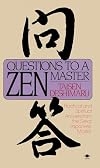
"True religion," the great Japanese teacher Taisen Deshimaru wrote, "is not esoteric or mystical, it is not an exercise in well-being or gymnastics. True religion is the highest Way, the absolute Way: zazen."
Here, Deshimaru, the author of True Zen, offers practical suggestions for developing unitary mind-body consciousness through the principles of zazen (translated literally as "seated meditation"). Advice is given on posture, breathing, and concentration, and concepts such as karma and show more satori are clearly explained. show less
Here, Deshimaru, the author of True Zen, offers practical suggestions for developing unitary mind-body consciousness through the principles of zazen (translated literally as "seated meditation"). Advice is given on posture, breathing, and concentration, and concepts such as karma and show more satori are clearly explained. show less
Se è vero, da una parte, che alcune sono deliziose, è anche vero che la maggior parte mi sono opache al limite del fastidioso.
Per carità, colpa mia che non conosco lo zen :)
Per carità, colpa mia che non conosco lo zen :)

You May Also Like


Associated Authors
Statistics
- Works
- 70
- Members
- 951
- Popularity
- #27,066
- Rating
- 3.6
- Reviews
- 34
- ISBNs
- 133
- Languages
- 10
- Favorited
- 2