
Michael L. Brown (1)
Author of Answering Jewish Objections to Jesus: General and Historical Objections, Vol. 1
For other authors named Michael L. Brown, see the disambiguation page.
About the Author
Image credit: Used by permission of Baker Publishing Group, copyright © 2008. All rights to this material are reserved. Materials are not to be distributed to other web locations for retrieval, published(see © info.)
Series
Works by Michael L. Brown
Answering Jewish Objections to Jesus: General and Historical Objections, Vol. 1 (2000) — Author — 243 copies, 2 reviews
Answering Jewish Objections to Jesus: Theological Objections Vol. 2 (2000) — Author — 158 copies, 2 reviews
Answering Jewish Objections to Jesus: Messianic Prophecy Objections, Vol. 3 (2003) — Author — 135 copies, 1 review
Can You Be Gay and Christian?: Responding With Love and Truth to Questions About Homosexuality (2014) 95 copies
Answering Jewish Objections to Jesus: New Testament Objections (2006) — Composer — 87 copies, 2 reviews
Not Afraid of the Antichrist: Why We Don't Believe in a Pre-Tribulation Rapture (2019) 70 copies, 3 reviews
A Queer Thing Happened to America: And What a Long, Strange Trip It's Been (2011) 69 copies, 1 review
What Do Jewish People Think about Jesus?: And Other Questions Christians Ask about Jewish Beliefs, Practices, and History (2007) 49 copies, 1 review
Revolution in the Church: Challenging the Religious System with a Call for Radical Change (2002) 48 copies
Jezebel's War With America: The Plot to Destroy Our Country and What We Can Do to Turn the Tide (2019) 43 copies, 1 review
Breaking the Stronghold of Food: How We Conquered Food Addictions and Discovered a New Way of Living (2017) 34 copies
Outlasting the Gay Revolution: Where Homosexual Activism Is Really Going and How to Turn the Tide (2015) 23 copies, 2 reviews
Playing With Holy Fire: A Wake-Up Call to the Pentecostal-Charismatic Church (2018) 20 copies, 1 review
The Silencing of the Lambs: The Ominous Rise of Cancel Culture and How We Can Overcome It (2022) 13 copies
Donald Trump is Not My Savior: An Evangelical Leader Speaks His Mind About the Man He Supports as President (2018) 9 copies
The Political Seduction of the Church: How Millions Of American Christians Have Confused Politics with the Gospel (2022) 6 copies
Resurrection: Investigating a Rabbi From Brooklyn, a Preacher From Galilee, and an Event That Changed the World (2020) 4 copies
Christ's Message to the Last Generation, Vol. 3 — Author — 1 copy
Holy Fire 1 copy
Hearts of Compassion, Backbones of Steel: How to Discuss Controversial Topics with Love and Kindness (2024) 1 copy
Sent to the Heart 1 copy
Nemít strach z Antikrista : proč nevěříme ve vytržení církve před velkým soužením (2021) 1 copy, 1 review
The Messiah in the Prophets 1 copy
Taking Up the Southern Cross 1 copy
Associated Works
Israel, the Church, and the Middle East: A biblical response to the current conflict (2018) — Contributor — 52 copies
Tagged
Common Knowledge
There is no Common Knowledge data for this author yet. You can help.
Members
Reviews
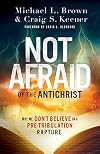
Embora um pouco repetitivo em algumas partes (dado que são dois autores, que se intercalam), apresenta uma argumentação detalhada de por que a visão dispensacionalista (infelizmente, amplamente aceita e ensinada como A Verdade no meio evangélico brasileiro e americano - vide Left Behind) em relação à volta de Cristo, 'arrebatamento secreto', tribulação, fim dos tempos e etc não corresponde àquilo que as escrituras ensinam (não no NT e menos ainda em relação ao plano global de show more salvação que perpassa toda a Bíblia). Absolutamente necessário que esta 'teologia' desenvolvida em 1830, pelos irmãos de Plymouth (Inglaterra) - que contorce e distorce o que realmente foi dito nas escrituras e ensinado por 18 séculos de cristianismo -, seja desmistificada em favor daquilo que a Palavra realmente ensina. show less
Playing With Holy Fire: A Wake-Up Call to the Pentecostal-Charismatic Church by Michael L. Brown PhD
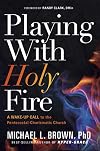
Criticisms of the flamboyant excesses of the Pentecostal/Charismatic movement are a dime a dozen. Rare indeed, though, is the criticism that comes from within the movement itself.
Michael Brown is no backseat driver, either, lobbing complaints from a safe distance. He's a lifelong leader in the movement who prays in tongues and has slain others in the Spirit. He's given up none of his belief that the gifts of the Spirit still operate — he believes Scripture opposes cessationism, and for him show more the primary witness of the Bible is secondarily confirmed by his own experiences of miraculous power.
This to me is what makes Brown's book so interesting. He, as a Charismatic scholar trained in the languages of the Bible and active both in ministry and in apologetics, pulls no punches in his disgust at the worst hallmarks of his own movement: apostles who live in kingly luxury at the expense of the poor, rampant sexual exploitation in the name of God, freewheeling doctrine unmoored from Scripture, and a trademark gullibility that makes Charismatics regular targets of the most obnoxious and most obvious con artists.
It's easy enough to sit outside and say, "This is all baked in. Once you open yourself to the possibility of prophetic words and manifestations of power, there are no boundaries and anything goes." Having read Brown's book, I'm not sure that's a fair criticism. Whether you're a cessationist or not, he's certainly an example of someone who distinguishes between "small a" apostles gifted to lead the church today, and the twelve "capital A" apostles whose teachings in the Bible are the rule to which all modern gifts and prophecies must be held accountable. It is clearly possible to reject cessationism and hold to the gifts without ripping up the Bible and descending into chaos.
I think this is what makes Brown's book important and compelling for my Pentecostal and Charismatic brethren. I have little to offer beyond the simplistic and (frankly) dismissive arguments of the outsider. This book by contrast is a clarion call from one Charistmatic to another to recognize that even as they have been the greatest globally evangelistic force in the past century, they’ve also often been phenomenally guilty of destroying their Lord's reputation, through hideous deformities such as the Prosperity Gospel and the abusive rule of the sort of super-apostles that plagued the church of Corinth.
Michael Brown gave me, a non-Charistmatic, a lot to think about in terms of my own commitment to holiness, outreach, humilty, and submission to the Spirit's promptings. I hope his co-laborers in Christ are equally ready to receive his gentle but uncompromising rebuke. show less
Michael Brown is no backseat driver, either, lobbing complaints from a safe distance. He's a lifelong leader in the movement who prays in tongues and has slain others in the Spirit. He's given up none of his belief that the gifts of the Spirit still operate — he believes Scripture opposes cessationism, and for him show more the primary witness of the Bible is secondarily confirmed by his own experiences of miraculous power.
This to me is what makes Brown's book so interesting. He, as a Charismatic scholar trained in the languages of the Bible and active both in ministry and in apologetics, pulls no punches in his disgust at the worst hallmarks of his own movement: apostles who live in kingly luxury at the expense of the poor, rampant sexual exploitation in the name of God, freewheeling doctrine unmoored from Scripture, and a trademark gullibility that makes Charismatics regular targets of the most obnoxious and most obvious con artists.
It's easy enough to sit outside and say, "This is all baked in. Once you open yourself to the possibility of prophetic words and manifestations of power, there are no boundaries and anything goes." Having read Brown's book, I'm not sure that's a fair criticism. Whether you're a cessationist or not, he's certainly an example of someone who distinguishes between "small a" apostles gifted to lead the church today, and the twelve "capital A" apostles whose teachings in the Bible are the rule to which all modern gifts and prophecies must be held accountable. It is clearly possible to reject cessationism and hold to the gifts without ripping up the Bible and descending into chaos.
I think this is what makes Brown's book important and compelling for my Pentecostal and Charismatic brethren. I have little to offer beyond the simplistic and (frankly) dismissive arguments of the outsider. This book by contrast is a clarion call from one Charistmatic to another to recognize that even as they have been the greatest globally evangelistic force in the past century, they’ve also often been phenomenally guilty of destroying their Lord's reputation, through hideous deformities such as the Prosperity Gospel and the abusive rule of the sort of super-apostles that plagued the church of Corinth.
Michael Brown gave me, a non-Charistmatic, a lot to think about in terms of my own commitment to holiness, outreach, humilty, and submission to the Spirit's promptings. I hope his co-laborers in Christ are equally ready to receive his gentle but uncompromising rebuke. show less
I purposed to read this book because I read Dr. Brown referring (with this title or in an article, I don't remember) to something called hyper-grace. Hyper-grace? It pretty clearly wasn't taught by my Southern Baptist church or in any of the books I read, or extolled by any Christian friends I interact with, because (similarly to some other reviewers) I had never heard of it or heard of the major preachers or writers who apparently teach it. Being inquisitive, I immediately wanted to know show more what hyper-grace is, preferably from perspectives both for and against. So I first read The Naked Gospel by Andrew Farley, whose book I saw suggested at Amazon among the pro-hyper-grace books; then this book.
Hyper-grace, as described by Dr. Brown (with heavy quotation from hyper-grace teachers themselves) and interpreted by me, is fairly easy to understand and avoid, because much of it sounds so absurd as to insult the intelligence of Christians who have received salvation and spent much time reading the Bible. Hyper-grace teaches that under grace, you don't need to (and shouldn't, even) pay attention to the Ten Commandments or confess sins to God after being saved (because all future sins are forgiven, per hyper-). Although, in comparison the hyper-grace teachers don't seem to emphasize ignoring the Ten Commandments, but they particularly insist that confessing sins is wrong--a sin, even.
In short, hyper-grace is simply the opposite extreme from legalism. Had I been in the position of Dr. Brown or some other Bible teacher, I would have regretted needing to dignify hyper-grace with a response. But substantial numbers of Christians have received this teaching and believe it. When I read this, in exasperation I stopped reading the book very closely, ignoring most of the pro-hyper-grave quotations (or even Dr. Brown's deflations of them).
More interesting than the obnoxious tenets of the doctrine itself are the comparisons with legalism and also ancient Christian heresies. Dr. Brown gives a quotation from some hyper-grace teacher fervently opposing confession and offering an alternative prayer that pointedly refuses to confess; Dr. Brown then opines that the prayer sounded "extremely legalistic." (Also patronizing to God, I thought.) I interpreted Dr. Brown's remark as a hint that despite purporting to counter legalism, militant hyper-grace (not necessarily all hyper-grace teaching) may itself be a new, clever repackaging of legalism. Brown outright states that the strongest hyper-grace teaching (again, not necessarily the more subtle forms) approach Gnosticism in their willingness to ignore sin. Also, a few hyper-grace teachers teach that the Old Testament is irrelevant and believers in Christ can ignore it.
Brown devotes a chapter to observing that this approximates the Christian heresy of Marcionism, which rejects the OT and even much of the NT. (I wanted to note that Marcionism otherwise is dead and buried, but it's actually not. I didn't know what it was until Brown explained it; but then I immediately recognized that hyper-grace aside, Marcion's idea that the OT God is not the NT God is common enough among contemporary Bible critics.) Anyway, hyper-grace teachers' rationalization for ignoring much of the NT is that much of Jesus' teachings, and Jesus Himself, were "under the old covenant." Excuse me? ...This represents why I had stopped taking the idea of hyper-grace seriously once I understood it. Jesus under a covenant? He made the covenant, you clowns. It's somewhat like the Pharisees demanding that Jesus observe Sabbath regulations.
And my copy of The Naked Gospel, which I bought because local libraries didn't carry it, is now sitting in a receptacle waiting to be recycled. show less
Hyper-grace, as described by Dr. Brown (with heavy quotation from hyper-grace teachers themselves) and interpreted by me, is fairly easy to understand and avoid, because much of it sounds so absurd as to insult the intelligence of Christians who have received salvation and spent much time reading the Bible. Hyper-grace teaches that under grace, you don't need to (and shouldn't, even) pay attention to the Ten Commandments or confess sins to God after being saved (because all future sins are forgiven, per hyper-). Although, in comparison the hyper-grace teachers don't seem to emphasize ignoring the Ten Commandments, but they particularly insist that confessing sins is wrong--a sin, even.
In short, hyper-grace is simply the opposite extreme from legalism. Had I been in the position of Dr. Brown or some other Bible teacher, I would have regretted needing to dignify hyper-grace with a response. But substantial numbers of Christians have received this teaching and believe it. When I read this, in exasperation I stopped reading the book very closely, ignoring most of the pro-hyper-grave quotations (or even Dr. Brown's deflations of them).
More interesting than the obnoxious tenets of the doctrine itself are the comparisons with legalism and also ancient Christian heresies. Dr. Brown gives a quotation from some hyper-grace teacher fervently opposing confession and offering an alternative prayer that pointedly refuses to confess; Dr. Brown then opines that the prayer sounded "extremely legalistic." (Also patronizing to God, I thought.) I interpreted Dr. Brown's remark as a hint that despite purporting to counter legalism, militant hyper-grace (not necessarily all hyper-grace teaching) may itself be a new, clever repackaging of legalism. Brown outright states that the strongest hyper-grace teaching (again, not necessarily the more subtle forms) approach Gnosticism in their willingness to ignore sin. Also, a few hyper-grace teachers teach that the Old Testament is irrelevant and believers in Christ can ignore it.
Brown devotes a chapter to observing that this approximates the Christian heresy of Marcionism, which rejects the OT and even much of the NT. (I wanted to note that Marcionism otherwise is dead and buried, but it's actually not. I didn't know what it was until Brown explained it; but then I immediately recognized that hyper-grace aside, Marcion's idea that the OT God is not the NT God is common enough among contemporary Bible critics.) Anyway, hyper-grace teachers' rationalization for ignoring much of the NT is that much of Jesus' teachings, and Jesus Himself, were "under the old covenant." Excuse me? ...This represents why I had stopped taking the idea of hyper-grace seriously once I understood it. Jesus under a covenant? He made the covenant, you clowns. It's somewhat like the Pharisees demanding that Jesus observe Sabbath regulations.
And my copy of The Naked Gospel, which I bought because local libraries didn't carry it, is now sitting in a receptacle waiting to be recycled. show less
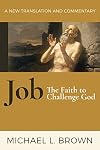
I must admit, there were some portions that were dry for me but, overall, it was an interesting read and helpful in clarifying some smaller issues. However, with respect to the overriding issue, having finally read the Epilogue, it was all worth it. Dr. Brown clearly gives the simple purpose for the book of "Job" and makes it so simple it should have been obvious were it not for reading it as though it were a justification for God's existence or for faith in God in the midst of evil, which show more it is not; more clearly to me, I see that the book of Job is not a theodicy. I would suggest reading Dr. Brown's "Reflections" essay, "The Faith to Challenge God" right after having read the Epilogue. show less
You May Also Like
Associated Authors
Statistics
- Works
- 66
- Also by
- 1
- Members
- 2,501
- Popularity
- #10,267
- Rating
- 4.2
- Reviews
- 29
- ISBNs
- 116
- Languages
- 7