
Richard Fifield (1)
Author of The Flood Girls
For other authors named Richard Fifield, see the disambiguation page.
Works by Richard Fifield
Tagged
Common Knowledge
- Gender
- male
- Education
- University of Montana
Sarah Lawrence College (MA) - Occupations
- caregiver
teacher
social worker - Organizations
- University of Montana
Zootown Arts Community Center
Western Montana Gay and Lesbian Community Center - Birthplace
- Troy, Montana, USA
- Places of residence
- Missoula, Montana, USA
- Associated Place (for map)
- Montana, USA
Members
Reviews

'The Flood Girls' wasn't a novel I could trust enough to let it loose in my imagination. All the way through, it felt like propaganda rather than an attempt to tell an honest story. The characters and situations seemed to have been developed to manipulate my emotions and sell a message.
With a lighter touch, I might have relaxed and accepted it as a sort of small-town Montana pantomime with a cast of larger than life characters who left me in no doubt about who to cheer for and who to hiss show more at.
Except, to me, this read like a more serious book than that. It has its roots in the pain caused by alcoholism, child abuse, poverty, homophobic hate and Christian Fundamentalism.
Part of the message that it was selling was the redemptive power of making amends. Another part was that, while the women in the Flood Girls softball team tend to be rowdy drunks with a habit of casual violence, they're all softies on the inside, especially once they start to win. These are fine messages in their way but I wasn't convinced by the main characters. I never got inside their heads and, seen from the outside, their road to redemption seemed a little too smooth.
All of that would normally have just gotten me to shrug, be grateful that there are some good scenes in the book and one or two surprises along the way, but the ending wasn't something I could just shrug at.
There was a brutal killing. I ought to have been sobbing. The characters ought to have been looking for blood or lost to despair. Instead, I got a symbolic protest and then everyone moved along a healing path. It wasn't just that I couldn't buy that sequence of events, it was that I felt the killing was a cheap trick to tug at my emotions.
It could be that if I was from Montana I'd feel differently about the book. Perhaps I'd recognise these people and their problems and see them as normal. Perhaps, if I wasn't an atheist, I'd be more open to the effectiveness of placing my trust in a higher power and working the Twelve Steps to win back my life. As it was, I felt like I was being covertly pitched something I didn't want to buy. show less
With a lighter touch, I might have relaxed and accepted it as a sort of small-town Montana pantomime with a cast of larger than life characters who left me in no doubt about who to cheer for and who to hiss show more at.
Except, to me, this read like a more serious book than that. It has its roots in the pain caused by alcoholism, child abuse, poverty, homophobic hate and Christian Fundamentalism.
Part of the message that it was selling was the redemptive power of making amends. Another part was that, while the women in the Flood Girls softball team tend to be rowdy drunks with a habit of casual violence, they're all softies on the inside, especially once they start to win. These are fine messages in their way but I wasn't convinced by the main characters. I never got inside their heads and, seen from the outside, their road to redemption seemed a little too smooth.
All of that would normally have just gotten me to shrug, be grateful that there are some good scenes in the book and one or two surprises along the way, but the ending wasn't something I could just shrug at.
There was a brutal killing. I ought to have been sobbing. The characters ought to have been looking for blood or lost to despair. Instead, I got a symbolic protest and then everyone moved along a healing path. It wasn't just that I couldn't buy that sequence of events, it was that I felt the killing was a cheap trick to tug at my emotions.
It could be that if I was from Montana I'd feel differently about the book. Perhaps I'd recognise these people and their problems and see them as normal. Perhaps, if I wasn't an atheist, I'd be more open to the effectiveness of placing my trust in a higher power and working the Twelve Steps to win back my life. As it was, I felt like I was being covertly pitched something I didn't want to buy. show less
Yay! I have discovered another trailer-trash author to love along with Daniel Woodrell and Bonnie Jo Campbell. That statement is not politically correct, but Fifield's characters do live in trailers for the most part and our protagonist is currently back in her hometown of Quinn, Montana to fulfill her AA 12-step program. Most of the characters in this book are of the down-and-out sort, although they have the grit and gumption it takes to survive small-town Montana, with its punitive winters show more and smoke-filled summers.
The characters also have long memories. When Rachel returns to Quinn, she is shunned by the residents led by her own mother. Seems that she was the bad girl who broke up marriages and…worse. Her depraved past is slowly revealed but I was much more interested in her present. She moved into her deceased father's run-down trailer which happened to be next door to 12-year-old Jake, another outcast of the community, and one of my favorite book characters ever. The friendship that develops rings true and is guaranteed to warm the toughest reader's heart. It takes time to break through the resistance, but Rachel slowly makes some friends and begins to work her way back into the fold showing that one can go home again. It also takes time to get to know and appreciate the many different characters that make up the small town. I loved that Rachel's mother owned a bar called The Dirty Shame. That name speaks volumes.
This book is touted as being "hilarious". While there is some very welcome dark humor, it is bittersweet and lurks behind the harsh reality of alcoholism, drug addiction, and poverty. There is coarse language and some graphic sex scenes. The sanctimonious "Christian" sect is almost as distasteful. It's the kind of book that is hard to describe…and hard to forget. show less
The characters also have long memories. When Rachel returns to Quinn, she is shunned by the residents led by her own mother. Seems that she was the bad girl who broke up marriages and…worse. Her depraved past is slowly revealed but I was much more interested in her present. She moved into her deceased father's run-down trailer which happened to be next door to 12-year-old Jake, another outcast of the community, and one of my favorite book characters ever. The friendship that develops rings true and is guaranteed to warm the toughest reader's heart. It takes time to break through the resistance, but Rachel slowly makes some friends and begins to work her way back into the fold showing that one can go home again. It also takes time to get to know and appreciate the many different characters that make up the small town. I loved that Rachel's mother owned a bar called The Dirty Shame. That name speaks volumes.
This book is touted as being "hilarious". While there is some very welcome dark humor, it is bittersweet and lurks behind the harsh reality of alcoholism, drug addiction, and poverty. There is coarse language and some graphic sex scenes. The sanctimonious "Christian" sect is almost as distasteful. It's the kind of book that is hard to describe…and hard to forget. show less
(Reprinted from the Chicago Center for Literature and Photography [cclapcenter.com]. I am the original author of this essay, as well as the owner of CCLaP; it is not being reprinted illegally.)
Every so often I'll review a book here at CCLaP that serves as a stark reminder about the biggest problem these days with major-press publishing; and that's that it's now the marketing committees who largely determine what books get published, not the editors, which means that most books only get show more signed if there's a clear and simple way to describe it to the general public, and that when the occasional complex-to-explain novel slips through the cracks, those marketing people typically do a horrendous job of trying to cram that square peg into a round hole against its will.
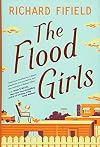
Take Richard Fifield's The Flood Girls for a great example, which continues the streak I've had for several years of reading only excellent books by writers in the unlikely literary hotbed of Montana. Published by Simon & Schuster, it comes with this cutesy-wutesy cover clearly designed to invoke quirky indie movies like Little Miss Sunshine; and if you don't get the point with that, the dust-jacket copy makes sure to tell us that the characters in this book are "as lovable as they are derisive, and as unforgettable as they are courageous," compares itself to the genteel Hollywood movie A League of Their Own, and ensures us that Fifield's "sardonic, hilarious and heartwarming" story will "leave you laughing through tears," clearly trying to present us with a quirky feel-good tale that will instantly appeal to fans of projects like...well, Little Miss Sunshine, to hit it right on the nose.
The problem, though, is that this book is not lovable and quirky at all; I mean, it has weird little details, sure, as any slowly-paced, character-heavy story set in a small town might, but these weird little details are mostly very dark and destructive in nature, much like if you asked Sam Shepard to write a book full of Lake Wobegon tales, or perhaps if Northern Exposure and Winesburg, Ohio got married and had a horrible little nightmare of a baby, who screeches all night long and uses its razor-sharp little fingernails to constantly gouge at your skin. I mean, let's be clear, that's what makes the novel so great; precisely because it's not some pandering portrait of lovably quirky small-town life, but rather a much more complicated look at rural Montana existence and all the strange, sometimes intolerable ugliness that happens there, even as life for our root-worthy protagonists occasionally have these beautiful little moments where everything suddenly goes right for them. Or at least for a few seconds, before the meth addicts and the drunken lesbian miners and the date-raping volunteer firemen start making existence a daily chore once again.
That's how a book like this should've been marketed, as a challenging and presumption-defying tale of the complex ups and downs in the lives of some very unique, very flawed people in a forgotten little town in Montana; and if this had come out a small press, that's exactly how it would've been marketed, instead of comparing it like Simon & Schuster did to some genteel mainstream movie like A League of Their Own that this novel has absolutely, positively not one single thing in common with, other than that the main characters in this novel just happen to play on an amateur softball team in their spare time. That's a flat-out insult to us as intelligent audience members, and is indicative of why major presses continue to lose more and more money with each passing year, why less and less great authors are willing to work with them, and why all the most exciting developments in literature are all happening at the small-press level these days. I don't want my main message to get lost -- this is definitely a great novel, and you should definitely pick it up -- it's just a real shame that this book's natural audience has to wade through such an immense pile of Lifetime Channel cheese and treacle to get to it.
Out of 10: 9.0 show less
Every so often I'll review a book here at CCLaP that serves as a stark reminder about the biggest problem these days with major-press publishing; and that's that it's now the marketing committees who largely determine what books get published, not the editors, which means that most books only get show more signed if there's a clear and simple way to describe it to the general public, and that when the occasional complex-to-explain novel slips through the cracks, those marketing people typically do a horrendous job of trying to cram that square peg into a round hole against its will.
Take Richard Fifield's The Flood Girls for a great example, which continues the streak I've had for several years of reading only excellent books by writers in the unlikely literary hotbed of Montana. Published by Simon & Schuster, it comes with this cutesy-wutesy cover clearly designed to invoke quirky indie movies like Little Miss Sunshine; and if you don't get the point with that, the dust-jacket copy makes sure to tell us that the characters in this book are "as lovable as they are derisive, and as unforgettable as they are courageous," compares itself to the genteel Hollywood movie A League of Their Own, and ensures us that Fifield's "sardonic, hilarious and heartwarming" story will "leave you laughing through tears," clearly trying to present us with a quirky feel-good tale that will instantly appeal to fans of projects like...well, Little Miss Sunshine, to hit it right on the nose.
The problem, though, is that this book is not lovable and quirky at all; I mean, it has weird little details, sure, as any slowly-paced, character-heavy story set in a small town might, but these weird little details are mostly very dark and destructive in nature, much like if you asked Sam Shepard to write a book full of Lake Wobegon tales, or perhaps if Northern Exposure and Winesburg, Ohio got married and had a horrible little nightmare of a baby, who screeches all night long and uses its razor-sharp little fingernails to constantly gouge at your skin. I mean, let's be clear, that's what makes the novel so great; precisely because it's not some pandering portrait of lovably quirky small-town life, but rather a much more complicated look at rural Montana existence and all the strange, sometimes intolerable ugliness that happens there, even as life for our root-worthy protagonists occasionally have these beautiful little moments where everything suddenly goes right for them. Or at least for a few seconds, before the meth addicts and the drunken lesbian miners and the date-raping volunteer firemen start making existence a daily chore once again.
That's how a book like this should've been marketed, as a challenging and presumption-defying tale of the complex ups and downs in the lives of some very unique, very flawed people in a forgotten little town in Montana; and if this had come out a small press, that's exactly how it would've been marketed, instead of comparing it like Simon & Schuster did to some genteel mainstream movie like A League of Their Own that this novel has absolutely, positively not one single thing in common with, other than that the main characters in this novel just happen to play on an amateur softball team in their spare time. That's a flat-out insult to us as intelligent audience members, and is indicative of why major presses continue to lose more and more money with each passing year, why less and less great authors are willing to work with them, and why all the most exciting developments in literature are all happening at the small-press level these days. I don't want my main message to get lost -- this is definitely a great novel, and you should definitely pick it up -- it's just a real shame that this book's natural audience has to wade through such an immense pile of Lifetime Channel cheese and treacle to get to it.
Out of 10: 9.0 show less
Fans of “A League of Their Own” might delight in this earthier version, set mostly in Quinn, Montana, population 956. In addition to a foul-mouthed, hard-drinking (female) coach, Laverna Flood, of a ladies’ softball team, it features very quirky team members and a charming 12-year-old gay boy, Jake, who is the team’s official scorekeeper and fashion consultant.
The author states in a forward that the story is somewhat autobiographical, which might explain the fierce love he seems to show more have for his characters.
As the book begins, Rachel Flood, Laverna’s daughter, has returned home to Quinn to make amends, pursuant to her A.A. program. Although Rachel has been gone for nine years, most of the town still feels hostility toward her, especially all the women whose husbands or boyfriends were enticed into sexual liaisons with Rachel. No one is more angry toward Rachel than her own mother, but we don’t learn why for a large part of the book.
The story takes place over a softball season, and we get to know all the ladies on the team, as well as Jake (patterned after the author's own experiences), quite well. Most of the story is hilarious, but there are sections that will knock you flat and devastate you as well. At the end, I just thought “wow.”
Evaluation: This is a terrific and in many ways astounding story. Highly recommended! show less
The author states in a forward that the story is somewhat autobiographical, which might explain the fierce love he seems to show more have for his characters.
As the book begins, Rachel Flood, Laverna’s daughter, has returned home to Quinn to make amends, pursuant to her A.A. program. Although Rachel has been gone for nine years, most of the town still feels hostility toward her, especially all the women whose husbands or boyfriends were enticed into sexual liaisons with Rachel. No one is more angry toward Rachel than her own mother, but we don’t learn why for a large part of the book.
The story takes place over a softball season, and we get to know all the ladies on the team, as well as Jake (patterned after the author's own experiences), quite well. Most of the story is hilarious, but there are sections that will knock you flat and devastate you as well. At the end, I just thought “wow.”
Evaluation: This is a terrific and in many ways astounding story. Highly recommended! show less
Lists
Statistics
- Works
- 2
- Members
- 327
- Popularity
- #72,481
- Rating
- 3.8
- Reviews
- 28
- ISBNs
- 26
- Languages
- 2


