
Paul Cronin
Author of Herzog on Herzog: Conversations with Paul Cronin
About the Author
Works by Paul Cronin
Werner Herzog: A Guide for the Perplexed: Conversations with Paul Cronin (2014) — Author — 177 copies, 2 reviews
Associated Works
Tagged
Common Knowledge
- Birthdate
- 1972
- Gender
- male
- Education
- Columbia University (MPhil, PhD)
London School of Economics (MA)
University of Manchester (BA) - Occupations
- filmmaker
biographer
film historian - Nationality
- England
UK
Members
Reviews
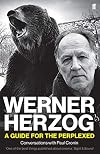
I bought this book to learn more about Werner Herzog and his movies. It went way beyond my expectations. What I learned is just how far from a stereotypical movie-maker Herzog is. It’s not about the technical side, or even in some ways about the story. What matters most is achieving direct touch with life through film — screw the trickery, the perfection of endless shots and editing, CGI, and even digital media. Meaning thrives in its raw state.
Herzog’s world is hyper-meaningful. What show more means nothing to someone else is over-filled with meaning for him. He lives and breathes dramatic extremes. Reading the book, I wondered whether this comes natural to him, or if it is something he purposely projects. It’s pretty clear that it is just who he is. It invades day to day life -- “Waiters in tuxedos intimidate me. It’s misery for me when being waited on; I’m literally close to panic."
The book is the result of interviews that actor Paul Cronin conducted with Herzog some time ago (the first publication of the content of the interviews was an earlier book, Herzog on Herzog, published in 2002). It is edited into roughly the chronological order of Herzog’s films, but his remarks do not stick closely either to the films or the chronology. He is a broad thinker, a broad reader, and we find that he’s done some things as an actor and writer that I, at least, hadn’t known. A collection of poems by Herzog is included after the interview content itself, along with a stylistically unusual essay, Thinking about Germany.
Herzog is iconoclastic. He denies being eccentric — "There’s nothing eccentric about my films; it’s everything else that’s eccentric.” But then that’s just the way everything looks if in fact you are eccentric.
We learn a good bit about Herzog’s life, his childhood, his attitudes, etc. But this is not an autobiography. It is more like a huge flow of self-expression — letting us behind the curtain to see how his mind works. Knowing the flurries of his thinking motivated me to take a new look at movies like Aguirre, Kaspar Hauser, and even the more mainstream Bad Lieutenant.
Despite the 500+ pages, I found it pretty quick reading. It’s a conversation, not an essay, so it flows pretty easily. If you’re a Herzog fan, or if you’ve seen just a few of his movies and been intrigued, it’s well worth your time. It deepened my experience of his films, giving me a kind of extra dimension of watching. I could imagine Herzog’s own thinking about what he was filming, why he was filming it, and why he put together the edits into its final form. show less
Herzog’s world is hyper-meaningful. What show more means nothing to someone else is over-filled with meaning for him. He lives and breathes dramatic extremes. Reading the book, I wondered whether this comes natural to him, or if it is something he purposely projects. It’s pretty clear that it is just who he is. It invades day to day life -- “Waiters in tuxedos intimidate me. It’s misery for me when being waited on; I’m literally close to panic."
The book is the result of interviews that actor Paul Cronin conducted with Herzog some time ago (the first publication of the content of the interviews was an earlier book, Herzog on Herzog, published in 2002). It is edited into roughly the chronological order of Herzog’s films, but his remarks do not stick closely either to the films or the chronology. He is a broad thinker, a broad reader, and we find that he’s done some things as an actor and writer that I, at least, hadn’t known. A collection of poems by Herzog is included after the interview content itself, along with a stylistically unusual essay, Thinking about Germany.
Herzog is iconoclastic. He denies being eccentric — "There’s nothing eccentric about my films; it’s everything else that’s eccentric.” But then that’s just the way everything looks if in fact you are eccentric.
We learn a good bit about Herzog’s life, his childhood, his attitudes, etc. But this is not an autobiography. It is more like a huge flow of self-expression — letting us behind the curtain to see how his mind works. Knowing the flurries of his thinking motivated me to take a new look at movies like Aguirre, Kaspar Hauser, and even the more mainstream Bad Lieutenant.
Despite the 500+ pages, I found it pretty quick reading. It’s a conversation, not an essay, so it flows pretty easily. If you’re a Herzog fan, or if you’ve seen just a few of his movies and been intrigued, it’s well worth your time. It deepened my experience of his films, giving me a kind of extra dimension of watching. I could imagine Herzog’s own thinking about what he was filming, why he was filming it, and why he put together the edits into its final form. show less
A pair with Clint Eastwood http://www.goodreads.com/review/show/303702560
How do I hate thee, bio-pic, let me count the ways.
Well.
Aside from the fact that it is a way of making up for not having a story – I wish somebody would come up with the idea of paying a tiny fraction of a percent of the budget of movies to writers. WRITERS. Come on, let’s hear it for writers…
Aside from that….
The historian in me continually wants to vomit every time I am dragged to one.
Eastwood’s falsification show more of history in Hoover is a good example. I imagine that almost all of the people who go to that movie enter the picture house knowing approximately nothing about Hoover and come out thinking that’s changed. They won’t have a clue what was true and what was made up, and I expect they don’t care either. Me, I watched it thinking very early on something was wrong: the movie has it that the terrorist bombings which kick off the movie are the work of Communists. Now, I don’t know why Eastwood made up that porkie. Presumably it was either because he personally wants the Commies to look dirtier out of his personal conviction and wish to influence how people think, or because he wanted to make it look like Hoover had SOME sort of justification for what he did in this period, which was to decimate the Communists. The communists who were doing what they could to help the workers of the US. The workers of the US who have been up shit creek ever since Hoover and his mates destroyed the political force which was building support for them. In actual fact it was the work of an Italian anarchist group, the bomings, but hey. Let’s not let the facts get in the way of a good bio-pic story, huh. Or a piece of anti-Communist propaganda, if that is what this movie is.
Rescue Dawn. Herzog. Much as I’ve seen a lot of movies in my life, this was the first time I’ve seen a movie and subsequently been ashamed of doing so. It says at the start it was merely ‘inspired’ by the story of Dengler, Vietnam ‘hero’. But in fact this is a bio-pic, made after Herzog also made a documentary about the guy. It is an amazing story of inspiration and heroism. I mean, it would be. Herzog could have simply stuck to the facts and made a good war movie. Instead he changed many important things about the story to make a bio-pic which is the odd piece of truth cobbled together with tissues of lies. And if you are going to say, so? And does it matter? If that is what you are going to say that, then please go to this site: http://www.rescuedawnthetruth.com/ This is where the families of the men who were with Dengler tell the truth. Where they write about what brave men their relatives were, the ones that Herzog turned into cowards and idiots in order to make Dengler look better. Read this site and I hope you will be ashamed too, ashamed of the idea of the bio-pic and what it means to go to such events to be entertained by history turned into mush, truth into fiction. show less
How do I hate thee, bio-pic, let me count the ways.
Well.
Aside from the fact that it is a way of making up for not having a story – I wish somebody would come up with the idea of paying a tiny fraction of a percent of the budget of movies to writers. WRITERS. Come on, let’s hear it for writers…
Aside from that….
The historian in me continually wants to vomit every time I am dragged to one.
Eastwood’s falsification show more of history in Hoover is a good example. I imagine that almost all of the people who go to that movie enter the picture house knowing approximately nothing about Hoover and come out thinking that’s changed. They won’t have a clue what was true and what was made up, and I expect they don’t care either. Me, I watched it thinking very early on something was wrong: the movie has it that the terrorist bombings which kick off the movie are the work of Communists. Now, I don’t know why Eastwood made up that porkie. Presumably it was either because he personally wants the Commies to look dirtier out of his personal conviction and wish to influence how people think, or because he wanted to make it look like Hoover had SOME sort of justification for what he did in this period, which was to decimate the Communists. The communists who were doing what they could to help the workers of the US. The workers of the US who have been up shit creek ever since Hoover and his mates destroyed the political force which was building support for them. In actual fact it was the work of an Italian anarchist group, the bomings, but hey. Let’s not let the facts get in the way of a good bio-pic story, huh. Or a piece of anti-Communist propaganda, if that is what this movie is.
Rescue Dawn. Herzog. Much as I’ve seen a lot of movies in my life, this was the first time I’ve seen a movie and subsequently been ashamed of doing so. It says at the start it was merely ‘inspired’ by the story of Dengler, Vietnam ‘hero’. But in fact this is a bio-pic, made after Herzog also made a documentary about the guy. It is an amazing story of inspiration and heroism. I mean, it would be. Herzog could have simply stuck to the facts and made a good war movie. Instead he changed many important things about the story to make a bio-pic which is the odd piece of truth cobbled together with tissues of lies. And if you are going to say, so? And does it matter? If that is what you are going to say that, then please go to this site: http://www.rescuedawnthetruth.com/ This is where the families of the men who were with Dengler tell the truth. Where they write about what brave men their relatives were, the ones that Herzog turned into cowards and idiots in order to make Dengler look better. Read this site and I hope you will be ashamed too, ashamed of the idea of the bio-pic and what it means to go to such events to be entertained by history turned into mush, truth into fiction. show less
Good
This is one long interview arbitrarily cut into chapters that follow the director’s films chronologically. To fully appreciate this I should have perhaps watched a few more of the films (something I plan to remedy) and realised that it only covers the feature films (I prefer his documentaries) Although saying that the questions allow Herzog to wax lyrical about the film making process, his relationships with some of his leading actors (especially Kinski) and many other tangential show more topics. This was an entertaining read despite not knowing some of the films in any depth (plot synopsis on Wikipedia was my friend here) and it is interspersed with photographs. However since Herzog has said that he doesn’t really differentiate between features and documentaries as they are all films and all tell a story it deems a little odd to ignore a significant body of his work. I feel that it only tells half the story, or perhaps less. Full of amusing, interesting and sometimes shocking anecdotes this is a great read for his fans and new devotees equally.
Overall – concentrates on the feature films rather than the documentaries, still Herzog speaks eloquently and is always interesting to listen to (or in this case read) show less
This is one long interview arbitrarily cut into chapters that follow the director’s films chronologically. To fully appreciate this I should have perhaps watched a few more of the films (something I plan to remedy) and realised that it only covers the feature films (I prefer his documentaries) Although saying that the questions allow Herzog to wax lyrical about the film making process, his relationships with some of his leading actors (especially Kinski) and many other tangential show more topics. This was an entertaining read despite not knowing some of the films in any depth (plot synopsis on Wikipedia was my friend here) and it is interspersed with photographs. However since Herzog has said that he doesn’t really differentiate between features and documentaries as they are all films and all tell a story it deems a little odd to ignore a significant body of his work. I feel that it only tells half the story, or perhaps less. Full of amusing, interesting and sometimes shocking anecdotes this is a great read for his fans and new devotees equally.
Overall – concentrates on the feature films rather than the documentaries, still Herzog speaks eloquently and is always interesting to listen to (or in this case read) show less
A pair with Clint Eastwood http://www.goodreads.com/review/show/303702560
How do I hate thee, bio-pic, let me count the ways.
Well.
Aside from the fact that it is a way of making up for not having a story – I wish somebody would come up with the idea of paying a tiny fraction of a percent of the budget of movies to writers. WRITERS. Come on, let’s hear it for writers…
Aside from that….
The historian in me continually wants to vomit every time I am dragged to one.
Eastwood’s falsification show more of history in Hoover is a good example. I imagine that almost all of the people who go to that movie enter the picture house knowing approximately nothing about Hoover and come out thinking that’s changed. They won’t have a clue what was true and what was made up, and I expect they don’t care either. Me, I watched it thinking very early on something was wrong: the movie has it that the terrorist bombings which kick off the movie are the work of Communists. Now, I don’t know why Eastwood made up that porkie. Presumably it was either because he personally wants the Commies to look dirtier out of his personal conviction and wish to influence how people think, or because he wanted to make it look like Hoover had SOME sort of justification for what he did in this period, which was to decimate the Communists. The communists who were doing what they could to help the workers of the US. The workers of the US who have been up shit creek ever since Hoover and his mates destroyed the political force which was building support for them. In actual fact it was the work of an Italian anarchist group, the bomings, but hey. Let’s not let the facts get in the way of a good bio-pic story, huh. Or a piece of anti-Communist propaganda, if that is what this movie is.
Rescue Dawn. Herzog. Much as I’ve seen a lot of movies in my life, this was the first time I’ve seen a movie and subsequently been ashamed of doing so. It says at the start it was merely ‘inspired’ by the story of Dengler, Vietnam ‘hero’. But in fact this is a bio-pic, made after Herzog also made a documentary about the guy. It is an amazing story of inspiration and heroism. I mean, it would be. Herzog could have simply stuck to the facts and made a good war movie. Instead he changed many important things about the story to make a bio-pic which is the odd piece of truth cobbled together with tissues of lies. And if you are going to say, so? And does it matter? If that is what you are going to say that, then please go to this site: http://www.rescuedawnthetruth.com/ This is where the families of the men who were with Dengler tell the truth. Where they write about what brave men their relatives were, the ones that Herzog turned into cowards and idiots in order to make Dengler look better. Read this site and I hope you will be ashamed too, ashamed of the idea of the bio-pic and what it means to go to such events to be entertained by history turned into mush, truth into fiction. show less
How do I hate thee, bio-pic, let me count the ways.
Well.
Aside from the fact that it is a way of making up for not having a story – I wish somebody would come up with the idea of paying a tiny fraction of a percent of the budget of movies to writers. WRITERS. Come on, let’s hear it for writers…
Aside from that….
The historian in me continually wants to vomit every time I am dragged to one.
Eastwood’s falsification show more of history in Hoover is a good example. I imagine that almost all of the people who go to that movie enter the picture house knowing approximately nothing about Hoover and come out thinking that’s changed. They won’t have a clue what was true and what was made up, and I expect they don’t care either. Me, I watched it thinking very early on something was wrong: the movie has it that the terrorist bombings which kick off the movie are the work of Communists. Now, I don’t know why Eastwood made up that porkie. Presumably it was either because he personally wants the Commies to look dirtier out of his personal conviction and wish to influence how people think, or because he wanted to make it look like Hoover had SOME sort of justification for what he did in this period, which was to decimate the Communists. The communists who were doing what they could to help the workers of the US. The workers of the US who have been up shit creek ever since Hoover and his mates destroyed the political force which was building support for them. In actual fact it was the work of an Italian anarchist group, the bomings, but hey. Let’s not let the facts get in the way of a good bio-pic story, huh. Or a piece of anti-Communist propaganda, if that is what this movie is.
Rescue Dawn. Herzog. Much as I’ve seen a lot of movies in my life, this was the first time I’ve seen a movie and subsequently been ashamed of doing so. It says at the start it was merely ‘inspired’ by the story of Dengler, Vietnam ‘hero’. But in fact this is a bio-pic, made after Herzog also made a documentary about the guy. It is an amazing story of inspiration and heroism. I mean, it would be. Herzog could have simply stuck to the facts and made a good war movie. Instead he changed many important things about the story to make a bio-pic which is the odd piece of truth cobbled together with tissues of lies. And if you are going to say, so? And does it matter? If that is what you are going to say that, then please go to this site: http://www.rescuedawnthetruth.com/ This is where the families of the men who were with Dengler tell the truth. Where they write about what brave men their relatives were, the ones that Herzog turned into cowards and idiots in order to make Dengler look better. Read this site and I hope you will be ashamed too, ashamed of the idea of the bio-pic and what it means to go to such events to be entertained by history turned into mush, truth into fiction. show less
Lists
02 (1)
You May Also Like
Associated Authors
Statistics
- Works
- 5
- Also by
- 3
- Members
- 491
- Popularity
- #50,319
- Rating
- 4.5
- Reviews
- 6
- ISBNs
- 10
- Languages
- 1