
Miles Davis (1) (1926–1991)
Author of Miles: The Autobiography
For other authors named Miles Davis, see the disambiguation page.
About the Author
Image credit: Miles Davis
Series
Works by Miles Davis
Ascenseur Pour L'Echafaud (Lift To The Scaffold): Original Soundtrack (1957) — Trumpet — 38 copies, 1 review
Conception 3 copies
The Cool Jazz Sound [DVD] 3 copies
Essential 3 copies
Bluing: Miles Davis Plays the Blues 3 copies
Four Classic Albums 3 copies
Boplicity 3 copies
The Miles Davis Gold Collection 3 copies
Move 2 copies
Bird of Paradise 2 copies
Best of Capitol & Blue Note Years 2 copies
Live in Montreal 2 copies
The Complete Recordings (1945-1960) 2 copies
Complete Vocalist Sessions 2 copies
All Miles: Prestige Albums 1 copy
Miles in Montreux 1 copy
Miles Davies 2 1 copy
Forever Miles Davis 1 copy
Cool: The Best of 1 copy
In a Soulful Mood 1 copy
Down Beat (November 1988) 1 copy
Down Beat (October 1988) 1 copy
Selection Of Miles Davis 1 copy
Warsaw Concert 1983 1 copy
Four 1 copy
Avignon- Last Concert 1 copy
Prestige Profiles Vol 1 1 copy
Vol 1 1 copy
Walkin 1 copy
BD Jazz : Miles Davis 1 copy
MILES DAVIS MELLOW MILES 1 copy
Out Of The Blue 2 1 copy
Columbia Blue Miles 1 copy
If I Were A Bell 1 copy
Miles Davis and horns 1 copy
Só o melhor de Miles Davis 1 copy
Complete Performances With the Lighthouse All-Stars — Trumpet — 1 copy
Diz 'n' Bird: The Beginning 1 copy
Live at the Hi-Hat - Boston 1 copy
Musings Of Miles 1 copy
Miles Davis - Conception 1 copy
Enter the Cool 1 copy
On the Corner 1 copy
Blue Bird 1 copy
Very Best of 1 copy
The Early Bird... 1 copy
Out Of The Blue 1 1 copy
Miles Davis 1 1 copy
25 Best Jazz Legends 1 copy
The Best Live 1 copy
Kind of Blue (video) 1 copy
Collection 1 copy
Kind of Blue / Bitches Brew 1 copy
Summertime 1 copy
Miles 1 1 copy
Miles 2 1 copy
Le Meilleur De Miles Davis 1 copy
Miles Stones 1 copy
Quiet Nights / Miles Smiles 1 copy
Story 1 copy
Workin' and Steamin' [Vinyl] 1 copy
Miles Davis + 19 1 copy
Jazz Station Juke Box [4 CD] 1 copy
The Buried 1 copy
Godchild 1 copy
The Beginning 1 copy
Groovin'-His Finest 1 copy
Plays Ballads 1 copy
Jazz & Blues 1 copy
Miles to Go 1 copy
It's About That Time... 1 copy
Mile Stone 1 copy
Time After Time (live) 1 copy
Live in Stockholm, 1960 1 copy
The Collection 1 copy
1945-1954 1 copy
Jazztime 1 copy
(Untitled) 1 copy
Actuel (Nov. 1986) 1 copy
Down Beat (December 1995) 1 copy
Keyboard (October 1987) 1 copy
Musician (May 1989) 1 copy
Jazz on the Screen 1 copy
The Miles Davis Quintet 1 copy
Associated Works
Miles Davis: Birth of the Cool (American Masters) [2019 film] — Self — 9 copies
Sun City — Contributor — 8 copies
'round midnight : homage a Thelonious Monk (Sarah Vaughan, Tommy Flanagan, J.J.Johnson, Miles Davis, Dexter Gordon, Bud Powell, Barrie Harris, Herbie Hancock, Thelonious Monk (1995) — Contributor — 2 copies
Rolf De Heer Collection [DVD] — Prf, some editions — 1 copy
The Headliners Volume Two 1 copy
In the Mood for Jazz 1 copy
Different Strokes: 19 Contemporary Artists Perform Music of Our Time [sound recording] (1969) — Artist — 1 copy
Tagged
Common Knowledge
- Canonical name
- Davis, Miles
- Legal name
- Davis, Miles Dewey, III
- Birthdate
- 1926-05-26
- Date of death
- 1991-09-28
- Gender
- male
- Education
- Juilliard School of Music
- Occupations
- musician
composer - Organizations
- Rock and Roll Hall of Fame (2006)
St. Louis Walk of Fame (1990) - Awards and honors
- Léonie Sonning Music Prize Laureate (1984)
Chevalier de la Légion d'honneur (1991)
Sovereign Military Hospitaller Order of Saint John of Jerusalem of Rhodes and of Malta (1988)
Grande Medaille de Vermeil (1989)
Grammy Lifetime Achievement Award (1990)
Grammy Award (1960, 1970, 1982, 1986, 1989, 1992, 1993) - Relationships
- Greco, Juliette (lover)
Davis, Betty (former spouse)
Tyson, Cicely (former spouse) - Cause of death
- stroke
pneumonia
respiratory failure - Nationality
- USA
- Birthplace
- Alton, Illinois, USA
- Places of residence
- Alton, Illinois, USA
East St. Louis, Illinois, USA
New York, New York, USA - Place of death
- Santa Monica, California, USA
- Burial location
- Woodlawn Cemetery, Bronx, New York, USA
- Map Location
- Illinois, USA
Members
Reviews
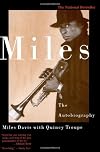
A brash, opinionated, and entertaining autobiography. Miles Davis tells about his rise from playing trumpet in East St. Louis to the pinnacle of the music world. He tells about the many players he worked with, both those who influenced him and those he influenced. He talks about his women, his drug use. And that’s what the book reads like – as if Miles was talking to you, in his true voice. It has the distinction of using the word motherf*cker probably about once a page on average, and show more with a variety of meanings.
Miles liked sharp clothes (custom made), cars (Ferrari, Lamborghini), and women (various, beautiful). He was appalled when Duke Ellington tried to recruit him for his orchestra and received Miles in his office in the Brill Building while wearing shorts. He tells of his deep admiration of and exasperation with the heroin addicted Charlie Parker: “Among the masters he was the master.”
Miles on dealing with people you don’t want around. “You just tell them to get the fuck out of your face. That’s it. Anything else is a waste of time.”
Known for his musical innovation and his ever-evolving playing styles, Miles had no use for jazz musicians “playing all those same old licks we used to play so long ago. I feel sad for them. I mean, it’s like going to bed with a real old person who even smells real old.”
Miles main hatred was racism and the exploitation of black musicians by white people. His description of attending an award ceremony in Washington, D.C. is both illuminating and wildly funny. show less
Miles liked sharp clothes (custom made), cars (Ferrari, Lamborghini), and women (various, beautiful). He was appalled when Duke Ellington tried to recruit him for his orchestra and received Miles in his office in the Brill Building while wearing shorts. He tells of his deep admiration of and exasperation with the heroin addicted Charlie Parker: “Among the masters he was the master.”
Miles on dealing with people you don’t want around. “You just tell them to get the fuck out of your face. That’s it. Anything else is a waste of time.”
Known for his musical innovation and his ever-evolving playing styles, Miles had no use for jazz musicians “playing all those same old licks we used to play so long ago. I feel sad for them. I mean, it’s like going to bed with a real old person who even smells real old.”
Miles main hatred was racism and the exploitation of black musicians by white people. His description of attending an award ceremony in Washington, D.C. is both illuminating and wildly funny. show less
Man what a wild ride. It was an amazing read, and as Miles would say, "this book is a motherfucker." I loved reading about the New York jazz scene in the 40's and 50's. There are so many fascinating stories about all the legendary musicians. Also really loved hearing about Miles creative process and background for some of my favorite albums of all time. You also get to hear Miles' no nonsense takes on things like racism, drug use, music, leading a band, playing trumpet, etc, all in Miles' show more distinctly authentic voice. Anybody who is a fan of music (especially jazz) should read this one. show less
The definitive jazz biography. Miles writes with such a casual hipness - and frankness - that you're pretty much disarmed from the get-go. His attitude toward women is abysmal, and his prejudice against most white people, while perhaps justified, is disheartening. Still, you find yourself mesmerized by his life, his battles, his confidence, and his passion for jazz.
A wounded, bitter artist, a fireplug, a gentle soul, a man lost in his music, an outspoken advocate for African Americans, and show more at the heart of it, a musical genius, pure and simple.
This is truly a trip through jazz history, with Miles ensconced right in the heart of it all - taking you back as far as Satchmo and Diz, and right up to the mid-80's, when jazz was crying out for another Miles to step up and revive the art form. show less
A wounded, bitter artist, a fireplug, a gentle soul, a man lost in his music, an outspoken advocate for African Americans, and show more at the heart of it, a musical genius, pure and simple.
This is truly a trip through jazz history, with Miles ensconced right in the heart of it all - taking you back as far as Satchmo and Diz, and right up to the mid-80's, when jazz was crying out for another Miles to step up and revive the art form. show less
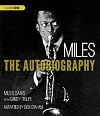
Miles is amazingly good and bad
I just finished Miles Davis’s autobiography, Miles: The Autobiography. In all that he was, Miles was amazing. An amazing musical mind, amazing in his drug addictions, amazingly selfish, amazingly genius, amazingly stylish, amazingly angry, and amazingly racist, are all aspects of Miles.
The book was a blast to read because it was written in Miles’ conversational tone. Think of Richard Pryor reading Lewis Carroll, “That Cheshire Cat was grinning like a show more mutherf*@%er!” This is part what makes Miles seem so real, as well as so much fun to read. You never know what he will say next or about whom. Miles is a seer. He sees people’s love, their creativity, their talent, their faults, and their shortcomings. This is true for everyone in Miles’ life except for Miles himself. There is no doubt that Miles loved so many folks in his life, his parents, Dizzy, Train, and of course Bird, as well as many of the women in his life. But Miles had no use for many in his world, and no respect for them. He pimped some of the women in his life; and Miles never had a problem wasn't either directly or indirectly caused by white people. It is not surprising that a young black man in East St. Louis, coming of age in the 1940’s, experienced prejudice and racism. However, over the course of his life, Miles seemed more and more focused on the evils of white people, and less and less tolerant. As I read about Miles’ experiences of the 1970’s and ‘80’s, I heard Miles sound more and more like the older generation in my small Tennessee hometown. Change the word black to white, and Miles spewed hatred just like the old men found each morning on the courthouse square.
This is what makes Miles amazingly sad. For a man of such light, love, and creativity to not see that hate is hate makes Miles one of the saddest artist of the 20th century. Miles allows those who influenced his youth win, by turning into the very same type of person. Thankfully, we have the music Miles created, before the drugs, anger and hatred turned out the light. show less
I just finished Miles Davis’s autobiography, Miles: The Autobiography. In all that he was, Miles was amazing. An amazing musical mind, amazing in his drug addictions, amazingly selfish, amazingly genius, amazingly stylish, amazingly angry, and amazingly racist, are all aspects of Miles.
The book was a blast to read because it was written in Miles’ conversational tone. Think of Richard Pryor reading Lewis Carroll, “That Cheshire Cat was grinning like a show more mutherf*@%er!” This is part what makes Miles seem so real, as well as so much fun to read. You never know what he will say next or about whom. Miles is a seer. He sees people’s love, their creativity, their talent, their faults, and their shortcomings. This is true for everyone in Miles’ life except for Miles himself. There is no doubt that Miles loved so many folks in his life, his parents, Dizzy, Train, and of course Bird, as well as many of the women in his life. But Miles had no use for many in his world, and no respect for them. He pimped some of the women in his life; and Miles never had a problem wasn't either directly or indirectly caused by white people. It is not surprising that a young black man in East St. Louis, coming of age in the 1940’s, experienced prejudice and racism. However, over the course of his life, Miles seemed more and more focused on the evils of white people, and less and less tolerant. As I read about Miles’ experiences of the 1970’s and ‘80’s, I heard Miles sound more and more like the older generation in my small Tennessee hometown. Change the word black to white, and Miles spewed hatred just like the old men found each morning on the courthouse square.
This is what makes Miles amazingly sad. For a man of such light, love, and creativity to not see that hate is hate makes Miles one of the saddest artist of the 20th century. Miles allows those who influenced his youth win, by turning into the very same type of person. Thankfully, we have the music Miles created, before the drugs, anger and hatred turned out the light. show less
Lists
Awards


Bitches Brew [sound recording] (Winner – Best Instrumental Jazz Performance – Large Group or Soloist with Large Group – 1971)
Aura (Winner – Best Jazz Instrumental Performance, Big Band, Best Jazz Instrumental Performance Soloist – 1990)


You May Also Like
Associated Authors
Statistics
- Works
- 392
- Also by
- 20
- Members
- 4,158
- Popularity
- #6,051
- Rating
- 4.2
- Reviews
- 51
- ISBNs
- 148
- Languages
- 20


